
Dominic Gagnon
Directing
Biography
Filmmaker, installation and performance artist Dominic Gagnon works with images taken from the web. His works question the specificity of cinema while suggesting the breakdown of its formal frameworks. Through these twists, his practice calls into question the institutional and cultural modalities of image production and consumption. His work focuses on the themes of contemporary mythologies, marginal productions of the moving image and their censorship, and the conditions of mediation between the work and the viewer. Issues such as violence, the economy, homelessness, identity and sadomasochism are also part of his work.
Known For
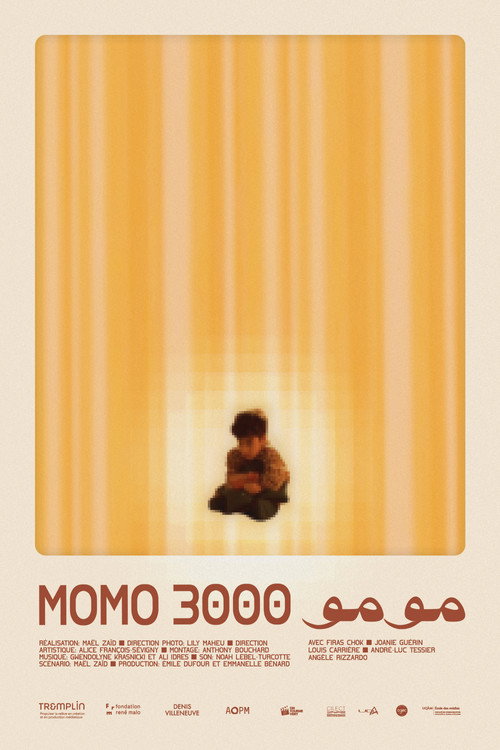
December 31, 1999. Quebec is a few hours from year 2000 and its potential bug. Trapped in a Montreal appartement, Momo needs only one thing to survive this nightmare: couscous.
Momo 3000
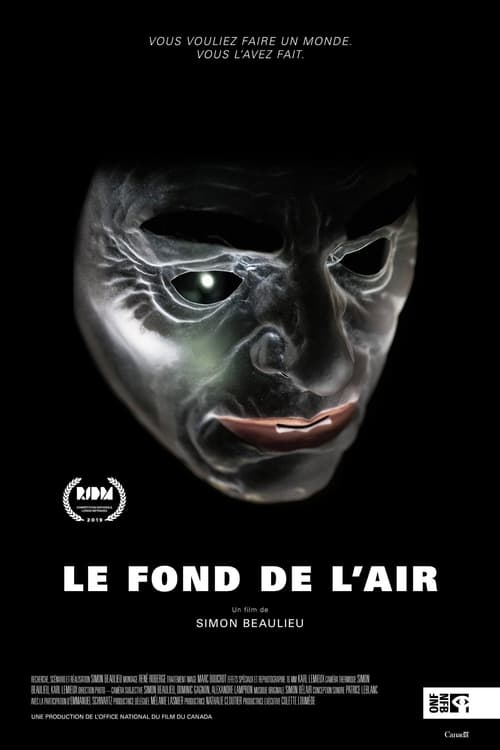
A reflection on the fate of humanity in the Anthropocene epoch, White Noise is a roller-coaster of a film, a whirlwind of sounds and images. The fourth feature-length work by Simon Beaulieu, this film essay plunges viewers into a subjective sensory adventure—a direct physical encounter with the information overload of daily life. White Noise transforms the imminent collapse of our civilization into a visceral aesthetic experience.
White Noise
A couple's impasse is refracted through the world’s great tragedies, and the news of "what is happening in Kosovo”. A tender, indifferent, cynical and bittersweet slice of melodrama.
Kosovolove
The Arctic filmed by its inhabitants.
Of the North

A large electronics store welcomes vendors and customers. Cameras are there to show that the company’s slogans are not lies. A manipulation transforms the recordings and instils doubt.
The Matrix
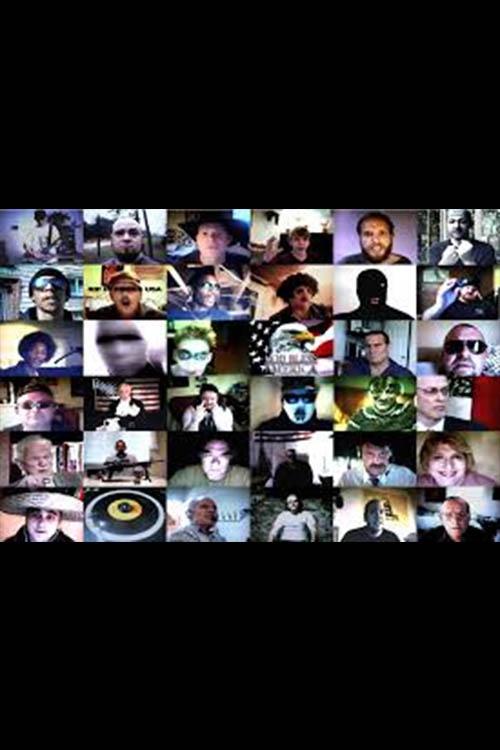
Rip in Pieces America is an uncensored proclamation from an invisible USA. Dominic Gagnon turns no blind eye in his ultra-intense collage film which consists entirely of more or less anonymous webcam clips that due to their controversial or explicit nature have been flagged and meanwhile removed from video sites such as YouTube. Well-formulated conspiracy theorists, bad-tempered grass-roots activists and religious arms fanatics, who use the webcam as both a means to preach and to confess, have all been filtered by the censor, but stored by Gagnon, who neither comments nor embarks on any finger-pointing. For who decides what can be thought and said? And what is paranoia, if you know that you’re right? RIP is an uncensored, in-your-face assault on political correctness and on most American institutions. But it also has a bizarre performative element that develop in pure Hollywood fashion.
RIP in Pieces America
How do you survive the end of the world? The young people in this exceptional found-footage film discuss their plans and expectations in a series of online videos. Some of them think they can survive, others embrace the end. Sometimes parody, sometimes scarily real
Hoax Canular
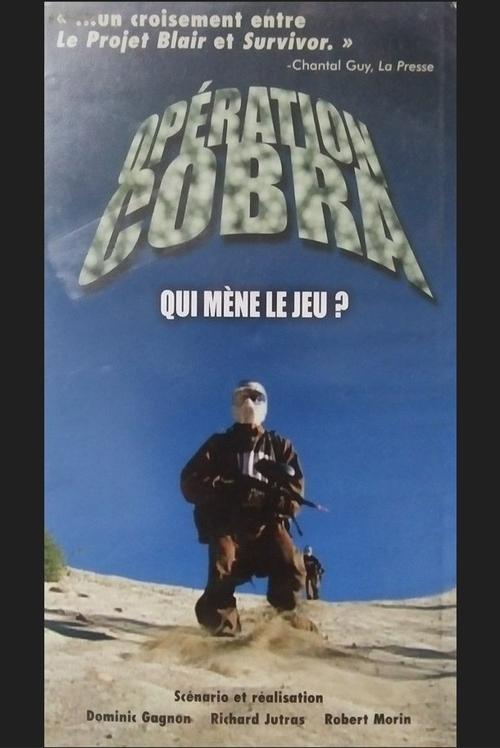
A Film crew is documenting the behavior patterns of two mock-commando units comprised of adolescent boys admist a paintball war, while they search for hidden prototype of a revolutionary military weapon in the Boreal forest. The rivaling teams are requipped with only basic supplies of food and water, a compass and a map as means of surviving in the deep woods. The boys have almost no experience or survival skills and face increasingly difficult situations, including a frightening night filled with the howls of hunting wolves. Tensions rise and the boys become increasingly confrontational and soon turn their aggressions towards the film crew... leaving these young men thinking that this is more than just a game.
Operation Cobra

Pre-schoolers are playing in a parc. Time stops and transforms their games into conflicts. 16mm / b&w / sound
Parapluie Bomb City
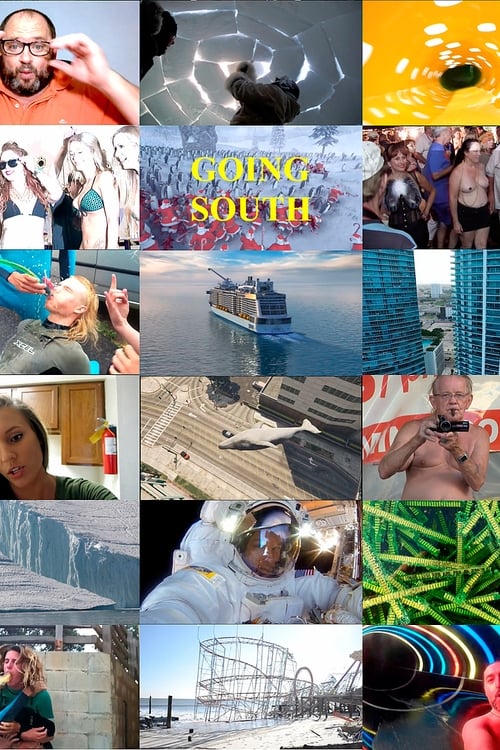
Exploration of the internet and our current era through YouTube videos. Dominic Gagnon reconstructs the south as seen through vlogs, found footage, video games, raging storms and burning palm trees.
Going South

Television spare parts follow each other and grow in number on an electronic soundtrack. From an installation made of materials found in the street, this film emphasises the end of an era, that of analogue and passivity, and the beginning of another, that of IT and interactive systems. Like Hal in 2001 A Space Odyssey,television bids farewell.
Total Recall

Men, seen from afar, driven by the dynamics of work. The machine is no longer an extension of the bodies, of their strength. Man is now driven by the machine. The alienation of humanity is accomplished.
Beluga Crash Blues

"Flag as inapproriate". This unconspicuous button with a flag icon appears underneath every single YouTube video we watch marking the limits of our freedom in the Internet. Once flagged by anonymous users, after being checked by the also anonymous YouTube team, a video quickly disappears forever. In exactly this process, Dominic Gagnon intervenes. He 'saves' the flagged videos before they are deleted and adds them to a dark and mythological collage of American survivalism. People have their say, who deeply mistrust the government, who warn their fellow citizens, and who arm themselves visibly. An unclear image emerges. While the protagonists are scared of the almighty American government, the viewer is irritated what to find the most threatening in this "hell": the United States of America, the critics armed to the teeth with conspiracy theories, or the anonymous censorship power of the companies which control the web.
Pieces and Love All to Hell

A team of astronauts is launched into space during the pandemic. As the planet takes a pause, its inhabitants share their experiences of COVID-19 and the consequences it might have on their mental health.
Space Down

Just out of jail, sitting in his car, Joseph drinks iced coffee, smokes cigarettes and makes videos. He loves a USA that he can see disappearing before his eyes, and his rants are a powerful trip into a reactionary and savage American psyche.
Big Kiss Goodnight

Images are shown on a screen split into four, while a voice-over fills these spaces with fantasies, with a mix of encyclopaedic culture and visionary intelligence, made of anecdotes, lucid reflections, paranoid obsessions, urban legends, memories of films... Suddenly, the man appears, in medium shot, baseball cap and fake glasses hiding his eyes. He talks about nature and technology, about Star Trek, the Bible, extraterrestrials, artificial intelligence, humanity controlled by higher powers. Although his discourse follows the logic of conspiracy theories, the truth of his solitude emerges.
High Speed

On the one hand, there is Murdochville, founded in Gaspésie in 1950 following the discovery of a large copper deposit. In 1970, it had over 5,000 inhabitants. Today, since the mine closed, fewer than 1,000 people live there. On the other hand, there is the ISO, which “brings together experts to share knowledge and develop [...] market- relevant International Standards that support innovation and provide solu- tions to global challenges.” * On the one hand, the needs of people facing unemployment and a loss of identity; on the other, an institution which advocates the efficiency and performance that lead to profit.
ISO

Some images, maybe a little bit of music, some people talking with each other, you know what? Just watch it. I didn't yet. Not that I don't want to, but I'm busy you know. School and everything.
Anchorage
Car races, planes and airports, men and women waiting, an eagle in flight, a bison in the fog. Sustained music and silence. Analogical editing, without words, orchestrates it all. The encounter between electronic sonorities and images frozen in a vacuum creates an anxiety-inducing and hypnotic rhythm. Facing this suspended world, we take in fully the necessity of the distance that characterises Gagnon’s films; and also our case. We would like to be part of this reality which we observe and judge from afar. We would like to change it. But “homo faber” is now merely an expression of past. The machine is now directing humanity, dictating speed and concern. In the free association of images, the body language says more than the words.
Du moteur à explosion

The filmmaker’s daughter looks at herself on a computer screen, using it like a mirror. She is surprised to see the colour of her lips…A searing indication of the future generation’s relationship with image, fascinated by selfies, the globalised affirmation of its own presence in the world. An intimate short film that summarises the filmmaker’s poetics and cinematic system.