Gianni Amelio
Directing
Biography
Gianni Amelio (born 20 January 1945; Catanzaro) is an Italian film director. His film "The Way We Laughed" (1998) won a Golden Lion at the 55th Venice Film Festival. Amelio was born in San Pietro di Magisano, province of Catanzaro, Calabria. His father moved to Argentina soon after his birth. He spent his youth and adolescence with his mother and his grandmother. The absence of a paternal figures will be a constant in Amelio's future works. During his university studies of philosophy in Messina, Amelio got interested in cinema, writing as film critic for a local magazine. In 1965 he moved to Rome, where he worked as operator and assistant director for figures such as Liliana Cavani and Vittorio De Seta. He also worked for television, directing documentaries and advertisements. Amelio's first important work is the TV film "Sun City", directed in 1973 for RAI TV and inspired to Tommaso Campanella's work. This was followed by "The Cinema According to Bertolucci" (1976) a documentary about "1900" shooting, and the thriller "Special Effects" (1978). Two years later he directed the mystery "Death at Work" (1978), which won prizes at Locarno and Hyères festivals. "The Little Archimedes" of 1979 was also critically acclaimed. In 1982 he debuted for cinema proper with "Blow to the Heart" (1982), about Italian terrorism, presented at the Venice Film Festival. In 1987 Amelio released "Via Panisperna Boys", about the lives of 1930 Italian physicists such as Enrico Fermi and Edoardo Amaldi, which won the award for best screenplay at the Bari Film Festival. 1989's "Open Doors", featuring Gian Maria Volonté, confirmed Amelio's status as one of Italy's best film directors and won a nomination as Best Foreign Film at 1991 Academy Awards. The film received also four Felix, two Silver Ribbon, four David di Donatello and three Golden Globes awards. Also successful was "The Stolen Children" in 1992, which won the Special Prize of Jury at the 1992 Cannes Film Festival plus two Silver Ribbon and 5 David di Donatello. In 1994 "Lamerica", about Albanian immigration in Italy, repeated the fate and the success, with 2 Silver Ribbons and 3 Davids. Four years later, "The Way We Laughed" won the Golden Lion at the Venice Film Festival. Amelio gained another Silver Ribbon as best director for "The Keys to the House", inspired to a novel by Giuseppe Pontiggia, of 2004. Amelio was a member of jury at the Cannes Film Festival in 1995. In 2006 he released his eighth feature film, "The Missing Star", featuring Sergio Castellitto. From 2009 to 2012 he has been director of Torino Film Festival, Turin. Amelio came out as gay late in life, shortly before the release of his 2014 documentary "Happy to be Different".
Known For

Fiore, an Italian conman, arrives in post Communist Albania with Gino, his young apprentice, to set up a shoe factory that will never open. The con requires a native Albanian, so they designate Spiro, an impoverished and confused former political prisoner as chairman of the board. When Fiore returns to Italy to get government funds for the project, Spiro unexpectedly disappears and Gino sets out on a journey to find him. The search leads him to discover Spiro's tragic personal history and witness Albanian poverty firsthand.
Lamerica

Documentary on the filming of Novecento by Bernardo Bertolucci
The Cinema According to Bertolucci

Tommaso Scalia is a man who commits three murders: he kills his superior who sacked him, the man who replaced him and his wife. He wants a quick trial and an early execution, but an earnest, principled assistant judge looks for a way to save the murderer from being shot, because he does not belive in capital punishment.
Open Doors

Meeting his handicapped son for the first time, a young father attempts to forge a relationship with the teenager.
The Keys To The House

Antonio, a policeman (carabiniere), has an order to take two children (Rosetta and her brother Luciano) from Milan to Sicily to an orphanage. Their mother has been arrested for forcing Rosetta (11 years old) to work as a prostitute. First the relation between Antonio and the children is tough, but it relaxes so they become temporary friends.
The Stolen Children

A Mexican outlaw known as "The Stranger" is part of a band of thieves that steal a cargo of gold from a stagecoach. However, the Americans in the band betray him, and shoot all the Mexicans. The Stranger is not completely dead though, and crawls his way out of his shallow grave, continuing his pursuit of the gold, and exacting a bloody vengeance.
Django Kill... If You Live, Shoot!

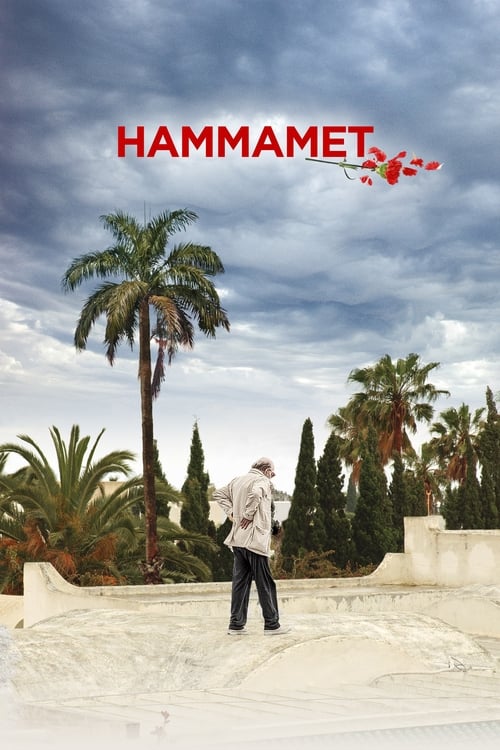
The last years of Bettino Craxi, one of the most important and controversial italian leader of the 1980's.
Hammamet

On the streets of a damp metropolis lie the corpses of hundreds and hundreds of boys and girls. No one can give them a resting place because of a law enacted by a repressive State. But the young Antigone, with the help of a foreigner, Tiresias, violates this rule in the name of pietas, undermining the established order.
The Year of the Cannibals

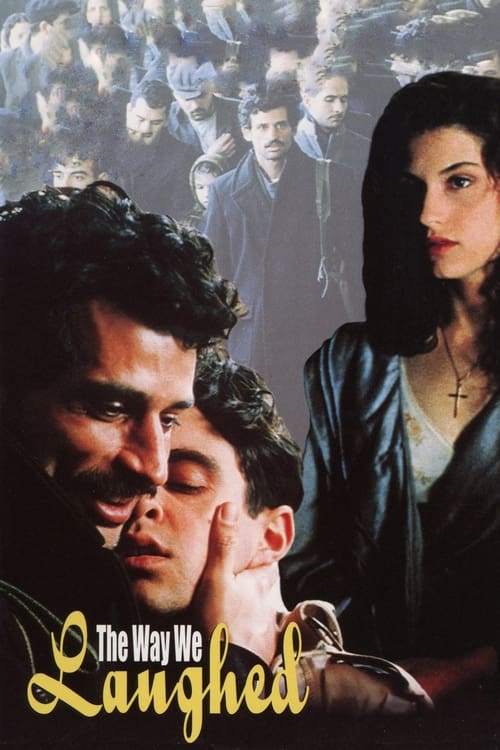
Studying to become a teacher in 1950s Northern Italy, Sicilian immigrant Pietro is joined by his big brother Giovanni. Pietro shows considerable promise in his field, prompting illiterate Giovanni to take on even the toughest jobs in order to support his sibling's academic pursuits.
The Way We Laughed

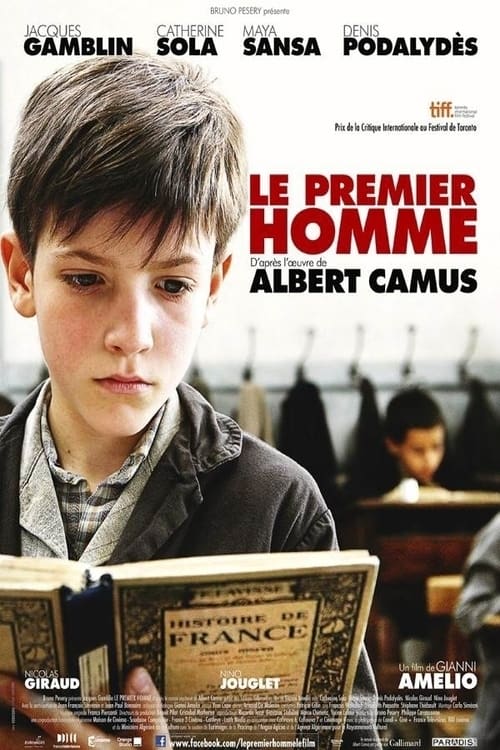
Based on a novel that Albert Camus was working on when he died, we follow Jacques Comery as he travels back to Algeria in 1957, a place full of childhood memories. The country is split between those wanting to remain a part of France, and those demanding independence. Reminiscences of his mother, his stern grandmother and a young Arab boy come flooding back.
The First Man

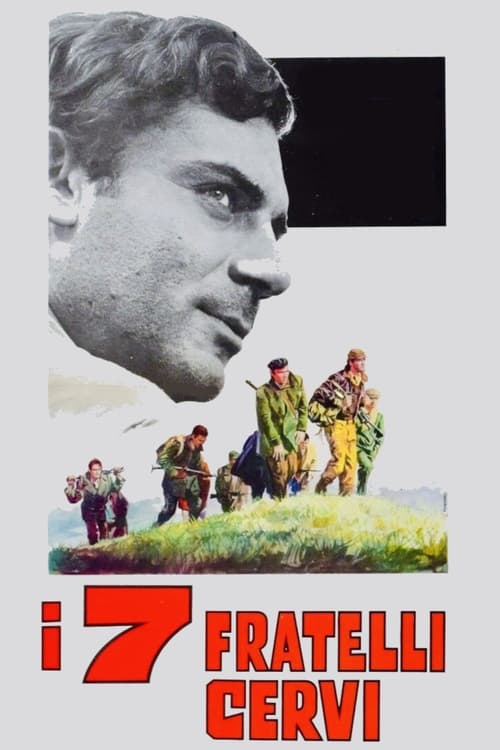
The story of the Cervi family. Rural farmers brought up to be idealogically opposed to fascism during the era of Mussolini's rule of Italy and World War 2.
The Seven Cervi Brothers

Back from the hospital where he has been treated after a heart attack, Lorenzo is on his way upstairs to his top-floor apartment in Naples when he meets Michela. The charming young woman, who has just moved to the facing apartment, has forgotten her keys and finds herself locked out. Cynical and grumpy, the retired lawyer who has been living estranged from the rest of the world, should normally leave her to her fate but he mellows under her spontaneous charm. He helps her, becomes friends not only with her but with her husband Fabio and their two children. For once, the self-declared misanthropist seems to be experiencing the long forgotten feeling of empathy.
Tenderness

These are the years of the First World War and Dr. Stefano Zorzi spends his days in the Exemption Clinic in a large city of Northern Italy, where he not only takes care of soldiers who arrive from the massacre of the front, but also he fights simulation and self-harm of those who hope to be dispensed, by sending them before the Military Court. If Stefano, in fact, does his utmost to heal soldiers and send them back to fight, Dr. Giulio Farradio makes them ill, or helps them to self-injure seriously enough to be exonerated. The two doctors, who went to university together and were great friends, they not only (secretly) challenge each other on a professional level, but also on the sentimental one: they are both linked to Anna, a courageous nurse with a strong character. But when the great ‘Spanish’ fever epidemic arrived in 1918, the time for love, politics and science ends up getting confused dangerously...
Battlefield

Based on true events of the late 60s in Italy, poet, playwright and myrmecologist Aldo Braibanti is prosecuted and sentenced to prison for the love he shares with his barely-of-age pupil and friend, Ettore. Amidst a chorus of voices of accusers, supporters and a largely hypocritical public, a single committed journalist takes on the task of piecing together the truth, between secrecy and desire, facing suspicion and censorship in the process.
Lord of the Ants

Vincenzo, former head of maintenance of a steel plant that's been outsourced, travels from Italy to China to warn about a defective blast furnace.
The Missing Star

The enthusiasms, fears, joys and disappointments of the (private and professional) life of a well-known group of boys fond of physics and mathematics, who just made history as the Via Panisperna boys.
Via Panisperna Boys

The son of a university professor discovers his father's secret life and has to decide what to do about it.
Blow to the Heart

The action takes place in Florence in the 1930s. Alfred, an Englishman who moved to that city in order to write a book on Giotto, meets a boy who is fond of music and mathematics, with whom he becomes close friends. Alfred goes to Switzerland, but one day he receives an anguished letter from the boy and rushes back to Florence where he learns some terrible news.
The Little Archimedes

The film takes us on a voyage to a hidden Italy rarely addressed on film: Gay Italy as it was lived in the 20th century, from the turn of the century up to the 80s. The documentary gives voice to those who personally had to bear the weight of being "different", remembering how their lives were shaped by this situation during Fascism and in the aftermath of World War II, in an anthropologically and culturally widely diverse nation. Theirs is a mixed testimony of repression, censorship, dignity, courage, and happiness, making way for the final image of a world - our world - that still has a long way to go towards respect and liberty for everyone.
Happy to Be Different
A sleep phenomenon overtakes an entire town's population. Two boy scouts remain the only ones awake in a world that has fallen asleep.