Art
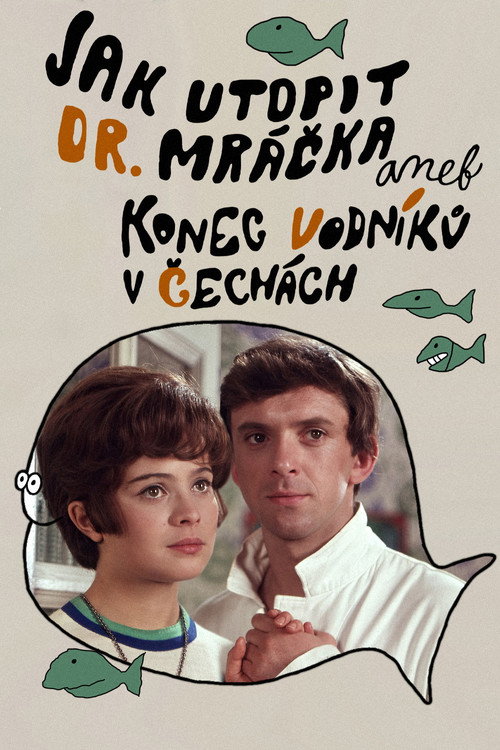
There are still water spirits among us. One group lives in Prague, led by Mr. Wassermann, who is using his wife's family as a servants. All they need is their old house near the river. But the house is to be demolished. They have to stop it. And the only way is to drown Dr. Mrácek, who is responsible for the demolition. But he falls in love with Wassermann's niece Jana. He changes to fish, is mistaken for water spirit from Germany, is drowned and revived again. The other problem is the flour with ears... and so on...
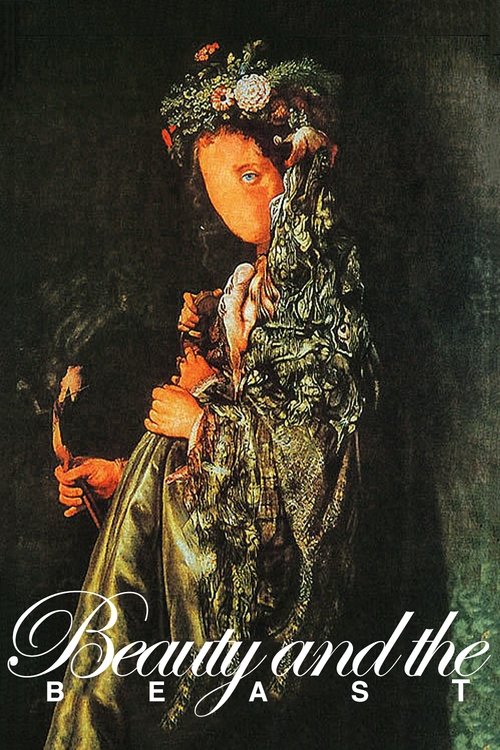
Julie, the youngest daughter of a bankrupt merchant, sacrifices her life in order to save her father. She goes to an enchanted castle in the woods and meets Netvor, a bird-like monster. As Netvor begins to fall in love with Julie, he must suppress his beastly urge to kill her.
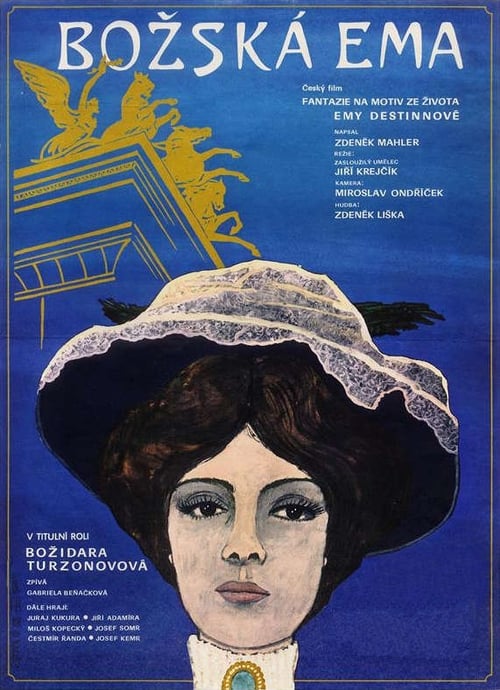
The opera lady singer Ema Destinnová is in all her splendor at the American stages. But in Europe there rages war and she decides to return home to Bohemia.
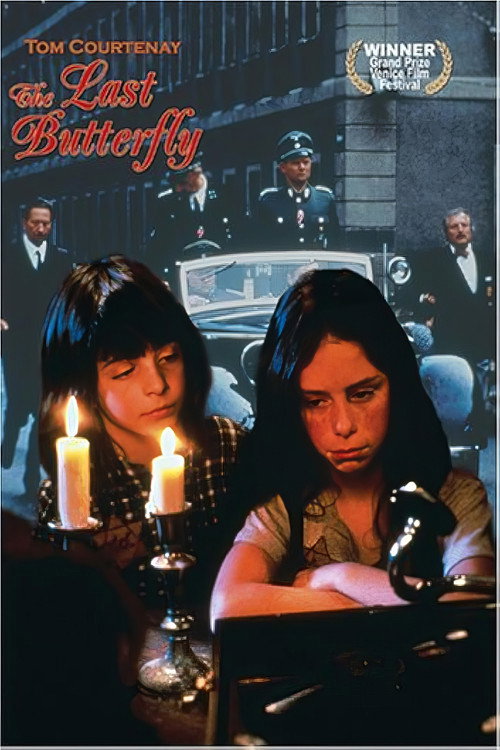
Stage mime Antoine Moreau is compelled by the Gestapo to put on a performance for the children of Terezin, a "model" concentration camp, to convince the Red Cross observers that the camp is truly what it seems. Reluctant at first, Moreau slowly learns the true nature of the camp, including the meaning of the "transports" on which people leave. With a world-class orchestra (made up of people interned in the camp) and a cast of children, Moreau stages a show to end all shows.
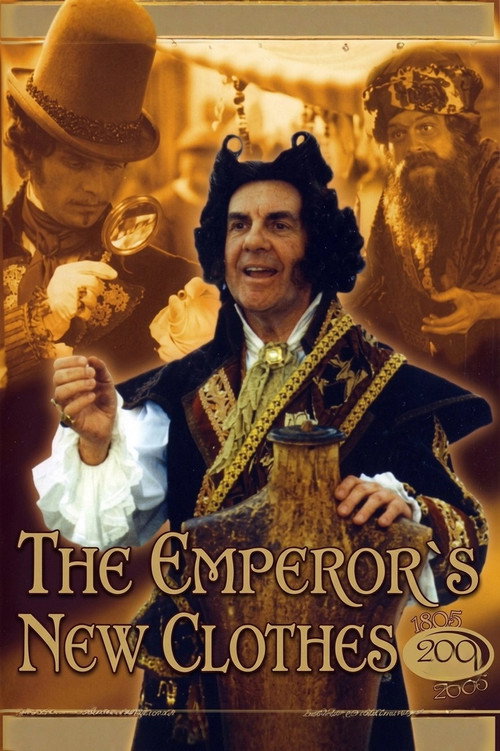
The Emperor of a European country demands new clothes to wear every day, in fact sometimes several times a day. He imposes a heavy tax on the poor citizens to pay for his vanity. An itinerant man and boy come to the capital city and see the injustice, and make friends, but they soon have to flee. They return disguised as Arab tailors, and offer to make the Emperor a new suit of clothes. But only the wise will be able to see it; fools, or those unfit for their public office, will not see anything. The Emperor orders the suit made, and much money is needed to purchase the raw materials. Eventually the suit is ready, and the Emperor and his officials pretend that they can see a wonderful outfit; will anyone prick the bubble of the illusion?
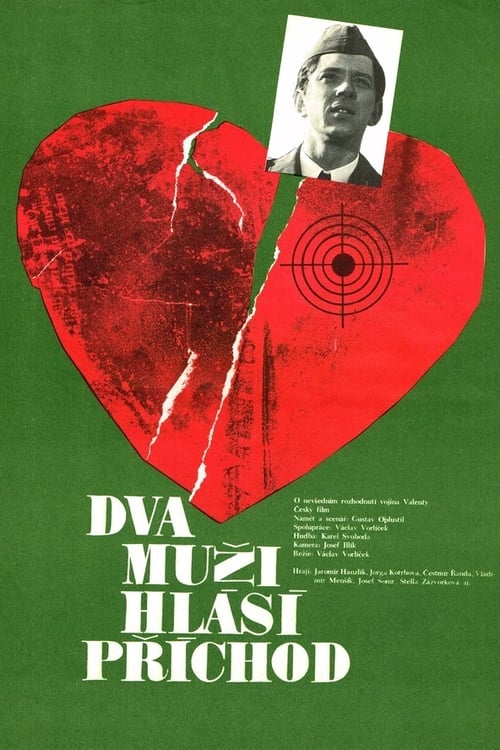
An only son, Jirí Valenta (Jaromír Hanzlík), has been drafted to the army. At the barracks he acquires the nickname Seamstress because he sews rugs in his spare time. One day, his friend introduces him to Julka Vávrová (Jorga Kotrbová), a girl he is desperate to get rid of. The naive Jirí falls in love with the girl and accepts her invitation to spend Easter together in the country. There he learns that the girl is the single mother of the young boy Martínek, whose father is the married tractor driver.
Her mother dead, 18-year-old Vladka travels to a remote village in the dead of winter to find the father she has never met. The happiness of their initial meeting gives way to the daughter’s disappointment and concern over the hardworking man’s alcoholism.
This film is about life of a family, which lived in Prague since since 1968 to 1980. Father of the family comes from Ukraine and so every year someone from Ukraine to visit this family and to buy something more better than is in Ukraine. As the times go by, the friens of family live in Austria. And now for change the family visit "a better life" in west Europe and they found out how it is to be something second-rate.
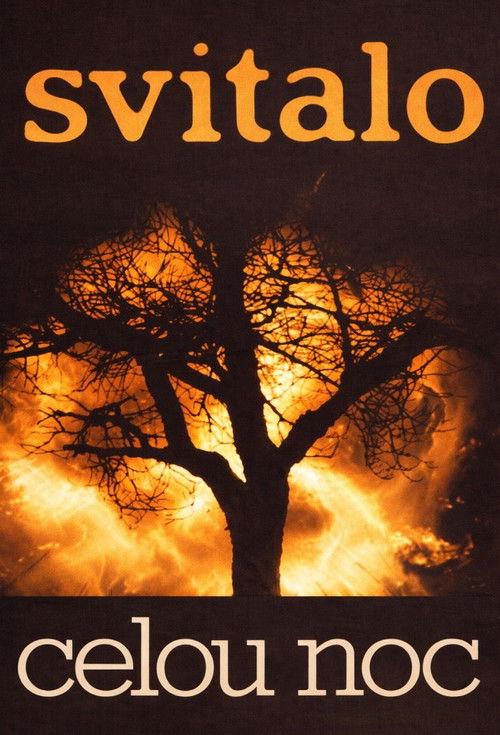
The Czech film Svítalo All Night was made to commemorate the 35th anniversary of the liberation of Czechoslovakia by the Soviet Army and is dedicated to all those who fought and gave their lives in Prague in the May Uprising of 1945. Behind the historical events, the creators see mainly their simple, unassuming participants. Thus, we are presented with a number of apt portraits, whether it is the central hero Dr. Soukup and nurse Daniela on the side of the fighting Czechs, or a captain and a simple private in a Red Army unit coming to the aid of the fighting Prague, or an old, war-weary German major, who only realises the senselessness of the war at the sight of a fanatical, cynical lieutenant for whom Nazi ideology represents the meaning of life.
Four short stories depicting the private life of Czechoslovak soldiers. In the short story "The Pheasant", the hardened corporal Kony takes revenge on the bullying of the new recruit Lubos. On the way to get a tank repaired, however, a manly friendship is born between the two men. The story Potato depicts a brigade during which, despite the prohibitions of a strict professor, soldiers and students become close at an evening disco. The buns bring to life the problems of military love: Štěpánka prefers Peter to Honza, but pays heavily for her mistake. The film closes with the short story "The Solution", in which a lieutenant from Slovakia has problems with the arrangement of his family life.
Who wouldn't want a donkey that drops gold coins, a hen that lays golden eggs, or even a goldfish that grants all wishes! Adults, let alone rulers, usually know that such phenomena do not belong in the life of an ordinary kingdom. However, this does not apply to the very kind but overly trusting king from our fairy tale! He is completely under the thumb of his cunning advisor Pitras and servant Johan, who make a decent living off their ruler's naivety. Everything changes, however, after Princess Beata returns from her studies. She cannot be fooled, and so hard times begin for the swindlers. Pitras, in order to get rid of the princess, suggests to the king that the girl must marry quickly, preferably somewhere far away. But Beáta is not giving up either. She intends to get rid of the parasites and finds an ally for her plan in the young gardener David, who would do anything for his childhood friend!
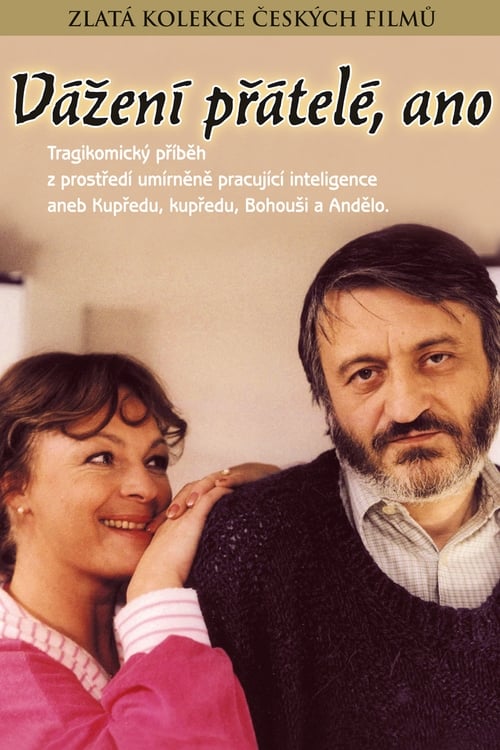
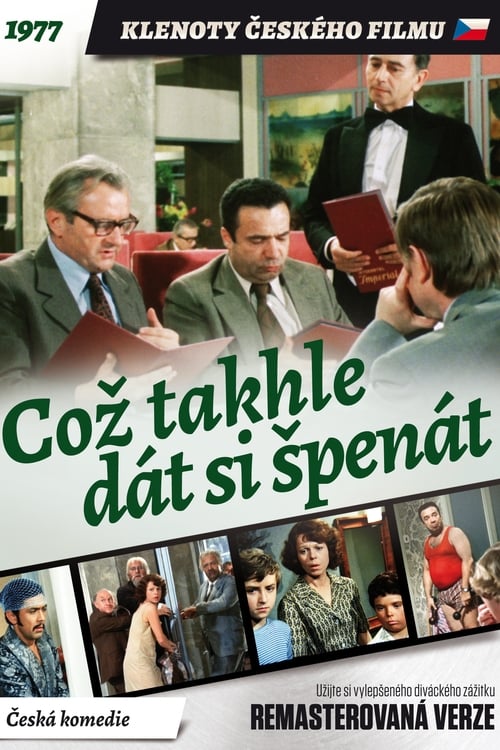
During the change of functions in the Fortuna medical ceramics company, Bohouš Fisher, an independent clerk, became deputy director of the company against his will. As a result, he is forced to make even greater compromises than before. He takes part in unnecessary meetings for which he has to raise money from company funds because of his position, or he jocularly solves a "work" accident of two employees who were engaged in love games instead of work. It's not much better in his private life. He would like to do some meaningful work, like building a stove.
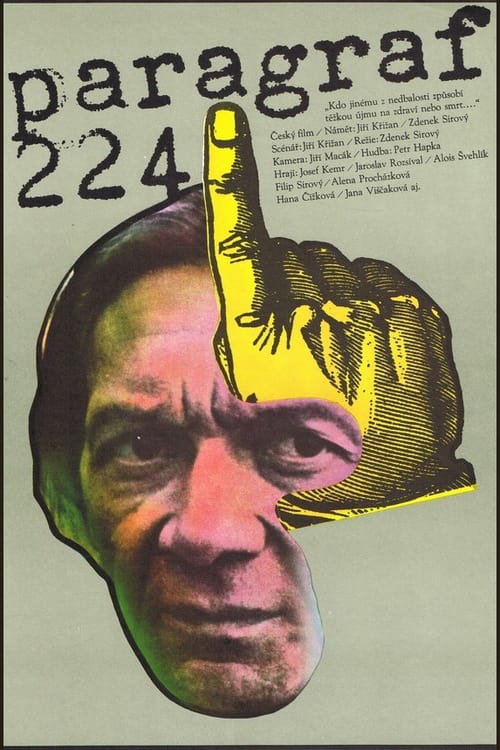
Placek (Josef Kemr), the head of research in a chemical plant, appreciates the help of his younger colleague Bernát (Alois Svehlík) in the creation of a new synthetic material.
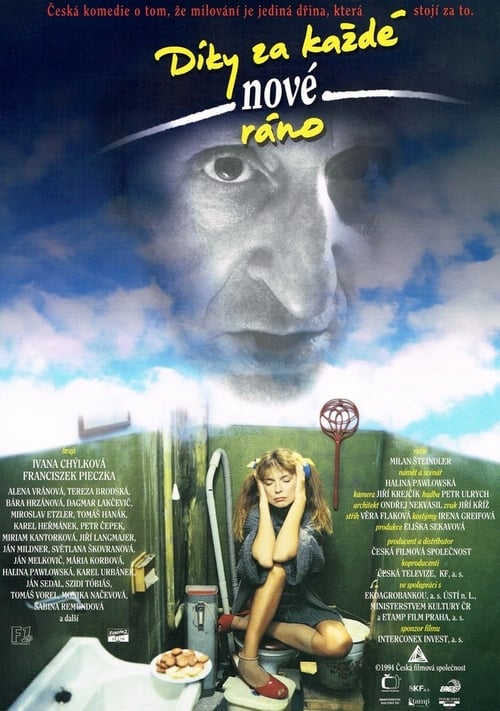
The fate of father and son Horáček, but this time they switched roles. Jirka has married, settled down and grown up, while his father is in trouble because he has "second lymphoma" and, feeling that he is missing the last train, he starts a relationship with a stripper, Ala, dyes his hair, but mostly he likes a pretty and kind nurse, Lucie. Although he behaves in such a way that it seems to others as if he has lost his mind, everything turns out well, of course.
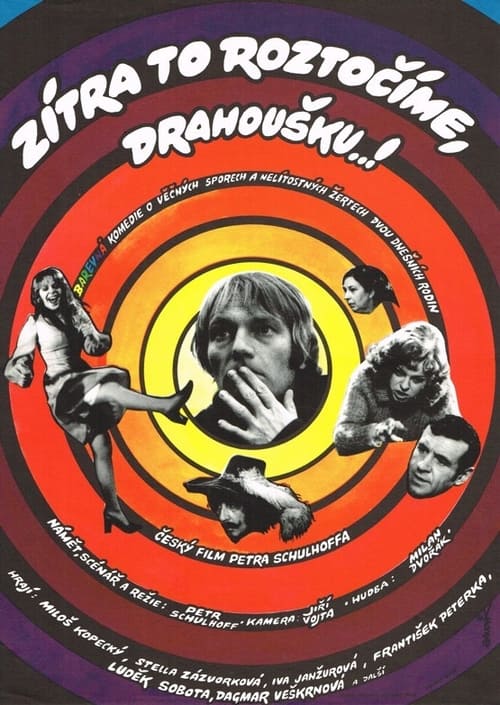
The heroes of this absurd comedy, full of confusion and humor are Dzharda Zemanek and Frantisek Liska.
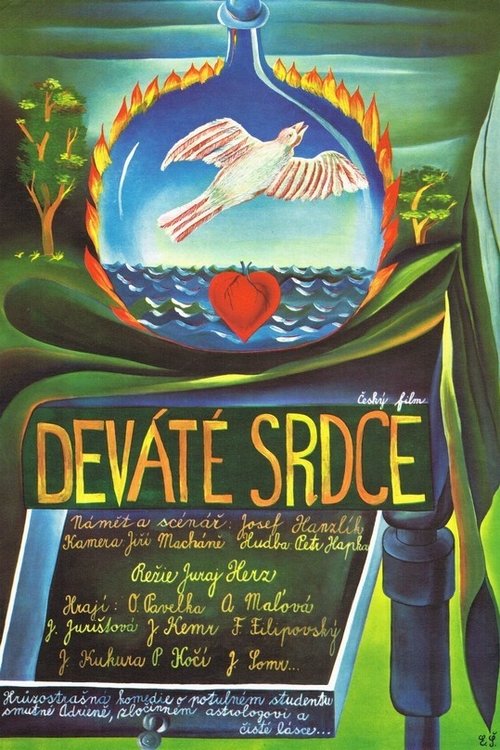
Martin, a poor student, volunteers to go on a quest to find a cure for the princess Adriana, who is stricken with a strange illness. Unknown to Martin or anyone else, the princess is actually under the spell of the powerful magician Andlobrandini, who is preparing a rejuvenating elixir made from the blood of nine men's hearts.
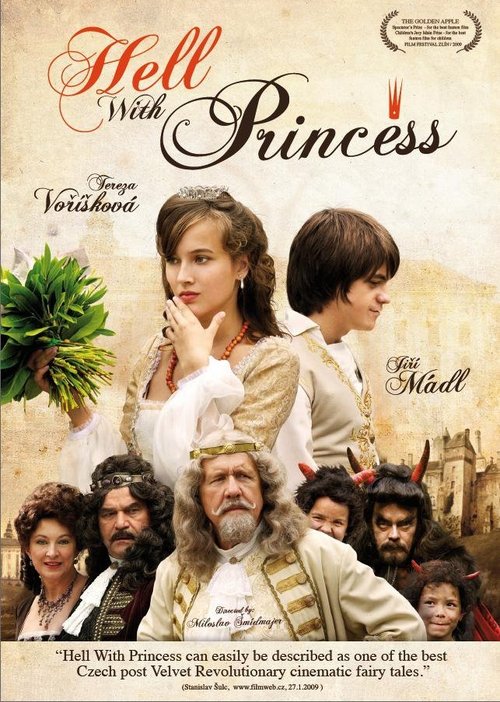
To help his daughter avoid marriage to an inept prince, King Leopold claims that Lucifer himself is wooing the princess. Satanic panic ensues.
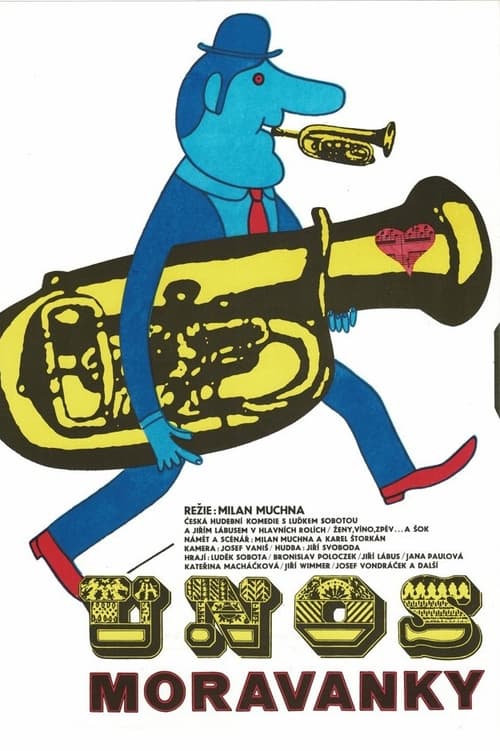
The popular Moravanka brass band performs at the fair. Vasek Pivoňka, the bandleader of the local brass band Kulatěnky, which broke up, decides to put the band back together. The village musicians are sceptical at first, but later they start rehearsing with vigour. Standa, a Prague resident who is working in a pig farm to cure his nerves, helps them to organise the concert. He really likes Evica Kocourková, but her father keeps an eye on her. Young Šišák tries to charm the teacher Olina. Before the performance can begin, the band must succeed before the cultural committee. However, they fail to do so. The disappointed musicians play for themselves at the station and suddenly they are successful. Standa comes up with an idea how to push Kulatěnka through without the permission of the commission. A concert of Moravanka is being prepared in nearby Nechvalin.
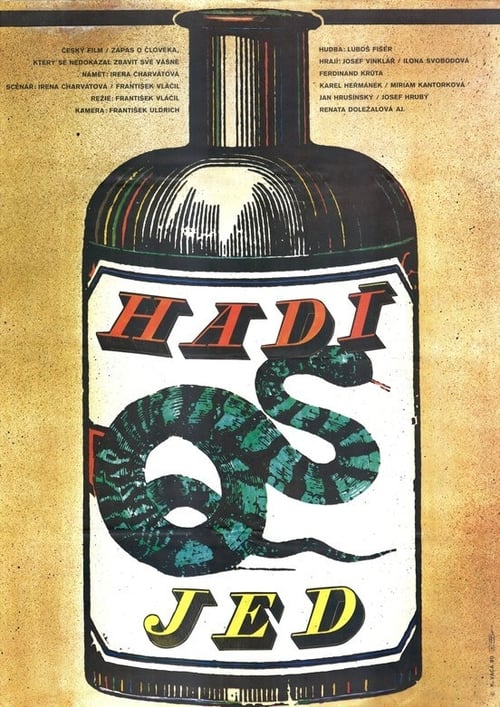
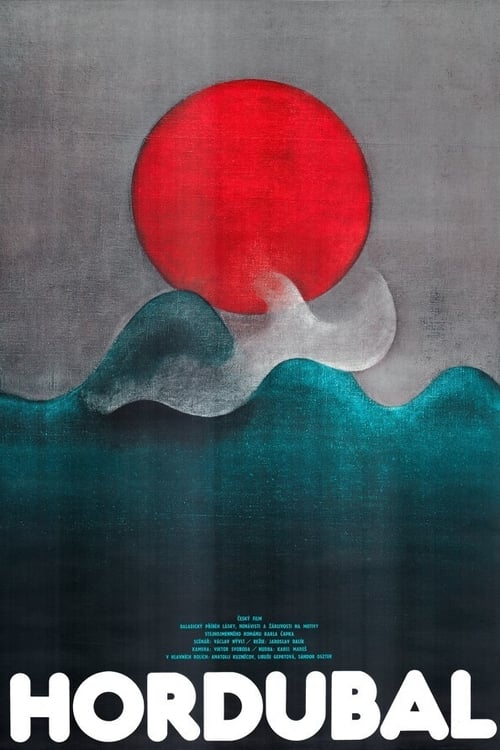
After five years of hard work in America Juraj Hordubal (Anatoliy Kuznetsov) returns back home. He is looking forward to his wife Polana (Libuse Geprtová) and his little daughter Hafie. The family and the village welcome him with hesitation. Everybody believed that Juraj died in America because Polana stopped receiving money from him already two years ago. Polana's farm was prospering first of all thanks to the young stable boy Stepán (Sándor Oszter). Men in the pub first indicate and then say to Juraj directly that Polana has been unfaithful to him with Stepán.
Mr. Novak tells a lie to his neighbor Mrs. Bartackova that her husband is unfaithful to her and that is how it all started.