Acting
No description available.
The catastrophically dry weather of 1947 causes immense problems in the countryside. In the small village Klícov, only farmers Hánek and Bervida and the old Hromádka have water. The others must queue every day for a drop for themselves and their cattle. All the villagers lament over their previous decision to turn down the cooperative chairman Kouba's proposal to built a new village water-supply system.
It is the 1930s. Physician Bartos devotedly attends poor patients in the city suburbs, at the same time researching the possibilities of regeneration of human tissues after transplantation. His former colleague Rosen, now working as an assistant at the private clinic of surgeon Kirchenbruch, considers the research a mere utopia. The disappointed Bartos, trying to verify his theories, therefore accepts the outrageous proposal of Marion, owner of a brothel - to surgically replace the face of her lover, the wanted thief Cutter, with the face of murdered Father Hopsasa. Bartos is well paid but his successful operation remains a secret.
Film shows the struggle of the Czechoslovak armed forces against groups of Ukrainian Insurgent Army (UPA) under command Burlak, who tried to pass through the territory of Slovakia.
A ballad story from the life of the inhabitants of the Moravian Beskydy Mountains. The heroine is a young woman, Františka Plesníková. Františka's lover was killed by a falling tree before he could marry her, and the girl faced the bitter fate of a "roll" of illegitimate mother. Františka fought with all her might for a better life for her son Metúdek. For his sake, she eventually married an old widower farmer, Podešva. However, she soon realized that her marriage had not benefited either herself or her child.
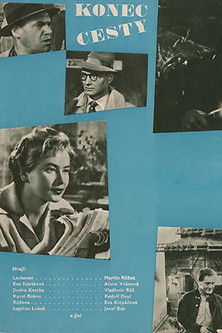
Josef Lachman, once a security officer, serves twelve years for aiding an SS fugitive’s escape. Upon release, he works as a driver on a dam project, hunting buried English pounds Meyer told him about. With miner Rokos’s help, he retrieves the cash and hides it with his daughter Eva, but she spends some at Tuzex, Rokos blackmails him, and they discover the notes are WWII forgeries.
The Emperor's mismanagement of his country is provoking some in his court to plot to overthrow him. He feels successful, at least, when he discovers the legendary Golem, which he believes can protect him and even cure his imaginary illnesses but, when he disappears while on a bender, his kindly baker, who looks just like him, is mistaken for him, and begins to put things in order. However, the conspirators, not to be outdone, determine to bring the Golem back to life to do their bidding.
The Czech revival movement is divided at the end of the first half of the 19th century. While the older generation, such as František Palacký, urges restraint, students lean towards radical positions. A report on the revolutionary events in Paris prompts Czech Prague residents to write down the demands of the Czech nation for self-determination and the proclamation of a constitution. Tensions peak during the All-Slavic Congress in Prague's Žofín. Vienna rejects the Czech demands and the congress is brutally dispersed by the Austrian police. Prague begins to build barricades...
In the last days of the war, American planes bomb a synthetic gasoline plant in the Sudetenland. The workers are then faced with the enormous task of building a new plant on the site of the ruins and starting production. Their efforts are truly bearing fruit - after immense sacrifices, Stalin's plants are back in full swing, which is something that competitors abroad don't like to see and they try to use the reaction to liquidate the production of synthetic gasoline...
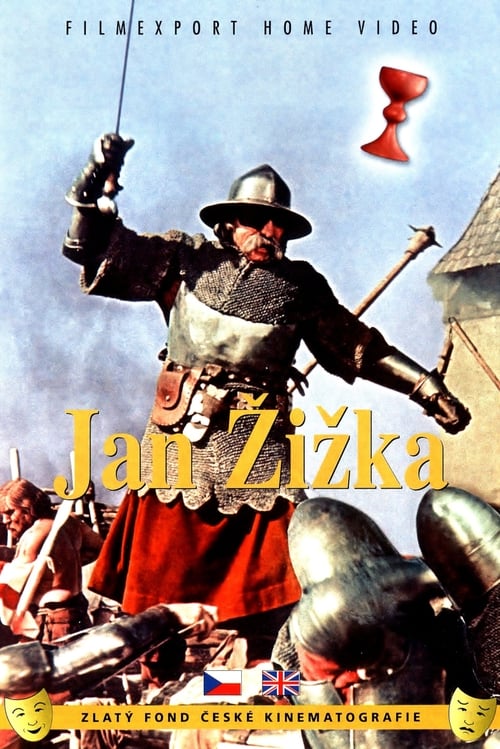
The second part of the revolutionary Hussite trilogy takes place in the years 1419-1420.
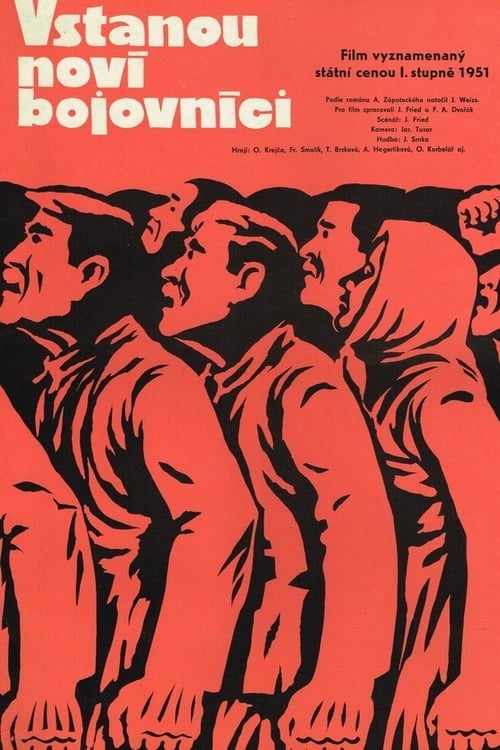
A socialist drama from the time of the February coup. The owner of the brickyard will use several workers before February in order to subvert worker solidarity and continue to do his black business. However, the vigilance of a young, aware worker prevents him from doing so.
Matylda, who lives in the Czech countryside, is trying to arrange burial plans for her dying husband, Jan. While Matylda hopes to have a funeral for Jan in the small town where they once lived, there are complications. Years earlier, Jan spoke out against the Communist government and was consequently expelled from the town. When Matylda fails to convince a local politician to allow the ceremony, she uses her husband's funeral as a public show of dissent.
An outdated fireclay factory is due to close, but its long-time employees can't imagine stopping what has fed them all their lives and what they do best...
A biographical film about the famous Czech painter Mikoláš Aleš, portrayed as part of the vanguard of the working class and a spokesman for the oppressed, who asserts himself despite the opposing bourgeoisie and reactionaries of all kinds. The film focuses on the period when Mikoláš Aleš participated in the competition to decorate the National Theatre.
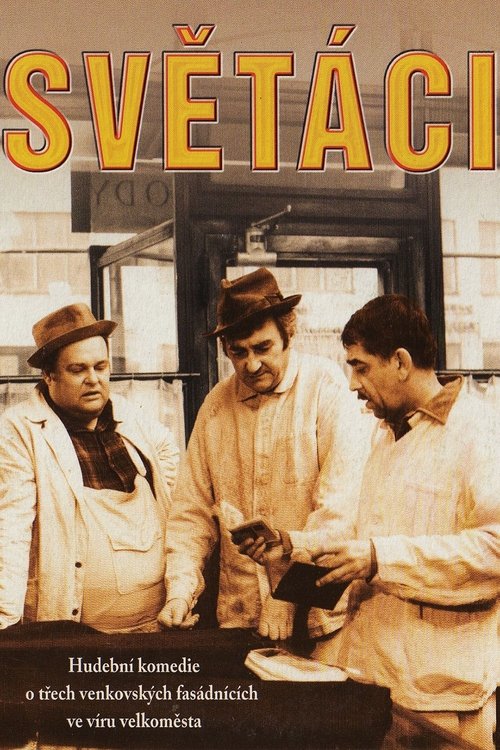
Two families live in a weaver's cottage - the Menecs and the Hroms. The women are pretty from the start. Musicians come, inviting fellow weavers who play in Menec's band to the May Day festival. Wanderers wander through the region, encountering a procession on their way. The police disperse it, so the men, who have various professions, join the wanderers. They wander around the world until they reach a tavern, where they get food and a bed. An old spinning wheeler composes a song at the request of one wanderer, inviting everyone to a "wanderer's convention". And so they get together and play together...
The leader of the emerging organized labor movement in the 1880s, Ladislav Zápotocký-Budečský, is exiled to his native village, where he works as a tailor and continues to raise social awareness among members of the working class.
The unfortunate 1930s also befell the student Standa Půlpán. For existential reasons, he had to abandon his studies and entered the mines. However, he only slowly and with difficulty became close to the older miners, rough men who were closed in on themselves. Only his brave stand in rescuing people who were trapped in a mining accident will win him the solidarity of the entire mining collective. Even Karel Čapek's draft once lent itself to promoting an exacerbated class interpretation of social relations.
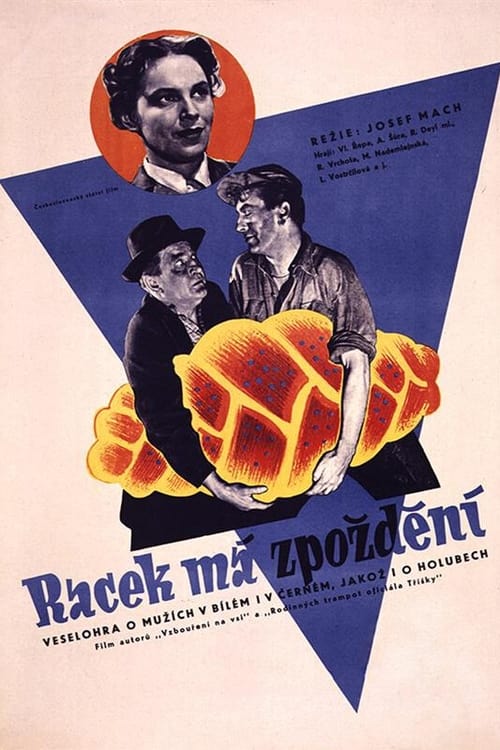
Baker Jan Racek (Vladimír Repa) is a very hard-working and sensible man. His great passion is pigeon-keeping and also, for many years, Ruzenka (Ludmila Vostrcilová). They are going to get married but Racek is busy waiting for the pigeons' return and misses the wedding. The engaged couple is already getting a little older so the otherwise kind Ruzenka gets very angry at this and gives Racek an ultimatum - it's going to be her or the pigeons.