Acting
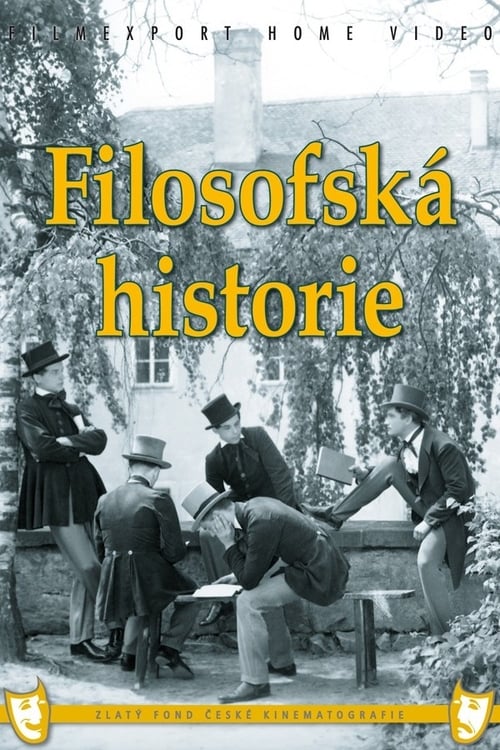
A student rebellion precedes revolutionary events in Prague.
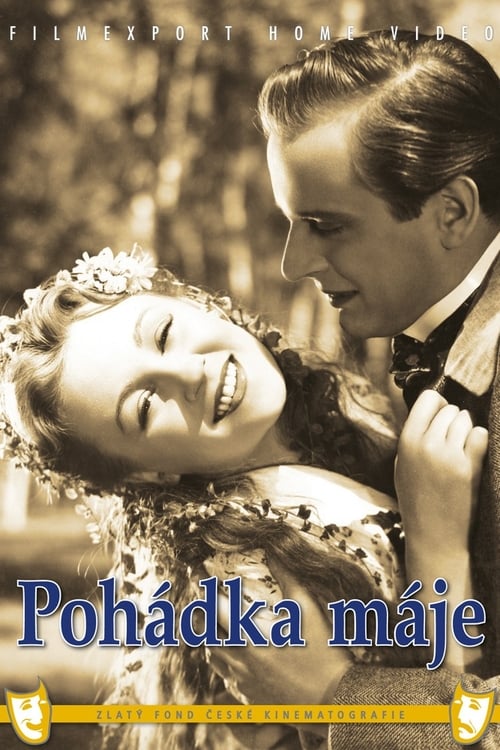
Ríša, a student of law, neglects his studies in favour of parties and pranks. His angry father refuses to continue helping him out of his debts. Ríša, however, is not entirely beyond hope. He decides to go and stay for a while with his uncle, a priest, who lives in Moravia, in order to prepare for his exams. He meets Helenka, the timid daughter of the local gamekeeper, at a village ball and is enchanted by her. The days pass and their idyllic relationship begins to tire Ríša. He begins to tell Helenka about his former debauched life the about the broken hearts of beautiful women. Helenka is hurt and refuses to see Ríša anymore. His uncle, the priest, is incensed at his behaviour and orders his nephew out of the house. Ríša tries desperately to find Helenka so he can make it up to her.
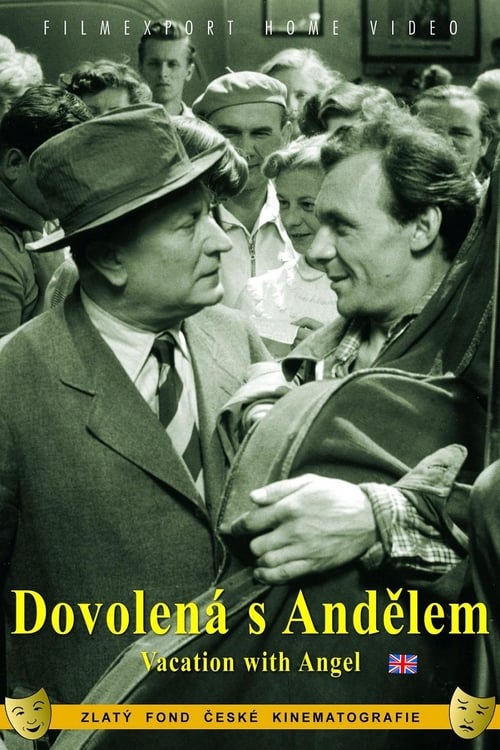
Strict and always dissatisfied grumbler Mr. Angel gets a voucher for summer recreation. He rejects it at first but he eventually decides to use it and spend 14 days in unionist hut Jezerka together with other merited co-workers.
Ten-year-old Martin attends religion at school and is always an altar boy at church. That's the wish of his mother Anci, a bigoted believer. However, Martin encounters hypocrisy at every turn and begins to doubt that God exists. His older brother Eda steals money from his father with impunity, his father steals materials from the cooperative building, and even Martin's best friend Kovajs "sins" without scruples. Pastor Hornof tries in various ways to maintain his influence over his sheep, but is hindered by people with a "progressive" socialist mindset. When Martin's beloved Angora rabbits, who have done nothing wrong to anyone, die, the boy's faith is clear. He decides to join a pioneer organisation. All that's left is to keep it a secret from his mother...
No description available.
The likeable and charming Vanda Karhanová has problems in every job because of her appearance. So when she is about to start a new job, she decides to decisively prevent similar problems. She adjusts and dresses in a way that men do not notice her and do not pay attention to her. She has no idea that she will cause even more problems for herself, and not only because she now bears an uncanny resemblance to the millionaire Czech-American Ruth Baretová, who ran away from home to avoid getting married. First, Vanda is mistakenly arrested and ends up in the police station, so she cannot return to work. At the factory, they suspect her of having disappeared with a large sum of money that they had entrusted to her to deposit in the bank. Then the whole situation is complicated by the arrival of the real Miss Baretová.
Gabriela Tuzarová still loves her husband Petr very much, even though he has cooled off towards her. Petr is an accountant in a printing house. He secretly speculates on the stock market and maintains a relationship with the owner of the company, Šeborová. He speculated on Gabriela's dowry and thirty thousand crowns, which he borrowed from the company treasury. The famous conductor Štěpán Tuzar, Petr's brother, arrives in Prague. Štěpán is enchanted by Gabriela...
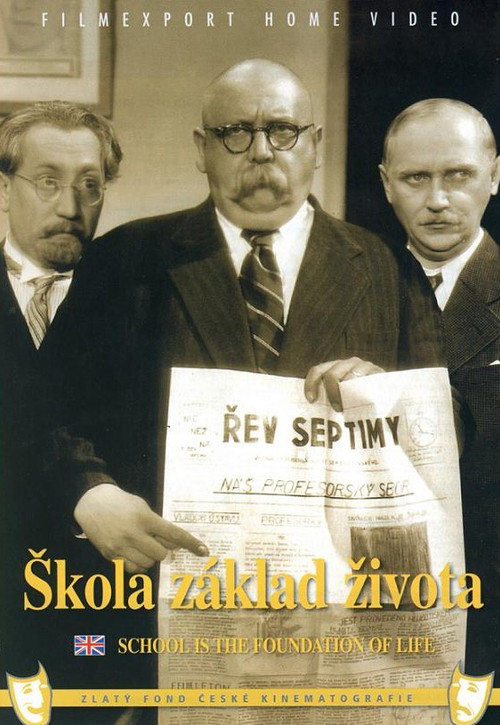
Seventh form pupils at a grammar school in Přívlaky are preparing for a secondary school sports competition. Class creep Krhounek gives the class teacher Lejsal a copy of the seventh form’s magazine Roar. Most of the teachers insist on severe punishing the culprit. The author does not own up and consequently the whole class is punished by being banned from taking part in the schools competition. The most gifted pupil, Benetka, rather sharply criticises the school in a homework essay on a subject of his choice. The strict Czech language teacher is convinced Benetka is the author of the school magazine. Benetka denies the charge but his expulsion from school is proposed anyway on account the views he expounded in his essay. Eventually, Boukal, the author of the school magazine comes forward and admits to writing it. The pupils are allowed to take part in the contest and thanks to Benetka they win. In the meantime however the teachers vote to expell him.
Factory owner Pardon, meets Olga, daughter of clairvoyant Stefanie Lesczynska at a ball. Their brief acquaintance is interrupted when Olga and her mother have to leave. Fifi Hrazánková has her sights set on the elligible Pardon. Pardon asks his Uncle Cyril Ponděliček if the girl could take over his position at work so that she may be dissuaded of her amorous intentions. Fifi seduces Pondělíček. In the meantime, Pardon meets Olga and Stefanie again by chance and offers them a place to stay at Ponděliček’s while Pondělíček passes himself off as Pardon.
The doomed love of a city girl caught in the vise of poverty is detailed in Vavra’s fluid, romantic work, one of the most elegant creations of the Czech Modernist era... The film lingers over its characters’ habitats and haunts, finding psychological truths in what each owns or desires, and countering every Hollywood-ready scene of gleaming restaurants and dazzling penthouses with realist moments of employment lines and crammed flats. Vavra’s classical camerawork and aura of romantic defeatism give Virginity a force comparable to the master of this genre, Hollywood’s Frank Borzage. (BAM/PFA)
Věra accepts the offer of her friend Kajetán, who arranges a position for her in Dominik's puppet factory. The spirited girl impresses her employer, Antonín Dominik, so much that he falls in love with her. Dominik's mother notices her son's interest in Věra and immediately fires her. Kajetán, who works in the studio of sculptor Výr, who is engaged in the production of mechanical puppets that can be used to advertise goods, asks Věra for help...
An old peasant from Chodský, Záhor, claims to the young Podestát that he returned three hundred gold pieces to his father before the old Podestát died. Out of greed, Záhor even decides to perjure himself in court. The indignant creditor warns him of God's wrath. Záhor's sons, Matěj and Vondra, are vying for the same girl - the daughter of a blacksmith, Nana.
After an attack against the guard of the Third Reich, Nazi repression intensifies, and the Czechoslovakian resistance's organized sabotage in an aircraft factory leads to Gestapo shootings.
This castle has its own ghost - a mysterious White lady. She emerges from the painting on the wall when someone speaks out magic formula. White lady is good ghost, she can make someone's wishes true. Even if it is a new duct. But a miracle is not the thing that Communist leaders want in the town.
Adam Kavalír returns from abroad to take over the family factory from his father. But as a consequence of his father's bohemian lifestyle the business is so far in debt that the Kavalírs even lose their villa and must find a place to sublet. Mrs. Trojanová is no longer up to managing her pension, the co-owner of which is none other than her peevish daughter Eva, and she is looking for a capable manager. Adam applies for the position and is accepted.
A Czech fairy tale about a princess named Lada who runs away from home in a mouse fur disguise in order to escape an unwanted and forced marriage.