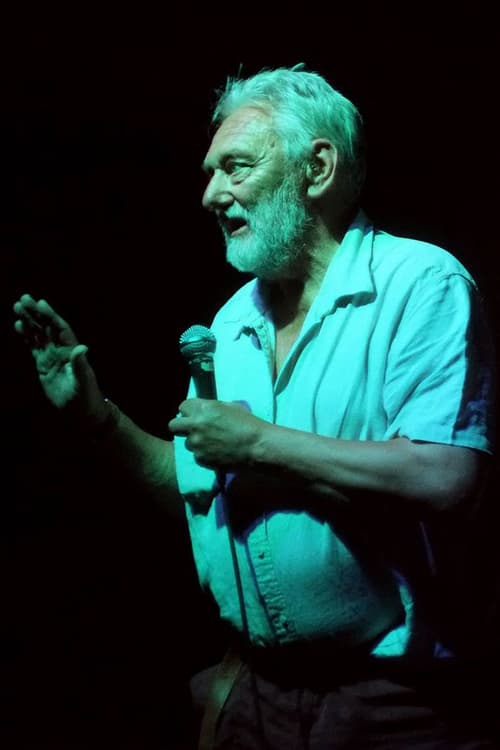
Malcolm Le Grice
Directing
Biography
Born in May 1940, Malcolm Le Grice started as a painter but began to make film and computer works in the mid 1960's. Since then he has shown regularly in Europe and the USA and his work has been screened in many international film festivals. He has also shown in major art exhibitions like the Paris Biennale No.8, Arte Inglese Oggi, Milan, Une Histoire du Cinema, Paris, Documenta 6, Kassel, X-Screen at the Museum of Modern Art, Vienna, and Behind the Facts at the Fondacion Joan Miro, Barcelona. His work has been screened at the Museum of Modern Art, New York, the Louvre Museum in Paris and the Tate Modern and Tate Britain in London and is in permanent collections including: the Centre Georges Pompidou, Paris; the Royal Belgian Film Archive, Brussels; the National Film Library of Australia, Canberra; German Cinamatheque Archive, Berlin; Canadian Distribution Centre, Montreal and Archives du Film Experimental D'Avignon. A number of longer films have been transmitted on British TV, including 'Finnegans Chin', 'Sketches for a Sensual Philosophy' and 'Chronos Fragmented'. His main work since the mid 1980's is in video and digital media and includes the multi-projection video installation works 'The Cyclops Cycle' and 'Treatise'. Le Grice has written critical and theoretical work including a history of experimental cinema 'Abstract Film and Beyond' (1977, Studio Vista and MIT). For three years in the 1970's he wrote a regular column for the art monthly Studio International and has published numerous other articles on film, video and digital media. Many of these have been collected and recently published under the title 'Experimental Cinema in the Digital Age' by the British Film Institute (2001). Le Grice is a Professor Emeritus of the University of the Arts London where he is a collaborating director with David Curtis of the British Artists Film and Video Study Collection.
Known For
An anthology of one-minute films created by 51 international filmmakers on the theme of the death of cinema. Intended as an ode to 35mm, the film was screened one time only on a purpose-built 20x12 meter public cinema screen in the Port of Tallinn, Estonia, on 22 December 2011. A special projector was constructed for the event which allowed the actual filmstrip to be burnt at the same time as the film was shown.
60 Seconds of Solitude in Year Zero
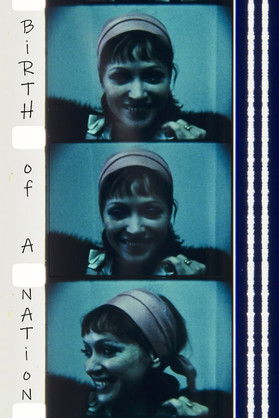
Jonas Mekas assembles 160 portraits, appearances, and fleeting sketches of underground and independent filmmakers captured between 1955 and 1996. Fast-paced and archival in spirit, the film celebrates the avant-garde as its own “nation of cinema,” a vital community existing outside the dominance of commercial film.
Birth of a Nation
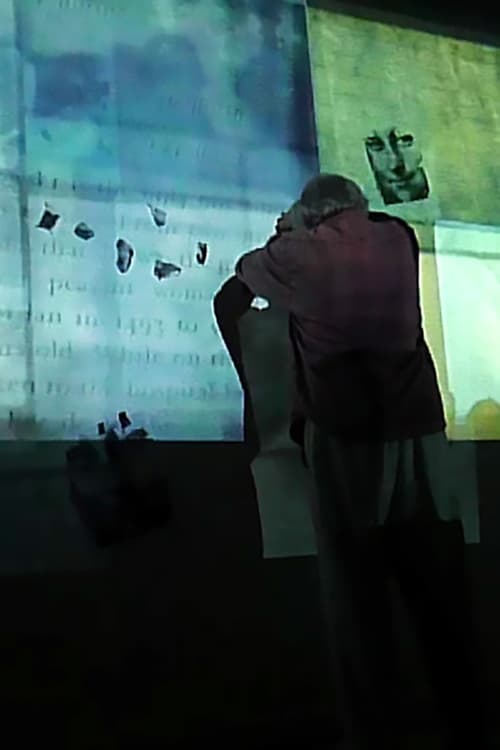
"This installation or performance work puts my own earlier film of the Mona Lisa (1973) through another stage of transformation – my own irretrievable self of some 34 years ago is now also part of the subject I first saw the ‘actual’ ‘Mona Lisa’ when I was about thirteen. Of course I had seen dozens of reproductions in books and postcards by then and the popular mythology of the enigmatic smile was already well engrained in my mind. My strongest impression, as I recall, was how small and unsurprising it was – a heavily protected cultural icon – no longer really a picture – and I was much more excited by the painting of the distant landscape than by the face. My own ‘version’ of ‘la Giaconda’ was never an homage, nor like Marcel Duchamp’s ‘L.H.O.O.Q’, an attack on its cultural power. Instead it came from a fascination with change and transformation – maybe also with arbitrary appropriation." Malcolm Le Grice
Eighteen fragments from Malcolm Le Grice’s After Leonardo
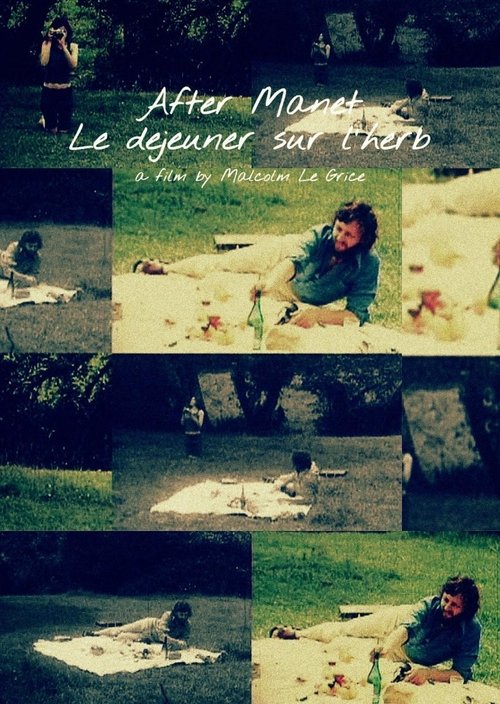
Le déjeuner sur l’herbe is simultaneously perceived from four different camera positions in a work which engages with the pro-filmic in order to question documentation, illusion and the film viewing process.
After Manet, After Giorgione – Le Dejeuner sur l'Herbe or Fete Champetre
Several well-known and pioneering abstract filmmakers discuss the history of non-objective cinema, the works of those that came before them and their own experiments in the field of visionary filmmaking.
Abstract Cinema
Documentary about British Art in the 60's produced by the BBC starting with Fraser and Kasmin, moving to the modern sculpture movement lead by Caro largely at Central Saint Martins, and finishing with political and performance art in London.
Art & the 60s

Two fragments of 8mm home-movie footage shot by the artist near Berlin weave together in repeating cycles of action, temporal manipulation, and colour distortion, heightening the viewer’s awareness of film-time and the film-image, and perception of colour in motion.
Berlin Horse
A video work based on video8 and hi8 material shot over six years. Chronos is the Titian – the time god who rules the universe – the flux in which events are born, mature and decay. The work explores video as a creative form of memory, it moves outwards from the particular and personal images of a diary – the fragmentary and inconsistent building blocks of memory – towards their transformation into more fundamental symbols in the cycles of days, seasons, birth and death. This transforming symbolic memory is all placed in the context of the social and political events of the world – particularly China and the Balkans – as they are encountered in the personal space.
Chronos Fragmented
Home movies shot on Super 8mm by W+B Hein over 10 years.
Home Movies 1971-81
First titled Jazz Punk, this work is based on a series of drawings I made over a number of years of heads inspired in part by punk styles. These were scanned into the Atari and manipulated through the programme in various ways. The music is generated by the same programme and is intended to evoke an atmosphere of a jazz/punk night club. In the original computer version I played part of the sound live from a keyboard into the computer (though the MIDI port). This input slightly modified, interactively, the development of the programme. The tape version was edited from one of the ‘performances’.
Heads I Win Tails You Lose
When I reviewed the video material it reminded me of a theatre performance which I recalled as “A Lecture to an Academy”, given by Tutte Lemkow at the Arts Lab in Drury lane in 1968. The performance was a translation of Kafka’s "Ein Bericht für eine Akademie". The resulting video work is about the giving of voice - its internal and external experience - the predictive moment before a word and short term memory after it - immediate past and near future mixing with the present/presence.
Lecture to an Academy
Directed by Malcolm Le Grice. "It nears the end of the political paranoid works using found military documentary images. It explores a complex form of loop permutation in both the image and sound track."
Reign of the Vampire
Self Portrait looks for an approach to a specific relationship between the duration of a work and material conditions in the projection as did William Raban in the film-performance Take Measure. The main difference is that Raban’s work was made when cinematic media had distinct physical properties linking medium directly to image - this self portrait recognizes that there is no such simple materiality for cinema following the emergence of digital processes. Instead the work takes a conceptual base – the speed of light and the time taken for light to travel from the sun to illuminate objects on earth –thus the duration of 8 minutes 20 seconds.
Self Portrait After Raban Take Measure
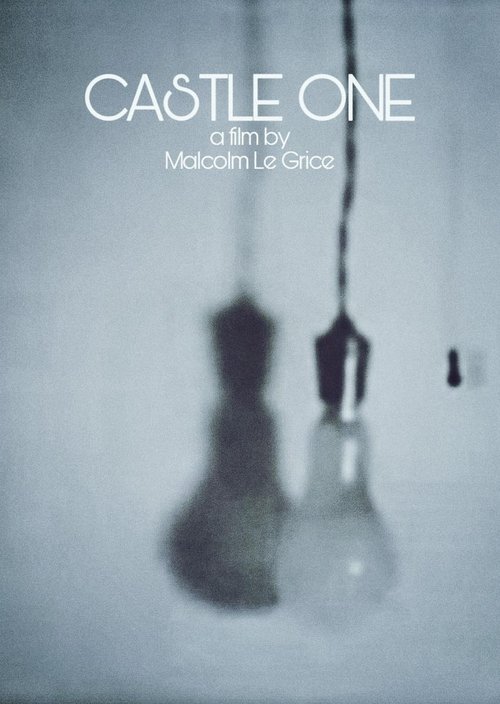
A film made with found newsreel footage combined with sequences of a flashing light bulb. It is projected with a real flashing bulb hanging in front of the screen as a film performance.
Castle One (The Light Bulb Film)
An allegory for the passage from being alive to being dead. The cyclops is the one-eyed father - the one-eyed king in the land of the blind - the single lens of the camera - three screens beyond stereoscopy.
Even a Cyclops Pays the Ferryman
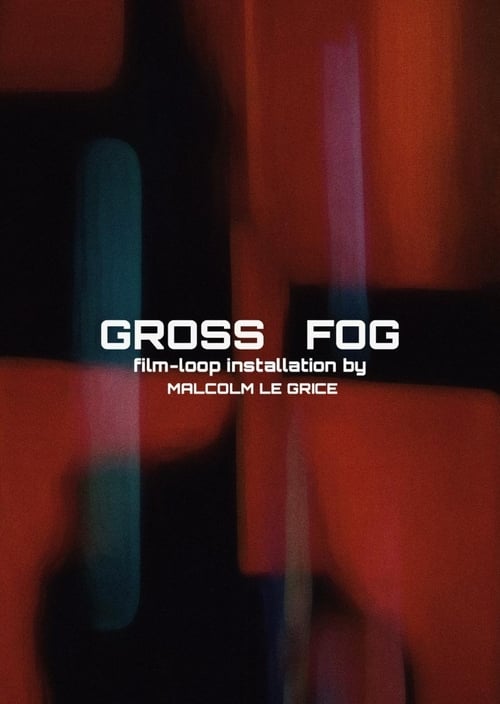
Loops. "A four screen film projection onto four vertically placed screens, which span the gallery space from floor to ceiling. The wall surface is transformed into a rippling column of colour, accompanied by a soundtrack of running water. First shown as part of the Film Action and Installation show at Gallery House, London, in March 1973.".
Gross Fog
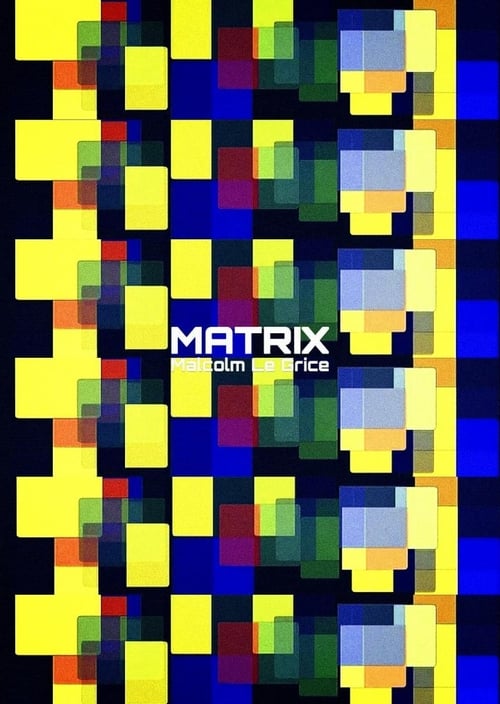
Abstract art film made for gallery exhibition.
Matrix
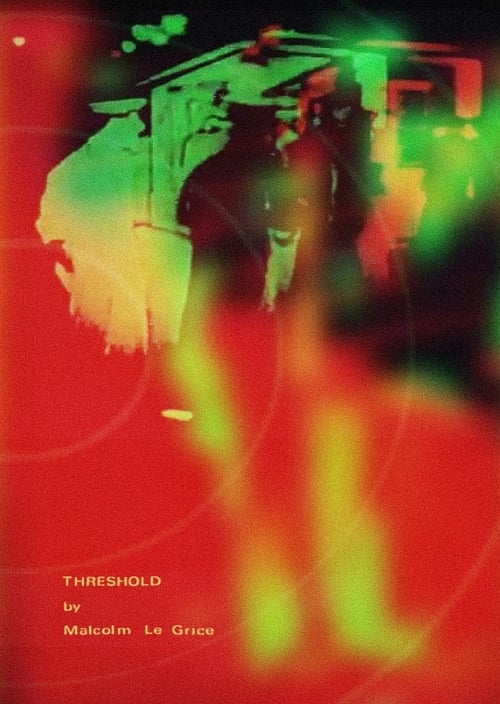
Le Grice no longer simply uses the printer as a reflexive mechanism, but utilises the possibilities of colour-shift and permutation of imagery as the film progresses from simplicity to complexity… With the film’s culmination in representational, photographic imagery, one would anticipate a culminating “richness” of image; yet the insistent evidence of splice bars and the loop and repetition of the short piece of found footage and the conflicting superimposition of filtered loops all reiterate the work which is necessary to decipher that cinematic image. - Deke Dusinberre
Threshold
The travelogue footage that appears here – the landscape rushing by, fragments of cityscapes, figures in cafes, forests, and beaches – is reminiscent of other videos made by Le Grice since the 1990s. The sense of foreboding is unique though. It comes across in the colours of the superimposed imagery: principally cold blues, a furnace-like orange and acid tones. The sound is similarly evocative. One might hear it as a rushing waterfall, a storm, or perhaps the sound of nuclear fallout as suggested by the title. The sublime, which Le Grice has often courted in his video work, is an apocalyptic variant in Strontium.
Strontium
The first of these is the simple domestic task of washing dishes, and the second is the aesthetic task of filming the first task. I, the filmmaker, am the protagonist in both acts, controlling the two cameras, which record the action. - M.L.G.