Acting
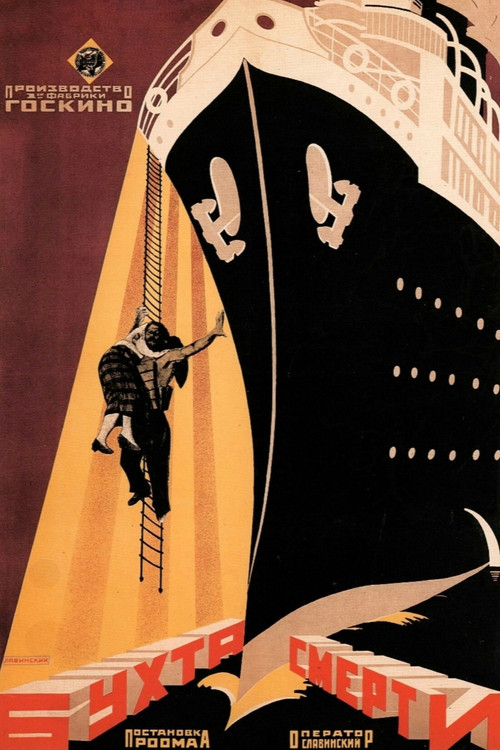
A machinist on a Navy ship has two sons, both bolcheviks. When the revolution comes the Tsarist police captures the machinist to put pressure on his sons.
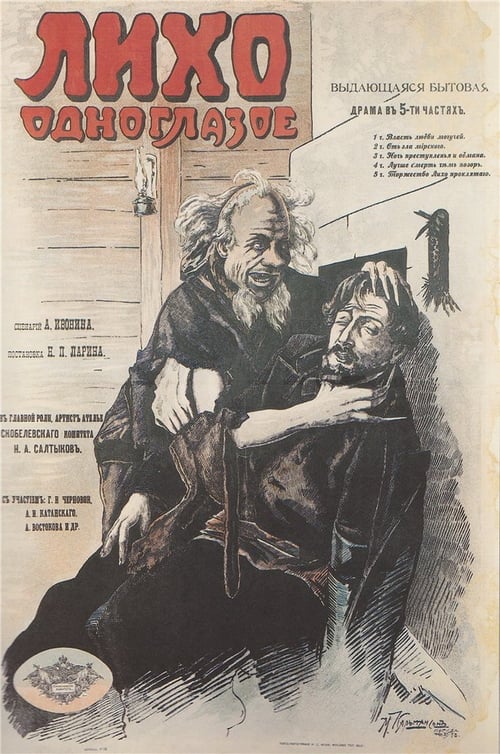
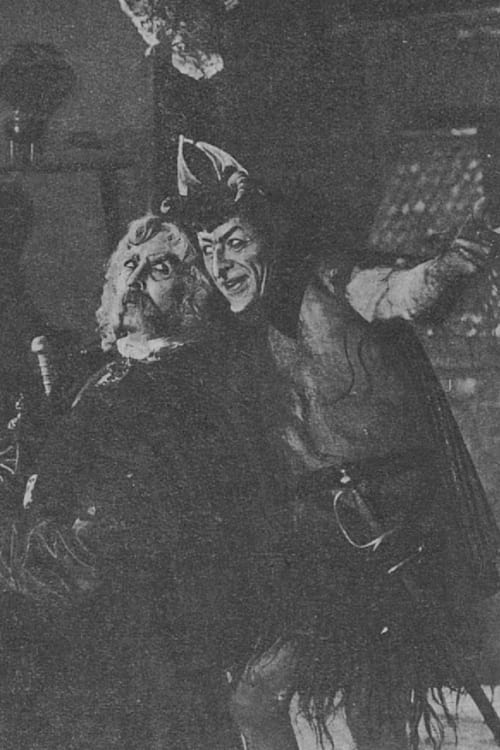
The plot is the embodiment of everyday belief about the impact of a certain evil force on a person. The action develops in a peasant environment.
People's drama. The movie has been preserved without inscriptions.
The first Ukrainian adventure detective story. The action takes place in Odesa in 1920, occupied by Denikin's troops. The White Guard counterintelligence conducts a fruitless search for the Bolshevik agent "7+2". The search is led by officer Enger. Dizzying races, disasters, and murders further confuse the agent's trail. It is only with the arrival of the Bolsheviks that the case is solved. Incompletely preserved
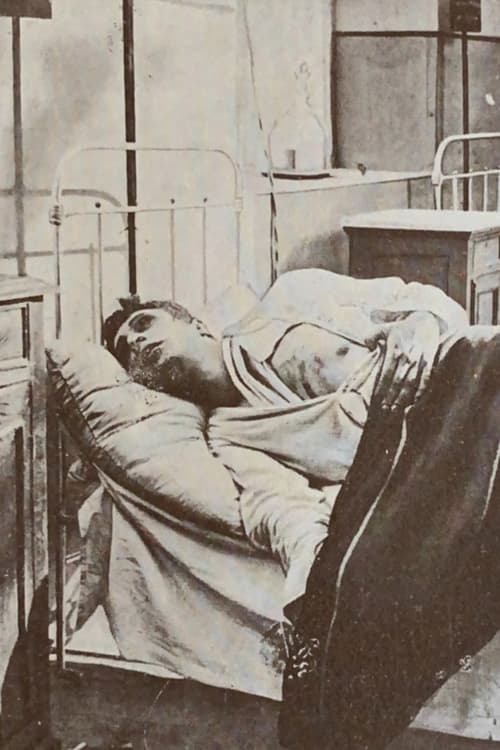
A documentary fiction propaganda film about the famine in Ukraine in 1921-1922. Among the causes of the catastrophe, in addition to drought, the film mentions the consequences of revolutionary events. It shows swollen children, destroyed factories and plants, burning villages, dead cattle, and a number of actions aimed at helping the victims: the work of the Commission for the Relief of the Starving under the All-Ukrainian Central Executive Committee, the organization of feeding stations, workers donating their three-day salary to help the famine victims, etc. The very first film made in Odesa under the auspices of the newly founded VUFKU in nationalized pavilions that until recently belonged to film magnates Kharytonov and Borysov.
No description available.
A film reenacting scenes from the life of Russian Orthodox Priest and anarchist Georgy Gapon.
The Government of the fictional country Norland has unleashed a war with the neighboring Galikania and is suffering one defeat after another. A group of conspirators who were dissatisfied with this state of affairs, led by the Social Democrat Frank Frey arrange a coup to overthrew the emperor of Norland. But the working class does not like the new order either. Workers expose Frank Frey's policy of continuing the war and a revolution breaks out in the country. The leader of the socialist revolution becomes a mechanic of the name Franz Stark.
Mid-19th century. An elderly landowner, bored with life, organizes balls, hunts, fistfights, and banquets. Among other things, he offers his serfs and serf women to his guests for sale or entertainment. One of them, Vanka Krasnov, dreams of marrying the noblewoman Aksyusha. To do so, he must defeat the village strongman Mitka in a fistfight. But even after a fair victory, the landowner himself tries to take possession of Aksyusha. Vanka must challenge the master himself. Considered lost.
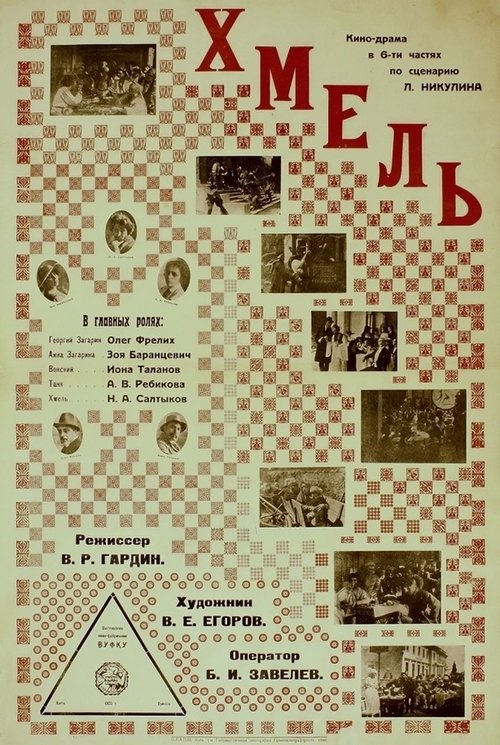
Revolutionary melodrama based on Lev Nikulin's story "Хміль". 1917. The main character of the film - a "bourgeois intellectual" - does not sympathize with any side and avoids revolutionary events. However, as a result of a series of adventurous adventures, love intrigues and communication with the people, he goes over to the side of the proletariat.
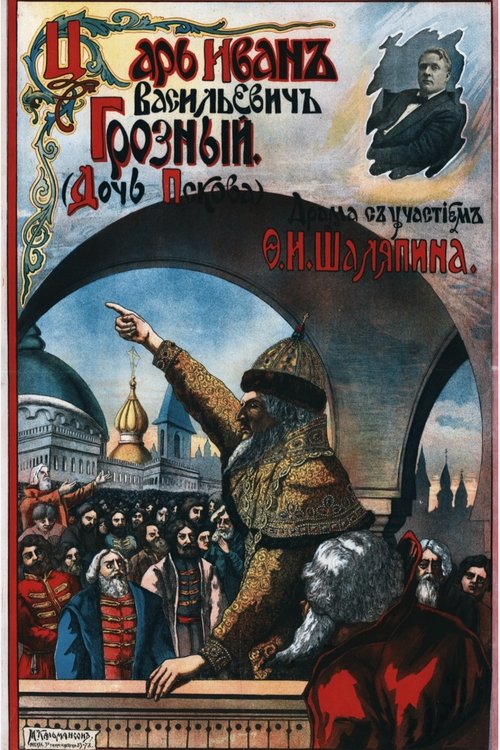
This film was a true peculiarity, a filmed version of the great Feodor Chaliapin in one of his most famous roles; the fact that it was a silent film, with title cards, meant that audiences could only appreciate his acting. Another curiosity is that the film also included a minor role enacted by Richard Boleslavsky, who in 1932 directed “Rasputin and the Empress.”(9)