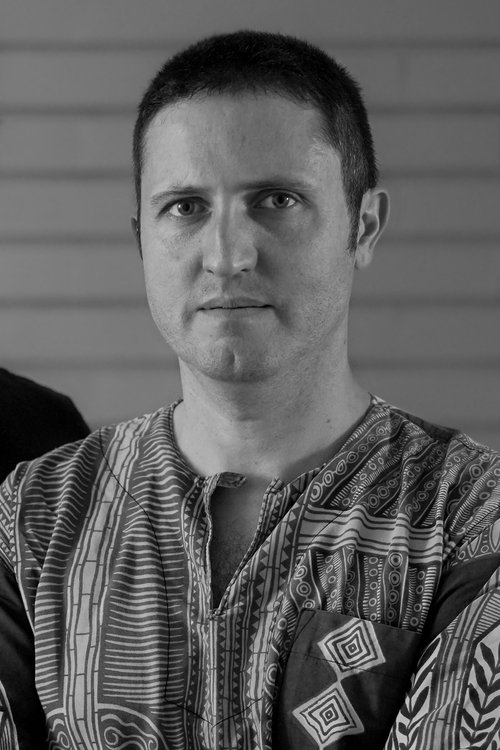
Michele Manzolini
Directing
Biography
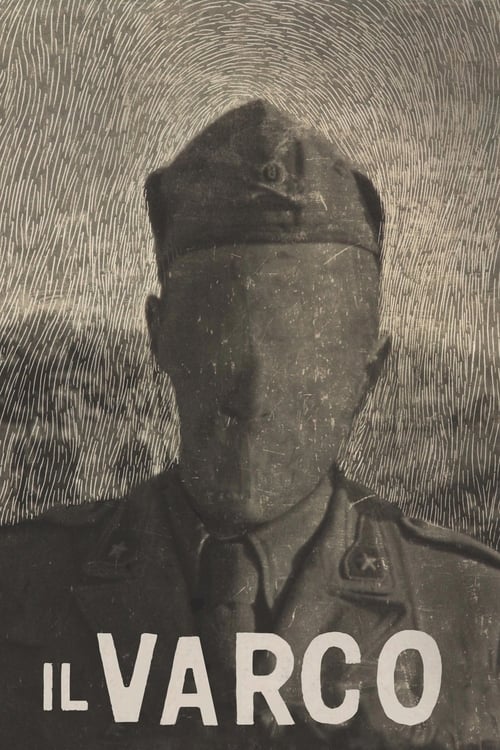
Michele Manzolini was born in Sondrio in 1980, he studied communication sciences at the University of Bologna, at the Universidade do Minho in Portugal and at the Universidade Federal do Rio de Janeiro. He is a director, producer, writer, screenwriter. In his 11-year career as a director he directed Il Varco: Once More Onto The Beach, The Train to Moscow and Merica.
Known For

July, 1941. After the beginning of the German invasion, an Italian soldier, a veteran of the colonial wars, is sent to the Soviet front. As he remembers the fairy tales his Russian mother used to tell him, the train he is travelling in crosses Europe on its way to the vast Ukrainian plains, where the enemy and a cruel winter await him… (Based on the experiences of several Italian soldiers.)
Once More Unto the Breach

In the aftermath of Stalin’s death, three Italian communists engage in a trip to the Soviet Union to challenge their utopia with an 8mm camera. In 1957, Sauro, Luigi and Enzo all live in Alfonsine, a small town in Italy ruled like a miniature Soviet Union by the Italian Communist Party. As many communists in the West, they dream of the Soviet Union, and hope for the great Revolution. But with the wind of reform and self-criticism blowing through the Eastern Bloc after the death of Stalin the image of the Soviet Union as the workers’ paradise begins to crumble. They therefore decide to travel to the USSR to find out what is true and what is false in this supposed land of milk and honey. They film their entire journey with their 8mm camera. Through this invaluable personal archive, our film tells the hopes, disappointments and challenges of three young men faced with the reality of what seemed to be a utopia come true.
The Train to Moscow

Six stories from Italian Islam. As in the rest of the country, in Bologna, intolerance and attempts at dialogue coexist, ghetto neighborhoods and second generations fighting, crime and everyday life.
The Enemy Within

25 million Brazilians are of Italian origin. Almost all of them are the descendants of the Italians who left poor rural Italy at the end of the 1800's for a continent which promised riches and a better life. After only a century however, the direction of migration has been completely reversed. Italy, a century ago the place to escape from, has in time taken its place in the first world, the longed for final destination of immigrants throughout the world. The only thing which does not seem to change is the plight of those forced to migrate.
Merica!

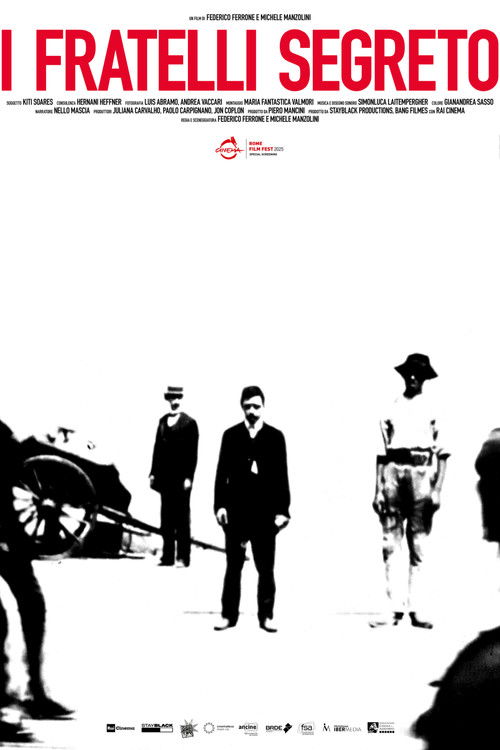
1882: the steamship Savoy sails across the Atlantic Ocean bound for Rio de Janeiro. On board, among the hundreds of Italian immigrants crammed into third class, there are two brothers from Campania who have escaped poverty and are seeking fortune in the New World: Pasquale and Gaetano Segreto. Their younger brother Alfonso, who will join them in 1898 with a Pathé camera, will be one of the pioneers of Cinema, the first to shoot films in Brazil. In a short time, at first selling newspapers and living by their wits, the brothers will become successful entrepreneurs, founding newspapers, amusement parks, cinemas and theatres. But their relationship, over the years, will slowly crumble. After Pasquale's death, a huge fire will definitively put an end to their dream and their empire.
I fratelli Segreto

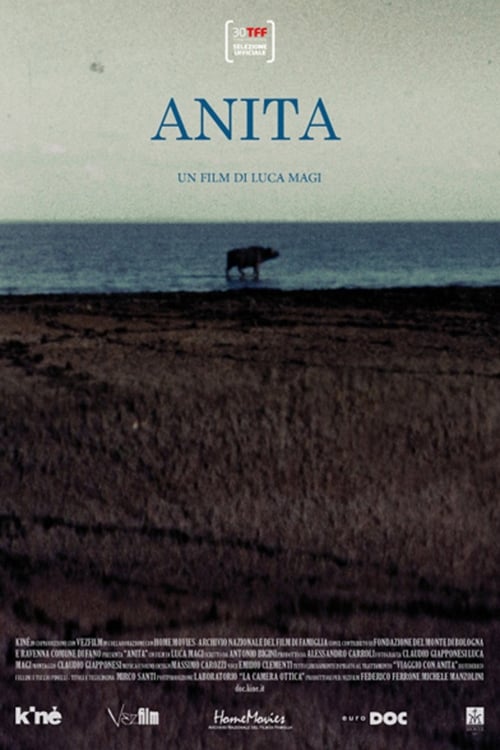
Inspired by Federico Fellini's unrealised film 'A Journey with Anita', the director bring us into a secret Italy, far from the usual tracks, chasing the story of Guido and Anita, the two protagonists, and their journey in order to reach Guido’s father deathbed. The result is a film full of encounters, amazing stories and characters found out in each and every place all along the two lovers' imaginary journey. A charming directing debut, visually impressive, which originality is especially due to a powerful use of found footage.
Anita

A symphony of home movies filmed on the 9.5mm format of the Pathé-Baby.
9 ½

A nocturnal journey inside the abandoned spaces of the former Collegno mental hospital. Through the writings from within - the voices of the letters, diaries and testimonies of the internees - the labyrinthine and crumbling rooms come back to life and evoke the painful past of the psychiatric hospital. They tell of the electroshocks and tortures on adults and children carried out by Doctor Giorgio Coda, the "electrician" from Collegno. They tell of the official trial against him for torture and of the proletarian trial that Coda suffered at the hands of a Prima Linea group, led by one of his "patients". Only at dawn, with the story of the closure of the mental hospitals, will we see the light again.
Scritti dall'interno

The Rostom is an overnight shelter for the homeless, located on the outskirts of Bologna. It appears like a ghostly moon base in the middle of the countryside, where beams of neon light draw the profiles of insomniacs, who in the middle of the night get up and go out for a smoke or a chat. Weaving the threads of their stories is David, an Englishman who has been wandering the world for seven years and has landed at Rostom exhausted and eager to get back on his feet and tell his story