Directing
Polizeiruf 110 is a long-running German language detective television series. The first episode was broadcast 27 June 1971 in the German Democratic Republic, and after the dissolution of Fernsehen der DDR the series was picked up by ARD. It was originally created as a counterpart to the West German series Tatort, and quickly became a public favorite.
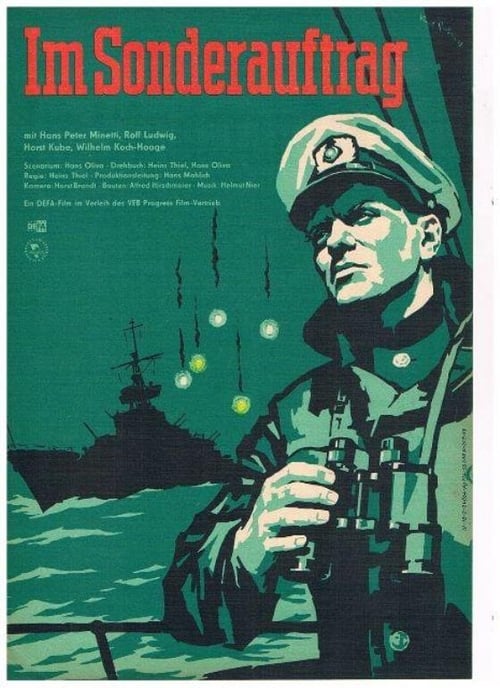
A warship returning from a training exercise was tasked with apprehending an unknown schooner that had violated GDR territorial waters. Although nothing illegal was found during the search of the ship, the ship's commander Fischer was suspicious of the owner of the schooner, Arendt, a former lieutenant of a Nazi coastal battery. Fischer's doubts were confirmed when a diver came aboard the schooner and photographed a military object underwater. The investigation showed that the detained schooner was on a sabotage mission, and the "activities" of Arendt, a former Gestapo Obersturmführer, were also revealed.
A story about life and everyday problems of a few families from East Germany.
A famous journalist wants to adopt a 13 years old orphan boy but their relationship are not perfect.
Tank commander Sergeant Tessen does not believe that his crew can become a successful collective and requests his transfer, but he finally withdraws his request due to a young boy to whom he carelessly promised a tank model. However, this would first have to be made by the crew members. New difficulties arise, even though everyone agrees to keep the soldier's word of honor. The spell is only broken when the tank gets into a dangerous situation during an underwater journey and the four of them have to prove themselves together.
Sylter Geschichten is a German television series.
No description available.
Puberty drama about the first love of a 15 year old girl from Berlin.
Once upon a time, there was a poor farmer who had thirteen children. Since the farmer was so poor, there was never anything left for the youngest of the family. Therefore, the farmer chose Death as the godfather of his son, Jörg, because all people are equal in the eyes of Death. The Grim Reaper is happy to look after the boy and turns Jörg into a skilled doctor who earns wealth and fame.
1945: Buchenwald concentration camp shortly before liberation: Polish inmate Janowski rescues a small child hidden in a suitcase. A child in the world of death means hope and danger at the same time. When his fellow inmates and members of the secret resistance group discover the boy, they are faced with a difficult decision. But in the end, humanity prevails. The original and first German feature film about life and death in a concentration camp based on an authentic story.
The girl Jorinde and the foundling Joringel grow up sheltered in a farmer's cottage behind the moor, but the dense forest around them harbors deep secrets. One day, a sorceress, omnipresent as an owl, juniper tree or in fairy form, takes the beautiful Jorinde away. Her mother, father and Joringel are left behind in sorrow. However, determined Joringel sets off in search of Jorinde. Although the enchantress tries to convince him that his search is in vain, he succeeds in finding his beloved in an enchanted castle. There she lives, enchanted, alongside many other beauties, unattainable for reality. But it is the special power of the love between the two that enables Joringel to recognize Jorinde, who has been transformed into a nightingale, among many other nightingales. The spell expires. But peace only returns when Joringel saves his family from marauders and defeats them in battle.
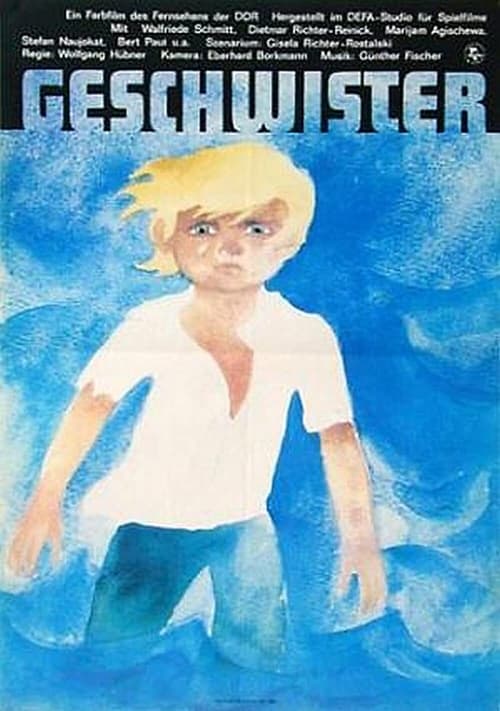
The children of Herbert and Hella, two single train conductors, are going to vacation at Baltic Sea. Unfortunately the parents are to busy to go so the oldest sister is in charge.
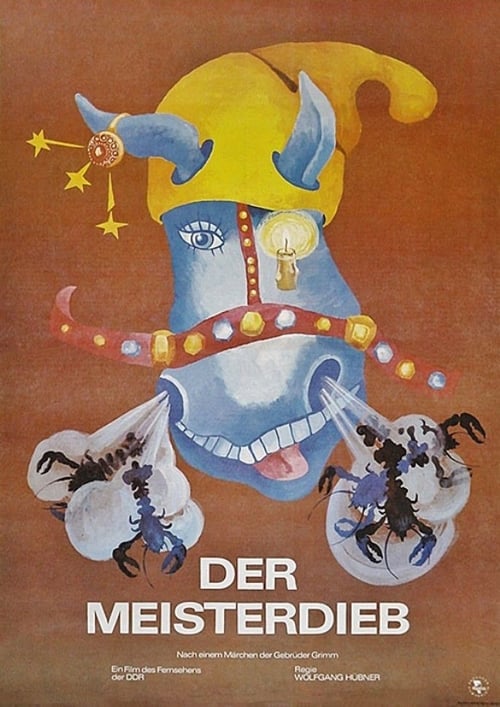
A master thief returns home. There he is threatened with the gallows if he fails to solve the tasks set by the count. So he has to steal the count's personal horse, the bed sheet and the wedding ring as well as the priest and the sexton.
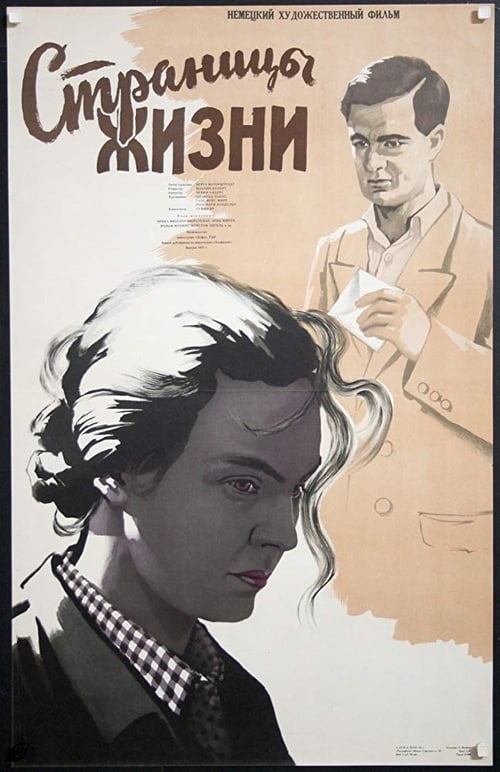
Post-war Germany: Like so many other women, Gerda Krause has lost her husband during the war and has to fend for herself and her two children. She finds work as a seamstress but refuses the offering of her department chief Zimmermann to upgrade her qualifications. One day she meets Uschi, an old friend of hers, whom she has helped with schoolwork before the war and subsequently lost track of. The reunion reminds Gerda of her childhood dream: to become a teacher. Thus, she decides to enroll at university to make her dream come true.
1831. A village schoolteacher Matthias Spitzbart dreams of the ideal school and writes a textbook on the perfect educational institution. When he becomes principal of a grammar school by chance, he puts his ideas into practice. His almost missionary-like zeal blossoms in wondrous ways, but his family idyll is deceptive. Entangled in his activities, Spitzbart fails to see his wife's affair with pro-rector Mehlmann, daughter Friederike flirts with the trainee teacher, and son Michael's misdeeds are enough to make a mockery of his efforts at exemplary behavior. Teachers, parents and the mayor are of the opinion that he has upset everything that worked before: he is dismissed...
The fisherman's son Christian, called Spinner, has a lively imagination. When he is sailing with his pirate sailboat, he feels like the sailor Magellan on the oceans.
Gunnar, a bigmouth, hitchhikes from Berlin to Rostock with his brother's duffel bag. Right at the start of his trip, he meets well-mannered Teresa, with whom he continues the journey in an old motorcycle. On the adventurous tour that follows, which is fraught with many obstacles, they meet a wide variety of people. For example, a pastor on his way to visit a dying man, an actor whose car breaks down or the shady Mercedes-Hurtig.
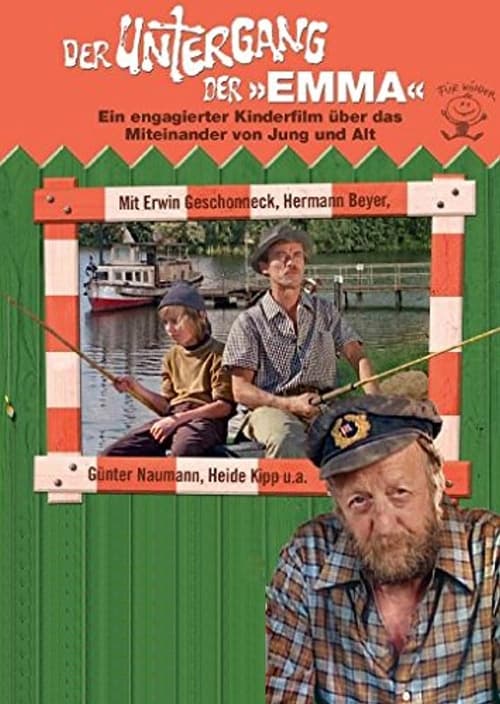
A funny adventures of a two young boys who are trying to rebuild the ship called "Emma" for their friend - the old captain.
Anton and his family moved into a high-rise building. In order for the new neighbors to accept his trumpet music, he has to perform a little "miracle" with the instrument.