Acting
No description available.
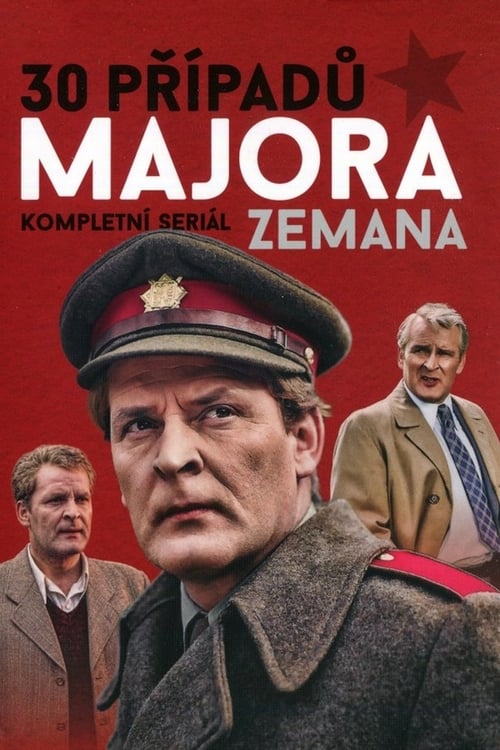
Thirty Cases of Major Zeman is a Czechoslovak action-drama television show intended as a political propaganda to support the official attitude of the communist party. The series were filmed in the 1970s. Each episode encompasses one year, and investigations are stylized to that year. Most are inspired by real cases. The series follows the life of police investigator Jan Zeman during his career from 1945 to 1975.
Plechová kavalérie is a Czechoslovak/Czech TV series about combine operators filmed by Jaroslav Dudek.
The distressing fate of the Czech great Jan Amos Komenský, forced to leave his homeland after the White Mountain disaster. It depicts his encounters with various European personalities of the 17th century - the Queen of Sweden, artists and scientists. It emphasises the hero's nobility, but also his inner resilience, which allowed him to overcome many personal and professional tragedies. The parable of The Labyrinth of the World and the Paradise of the Heart becomes part of the story. However, Comenius's concept is sculpturally lifeless and, in particular, the religious dimension is "erased" from it. The simplistic biography therefore does not avoid schoolboyish dryness.
A paraphrase of the classic fairy tale The Gingerbread House, created in 1983 based on one of Josef Lada's Naughty Fairy Tales. And because it is an "inside out" fairy tale, it is not the children who get lost in the forest, but the magical gingerbread man and woman. They see the cottage from a tree, and when they start feeding on the shingles, they fall into a goat pen. To escape their captivity, the cottage is miraculously transformed into a gingerbread house. But mom and dad soon start eating too much gingerbread.
Ostrava - Kunčice , 1953: on the same day as the manifestation funeral for J. V. Stalin, the funeral of Brigadier Bédi Nevěřil, a tragic victim of the bureaucratic cadre machine... The story unfolds in the memoirs of another brigadier, former journalist Karel Kratochvil.
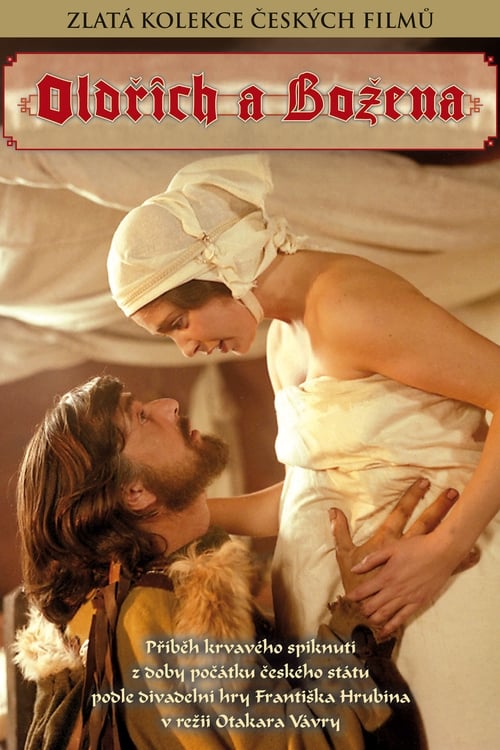
At the turn of the 10th and 11th centuries Boleslav's kingdom fell apart in the fratricidal war between the Přemyslovci and the other clans the main profiteer of this being the German emperor. At that time it seemed as if the Czech state and the lineage of its princes was awaiting its end..." It is with these words that the tale of this film begins, whose narrative is based upon the the play by František Hrubín of the same name.
Getting out of prison doesn't mean being free. After the bloody suppression of the Prague Revolution in 1848, one of its participants, the writer František Vinický, spent eight years in prison. Returning to Prague in 1857, he tries to make contact with his former friends. The main one is his former comrade-in-arms Antoš. Of course, the man's steps also lead him to his former love Ida, who has been married to the councillor Mayer for several years. Vinicky is followed at practically every turn by the secret police, who will not allow him to get a decent job, let alone publish his new book. Police Councillor Berger makes it clear to the writer that a lot could be arranged if Vinicky would commit to cooperating...
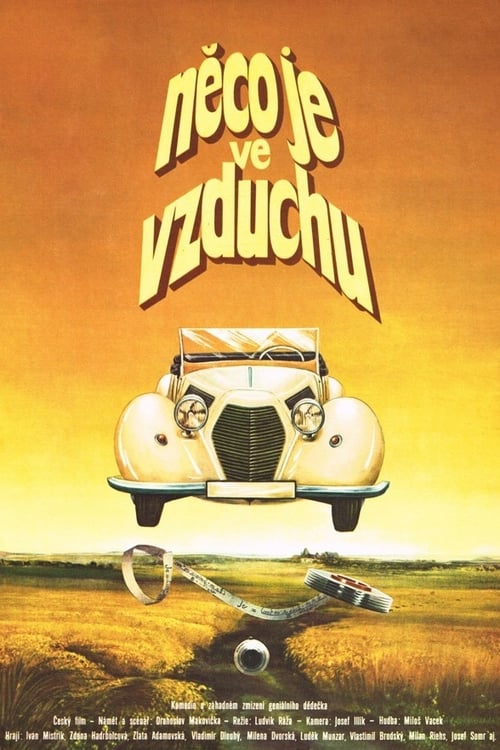
The urn supposedly containing the remains of Alice's grandfather falls out of the window and breaks. To Alice's great surprise, the urn is empty and the girl learns that the grandfather didn't die but disappeared under mysterious circumstances on the 2nd September 1946 in the town of Telc. Her grandmother claims that a mysterious young man with dark glasses was implicated in her husband disappearance. Alice is determined to solve the mystery. Grandmother's story leads Alice to a shoemaker who hands her Professor Jeník's - her grandfather's - invention, called the Force-fields Accelerator. Alice tells her boyfriend Petr about the device and the young man creates a time machine following the professor's instructions. The young couple then travel back to 1946 and there they indeed meet Alice's grandfather, and his daughter Blanka, who will later be Alice's mother.
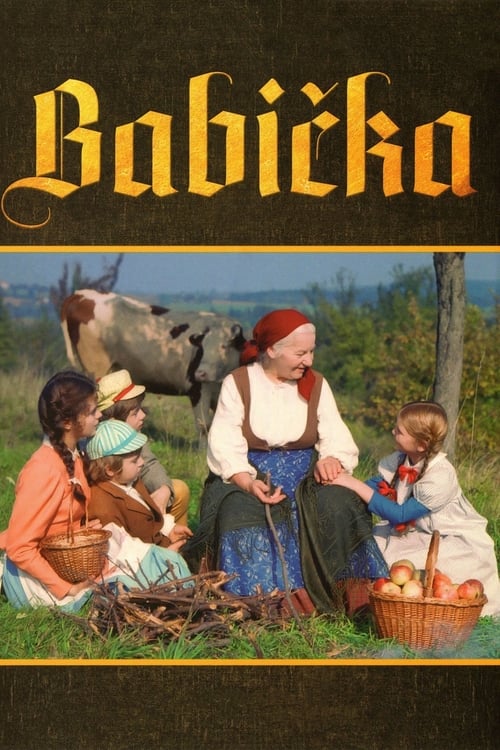
A tale based on novel by Czech writer Bozena Nemcova.