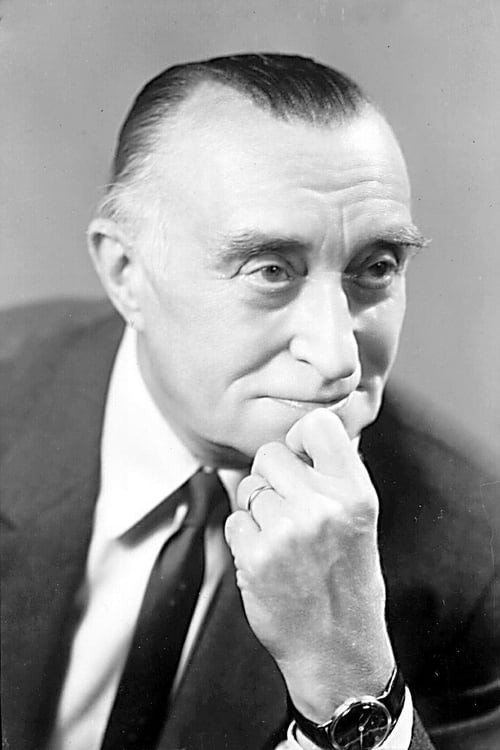
Oldřich Nový
Acting
Biography
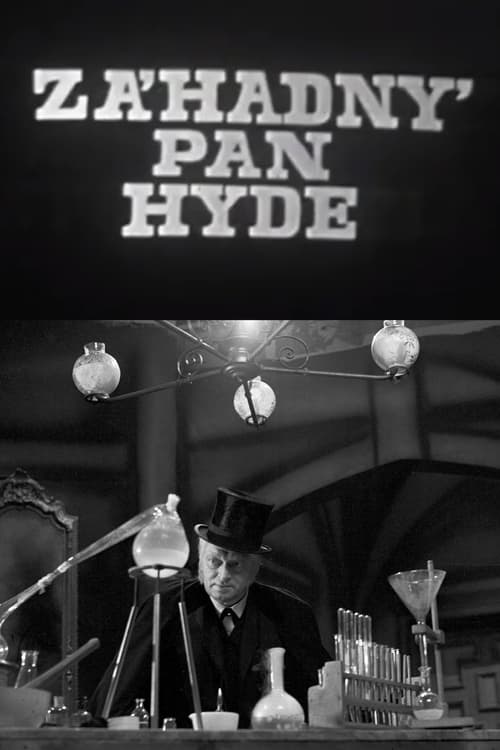
Oldřich Nový was a Czech film and theatre actor, director, composer, dramaturge and singer. He is considered one of the greatest actors of the Czech cinema in the first half of the 20th century. At the encouragement of his uncle, Miloš Nový, a well-known actor of the National Theatre in Prague, Oldřich joined amateur theatre group "Řemeslnická beseda" and appeared in numerous plays before moving to Brno to direct in 1918. Following his fifteen year stay, Oldřich co-founded the "Nové divadlo" (The New Theatre) together with his wife Alice Valentová-Nová. There he explored new and modern expressions of theatre by combining spoken word with operetta stylings to develop the "musical comedy" genre. In 1937 he met and began collaborating with renowned pre-war director Mac Frič. Their first success came in 1939, with the comedy Kristián, the first of many popular comedies starring Nový. During the German occupation of Czechoslovakia, Oldřich Nový became a target of the Nazi party, both for his celebrity, and his wife’s Jewish ancestry. In 1944, after refusing to divorce, the couple was imprisoned in the the German concentration camp in Osterode. Following the liberation, Nový worked a dramaturge of Czechoslovakian film until the 1960s, when he began appearing on Czech television in the popular television series, "Taková normální rodinka" (1967-1971). His last theatre role was a title character of the play "Hodinový hoteliér" by Pavel Landovský, directed by Evald Schorm. During this time, Nový again collaborated with Mac Frič to create successful comedies, both conformist and parody, but these films are of minor note to his career. In his later years, Nový lived a life of isolation to avoid his celebrity status, almost never leaving his home.
Known For

No description available.
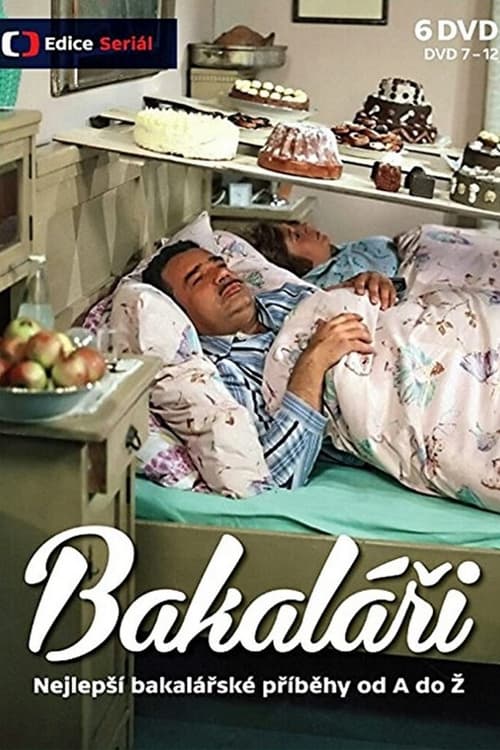
Bakaláři

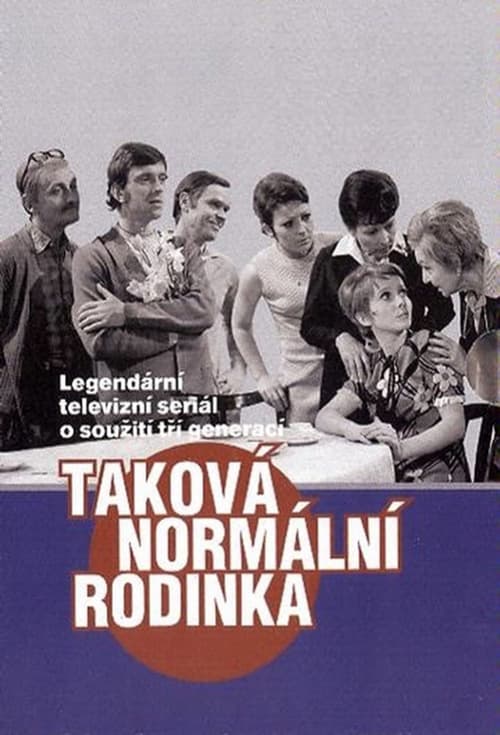
Taková normální rodinka was a Czechoslovak television programme which was first broadcast in 1971. The programme was directed by Jaroslav Dudek. It was released on DVD in 2006.
Taková normální rodinka

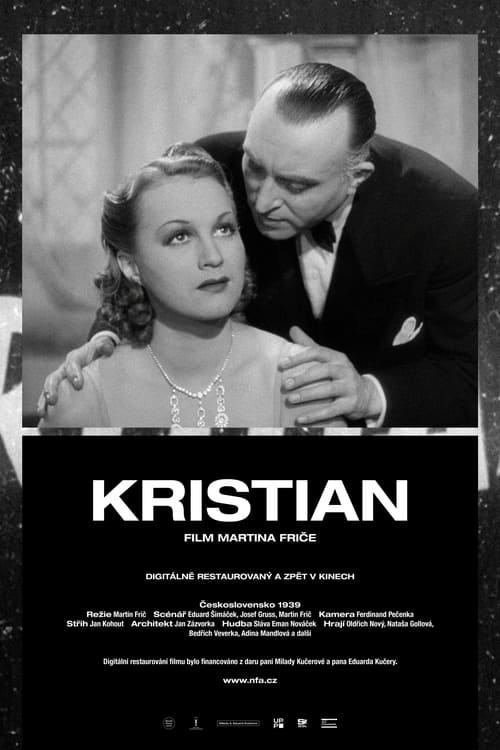
Alois Novák (Oldrich Nový), a minor clerk in a travel agency and the husband of a dowdy housewife Marenka (Natasa Gollová), lives a run-of-the-mill, dull life. In his soul, however, there resides an inextinguishable desire for adventure. And so once a month he poses as a playboy. As the mysterious and wealthy Mr. Kristian he goes to the exclusive Orient Bar where he does not skimp on generous tips and where he platonic-ally seduces beautiful and elegant women. In the salon he speaks of love and the magnificence of exotic lands, which he has supposedly come to know on his wanderings abroad. In reality he has read all of this in the travel agency's brochures.
Kristian

The employees of the furniture company MARS welcome a rare visitor with hired music. Their boast that they would put together an orchestra is taken seriously, so they receive a small gift - musical instruments for thirty musicians.
Hudba z Marsu

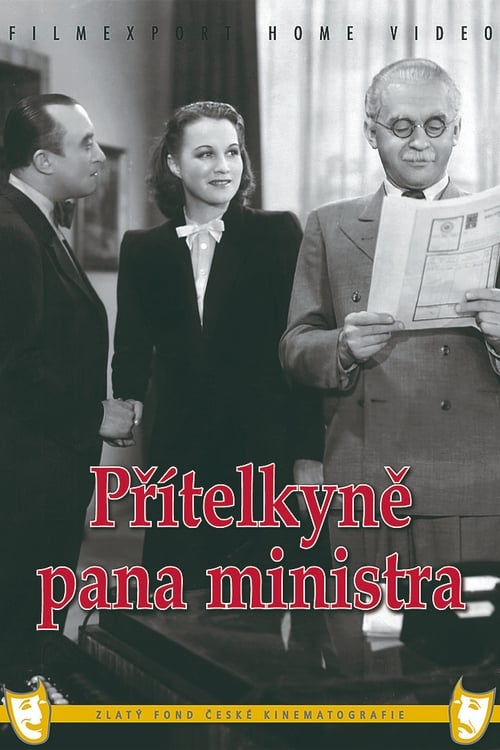
The main character of the funny story is an ordinary typist Julinka Svobodová, who works for the established business firm Hrubý a syn and lives in a sublet with the seamstress Mrs. Pokorná. Although she is poor and sometimes manages to be late, she is still cheerful and pleasant. However, a small coincidence is enough and everything changes. That is when she takes an elevator ride with the Minister of Trade, Dr. Horák, who coincidentally lives in the same building. Mrs. Pokorná, in good faith, hints to the inquisitive landlady that Julinka is the Minister's girlfriend. From the talkative woman, an innocent rumor spreads like wildfire and, surprisingly, it helps the girl in every way...
Přítelkyně pana ministra

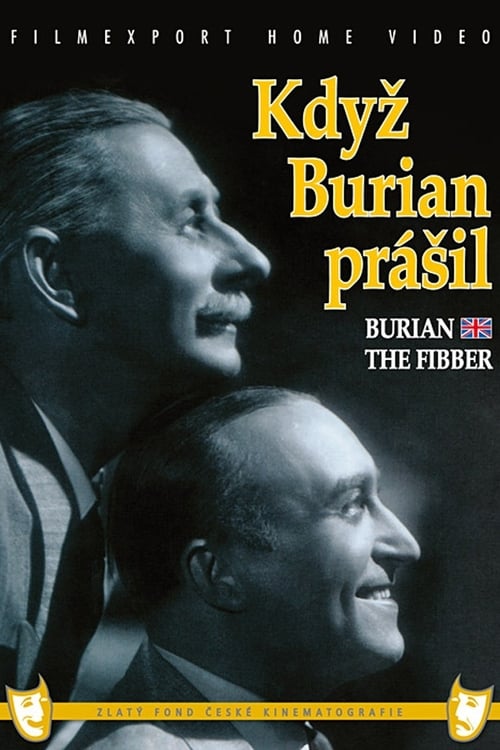
Fifty years old Baron von Fibberg lives at The Fibberg Castle with his wife Olga and daughter Charley. Besides the delight in hunting, Baron is very enthusiastic about truth. Although he can't withstand any falsehood of others, he keeps his own intimate secrets from his wife. Charley seems to be an innocent girl at first glance, but she has a little secret too. She fell in love with a young fop Ernest Benda and married him in secret. Her only concern is the way, how to let her strict father know about the marriage. Together with her husband they prepare a plan how to do it, but it turns out to be a catastrophe for the whole family.
Burian the Liar

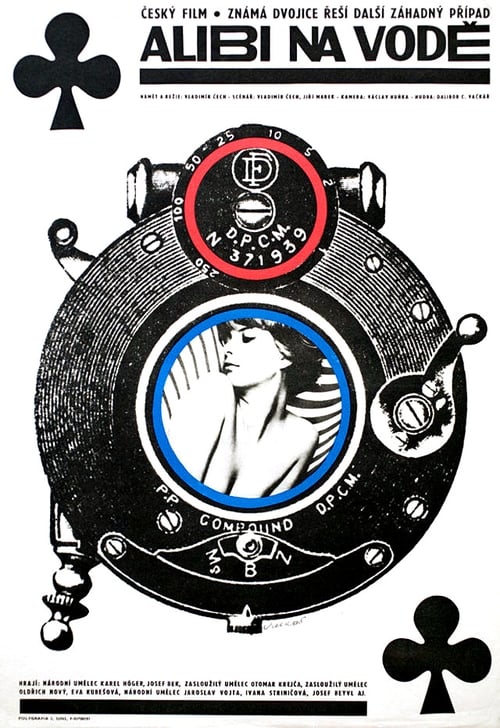
“A bored housewife, a husband who married her for show, and a stupid boy who is full of himself because he is dating a Swiss woman.” The words of Inspector Tůma sound like they’re from a European melodrama, but in fact they come from a Czechoslovak crime story. A pair of detectives, counterfeit medicine, the high-society setting of a Karlovy Vary hotel, and Oldřich Nový as the aging hotel manager Kraus.
Where an Alibi Is Not Everything
Věra Donátová has graduated from law school and wants to open a law firm. However, she is financially dependent on her parents. Her emancipated mother supports her efforts, but her father gives Věra money on the condition that if her practice is not successful within a year, she will marry the son of Consul Raboch. Věra has no clients. The first case is assigned to her ex officio. Věra visits her client Petr Kučera, known as Tygr, in a prison cell and achieves his release against his will. In an attempt to reform him, she offers him a position as a butler in his office. Tygr invites her to a pub to get acquainted with the mentality of the underworld. Věra likes his sovereign behavior. The one-year deadline has passed and Father Donát is throwing a feast. He wants Věra to choose from several invited suitors. Věra ridicules all the suitors, including Consul Raboch's son...
Advokátka Věra

Elén, a girl living with her mother and stepfather in a secluded forest, has a great singing talent. On her twenty-first birthday, she runs away from home and on the train, millionaire René falls in love with her. Their paths soon diverge, only to be reunited soon after. Violinist Pavel Sedloň falls in love with Elén, and although Elén does not love him, she is determined to marry him. At that time, René dies, exhausted from working on the operetta Srdce v delirium. However, he is saved at the last moment and everything comes to a happy ending when Oldřich Nový explains how the authors actually meant it all.
The Poacher's Foster Daughter or Noble Millionaire

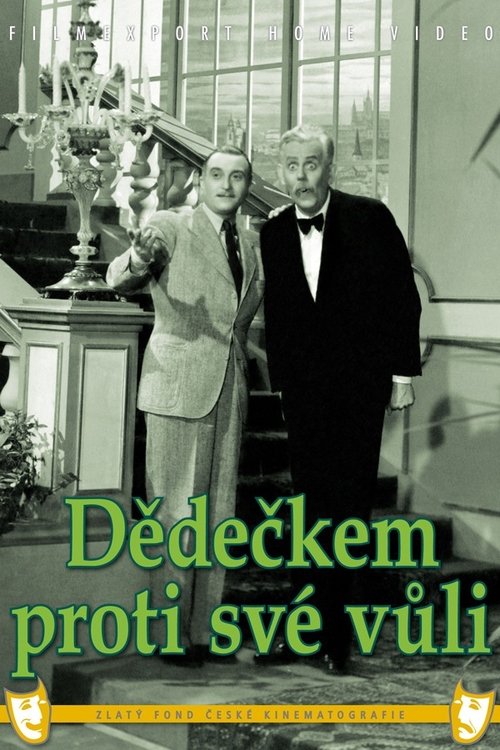
The wealthy factory owner Osten has achieved his position thanks to his energy and diligence. However, he has one weakness - he cannot admit that he too must grow old one day. What scares him most is the thought of becoming a grandfather. To prevent this, he is willing to become a rival in love with his own son. One day, Jiří has had enough of his father's actions and decides to leave his house and his comfortable life. He even changes his name and starts working in a competing factory as an ordinary worker to prove to his father that he too is capable of working his way up from scratch. That is when Jiří meets the energetic seamstress Tonička, who is studying in the evenings to become an office worker. The young people are happy together, but the factory owner Osten comes between them. He offers Tonička a position as a secretary and is ready to win her over...
Dědečkem proti své vůli
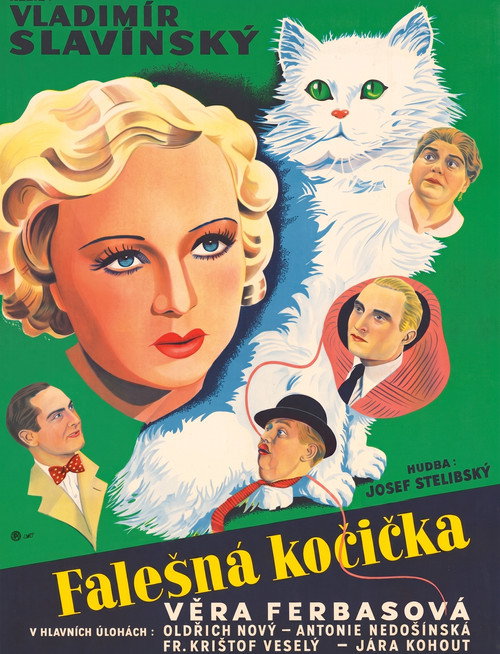
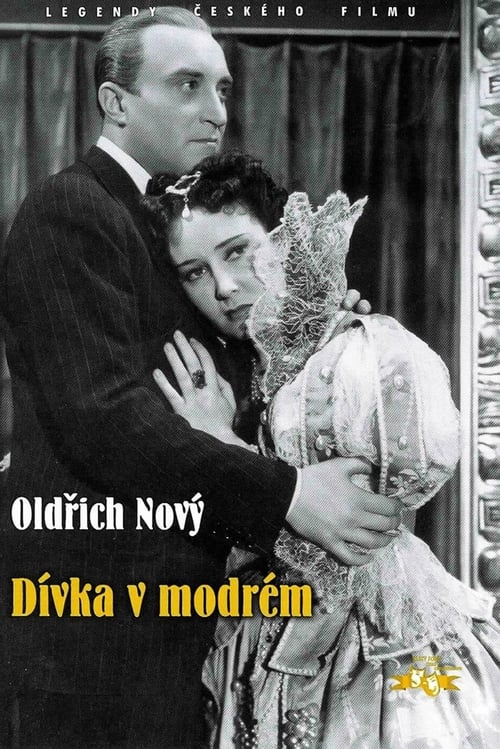
Oldřich Nový was and will forever remain the embodiment of charm, elegance and personal charm for Czech cinema, to which all women, regardless of age, were subject. In his unforgettable lover roles, he was not only a romantic who was able to fall in love with a girl from an ancient painting, succumb to the chocolate-brown eyes of the minister's girlfriend, but also a seducer for whom infidelity was a regularly practiced sport, or, conversely, a newlywed obsessed with jealousy. This was exactly Viktorin, the main character of a crazy Art Nouveau comedy, where everything revolves around a massive deer antler. Its involuntary owner becomes the jealous Viktorin, and it is certainly not difficult to guess what such a "right" gift can cause.
Parohy

The main hero of the story is the editor Viktor Bláha, who likes to invent crazy mystifications, during which he has a good time at the expense of those around him. Not only friends pay for his jokes, especially his roommate Jan Valtera, but also completely unknown people who "get involved in his wound" and have no idea that the slightest mistake on their part will trigger an avalanche of Bláh's eloquence. But as they say, everything takes time... The film was shown for the first time at the Film Festival in Zlín on July 30, 1941.
A Charming Man

An anthology of three absurd, ironic tales inspired by Čapek’s “Tales from One Pocket” and “Fables and Side Stories,” each showing uncanny forces disrupting ordinary lives: in Krejčík’s “Glorie,” a gentle clerk is haunted by a sudden halo; the other two segments by Mach and Makovec similarly blend everyday routines with ironic, supernatural twists.
Of Things Supernatural

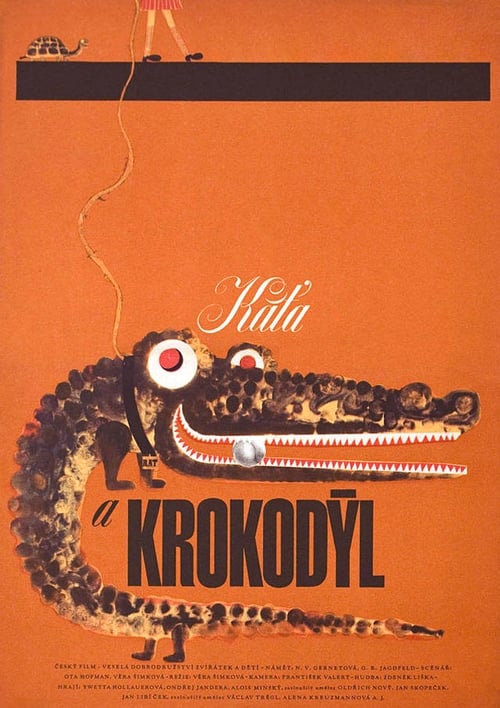
It is the summer holiday and little Mísa Horák has taken a few animals from the school's so-called "Corner of Living Nature" home to care for. But when he brings home two Angora rabbits, a starling, a little monkey, a tortoise and a small crocodile, his parents order him to take them away. He is helped by Káta, who offers to place the animals in the child's room of her family's apartment. Mísa leaves for her friend where the animals will hopefully be able to stay. Káta goes shopping. In the meantime, Káta's younger sister Minka wakes up and begins to play with the animals, who gradually run off in disarray.
Katya and the Crocodile

Criminals have their hands full: first a shoplifting, soon the murder of a young driver. Do these crimes have anything in common? But the attempt to create a suspenseful story is broken by its unimaginative nature.
Bílá spona

Three blue collar workers have a night out in big city Prague.
Men About Town

A musical comedy about two indistinguishably similar siblings who love music, but each of them is completely different. Pavel Fořt is a professor of classical music at a pedagogical institute, his brother is a jazz musician and plays music in America. When the twin brother suddenly appears in Prague, they switch roles.
Dva z onoho světa

Ostrava - Kunčice , 1953: on the same day as the manifestation funeral for J. V. Stalin, the funeral of Brigadier Bédi Nevěřil, a tragic victim of the bureaucratic cadre machine... The story unfolds in the memoirs of another brigadier, former journalist Karel Kratochvil.
Úplně vyřízený chlap

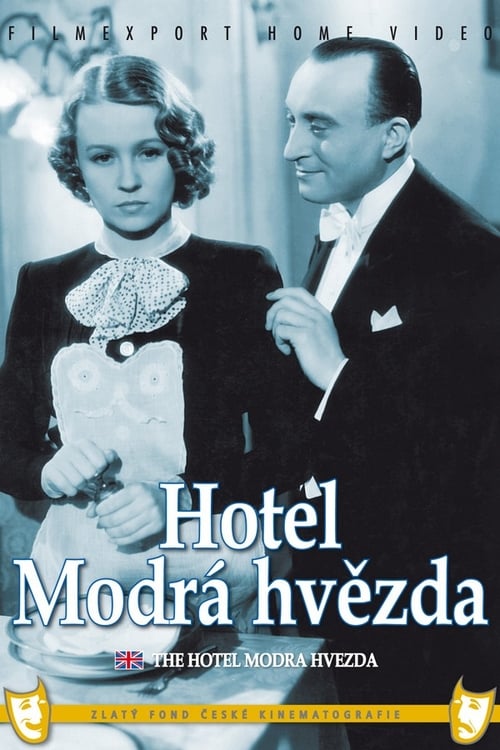
It all begins when Zuzanka, the new young owner, arrives at the dilapidated Blue Star Hotel. Determined to put the declining inheritance back on its feet, she starts chasing three young men, including the composer Jirka, who, dressed in a waiter's tailcoat, is to work off his debt to the new owner. Like his two friends, Jirka succumbs to the charms of his new boss and, with some confidence, hopes that he is the one who has the best chance of becoming her chosen one. At that moment, however, a guest arrives, intent on carrying out the family tradition and throwing an engagement party at the Blue Star Hotel, regardless of his condition. This, however, is not to the liking of his wilful fiancée. Fortunately, there is the sympathetic Zuzanka, who charms the unusual guest so much that he resolutely breaks off his engagement to the rich girl and prefers to marry the cute hotelier.
The Blue Star Hotel

A social comedy about a wealthy man in his prime, for whom marital infidelity is just a pleasant and regular sport. A young flower shop owner, to whom her husband seems to be generally ordinary and overworked, nevertheless manages to resist the advances of an experienced seducer.