Aleksandr Solovyov
Directing
Known For
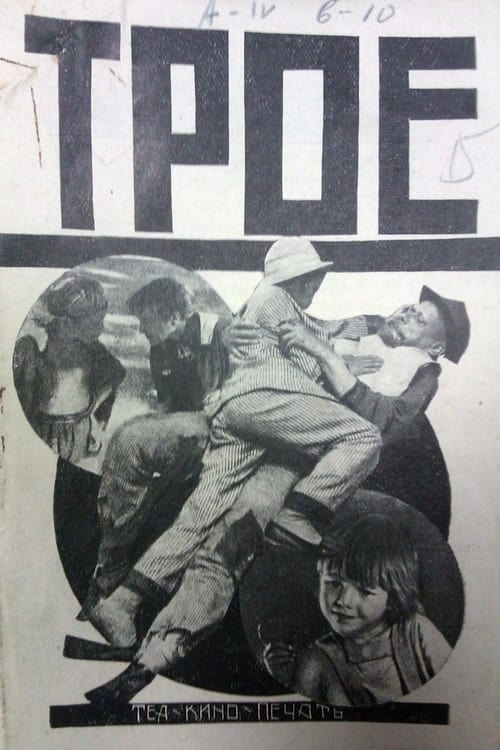
Based on a short story by O. Henry "The Ransom of the Red Chief". Three boys meet by chance. Myshko, a pioneer, is walking down the street in the ranks of a pioneer unit, while the homeless Semen is standing behind the unit, and Mr. Zhorzhyk is looking out of the window. The second time the boys meet is in the Crimea, where Myshko travels with the pioneers, the panych in a soft carriage with a bonnet, and Semen between the cars. Semen is kidnapped by bandits who mistake him for Zhorzhyk. Meanwhile, Zhorzhyk escapes from his bondage to a pioneer detachment. Soon, Semyon ends up there as well.
The Three
In October 1917, Warrant Officer Shakhov sided with the revolution.Shakhov is disturbed by the thought that once, during the imperialist war, he was arrested for participating in a revolutionary circle and, during interrogation, while in a semi-conscious state, revealed the name of his comrade and teacher, the revolutionary Rayevsky. This offense of Shakhov's was exposed. The Revolutionary Tribunal sentences Shakhov to death. At the last moment, he is saved by Raevsky, who by then had become a significant party figure named Turbin, who tells the court about Shakhov and the circumstances in which he unknowingly became a traitor. The tribunal acquits Shakhov. Based on the novel “Nine Tenths of Fate“ by Veniamin Kaverin.
The Laws of the Storm

A Soviet propaganda film based on material from the Bolshevik coup. During the Russian civil war, the Whites, that anti-Communist force that fought against the Bolsheviks during that period, capture a Jewish Ukranian village; the gang commander threatens a pogrom, and will kill everyone in the village unless the inhabitants agree to give to the White Officers five virgin girls in wedding dresses. Under such terrible pressure, the Jewish council of the town decides, full of sorrow and despair, to sacrifice their daughters to the drunken officers but fortunately and just in time, a detachment of partisans that belong to the Red Army, comes and frees the village.
Five Brides
A propaganda film on the mechanization of Donbas mines.
The Front
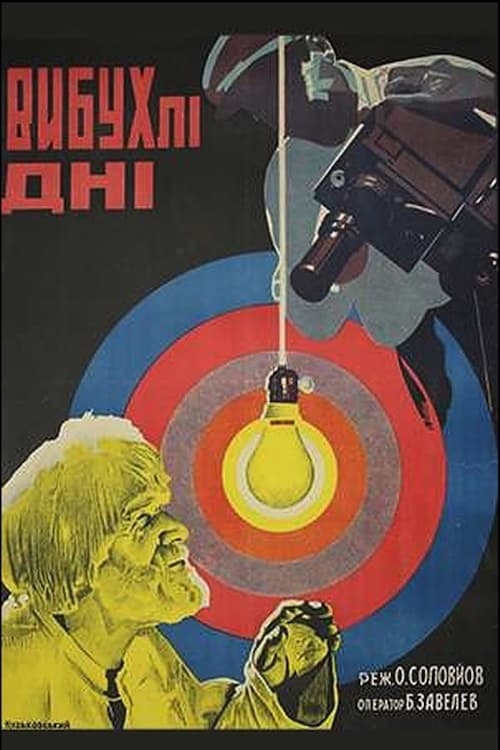
The year 1929. A “shock worker” from a tractor plant visits a film studio premises and is furious to see fake stage designs for a kitsch production about a Soviet life. He refuses to help the crew with his tractor, but is happy to ask one of the cameramen to go with him to visit an actual Soviet village. There they witness the birth of the kolkhoz and the dekulakization of wealthy villagers. Then they are transported to the future, to the year 1932, when the first five-year plan is done and the commune-sovkhoz is established. Movies can move faster than time, but the pace of change in Soviet society is even faster than that. In the movie, the entrance gate of the Odesa film factory, where all of the indoors scenes were shot, can be seen. The outdoors scenes were filmed all over Eastern Ukraine and Southern Russia (Kuban): at Kharkiv factories, in Ukrainian villages and in the 240 ha-sovkhoz “Gigant” in Rostov region, the latter representing the future after the five-year plan.