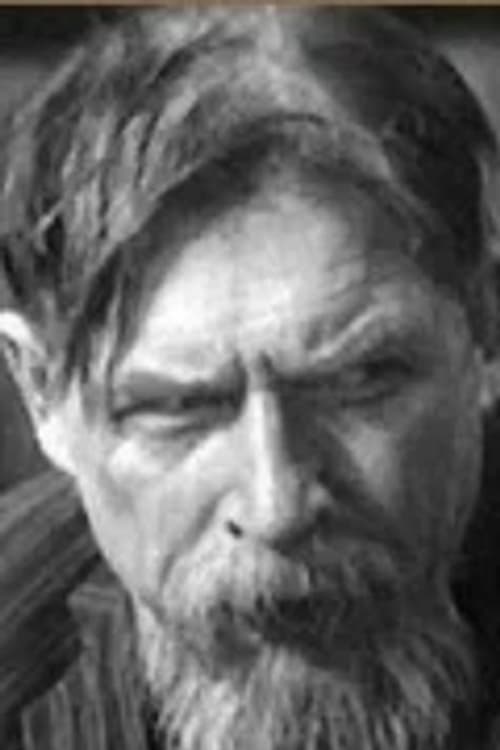
Alexandr Gromov
Acting
Biography
Aleksandr Gromov was a russian actor, producer and screenwriter.
Known For
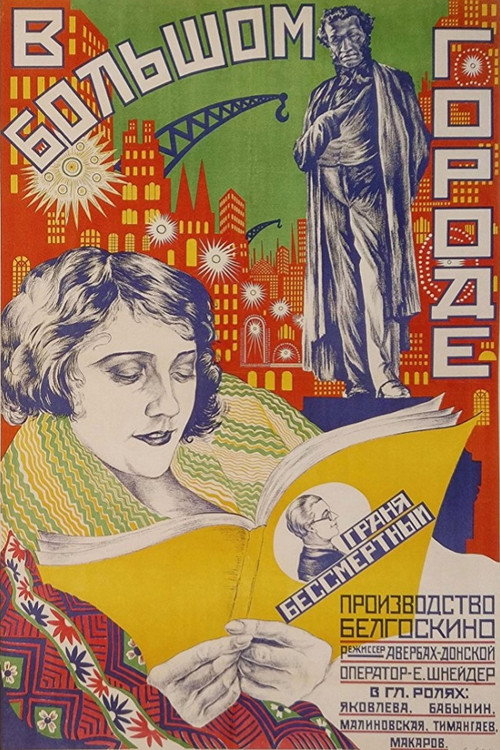
Two country boys move to Moscow. One becomes a construction worker who dreams of being an inventor, the other becomes a decadent poet.
In the Big City
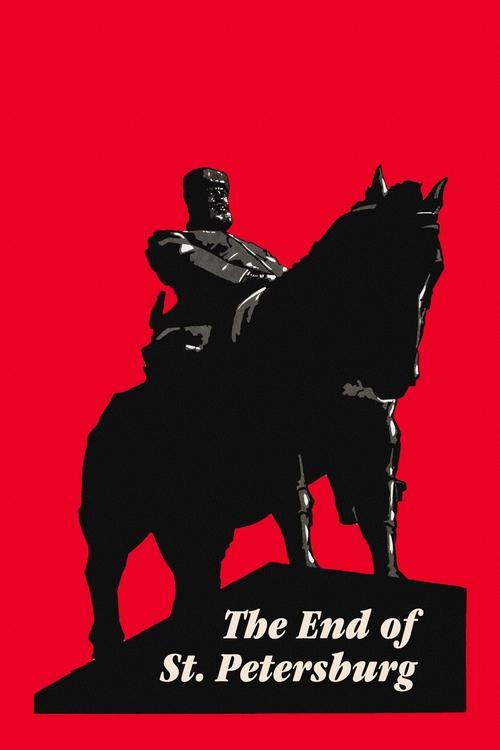
Shortly before the outbreak of WWI, a peasant from rural Russia arrives in St. Petersburg to find work.
The End of St. Petersburg
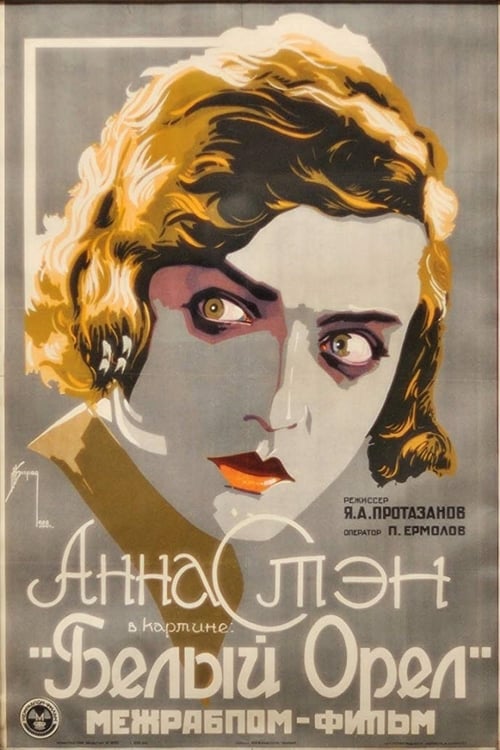
The film is based on The Governor, a play by Leonid Andreyev. V.I. Kachalov plays the governor of a small Russian province who tries to treat the people under his authority with kindness and equanimity. But when a local factory goes on strike, the governor buckles under to pressure from the Tzar and orders the wholesale slaughter of the strikers. He pays for this betrayal of his trust with his life -- at the hands of a courageous Bolshevik spy.
The White Eagle
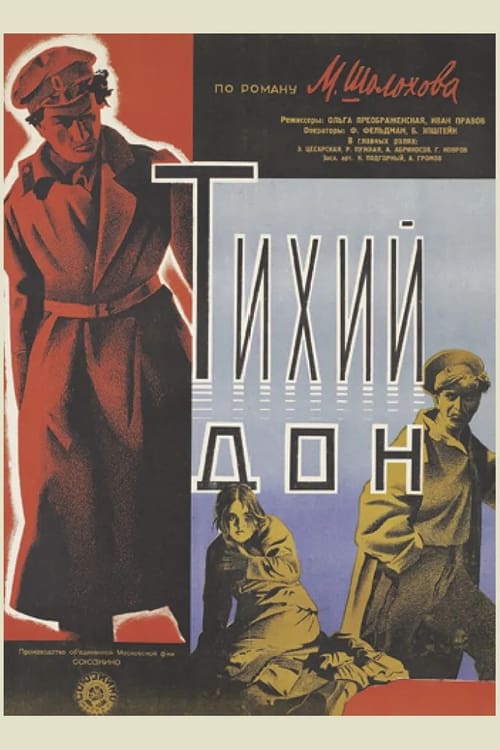
The first screen adaptation of an epic Russian novel about a village of Cossacks on the Don River, covering the last days of peace on the riverside before the beginning of the First World War.
And Quiet Flows the Don
During the Russian Civil War, pilot Sergey Sedov engages in battle with the Black Cat enemy fighter, controlled by the famous pilot Baru. In the battle, Sedov wounded Baru, but Sedov's plane fell apart in the air. Sedov was only miraculously saved. A few years later, Sedov and Baru meet in international competitions in Tehran. Baru are to defend the honor of a French company, Sedov and his student Ivanov - the honor of their country. In the end, the defeated Baru can only express hope of a rematch during a new meeting with Sedov in a future war. The film has not survived.
Wings
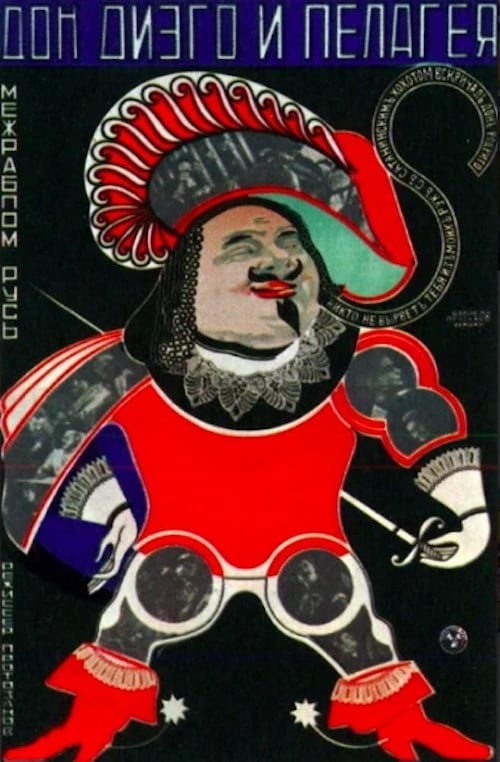
The vain station master of a Russian train station out in the sticks has a quarrel with an old peasant woman and has her thrown in jail. The local party youth organisation finally manage to get her released, after having to cut through lots of red tape.
Don Diego and Pelagia

Jacob, a farmer, returns from the war to his wife Marie and begs the landlord baron for a plot of land to rent. The Baron grants the request, but only for a barren, rocky, useless acreage. The pair struggle to make do on this land, but then the Baron demands that Maria leave her husband to serve as wet nurse to his married daughter Anya's new baby, on threat of eviction. While nursing the daughter's baby, Maria receives unwelcome attentions from the daughter's husband, and a scandal erupts, ruining Maria in her husband's eyes. When she escapes from her employers and seeks to return home, the police give her the yellow passport signifying a prostitute, further degrading her. She approaches home, unsure of the reception that awaits her.
The Yellow Ticket
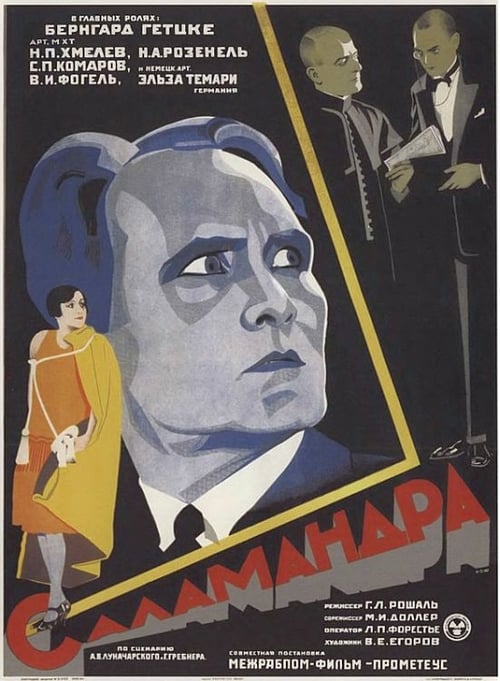
The film is based on real events and reveals the tragic episodes from the life of the Austrian biologist scientist-materialist Paul Kammerer (1880-1926), hunted by regressive scientists and Catholic reactionaries who committed suicide.
Salamander

A feature film that depicts scenes from the census of Imperial Russia in 1882 and the upcoming census of the Soviet Union as of January 17, 1939. The census takers interview citizens, fill out census forms in the homes of urban residents, collective farmers, and among the guests of the "Moscow" hotel.
The Great Count
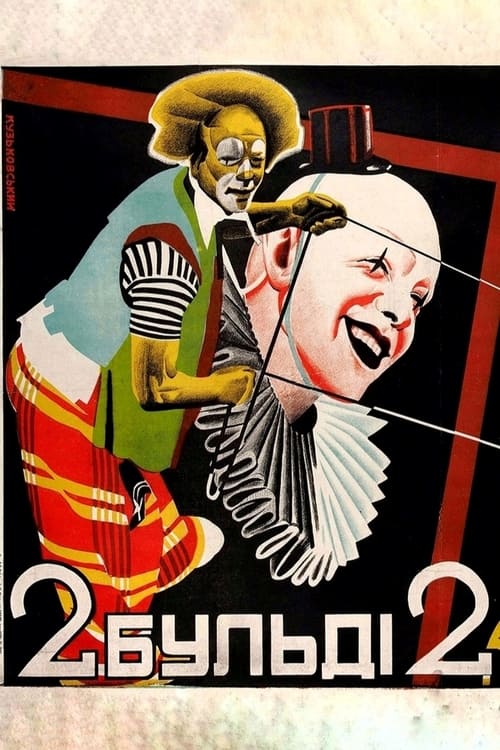
Naturally, the circus milieu of 2 Buldy 2 (1929) encourages stunts. A father and son, both clowns, are to perform together for the first time, but the civil war separates them, and the elder Buldy, tempted for a moment to acquiesce to the White forces, casts his lot with the revolution. At the climax Buldy Jr. escapes the Whites thanks to flashy trampoline and trapeze acrobatics; the gaping enemy soldiers forget to shoot.
Two-Buldi-Two
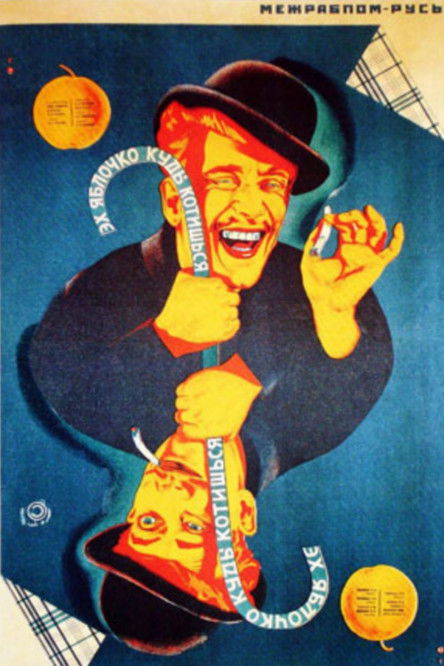
1918 Odessa. German occupiers plunder the city. Sailor Petrus, who has lagged behind the Red Army detachment, saves one of the victims of bandit terror - the girl Marusya... Years have passed. The time has come for peaceful construction in the country. Red commander Petrus and Marusya, who has become a teacher, meet in Moscow in one of the cafes, where both were attracted by the sounds of the popular song “Eh, apple...”, accompanying the adventure of the heroes.
Эх, яблочко, куды котишься

Khokhlova, a girl-reporter on a Moscow newpaper, falls in love with factory manager Petrovsky. To her he's the epitome of manliness--virile, decisive, strong-minded. Conversely, she rejects the sensitive, diffident editor Vasilchikov, who's in love with her, as unmanly. Her infatuation affects her work, and she is fired.
Your Friend
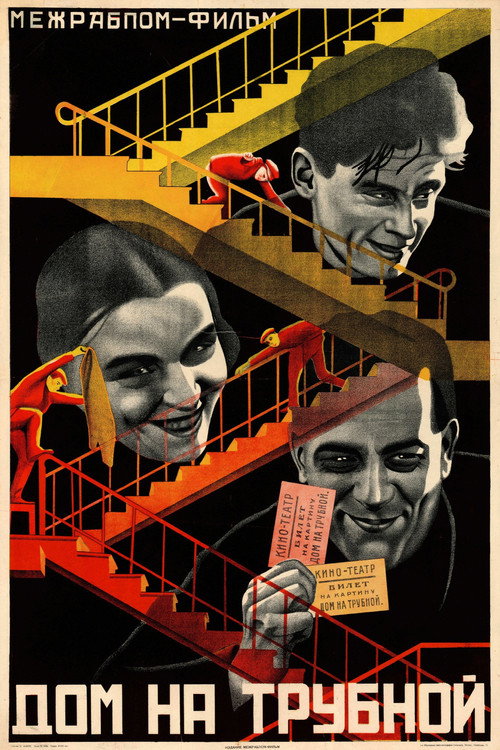
Life is short and full of oppression, but that doesn't mean Parasha can't find love and laughter when she leaves her country home to take a job as a maid in the overcrowded, overworked, and underpaid world in the big city.
The House on Trubnaya
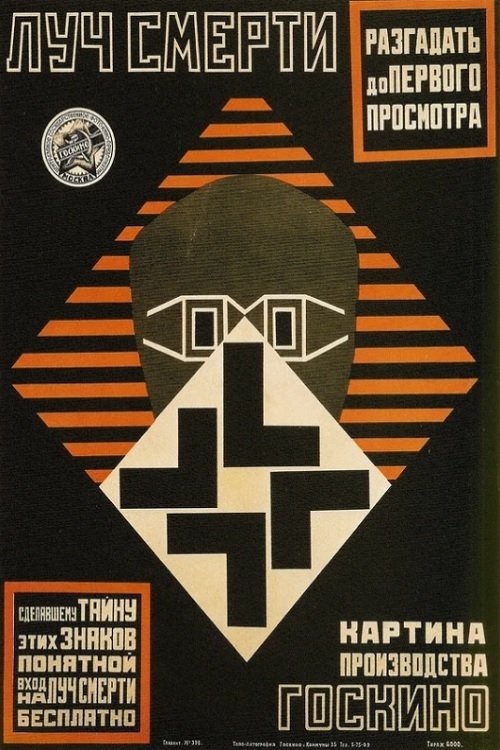
In a capitalist country, workers are heavily repressed but manage to get a "death ray" to fight back. (A part of the movie is lost.)
The Death Ray
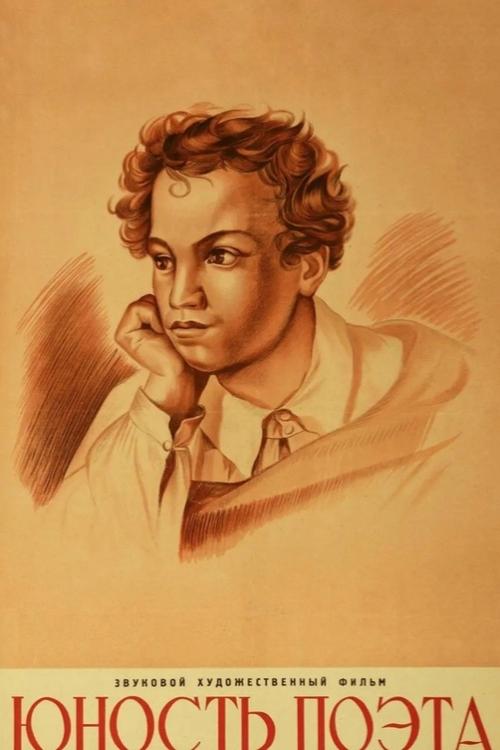
Biographical film "Youth of the poet", dedicated to Pushkin-Lyceum student. At the 1937 world exhibition in Paris, the film was awarded a gold medal. The Director managed to accurately recreate the historic era, to convey the atmosphere of the Tsarskoye Selo Lyceum in the years of the formation of the poetic genius of Pushkin.
Youth of the Poet

In a Kazakh village at the beginning of Soviet power, a wealthy kulak (landowner) voluntarily denounces his opposition to the new regime and hands over his large home to be a new school for the children of the villagers. But three people in the village have difficulty believing that their class enemy is now their friend.
Paths of Enemies
About an old retired turner who returned to the machine in the hard days for the plant. Considered lost.
Turner Alekseev
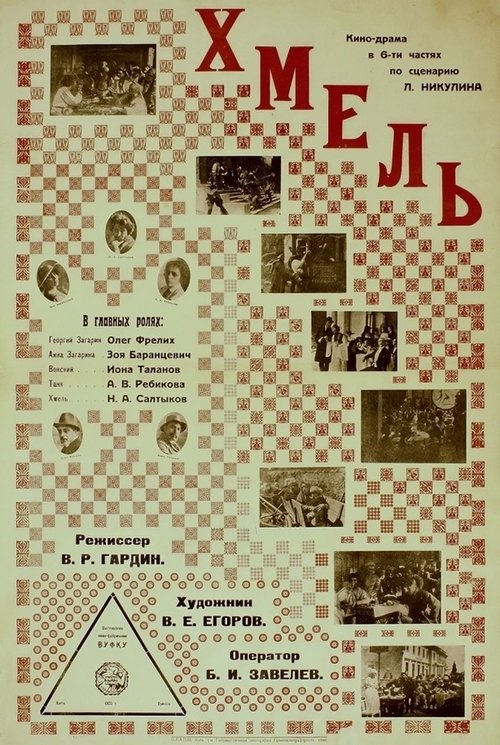
Revolutionary melodrama based on Lev Nikulin's story "Хміль". 1917. The main character of the film - a "bourgeois intellectual" - does not sympathize with any side and avoids revolutionary events. However, as a result of a series of adventurous adventures, love intrigues and communication with the people, he goes over to the side of the proletariat.
Ataman Khmil'
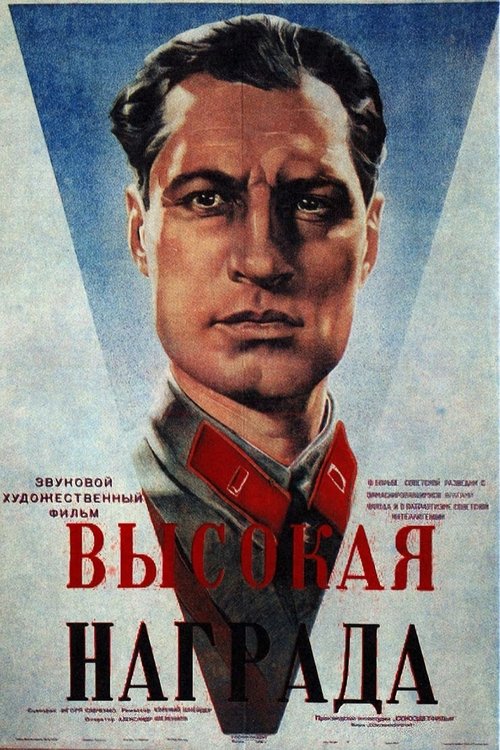
No description available.
High Award
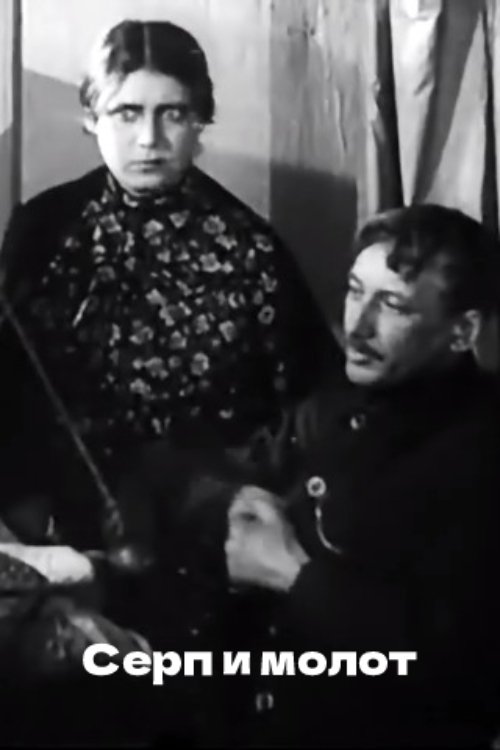
A down on his luck peasant goes to fight in World War I and returns home a hero. Partially lost.