FEEL IT.STREAM
?

Saburō Sawai

Acting

Known For

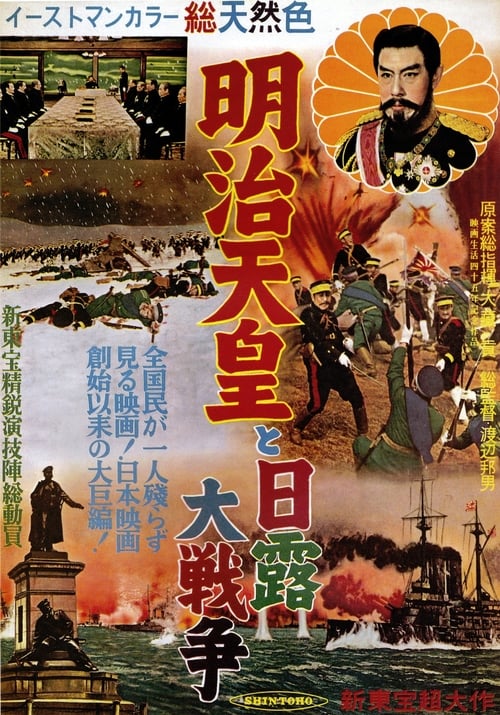
Emperor Meiji and the Great Russo-Japanese War
8.0

Meiji Tenno portrays the buildup to the Russo-Japan War. In addition to showing the political events that led to war, it also shows the era from the story of a farm family in rural Japan that sends their son off to war. As such, it could be considered an anti-war movie, showing how, while war is devised by governments, the people do not really understand what war is, and its combatants often do not know what they are fighting for.

Emperor Meiji and the Great Russo-Japanese War

1957
The Battle of Kawanakajima
7.0

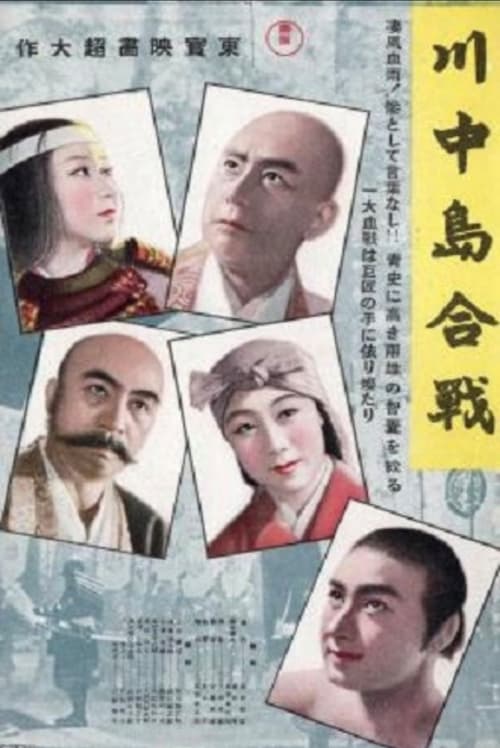
This epic depicts the battle between Uesugi Kenshin and Takeda Shingen. The focus of the story is the struggle by the unit leader in charge of the main supply wagons and the supply troops to transport materiel to the Uesugi army. To this are added episodes involving an itinerant woman.

The Battle of Kawanakajima

1941
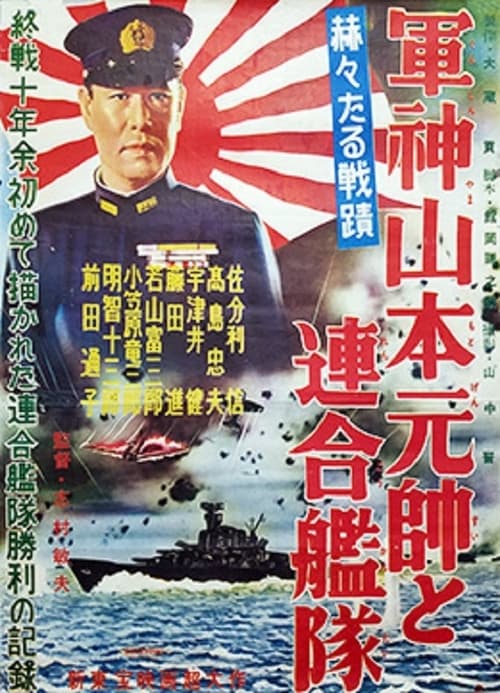
Admiral Yamamoto and the Allied Fleets
5.0

Admiral Isoroku Yamamoto leads the Combined Fleet of the Imperial Japanese Navy to defeat the American Fleet.

Admiral Yamamoto and the Allied Fleets

1956
Duel at Yagyu Valley
N/A

During the Warring States era, Hozoin Kakuzenbo and Yagyu Tajima-no-kami, being best friends, spend their days acquiring skills of the spear, sword and martial arts. Hozoin loses a series of matches with master swordsman Kozumi Ise-no-kami. Bitterly ashamed, Hozoin embarks on a journey, trying to perfect his skills. A few years later, Hozoin is ready and it's time for the ultimate showdown with Ise-no-kami!

Duel at Yagyu Valley

1945
Emperor & Empress Meiji and the Sino-Japanese War
N/A

No description available.

Emperor & Empress Meiji and the Sino-Japanese War

1958
Omatsuri hanjiro
8.0

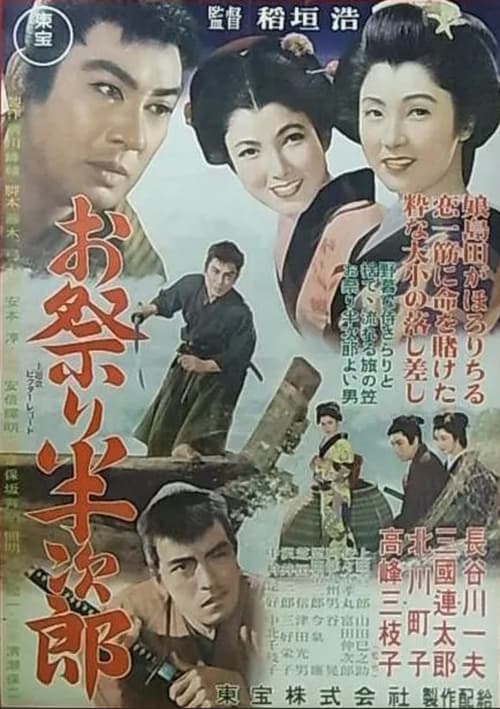
Every year, at the festival, familiar merchants such as Toraemon, a magic trick, Tokubei, a blowgun, Kaji, acrobatics, and Unsaibo, a ritual, gather toward the port town.

Omatsuri hanjiro

1953
Dancers of Awa
7.0

Jurobei, a kaisen tonya (wholesaler in port) in Awa, was wronged and killed on the day of the Dance Festival by the evil merchant & the chamberlin. His brother (Kazuo Hasegawa) vowed vengeance on the day of his brother's death. So every year the villains are worried during the Awa Dance Festival (which is part of the Obon festival), but nothing has ever happened, until seven years later...

Dancers of Awa

1941
The Loyal 47 Ronin
N/A

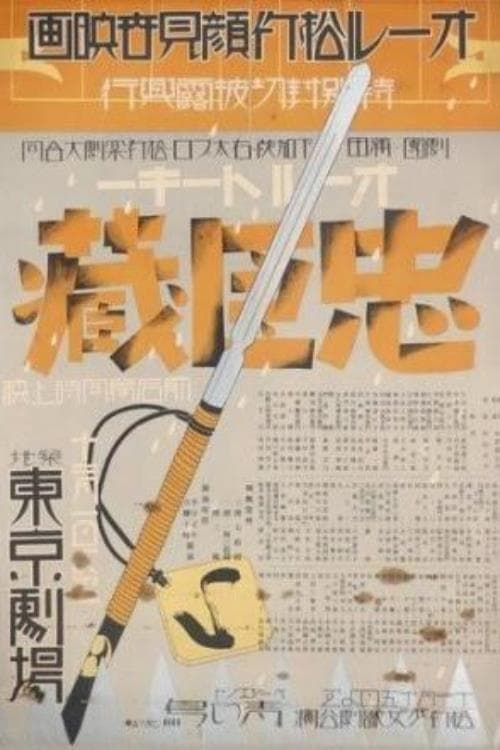
This 1932 adaptation is the earliest sound version of the ever-popular and much-filmed Chushingura story of the loyal 47 retainers who avenged their feudal lord after he was obliged to commit hara-kiri due to the machinations of a villainous courtier. As the first sound version of the classic narrative, the film was something of an event, and employed a stellar cast, who give a roster of memorable performances. Director Teinosuke Kinugasa was primarily a specialist in jidai-geki (period films), such as the internationally celebrated Gate of Hell (Jigokumon, 1953), and although he is now most famous as the maker of the avant-garde silent films A Page of Madness (Kurutta ichipeji, 1926) and Crossroads (Jujiro, 1928), Chushingura is in fact more typical of his output than those experimental works. The film ranked third in that year’s Kinema Junpo critics’ poll, and Joseph Anderson and Donald Richie noted that 'not only the sound but the quick cutting was admired by many critics.

The Loyal 47 Ronin

1932
Ren'ai Zubari Kōza
N/A

A omnibus movie consisting of the three parts: "Kechinbo", "Yowak" and "Kōshoku".

Ren'ai Zubari Kōza

1961
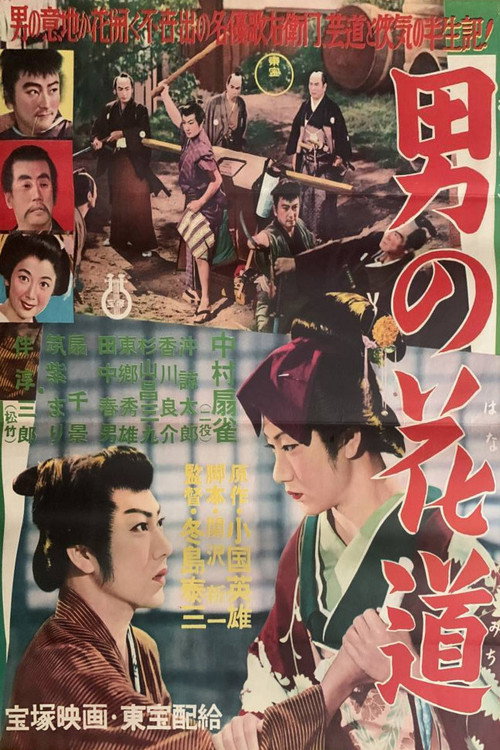
A Man's Flower Road of Triumph
7.0

No description available.

A Man's Flower Road of Triumph

1941
Daikichi Konomura
N/A

A samurai is struggling to make ends meet at the end of the Edo period. He has students and, among other things, teaches them about the evils of the government. A member of the yakuza thugs has fallen in love with the samurai's daughter and conspires to report the father to the authorities in order to snatch the girl. The samurai's daughter has a boyfriend who hides the father and daughter from the thug.

Daikichi Konomura

1954
Dokonjo Taisho
N/A

Ryosuke Kotaki's life motto was his grandfather's will, "Study, make money, drink alcohol, and win the first prize". So, first of all, he went to Osaka to win the first prize with favorite shogi. In the car, he hit it off with a woman named Okichi and decided to live in the Shogi Kaisho, which is run by Okichi's father, Yoichi. Ryosuke's skill was strong, and he was happy to make a lot of money in gambling shogi. However, he lost to a middle-aged man by dropping four cards. This man was actually Heihachi Kudo, who is said to be the best of both worlds in the Kansai chess world at the time...

Dokonjo Taisho

1966
A Wicked Woman
7.7

In 1870's Tokyo, Den steals to support the daughter of her first marriage and her consumptive second husband. She falls in love with a young policeman, but is coerced into becoming the mistress of and procurer for a vice boss.

A Wicked Woman

1958
No image
7.0

Harada Kai, the Date clan's Chamberlain attempts to take power from the lord himself.

Traitors of the Blue Castle

1957
The Edo Fortune-Teller
N/A

Karasudo, who charges 16 mon for his fortune-telling skill, asks for nothing when it comes to swordplay. His merciless blade is stained with the blood of his enemies when he uncovers a sinister plot and finds that his martial arts skill must be called into action. An unusual and highly entertaining story, about a man not to be trifled with.

The Edo Fortune-Teller

1982
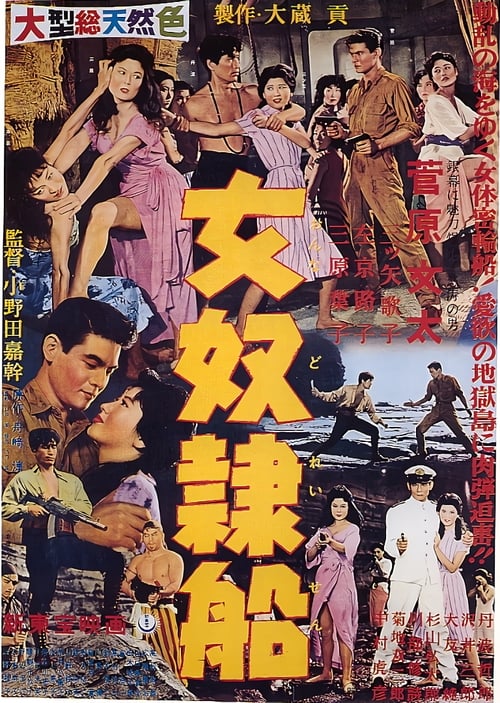
Female Slave Ship
6.5

The year is 1945, months prior to Japan's ultimate defeat in WW2, and military lieutenant Sugawa is sent on a critical mission to deliver micro-fiche war plans to Tokyo from his base in Malaysia. But while flying over Chinese waters his plane is shot down and he is taken aboard a ship bound for Shanghai to deliver its merchandise - a ship filled with Female Slaves kidnapped from Japan. Will he abandon the women to pursue his main objective? Or will he fight foes, spies and pirates to save these women against all odds?

Female Slave Ship

1960
An Actor's Revenge
5.6

An onnagata (female impersonator) of a Kabuki troupe avenges his parents' deaths. Remade in 1963 as Yukinojô Henge.

An Actor's Revenge

1935
The Man Who Disappeared Yesterday
6.5

No description available.

The Man Who Disappeared Yesterday

1941
お役者小僧
N/A

The phantom thief, known as the "Actor Kid", who was creating a stir in the Daimyo's mansion, especially in the inner chambers, was called Inaba Goutaro. He was the adopted son of a samurai, Inaba Buemon. An incident occurred where his foster father collided with the palanquin of the lord's concubine. In the subsequent altercation, Goutaro killed one of the attendants. Taking responsibility for the act, his foster father committed seppuku, and Goutaro was hunted down. Facing death, his foster father revealed to Goutaro that after the death of his biological father, Goutaro's real mother and his younger brother were forcibly made to serve a lord. This revelation ignited Goutaro's determination to infiltrate the Daimyo's mansion to meet his birth mother.

お役者小僧

1953
No image
10.0

Japanese film.

Nangoku taiheiki

1937