Acting
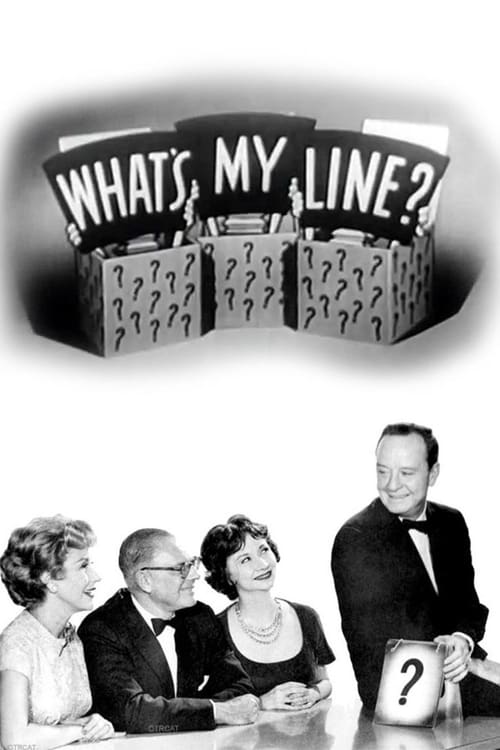
Four panelists must determine guests' occupations - and, in the case of famous guests, while blindfolded, their identity - by asking only "yes" or "no" questions.
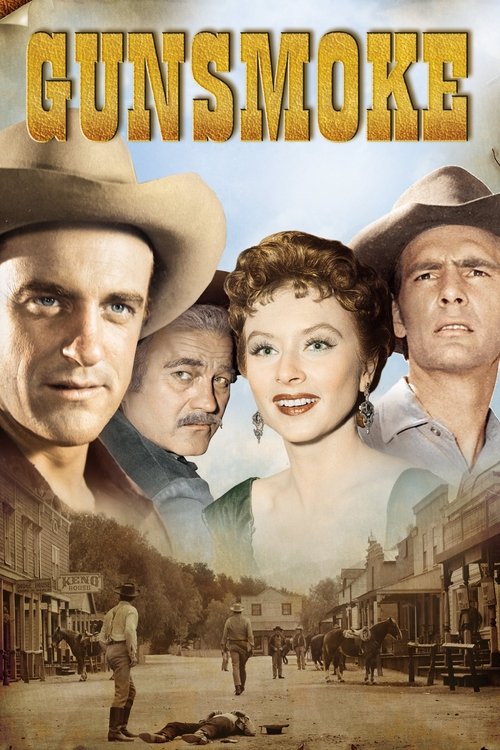
Gunsmoke is an American radio and television Western drama series created by director Norman MacDonnell and writer John Meston. The stories take place in and around Dodge City, Kansas, during the settlement of the American West. The central character is lawman Marshal Matt Dillon, played by William Conrad on radio and James Arness on television.
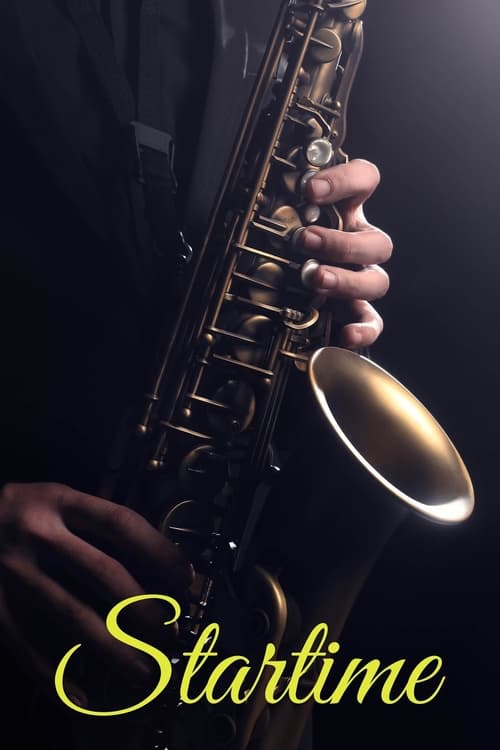
Startime, an anthology of drama, comedy and variety, was one of the first American television shows broadcast in color.
“The Bell Telephone Hour” was a musical variety show that aired on “NBC” TV from 12 January 1959 to 14 June 1968 that showcased the best in Broadway, Classical, Concert, Jazz and Popular music each week. The series had its’ own house band appropriately named the “Bell Telephone Orchestra”. The show also had its’ own theme song being the “Bell Waltz” composed by “Donald Voorhees” who was also the show's Orchestra conductor. Some of the greatest violinists of the 1960’s performed on this show that aired in the old “Black & White” format. Some of these great violinists included “Erica Mornin”, “Isaac Stern", "Michael Rabin", "Ruggiero Ricci", "Yehudi Menuhin" and "Zino Francesacatti". From time to time some of the great singers and bandleaders of the 1960’s would perform on the show as well. Some of these were “Bing Crosby”, “Gordon MacRae”, “John Gary”, “Leslie Uggams”, “Mary Martin”, “Nelson Eddy”, “Patti Page” and “Roy Rogers”. The TV show followed on the heels of its’ predecessor with the same name on “NBC” radio that aired from 29 April 1940 to 1958 on Monday nights at 8 PM. The name of the show was derived from its’ Major sponsor “Bell Telephone Laboratories”. The TV version began airing on Friday nights at 8:30 PM once a month. It later was given it’s same time slot now airing every other week alternating with another show on the other weeks such as News shows and specials. The show time slot changed quite often over the years. In September 1960 it aired at 9 PM and in September 1961 it moved to 9:30 PM. In October 1963 it moved to Tuesday nights at 10 PM, September 1965 it moved to Sunday night at 6:30 PM and in September 1967 it made its' final move back to Friday night at 10 PM.
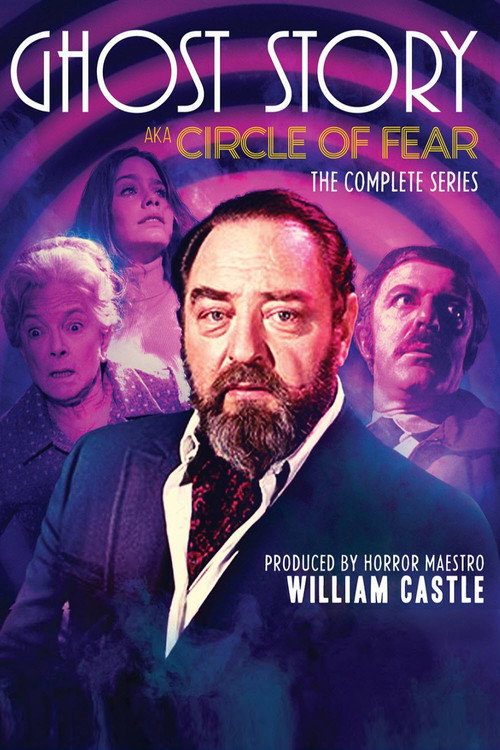
Ghost Story is an American television anthology series that aired for one season on NBC from 1972 to 1973. Executive-produced by William Castle, it initially featured supernatural entities such as ghosts, vampires, and witches. By mid-season, low ratings led to a shift -- for the most part -- away from paranormal themes and a title change to Circle of Fear.
Search is an American science fiction series that aired on Wednesday nights on NBC at 10 pm ET, from September 1972 to August 1973. It ran for 23 episodes, not including the two-hour pilot film originally titled Probe. When picked up for series production, the title had to be changed because Probe was the name of an existing PBS series. In the UK the series aired on BBC 1 under the title Search Control. The show was created by Leslie Stevens, and produced by Leslie Stevens, Robert Justman, John Strong and Tony Spinner. The high concept was described as "science fiction in today's world" and the episodes featured many high-tech elements which are considered common in current science fiction shows.
The Delphi Bureau is an American dramatic television series aired in the United States by ABC as one of three elements of The Men, a wheel series shown as part of its 1972-73 schedule. The Delphi Bureau starred Laurence Luckinbill as Glenn Garth Gregory, a man with a photographic memory, whose obscure United States Government "agency" ostensibly did obscure research for the President of the United States. Its actual role was counter-espionage and its main operative was Gregory, whose liaison with the group's unnamed superiors was Sybil Van Lowreen, a Washington D.C. society hostess. A framing design for each episode involved a limerick, a single new line of which was added for each segment of the show, until the entire limerick was completed in the final segment.
Documentary series looking at the stories behind the production of popular English films, showing how they tie in with the production of other movies through the actors or actresses.
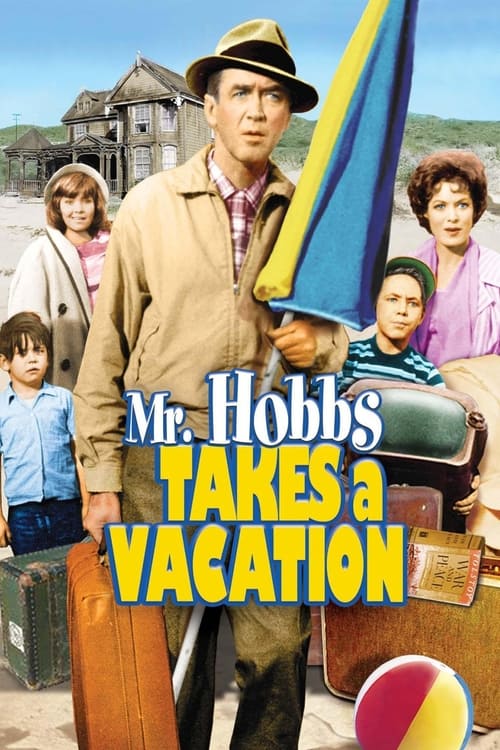
Banker Roger Hobbs wants to spend his vacation alone with his wife, Peggy, but she insists on a family vacation at a California beach house that turns out to be ugly and broken down. Daughter Katey, embarrassed by her braces, refuses to go to the beach, as does TV-addicted son Danny. When the family is joined by Hobbs' two unhappily married daughters and their husbands, he must help everyone with their problems to get some peace.
1960s musical showcasing Cliff Richard. Four bus mechanics working for London Transport strike up a deal with the company: they do up a one of the company's legendary red double decker buses and take it to southern Europe as a mobile hotel. If it succeeds, they will be put in charge of a whole fleet. While on the road in France they pick up three young British ladies whose car breaks down and offer to take them to their next singing job in Athens. They also pick up a stowaway, who hides the fact that she's a famous American pop star on the run, chased by the media and her parents.
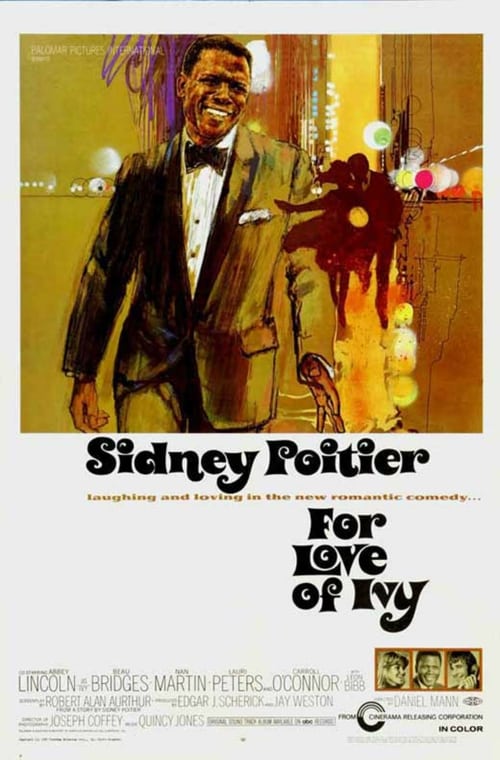
A white family has had the same Black maid for many years. When she tells them she wants to go back to school and will be leaving soon, the 20ish year old son decides what she needs is a change and begins searching for a man to wine and dine her, but who won't marry her, thinking that this will distract her from her plans. The man he finds doesn't entirely cooperate.