
Ashok Sukumaran
Directing
Biography
Ashok Sukumaran is an architect and media artist. He holds a Bachelor’s Degree in Architecture from the School of Planning and Architecture, New Delhi, India, and an M.F.A. from the Department of Design/Media Arts at the University of California, Los Angeles (United States). He is a founding member of CAMP, a collectively run artistic space based in Mumbai. CAMP came together as a group in 2007, initially consisting of Shaina Anand (filmmaker and artist), Sanjay Bhangar (software programmer) and Ashok Sukumaran (architect and artist). CAMP's work has been exhibited internationally, including at the 2009, 20011 and the 2013 Sharjah Biennials, the 2012 New Museum Triennial, Documenta 13 in Kassel and Kabul, the 2013 edition of the Viennale, the 2014 edition of the Shanghai Biennale, the 2017 edition of the Skulptur Projekte Münster, the 2012 and 2022 Kochi Muziris Biennale, and the Museum of Modern Art in 2025, with a monographic show titled Video After Video: The Critical Media of CAMP.
Known For
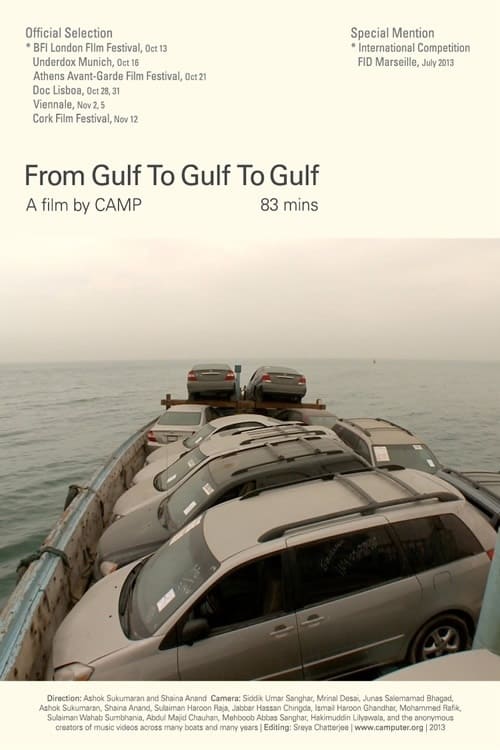
A boat has many powers: to gather a society in its making, to distribute goods, to carry people and ideas across places that, it seems to us, are more different than ever before. From Gulf to Gulf to Gulf is a result of four years of dialogue, friendship and exchange between CAMP and a group of sailors from the Gulf of Kutch. Their travels and those of co-seafarers from Sindh, Baluchistan, and Southern Iran through the gulfs of Persia and Aden show us a world cut into many pieces, not easily bridged by nostalgics or nationalists. Instead, we follow the physical crossings made by these groups of people who make and sail wooden boats and who also make videos, sometimes with songs married to them.
From Gulf to Gulf to Gulf

The work narrates the social, cultural and political history of the “housing question” in Mumbai, by bringing together cinema, state-sponsored documentary, newspapers, policy reports and archives from social movements, among other source materials. These materials are assembled, via a hand-built web editor, into a new kind of "annotated film" that links to online archival sources. Drawing in form from the video lecture-performance style honed on CAMP's rooftop cinema and studio that takes its audience on dense archival journeys, the work examines a series of four organized responses to urban housing and slums triggered by a landmark court case, alongside a parallel cinema movement.
From Footpath to Flat (via FSI)
Filmed in Guangzhou at the Zhuhai International Container Terminal. The crane operator and longshoreman seem to have disappeared. In this "forgotten space" of the ocean (that channels 90% of global trade), their absence, along with the grime and buzz of the port city has been mourned, there have been requiems. But they exist, countless of them, their hand-eye and body workings, rendered tiny and near-invisible against the backdrop of the lego-land image of the container port. CAMP's work here, filmed on location at the Zhuhai International Container Terminal, Gaolan on the Pearl River Delta offers "a day in the life of" look at what can be seen; of both the systems-view and workers-view of that seemingly automated movement of boxes.
Men-At-Work with Boxes in Stereo
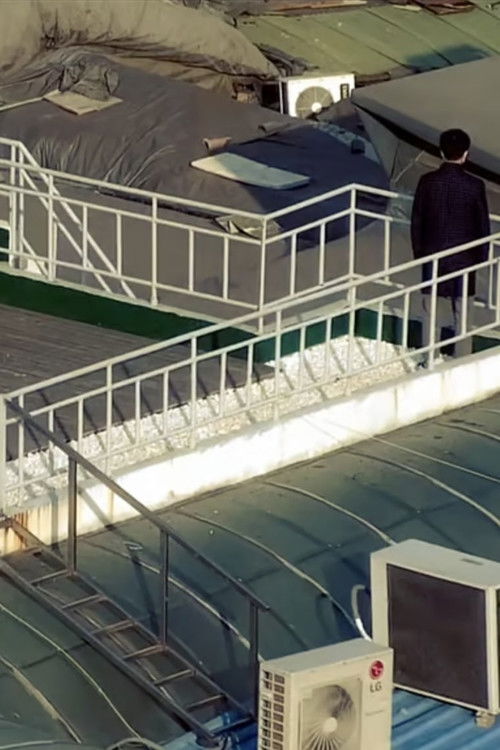
Filmed from a single location over two months, "Bombay Tilts Down" documents the rapidly transforming metropolis of Mumbai. It was shot remotely during the COVID-19 pandemic by a CCTV camera that was mounted on the thirty-fifth floor of a building in the heart of the city. CAMP pushed the camera to its limits: It moves from expansive skies, limitless sea, and gleaming glass towers to bustling streets, tarp-covered settlements, and the figures and faces of city dwellers, many of whom seem aware of the camera looking at them. The artists edited the collected footage to create the illusion of a continuous takein which days and weeks fold into each other. The film's soundtrack was composed by BamBoy (Tushar Adhav), who interspersed his beats and basslines with the sounds of storms, sirens, and recordings of poetry and songs by working-class and Dalit poets who came of age in the city's once bustling textile mills. [Overview courtesy of MoMA]
Bombay Tilts Down
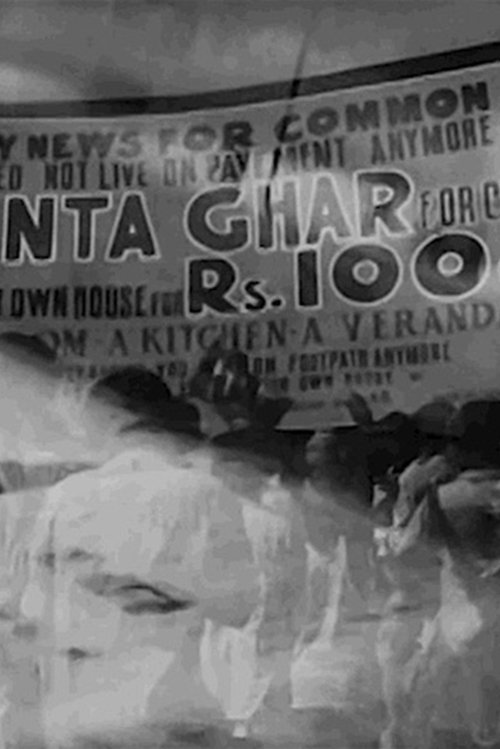
The work narrates the social, cultural and political history of the “housing question” in Mumbai, by bringing together cinema, state-sponsored documentary, newspapers, policy reports and archives from social movements, among other source materials. These materials are assembled, via a hand-built web editor, into a new kind of "annotated film" that links to online archival sources. Drawing in form from the video lecture-performance style honed on CAMP's rooftop cinema and studio that takes its audience on dense archival journeys, the work examines a "poor man's colony" that was set up in the 1950s and destroyed twenty-five years later to make room for an atomic research facility in Bombay.