Acting
The popular Danish family are vacationing on the island of Bornholm. Unfortunately, they have not been able to get hotel rooms, but Tiny Per, always resourceful, have come up with the idea that they must sleep in a tent. Father and Uncle Anders are not quite enthusiastic about the idea, but there is nothing else to do.
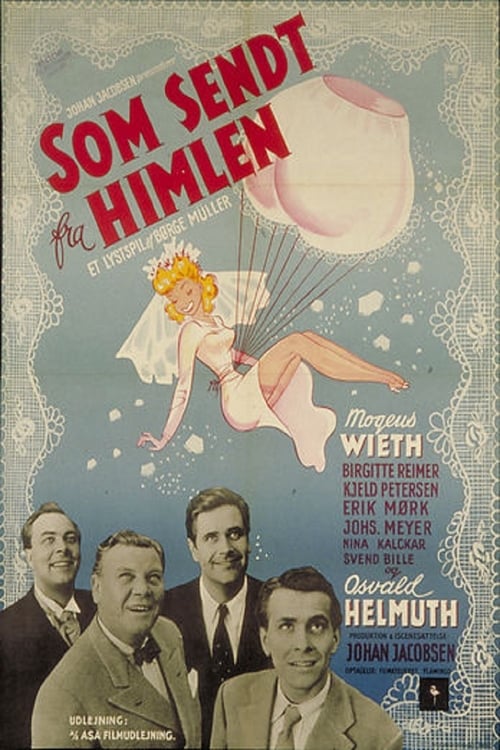
The ship arrives in Copenhagen and after a long time at sea, most of the crew are eager to go ashore. But who wants to take the very young navigator cadet with them? He who thinks only of food and a special young girl. During their visit to the girl, they are mistaken for businessmen whom the girl's father has been waiting for, which really sets the ball rolling.
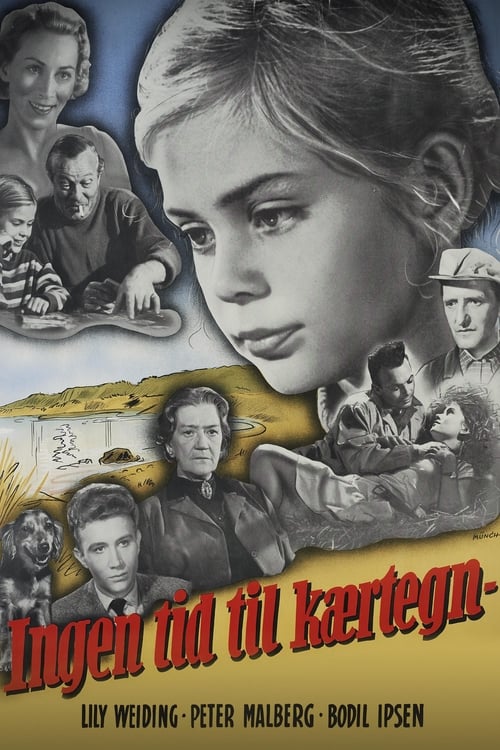
The Danish Ingen tid til Kaertegn (Be Dear to Me) is heavily reliant on the appeal of its star, 8-year-old Eva Cohn. Our heroine is the neglected child of a businessman father and actress mother. Feeling that happiness lies well outside her own backyard, Eva goes on a search for that happiness. The longer she stays away, the more her parents realize that they've unfairly ignored her. The plot is nothing new: it's what is done with it that pleases the eye and ear. Ingen tid til Kaertegn was one of the more popular entries in the 1957 Berlin Film Festival.
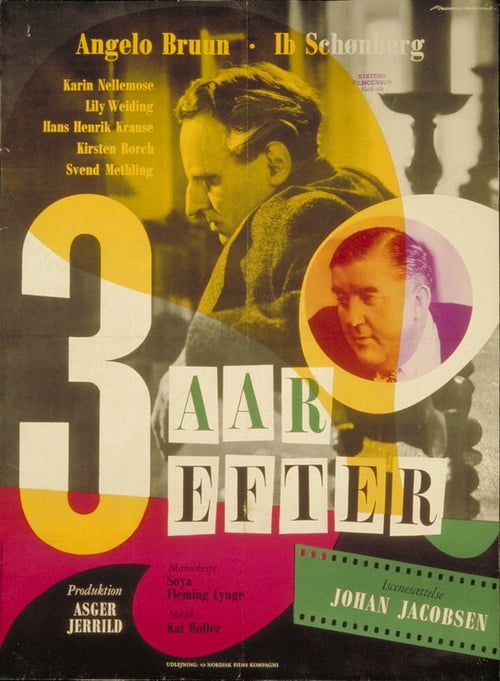
Soya's satirist take on variations of Danes, who willingly or unwillingly came to deal with German troops during the five year Second World War occupation.
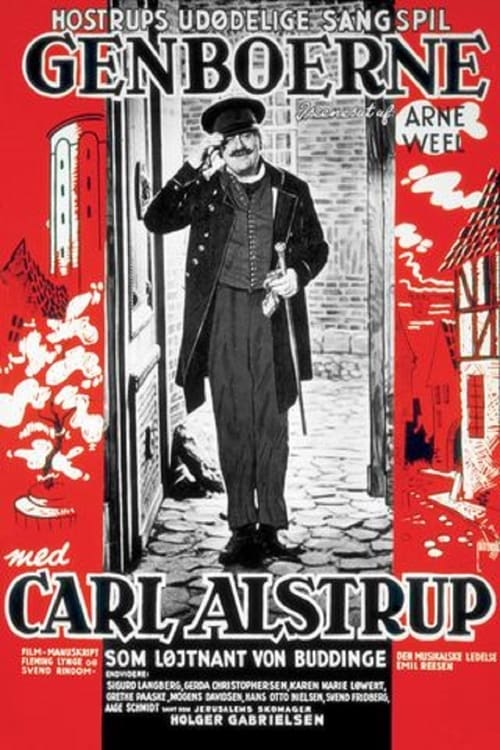
Opposite Regensen lives the brave and well-off coppersmith Smidt with his equally brave wife and their delightful young daughter Rikke, as well as the three journeymen Madsen, Mikkel and Lars, who, according to old craftsman custom, both eat and stay with the master. When an acquaintance of journeyman Madsen comes to visit, he learns that he is unhappily in love with Rikke, and he promises to help him get in touch with her.
Most of the ingredients in this filmed circus performance are familiar and simple, but something special has been added—something as simple as ordinary humanity. They talk and behave just like everyone else.
A different kind of Danish film about Denmark, the Danes, and everyday life in Denmark. An episodic film consisting of different storylines, which are linked together by several smaller scenes.
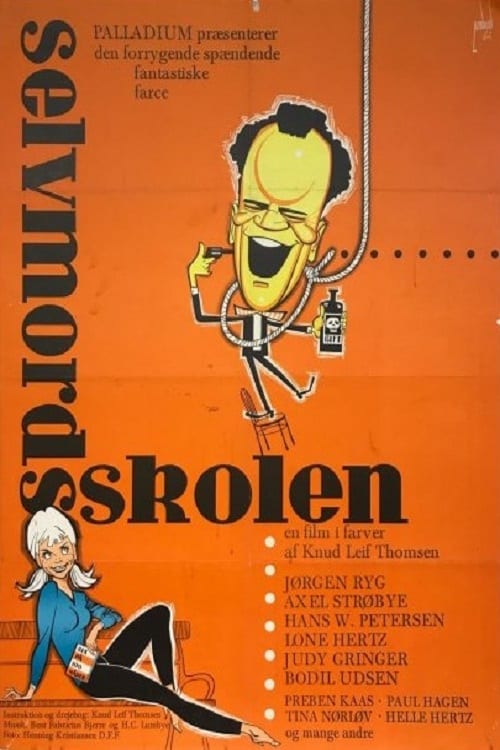
Bizarre satiric tale about an ordinary Danish man disappointed in life and the welfare system. Close to a total collapse he decides to take the easy way out. He seeks help at Doctor X, head of a suicide school that guarantees 100% efficiency.
The young and beautiful Laura Heiberg is to marry Torsten Vinge. When the priest asks if she will marry him, she says no. She flees from the church and gets a lift from Jonas Møller. He is heading north along the coast. At the 42 km marker in the forest, she asks to be dropped off. She follows a telephone wire to see where it ends. She finds a beautiful house in the forest. It looks uninhabited, but the door is open, so she goes inside. No one responds to her calls. She sends a telegram to an old flame, Herbert Thorsen, asking him to fetch some clothes from home and bring them to her. At the same time, she tells him that she did not get married after all. She finds a book called "What Do You Know About Yourself" written by Allan Krogh. She takes it out onto the terrace to read.
No description available.
The people depicted in the film have grown up from the Jutland soil and are marked by its toughness, centuries of struggle with the fabled heath, which in its lonely majesty seems to brood over great secrets that it is most reluctant to let go of. The struggle is hard and unspeakably bitter for the frugal Jutland heath farmer, and how many destinies are not buried under the silent monument of the heath?
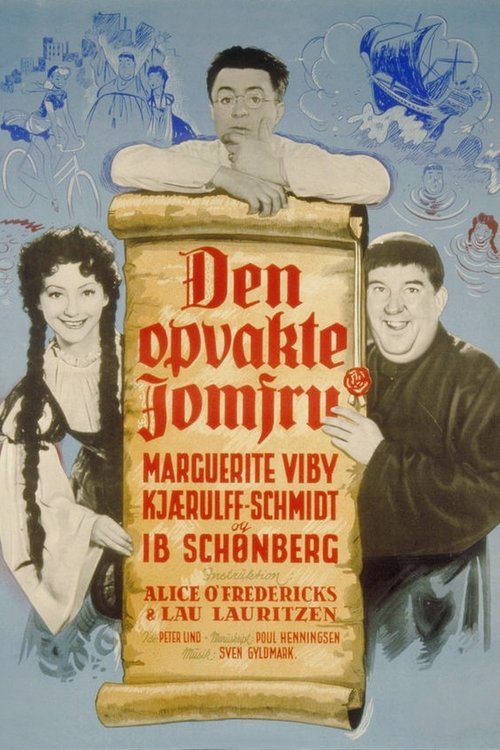
In the year 1520, during a violent hurricane in the North Sea, a ship in distress. The sailors are convinced that the abbot they have aboard is causing this. They throw him overboard with his holy scriptures.
Four young criminals are planning a heist against a racecourse and in order to obtain a seed capital they rob a gambling den. They celebrate the successful heist by throwing a party but it turns out to be a lot of disagreement within the group.
Mrs. Adda Ernst is a middle-aged lady of the bourgeoisie. She has a nice husband Mr. Ernst, a lovely home and two healthy children Birgit and Hans, who like most of their peers are interested in swing. Mrs. Adda is musical herself, and has a beautiful singing voice, sometimes she can fall into melancholy over the career she never had. But she is naturally endowed with a rare good mood, she soon sheds her sad mood. In reality, she has only one worry. She is afraid of getting old, and therefore makes some convulsive efforts to still seem young. She refuses to realize that her daughter has grown up.
Copenhagen in the 1890s. A pleasant city for those who experienced it at the time. This is the story of how Therese Schrøder came to live with Professor Jacobsen and became the children's nanny, which led to her meeting her sailor. This caused quite a stir in bourgeois circles at the time.
Young Jonas Tofte is a waiter in the theater café, but he is more than that; he is also a poet and has written a comedy that is about to premiere. With this, both he and his sweet little wife, Else, hope to be out of all the difficulties they have come to know so well. Once the premiere is over, all the bills will be paid, and Jonas can stop serving. But many difficulties still lie ahead for Jonas before the premiere is over.
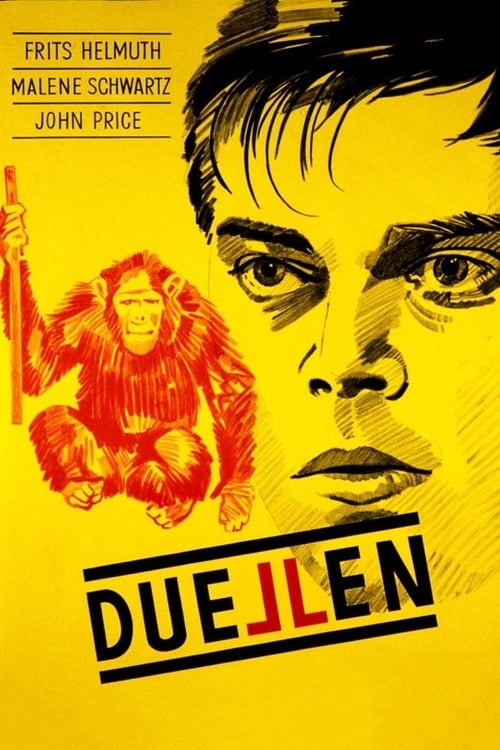
A sort of forerunner to Hollywood's Boogie Nights (1997), this Danish melodrama is set in the world of strip clubs. A medical student (Frits Helmuth) earns money for tuition working in a burlesque joint. He falls for one of the girls (Malene Schwarz), but she is also involved with a movie director (John Price). The director and Helmuth get into a philosophical debate about love and Darwinism, and the film ends with a duel (the film's title). Duellen was met with mostly incomprehension when it premiered and is no more lucid when viewed today. The striptease scene featuring full-frontal nudity is tame by modern standards.
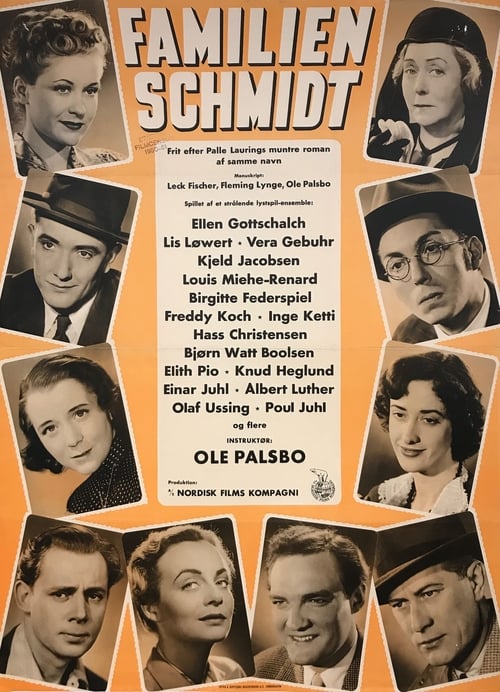
The bank is located in the square of a small, idyllic market town, and its manager, Anders B. Schmidt, is seriously ill in the town hospital. At the beginning of the story, he is quietly passing away. In the wealthy neighborhood of the market town, we find the bank manager's villa, which has been his pride and joy for many years. He leaves behind a deeply grieving widow and four adult children. It soon emerges that the respected citizen had a love affair before he got married, and this causes outrage.
A lost hat brings a powerful director and an aspiring actress together.
At the Central Theatre in the chorus girls' cloakroom, the girls have a very lively discussion: The ever-recurring topic - their various male acquaintances. The only one who doesn't join in the joke is the pretty Mette Madsen. She thinks her friends are frivolous and stupid. Oda Holm, who is a very pretty girl, full of sex appeal, claims that Mette, who is also an excellent chairwoman of the chorus girls' organization, is completely devoid of "Oomph". She is incapable of exerting any attraction on men. It becomes too much for Mette.