
Higor Campagnaro
Acting
Known For

The story of a mother and daughter with opposing views on the path to success in life takes the audience on a contemporary journey about character, ethics and honesty.
Anything Goes

No description available.
Filhos da Pátria

"E Aí - Comeu?" is a brazilian serie about the movie with the same name. The plot shows the story of love lives of three best friends Fernando (Bruno Mazzeo), Honório (Marcos Palmeira) and Afonsinho (Emilio Orciollo) who live different phases of their lives.
E Aí... Comeu?

After eight years of a political exile imposed by the Brazilian military dictatorship, sociologist Herbert de Souza returns to his homeland. Alongside democracy activists, he faces the arrival of AIDS and puts the devastating impact of hunger under the spotlight. Overcoming his fragile health and personal tragedy, he creates the largest social awareness campaign in Brazilian history.
Betinho: No Fio da Navalha

Gilda is a free woman, in the most literal sense of the word. She has excellent culinary skills, raises pigs and chickens in the backyard of her home for slaughter and produces recipes capable of enchanting her friends, family and lovers. Her independence bothers the neighborhood, especially Cacilda, wife of Ismael who is running for public office through a party linked to a religious group.
The Last Days of Gilda
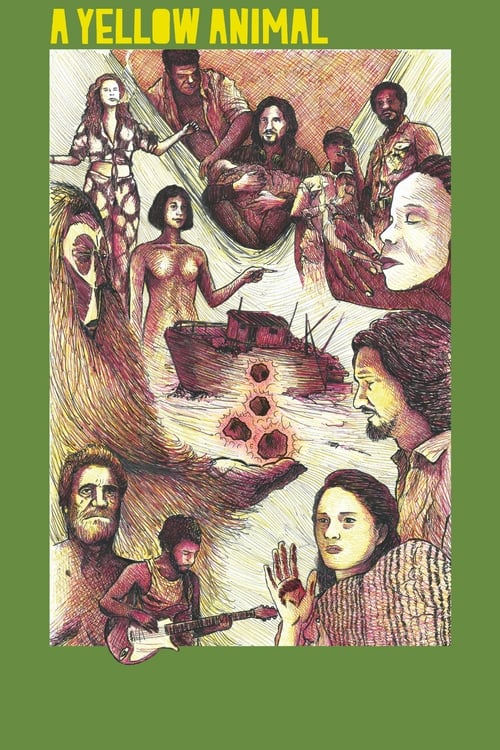
Obsessed with questions about his past, a bankrupt, white Brazilian filmmaker undertakes an epic journey from Brazil to Mozambique and Portugal. This melancholic fable mixes animation, live-action, voice-overs, genres, and continents to explore Brazil's colonial past.
A Yellow Animal
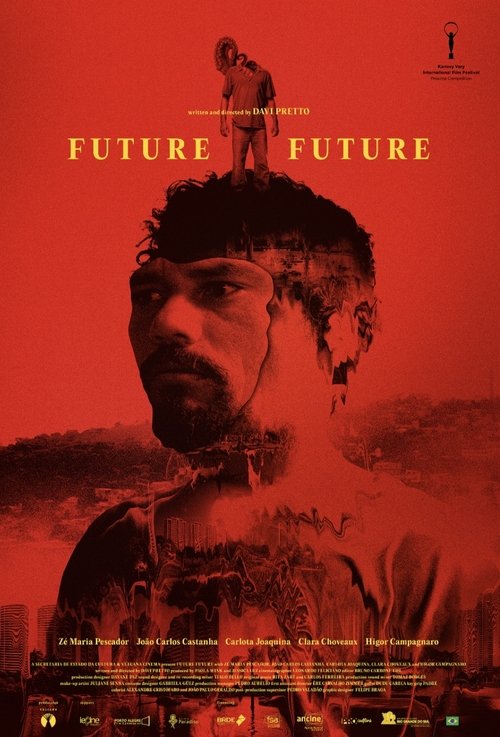
In a rainy Brazilian city, an amnesic man is taken in by a lonely clickworker at a course for people with a strange neurological syndrome. After using an addictive AI device, he embarks on a tragic and absurd journey to find where he truly belongs.
Future Future

When Maurício becomes a student at a top medical school, he becomes obsessed with a mystery linked to the dead bodies used for dissection.
M8 - When Death Rescues Life

"Party Crashers" chronicles the amusing encounter between Marco Polo (Marcelo Adnet), a Copacabana trickster, and Beto (Eduardo Sterblitch), a shy and insecure man, on the New Year's Eve in Rio. Together they crash parties and create a lot of confusion in search of the beautiful Laura.
Party Crashers

No description available.
Imperial Brazil

1983 — A young biologist returns home from studies abroad and feels something wrong with his body. This is the start of the AIDS crisis when the first wave of the epidemic hit Brazil. Lives will change, friends will be lost and the future is uncertain.
The First Fallen

Two moments in the life of Pedro. First in 1997, he lives with his family in Rio de Janeiro and works at Gás do Brasil, a company that is undergoing a tough restructuring process, with layoffs and early retirements. Soon, privatization will come. In the second moment, two years later, Pedro lives retired in his hometown Barbosa, in the company of his childhood memories, his dog and his girlfriend. By interweaving these two moments in time, we put ourselves in Pedro's skin and experience his fears and delights.
Jaguar Man
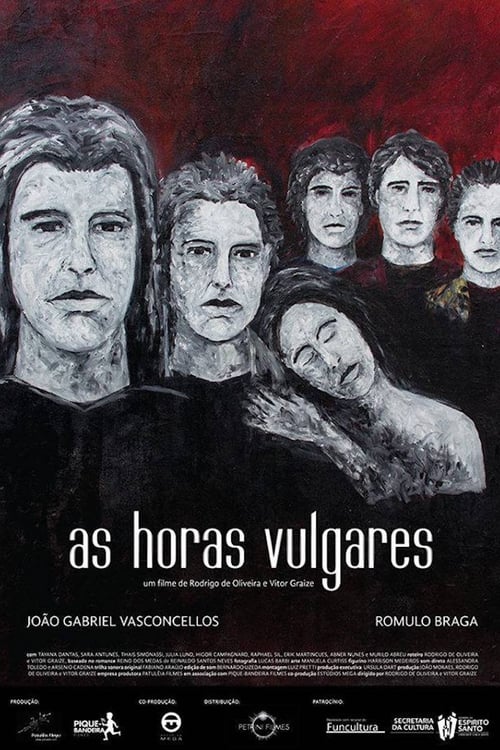
The painter Lauro seems to have a good life: he lives with his beloved wife Erika, and is successful working with art. However, he is not happy. One day, Lauro runs into Theo, a friend he hasn't seen in years. Both have already been in love with the same girl, Clara, who no longer lives in the city. It doesn't take long for the two to start remembering them as stories from the past, while taking a long walk through the streets of Vitória.
As Horas Vulgares

Empire of Brazil, 1870. A queer indigenous body slowly dies on the cross while a transgender gypsy woman is banned by her people. A half-breed soldier stands in the middle of the way. A child and an old woman cross their stories like destined lines on the palm of a hand.
I Seek Your Help to Bury a Man

Ana, a Portuguese actress, dives into Brazil's current atmosphere of identity and political crisis while trying to portray in a feature film the colourful life of famous singer and actress Carmen Miranda, who helped define Brazil's identity.
Bring me the Head of Carmen M.

Vera, imprisoned at a military fortress during the dictatorship, 1969, get to know a soldier, Armando, who, in the face of torture, decides to take messages from Vera to his family and establishes an affective relationship with D. Maria, Vera’s mother. Despite the horrors of the time, the film works on this possibility of a dialogue between two lonely and lost human beings: a high-middle-class lady and a young southerner of rural origin. Today, Vera, aged 70, is a professor at the university, and debates with her students about politics, forgiveness and Hannah Arendt.
The Messenger
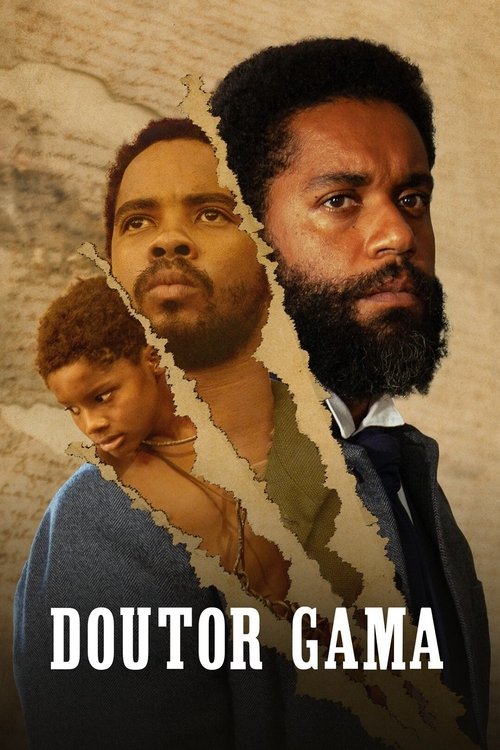
Based on the biography of Luiz Gama, one of the most important characters in Brazilian history, a black man who used the laws and courts to free more than 500 slaves. Born of a free womb, Gama was sold into slavery at the age of 10 to pay off his father's gambling debts. Even as a slave, he became literate, studied and earned his own freedom, becoming one of the most respected lawyers of his time. An abolitionist and republican who inspired an entire country.
Dr. Gama

COPA 181 is the first feature film by Brazilian director Dannon Lacerda. It is a 100% independent production that deals with the relationship of a couple that is affected by the events in a gay sauna. Awarded in several festivals in Brazil and in other countries, the director had the premiere of his film at the Rio de Janeiro International Film Festival in October 2017.
Copa 181

Mário returned to the world of the dead. He dug his escape into the earth, with no intention of taking revenge on the powerful men who pursued him. "The Fury (2024)" starts from a fantastic premise, a poetic license, to conclude the trilogy begun by "The Guns (1964)" and "The Fall (1978)."
A Fúria
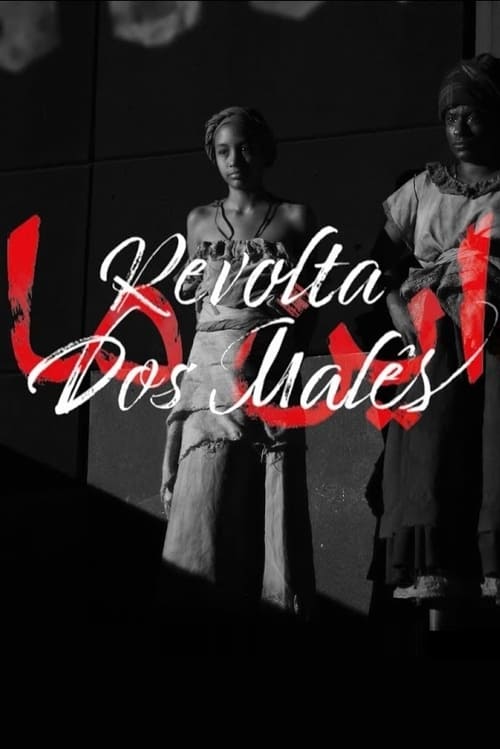
Salvador, Bahia, January 1835. After more than a decade of hard work, Guilhermina, 27, a slave of Muslim origin, finally gets the resources to buy her manumission, as well as that of Teresa, 11, her teenage daughter. But, contrary to an old promise, his “lord”, farmer Souza Velho, refuses to sell the girl's letter. When Pacific Licutan, Salvador's most esteemed Islamic leadership, is arrested by the Bahian authorities, the Muslim community goes into a boiling state and begins to articulate a jihad. In desperation, Guilhermina sees in the uprising the only way to win her daughter's freedom.