Acting
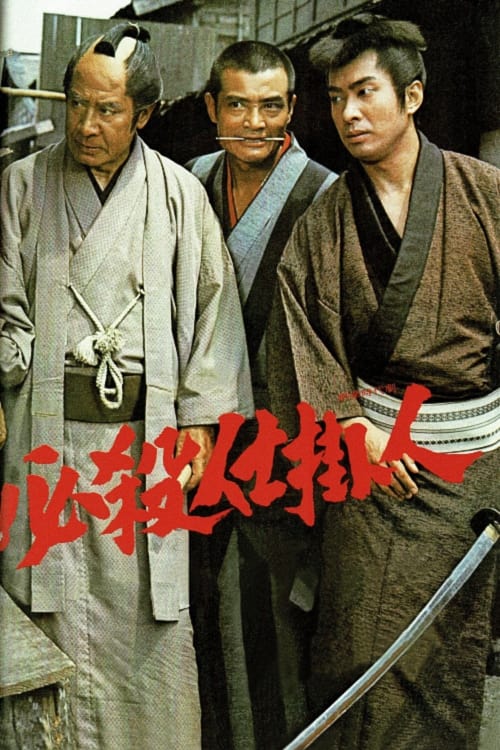
A shikakenin was an under-the-cover trade that undertook killing in Edo. Hanemon of Otowa, an agency that introduced laborers and maids, was also one of these. Katsugoro Iseya was a timber dealer who had come in as a client. His target was the constructions magistrate Hanno, and the Tatsumiya who sipped on the benefits. Hanemon who had a stong code towards killing, where he would only kill those who do no good to be in the world, accepts this request. Baian Fujieda, a needle doctor would carry out the killing. However, the professional killer Baian fails to bring down Tatsumiya. Hanemon then looks to another shikakenin, the ronin Sanai Nishimura for the role. Although Sanai's ability with the sword is good, he lives poorly in a tenement, and accepts this commission on the condition that it is kept a secret from his wife and child. Here, they close in on Hanno and Tatsumiya again...
The Nakata family, father, mother, son Hideo, and daughters Taeko and Akiko live in the poorer section of modern Tokyo. Their troubles start when the father leaves with another woman, returns after he is rejected, and leaves again with the family's money.
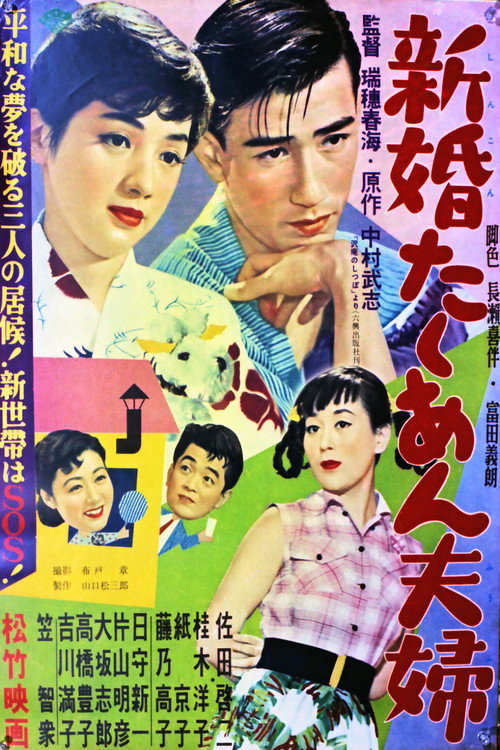
Akiko divorces her husband Fujikawa due to his infidelity, and when she returns to her parents' home, she finds that her family's toy factory is in decline, and she has to work hard to rebuild it. Thanks to the mediation of Niimura, who is a close friend of her brother Shinichi and has feelings for Akiko, they are able to secure a sales contract with a foreign trading company for the toy that Shinichi invented. However, Fujikawa, who has a grudge against Akiko, begins to interfere by making cheap imitations...
Toshiko is the madam of a bar in Osaka who tries to keep her private life private and claims not to have a lover. However, she is in fact having a secret affair.
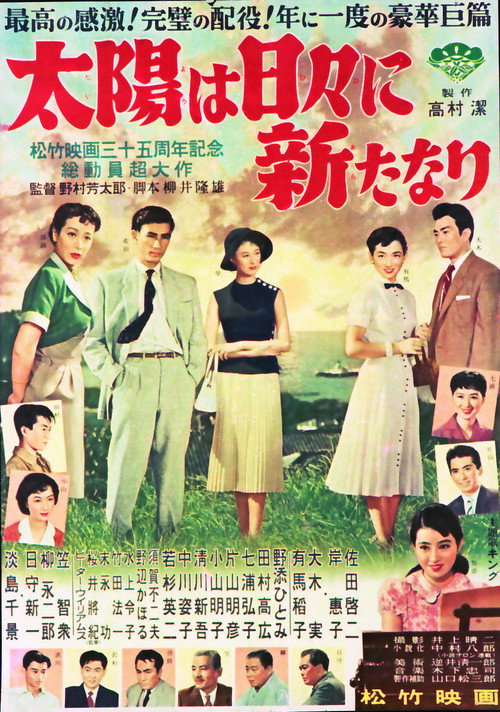
Produced by Shochiku’s all-star cast as a commemorative film to mark the completion of the “Shochiku Kaikan” in Tsukiji, Tokyo, this movie introduces both the Shochiku Ofuna and Kyoto studios. Part One focuses on the studio’s behind-the-scenes staff: set designers, prop masters, and lighting technicians. Part Two presents a digest-style overview of the process surrounding a young woman who auditions for the “New Faces” program, from the auditions to her debut as an actress.
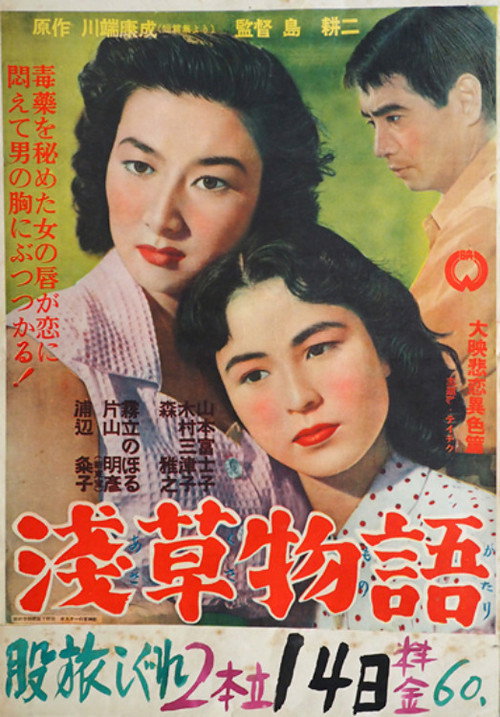
No description available.
In this four part mystery-adventure, detective Kogoro Akechi and the members of the Boy Detectives Club must capture the Bronze Monster, a giant metal monster that steals valuable clocks.
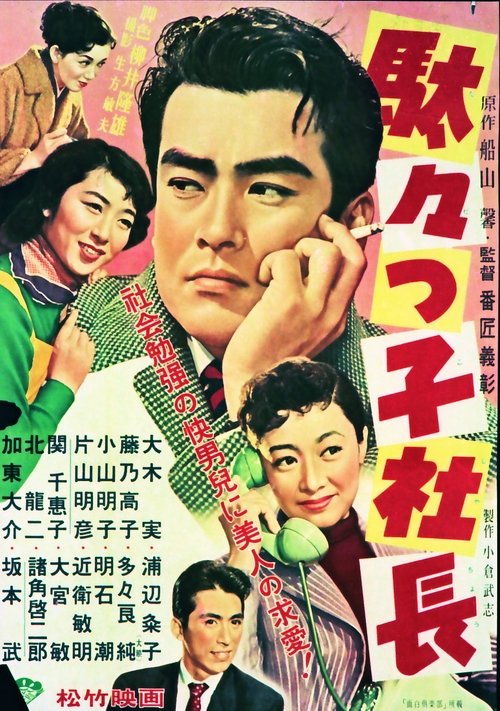
1956 Japanese movie
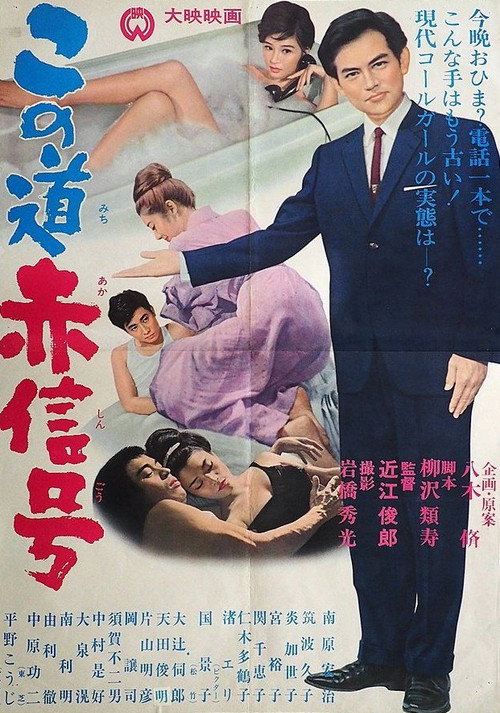
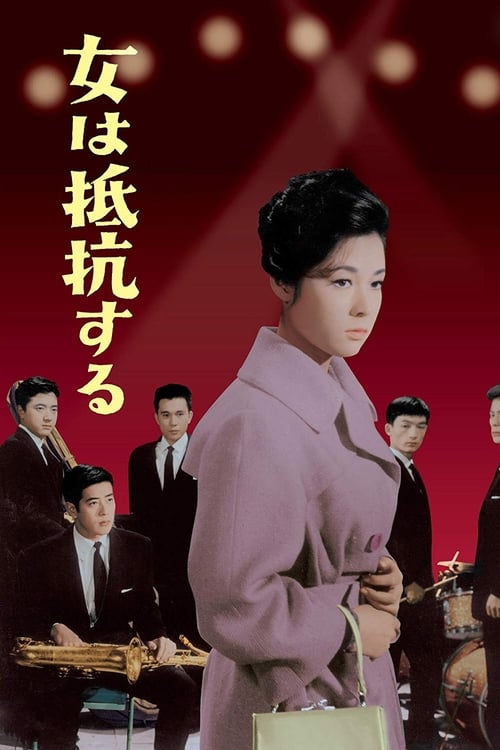
This film depicts women who throw themselves into the world of call girls as an easy way to make a living and seek pleasure, only to ruin their lives through money and sex.
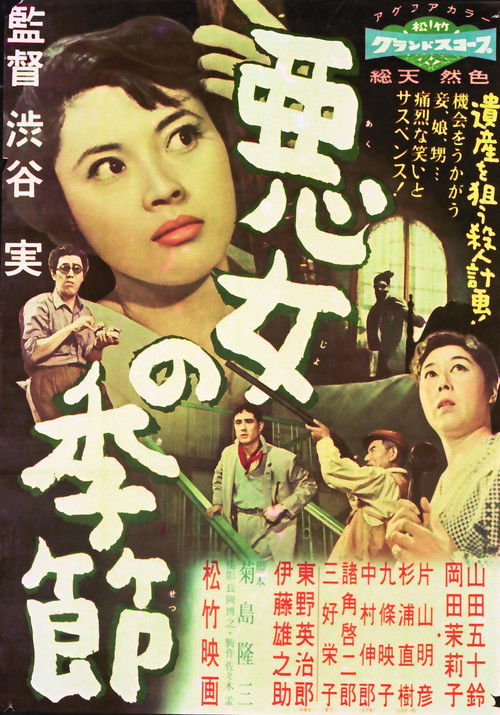
The common-law wife and daughter of a wealthy old man plot to murder him and steal his fortune, with the help of their male acquaintances.
The story of love and friendship between a seamstress girl and a member of a student ensemble, who, against all odds, turned a song written by the composer about adversity into a real hit.
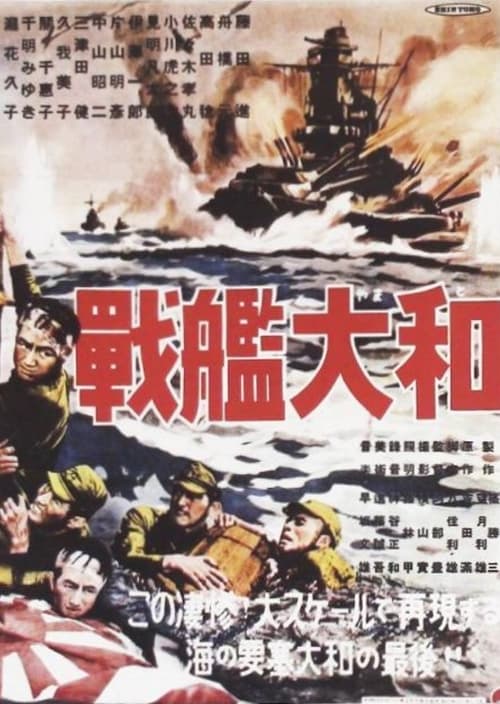
The film is about the Yamato's suicide mission to Okinawa in March 1945 to defend the homeland threatened by U.S. bombers. Adapted from Mitsuru Yoshida's 1952 book "Requiem for the Battleship Yamato".
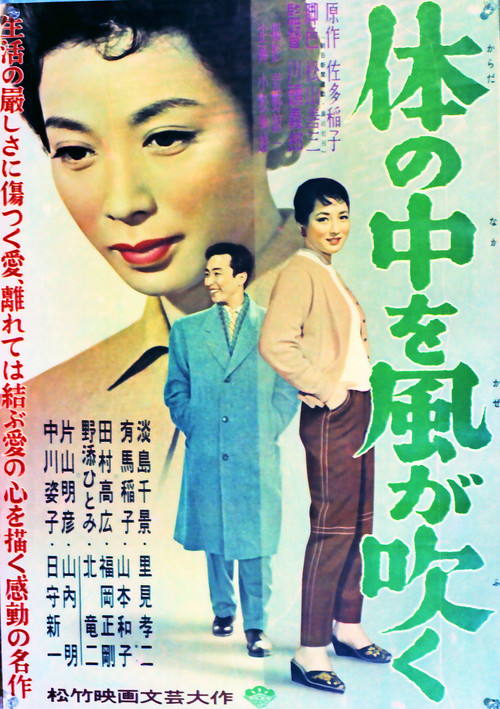
Born into a poor farming family, Yukie left home with her only son Ryokichi, leaving her grandfather Heisaku behind, to search for her husband Ryohei, who had run away. Ryohei was working in a coal mine in Hokkaido, but he was already living with a woman named Otami, who was pregnant with his child. With no time to wallow in despair, Yukie resolved to work single-handedly to support Ryokichi, but no matter how hard she worked, she could not provide for him adequately. Yet, thinking of Ryokichi’s future, she could not bring herself to die, so she took a job as a barmaid at Yamagataya, living on the premises.
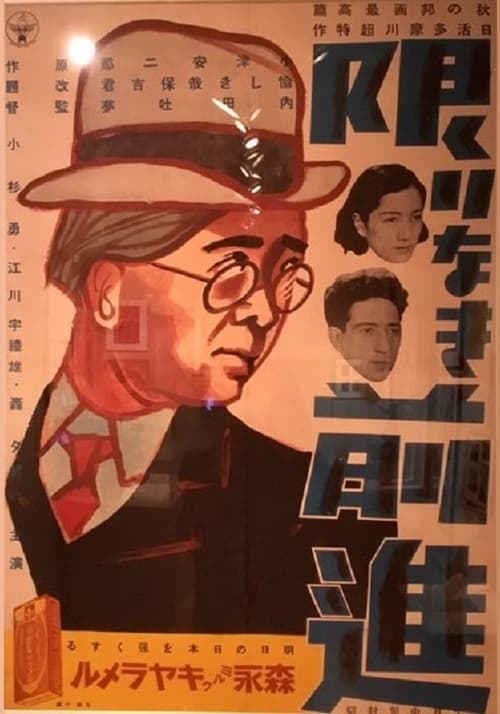
One of Uchida’s early sound films, Unending Advance is based on a curious story by Yasujiro Ozu, in which an examination of the quotidian problems of a middle-aged salaryman and his family segues into an idyllic dream of an implausible future. The surviving print, although incomplete, offers an essential glimpse into Uchida’s prewar period, when he was associated more with realist dramas than with the period films that dominated his work after the war.
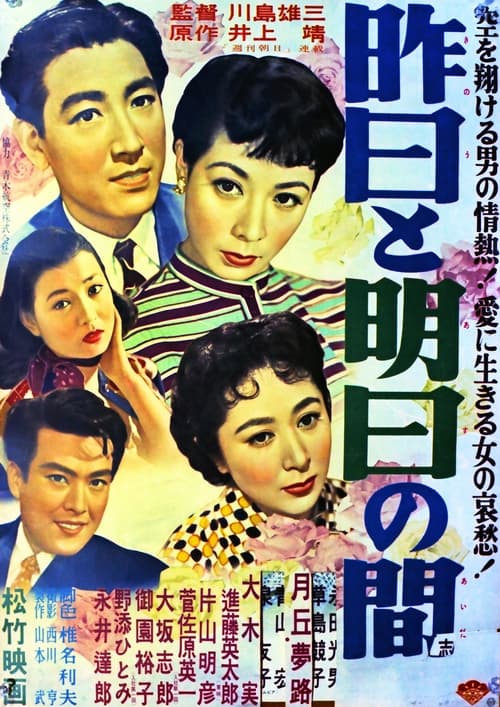
A young man hands in his notice at work and breaks up with his girlfriend in order to pursue his true nature and dream of shaping the world according to his own desires. Against all the odds, he manages to push through his business idea – the foundation of an airline. At the same time, his ex-girlfriend refuses to accept their separation and attempts to force her way back into his life by any means possible. He in turn feels attracted to a young woman, who turns out to be the wife of one of his airline investors and who has herself had a secret lover for several years.
Adapted from a novel by Kaoru Funayama