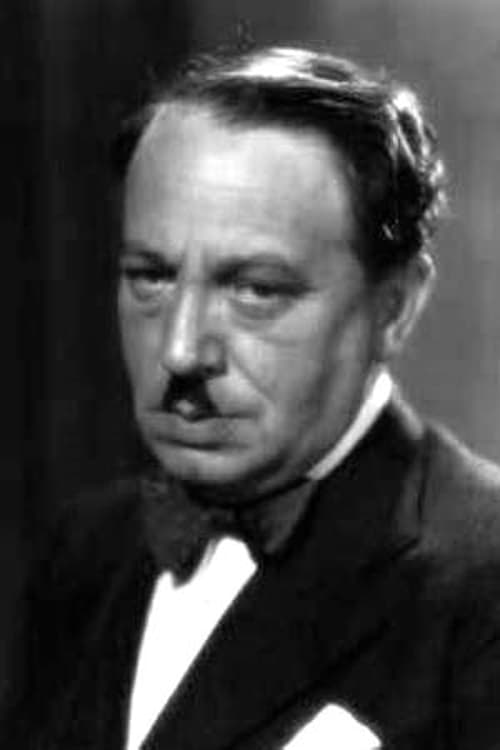
Gyula Gózon
Acting
Biography
Gyula Gózon (19 April 1885, Nové Zámky – 8 October 1972, Budapest) was a Hungarian actor and comedian. Gyula Gózon was born on 19 April 1885, in Nové Zámky, but grew up in Esztergom. With the mentoring of his brother, he could fulfill his dream of learning to be a singer actor at the actor school of Szidi Rákosi in Budapest. After graduating, he joins a group touring the southern part of the country, often working under harsh conditions, changing location and repertory often. During this period he has the chance to polish his prosaic capabilities, one that was omitted in Rákosi's school. After playing in Târgu Mureş and Miercurea Ciuc, he gains the attention of Miklós Erdélyi, the director of Oradea's theater, who offers him contract in 1904. He plays here for six years, and befriends Gyula Kabos, forming a lifelong comradeship, and comedic duo. In 1912 Endre Nagy offers him to join his newly forming Cabaret (Apolló theatre) in Budapest, followed by years working in the Népopera and Király Theatre. Gózon accepted his first movie role in 1914 (the silent film A becsapott újságíró), appearing nearly a hundred during his lifetime. In 1917 he marries Lili Berky, with whom he starts the Muskátli Cabaret, often appearing on stage together. After the venture failed in 1920, he joins the Belvárosi Theatre in 1927, followed by the Új Theatre two years later. With Gyula Kabos he gets a role in Kék Bálvány, Hungary's first major motion picture, and like his mate, Gózon quickly becomes a much used actor of the emerging movie industry, appearing in the first hits of Budapest's theatres, like Hyppolit a lakáj or Meseautó. In 1935, along with his wife, he is contracted to the National Theatre). On the account of Jew-laws, he is banned from work in 1941, followed by years of hiding in his Rákosliget home during World War II. In 1945 Gózon re-joins the National Theatre, enjoying a second flowering of his career for a decade. After his wife's death in 1958, the health of the now 73-year-old actor began to fail, and seven years after his last appearance in the National Theatre, he died on 8 October 1972. Gyula Gózon is one of the few entertainers who could be successful and active all along the years of the Monarchy, the Horthy regime, and the Communist rule. Throughout his long career, he appeared in over 90 movies (including silent ones), and was both a pioneer and master of the Hungarian Cabaret. He received the Kossuth Prize in 1954. His former home in Rákosliget is now home to the Gózon Gyula Repertory Theater, opened in 2005. Description above from the Wikipedia article Gyula Gózon, licensed under CC-BY-SA, full list of contributors on Wikipedia.
Known For

Ignác Semmelweis is 18 and is in Vienna, training to become a judge-advocate, to comply with the wishes of his family. He is, however, attracted by the medical science, and joins the team of Professor Rokitanszky.
Semmelweis

No description available.
Könnyű múzsa

A comedy about the organisation of agricultural co-operatives. In the village of "Rendes", everybody has already entered the co-op, only the stubborn farmer, Bódog Balogh continues to resist. The leadership plays all their tricks and uses all their efforts, but all in vain.
I'll Appeal to the Minister
Baron Lóránt, now bankrupt for reasons for which he cannot be blamed, starts a new life in America, accompanied by Péter, his faithful valet. They both work as waiters in a bar. Things turn nasty when Lóránt recognises his uncle in one of the bar's customers. Embarrassed by his present job, he refuses to serve his uncle and is, therefore, promptly given the sack.
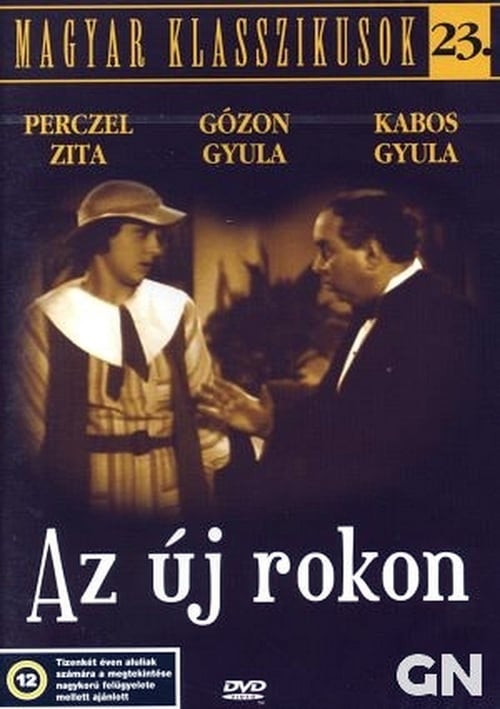
The Blue Idol

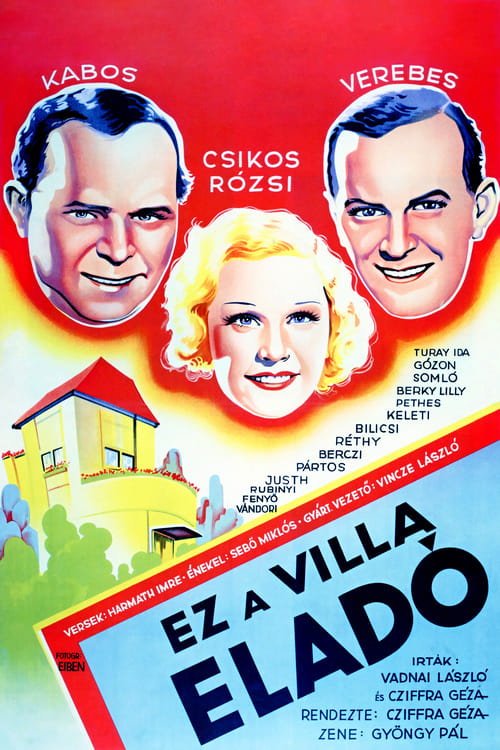
A light hearted comedy, from the thirties. One of the most successful ones in Hungary. The ever enchanting story of a beautiful girl falling in love with a rich man.
The Dream Car

Young playboy Pál Milkó, nephew of the mill’s powerful CEO, insults and even strikes the company’s venerable accountant, Andor Virág, who quits in anger. To make amends, Pál rents a room in Virág’s home, avoids the old man but courts his beautiful daughter, soon hopelessly falling in love.
Lovagias ügy

In the vocational school the professionally excellent Dani János works on his own invention in his leisure time, but he does not like learning. However, even his own father learns in the evenings, he will become a teacher.
Young at Heart

Every member of a small community in the snow-capped Bükk Mountains is trying to help the doctor get to István Simon forester's house where his wife is about to give birth to their first child.
The Birth of Menyhért Simon

Another winner from Hungarian director Ivan Szekely (aka S.K. Seeley and Steve Sekely), A Nosty fiu Esete Toth Marival was released in English-speaking regions as I Married for Love. Feri Noszty (Paul Javor) is a handsome but irresponsible Hussar officer who prefers a life of wine, women and song to his military responsibilities. Unwilling to bow to family pressure, Feri refuses to marry heiress Mary Toth (Eva Szorenyi) for her dowry alone. But Mary falls in love with the prideful Feri, and to win his affections she poses as her own poverty-stricken maid. Based on a novel by Kalman Mikszath, A Noszty Fiu Esete Toth Marival was filmed simultaneously in Hungarian- and German-language versions.
Young Noszty and Mary Toth

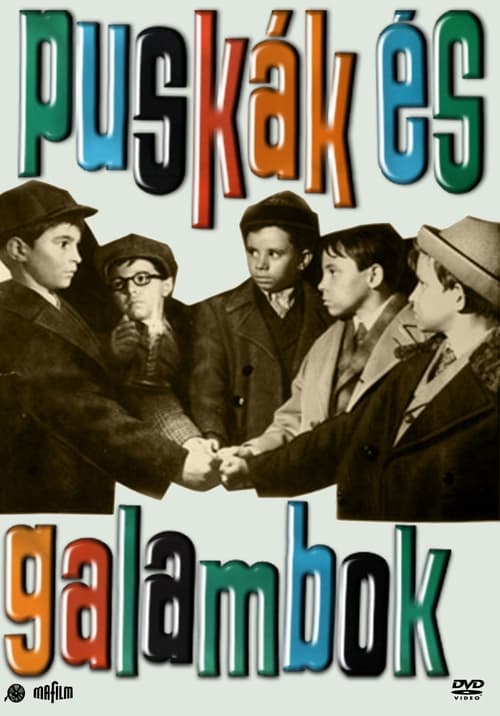
1920 in a mining town in the country-side. The team of children led by Ferkó Boda fish guns and a flag of Red soldiers out of the local lake.
Guns and Doves

Cabinet crisis threatens in Futbólia, due to a series of lost matches. The head of state charges admiral Duca with the task, as a last chance, to get hold of the football star of the Hungarian team presently playing in Switzerland.
The Football Star

On the Spring of 1945 the Jackson circus is heading towards the border with the clown Peti and Aida, the elephant. They have to play for the Hungarian Fascists, while Peti is hiding the Jew Annuska and Sanyika.
Keep Your Chin Up!

A Hungarian-language film loosely based on the 1883 operetta Eine Nacht in Venedig (A Night in Venice) by Johann Strauss II. The film was shot simultaneously while making the German film A Night in Venice (1934). The Hungarian version was co-directed by Robert Wiene and Géza von Cziffra and used a separate cast of Hungarian actors. From Wikipedia.
A Night in Venice

In May 1919 in a small rural town beside Salgótarján the local high society wants to get the power back with the leadership of dr. Máriáss, exploiting the outside attack launched against the Republic of Councils.
The Day of Wrath

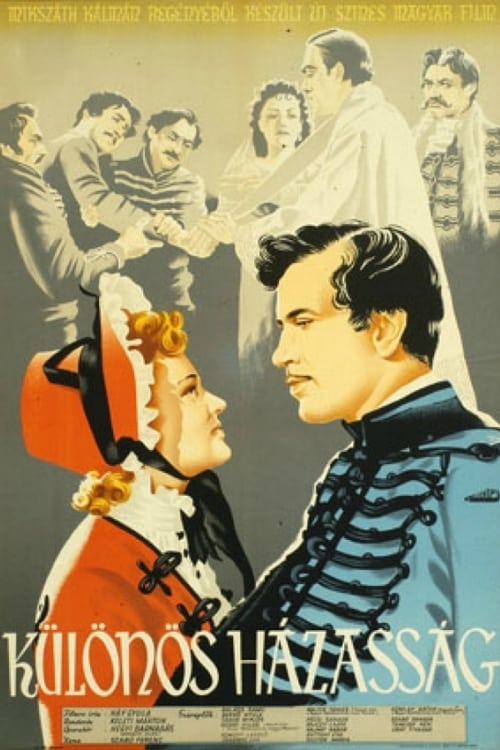
Count János Buttler rushes home to his parents and his beloved for the school holidays. On the way, they stop at Baron Dőry's house, where János is deviously trapped. In the presence of false witnesses, he is forcibly married to Baron Dőry's pregnant daughter. The swearing priest is the father of the unborn child. Although Buttler, his family and friends do their utmost to have the marriage annulled, the Church and the court, fearing for his authority, will not allow it. John Buttler and his lover therefore choose another way to divorce.
A Strange Marriage

The story, which takes place in the reform era, centres around Mrs. Déry, a legendary actress, who, along with her fellow actors and actresses, travels around the country to become the herald of the Hungarian language, performing in villages and towns up and down the land as strolling players, a woman who is not put off by the prospect of starvation and the dearth of a home to return to and security to live in.
Mrs. Déry
The protagonist of the story is Flora, a teacher who wants to teach in the village, in accordance with her vocation and her oath. Her beauty and purity bring her into conflict with the local authorities and with the landowning family of the countryside. Aware of her truth, she defies them, but can only count on the sympathy of the old priest. István Nagy Jr., the idle, dissolute landowner's son, falls in love with Flóra, and love changes him: he takes her side, exposing the lecherous hypocrites.
The School-Mistress

Éva Balogh travels to Pest to attend her friend's wedding, but the wedding is cancelled because the groom backs out at the last minute (for the third time). Éva mistakenly blames Paul Murray, the world-famous pianist, for the broken marriage promise. The pianist, who changes his girlfriends frequently, mistakes the temperamental, snappy jazz girl for one of his forgotten old flames. By the time the truth comes out, Eve and Murray are in love, and another slap - now undoubtedly for Murray - can't keep them apart.
Pardon, tévedtem

The grey hero of grey workdays, the divorced cashier of a cinema who is always willing to sacrifice herself for others, Etelka, is awarded a two-week-holiday at Lake Balaton. Following the advice of her female friend, she tries to live life at full speed.
Just a Joke

It tells the story of Marie, an austerely beautiful young peasant girl played by the French star, Annabella. She is seduced beneath a flowering tree by the admirer of one of the daughters of the prosperous family for whom she works, becomes pregnant and is cast out.