Directing
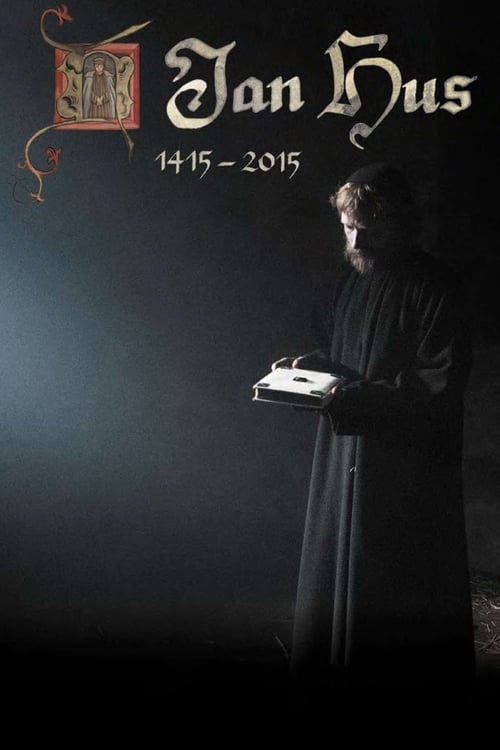
Prague at the end of the 14th century: King Wenceslas, his brother Sigismund, the Archbishop of Prague Zbynek and three popes are locked in a power struggle. All lay claim to influence over the Holy See. Jan Hus, a master of Charles University and preacher, feels partly responsible for the fate of the divided church and its faithful, for whom it serves as a role model. He thus attracts the resentment of the powerful. "Jan Hus" is the story of a man who, because of his convictions, faced death in the battle between the opinions and ambitions of ecclesiastical and secular authorities.
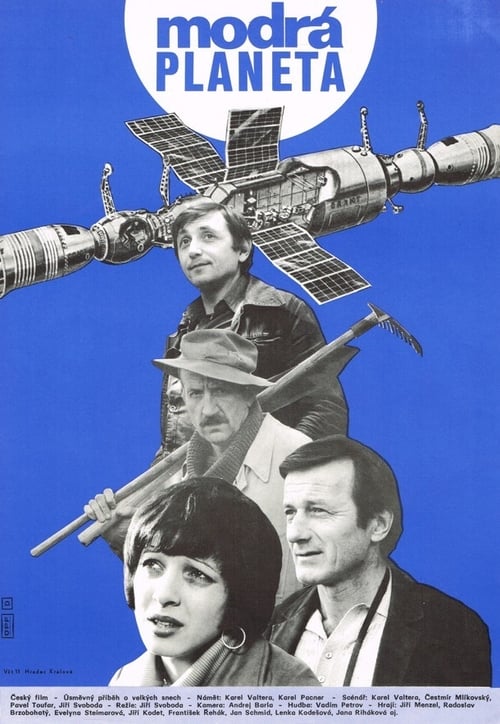
A young engineer, Štěpán Pavlík, dreams of becoming a cosmonaut.
A thriller loosely based on one of the most violent Czech criminal cases of the nineties, popularly known as the Orlík murders. The film delves into the motivation behind the killings, exposing their exceptional cruelty and an absolute absence of moral values. The perpetrators executed four people on their way to achieving material gain. Two of the bodies were found at the bottom of Orlík reservoir, the third perished in a bomb blast, and the forth was shot at home...
No description available.
The story begins at the airport and on an international express train, which is being carried by a German citizen, Otto Lang. The conductor and his girlfriend are solving the problem of living together, and it seems that the conductor has come into a lot of money. In the evening, a fight breaks out between two young men in a nearby pub. The next day, the body of one of them is found near the track. However, the investigators come across another body in the forest, this time that of an unknown man. They try to find out his identity and the relationship between the dead. They start questioning the people who were on duty on the express train that night. They also come across several hotel scammers. Then another clue appears – heroin found on another German citizen. With each new fact, the search seems more difficult...
Lieutenant Alan Kreiner tries to obtain evidence of criminal activity through an informant. However, when his boss is shot with his gun, Alan is accused of the murder and must prove his innocence.
The film was based on the novel "Milión" by Karel Štorkán. The book and the film depict the events surrounding the great construction disaster in Prague in 1928, in which 46 construction workers died. The disaster thrilled the entire republic at the time, yet was never fully explained. The filmmakers focus on the story of Ing. Vondrák, the designer of the construction.
In a veterinary research institute, its workers are trying to deal with the sudden appearance of rabies. However, the work problem grows into a personal issue for each of them, especially for MVDr. Eva Krausová. Up until this point, Eva had lived the most ordinary life. A single mother in her forties, employed at the institute in a job that had already become routine; one day a week spent with a boyfriend – without any claim to any shared perspective; short holidays with a family in the countryside with a child, who is looked after by Eva's mother during the year. A woman who has not made it very far. Until one day, chance presents her with an opportunity that she has subconsciously been waiting for since her youth and forgotten about for years. But now, at forty?
What led a former top scientist to rob a bank and hold a dozen hostages? Czech Television's crime thriller based on Martin Goffa's novel "The Little Girl" is squeezed into two environments - the interior of a robbed bank with hostages and the interior of a crisis management car, from where the police communicate with the mysterious attacker and try, like him, to play for time and find out more about him. The flashbacks also tell the story of the attacker's daughter Karin from the recent past, gradually revealing a connection with what is happening in the current storyline.
The story takes place in the Czech-German border region in 1938. The hero Tomás Jakl marries but the marriage is not very lucky and falls apart. His German friend forced him to enter the Nazi party.
A Christian orphan raised in a Jewish family has to face the cruel fate of Auschwitz during World War II.
The 19-year-old volleyball player has been bedridden for a long time due to a spinal injury. The self-confident and energetic girl has time to recap her life and short sporting career so far...
An aging professor at a Prague neurological clinic is forced to confront his personal values and the harsh boundaries of medical science. Already burdened by the ultimate questions of life and death, his ethical convictions are put to the test by Víťa, a young patient with an inoperable tumor.
František Cepl is a young man from a simple family. He graduated from a real school and was going to study technology. When the occupation came, he had to work as a factory assistant. There he meets an older man named Telec, whom everyone knows as Hrabě. He impresses František with his ostentatious disdain for work and his shameless flirtation with women. František, whom the Count calls Papilio (butterfly butterfly), is filled with youthful ideals, while the Count, on the other hand, is an extract of the crudest individualism. He has worked his way up from a student at a business academy and a theatre actor to a member of a pre-war gallery. He blackmails, steals, drinks, abuses women and, in a way, Papilio himself.
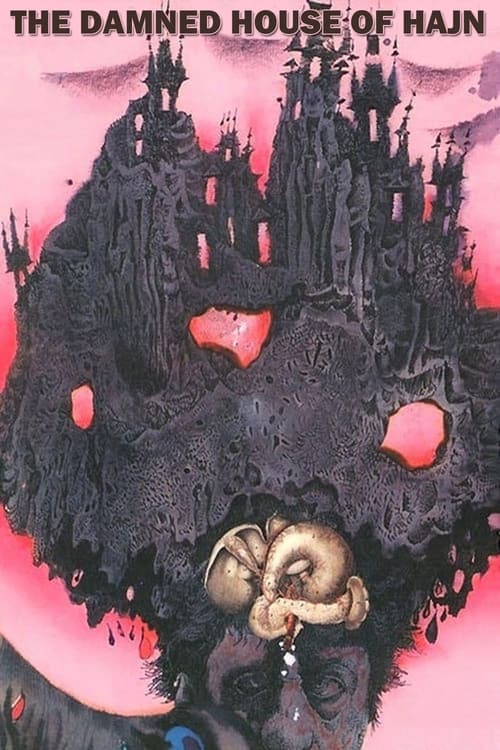
Sonya is the heiress to the riches of a Czech noble family—the Hajns. Petr, a social climber marries her, ignoring some shady goings-on—in particular, an insane uncle who prowls the mansion believing himself invisible, a peccadillo the family indulges. The uncle’s stalking every corner of the house, popping out of cupboards and out from behind curtains slowly takes its toll on the young bride.
A man's life is turned upside down by the tsunami disaster. This suspenseful, almost detective-like story is set against the backdrop of the real-life natural disaster that struck the shores of the Indian Ocean in late 2004, when a devastating tsunami wave affected the lives of hundreds of thousands of people.
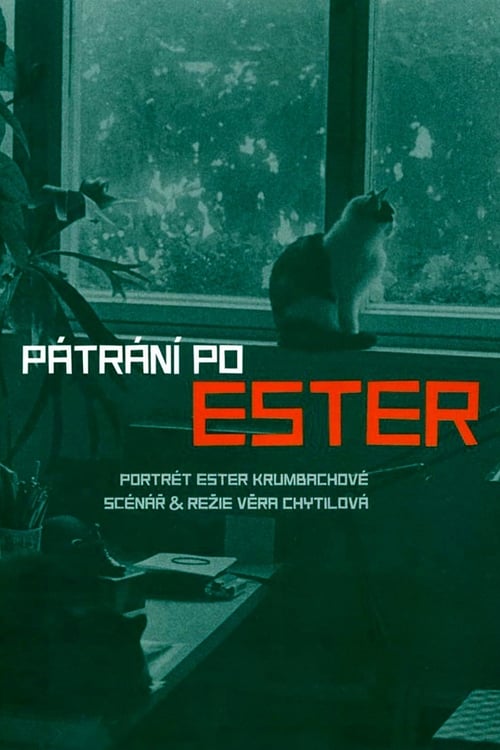
Ester Krumbachová - a costume designer, screenwriter, director; one of the boldest personalities of the Czech New Wave. She worked in theatre, she was a writer and an illustrator. She co-created films such as O slavnosti a hostech (1966), Sedmikrásky (1966), Vsichni dobrí rodáci (1969), Pension pro svobodné pány (1968), Valerie a týden divu (1970), Slamený klobouk (1972) and many others. In the 1960s, she was a 'pivot' of the art scene in Prague, attracting artists who were on the threshold of their career, just setting out to find their own form of self-realization. Those who underwent her tutelage remember her forever. Director Vera Chytilová talks to those who knew Ester Krumbachová, who worked with her, befriended her, loved her. She sets off on a search that is to end by answering the question: Who was Ester?
After the occupation of Czechoslovakia by Warsaw Pact troops, everyone is packing their bags to leave the country. Martin Ivánek, who has just been dismissed from his position as head physician, has a valid passport and an exit visa to the United Kingdom. He has made up his mind. But! He has a complicated medical case on his hands, which turns into a personal commitment.