Sound
The Kennedy Center Honors is an annual honor given to those in the performing arts for their lifetime of contributions to American culture.
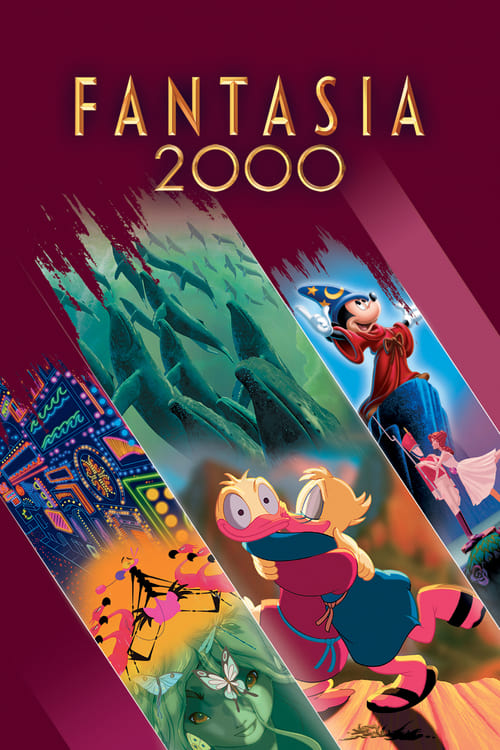
Blending lively music and brilliant animation, this sequel to the original 'Fantasia' restores 'The Sorcerer's Apprentice' and adds seven new shorts.
Luciano Pavarotti brings his spectacular voice and artistry to one of the most famous of all tenor roles—Manrico, the ardent troubadour, trapped in an impossible situation by forces beyond his control. The sensational Dolora Zajick, only days after her Met debut, gives an incandescent performance as the demented gypsy Azucena, thirsting for revenge against Count Di Luna (Sherrill Milnes). Eva Marton is the passionate Leonora, desired by both Manrico and the Count, and James Levine brilliantly leads the Met’s orchestra and chorus in some of Verdi’s best-known music.
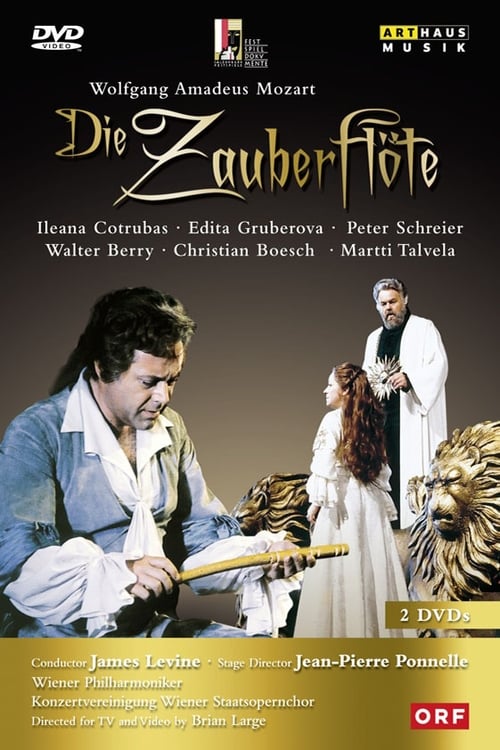
Mozart’s “The Magic Flute”
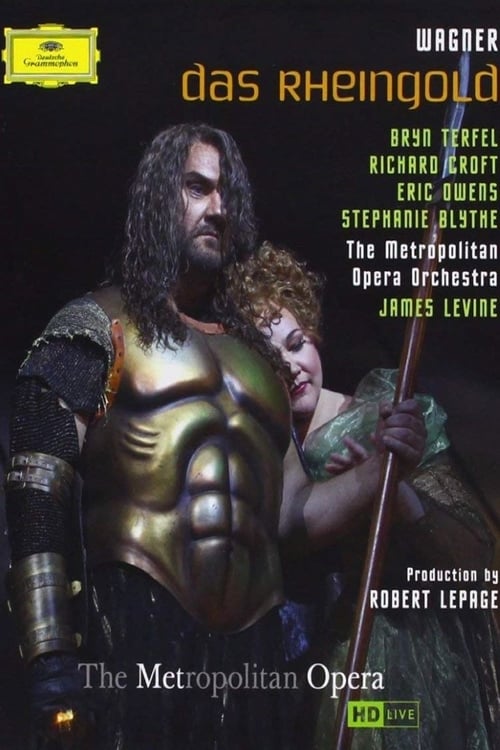
In the depths of the Rhine, the three Rhinemaidens guard the Rhinegold, a treasure of immeasurable value. The Nibelung dwarf Alberich is dazzled by the sight of it. The girls explain that whoever wins the gold and forges it into a ring will gain power over the world, but must first renounce love. Frustrated by his unsuccessful attempts to catch one of the girls, Alberich curses love and steals the gold. Wotan, lord of the gods, is reproached by his wife Fricka: he has promised to give Freia, goddess of youth, to the giants Fasolt and Fafner in return for their building a fortress for the gods. When the giants demand their reward, Loge, the god of fire, suggests an alternative payment: the ring Alberich has forged from the Rhinegold, and his other treasures. The giants agree, and Wotan and Loge leave for the Nibelungs’ underground home.
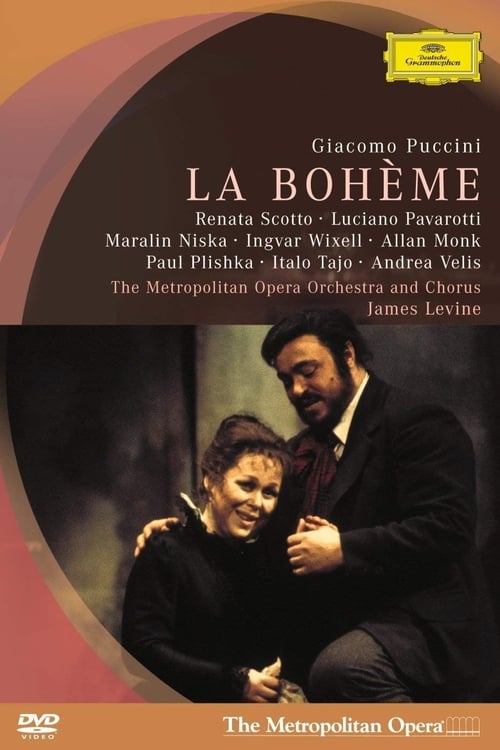
Puccini’s heartbreaking story of young love in the garrets of Belle Epoque Paris has attracted many famous singers through the years. But with James Levine at the helm and the starry duo of Luciano Pavarotti and Renata Scotto as Rodolfo and Mimi, every bit of emotion in the score pours across the footlights and seduces the audience. In this case, the audience was in the millions since this was the very first in the “Live from the Met” series of telecasts. The evocative production is by Fabrizio Melano, designed by Pier Luigi Pizzi.
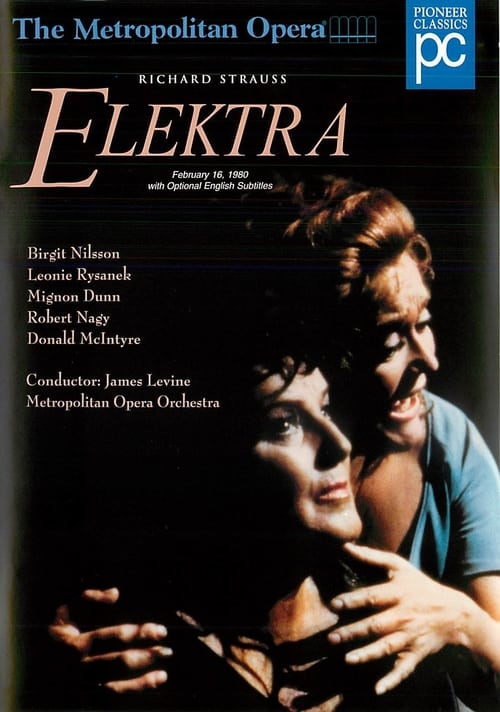
The Metropolitan Opera live production of Richard Strauss's opera Elektra on February 16, 1980
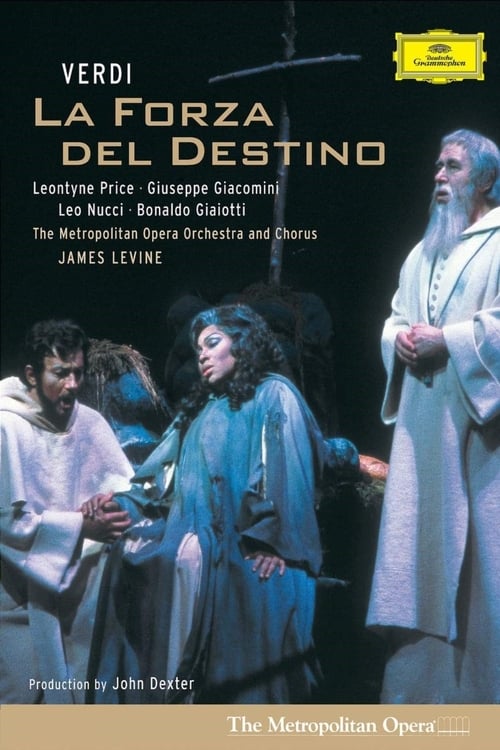
Leonora plans to elope with Don Alvaro, but he accidentally shoots and kills her father, who curses them as he dies. The lovers go on the run, but get separated. Bent on revenge, Leonora's brother Don Carlo, hunts them down. Verdi painted an immense canvas with this dark but tuneful opera, vividly brought to life in John Dexter’s production, with sets by the great Eugene Berman. The legendary Leontyne Price is seen in one of her greatest roles, Leonora. Price’s soaring voice encompasses every nuance of Leonora’s emotion as she moves from joy through resignation to ultimate heartbreak. James Levine’s brilliant leading of the Met orchestra and chorus is a lesson in Verdi style. Giuseppe Giacomini is Alvaro, the man Leonora loves, and Leo Nucci is Don Carlo, the dark instrument of their Fate.
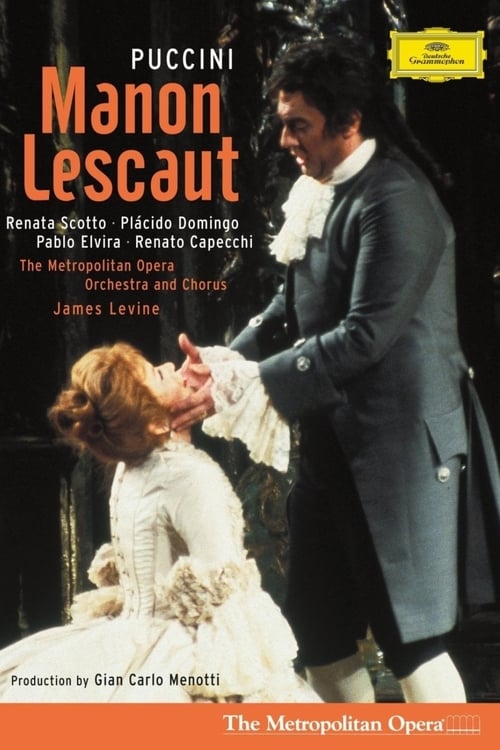
All the throbbing eroticism—and ultimate heartbreak—of Puccini’s youthful score is unleashed by James Levine and his top-flight cast. Plácido Domingo is Des Grieux, the handsome, headstrong young aristocrat who falls head over heels for the enticing, impetuous Manon Lescaut (Renata Scotto). Manon returns his love, but her obsession with luxury ruins them both. Gian Carlo Menotti’s opulent production, with sets and costumes by Desmond Heeley, superbly captures the colorful world of 18th century France.
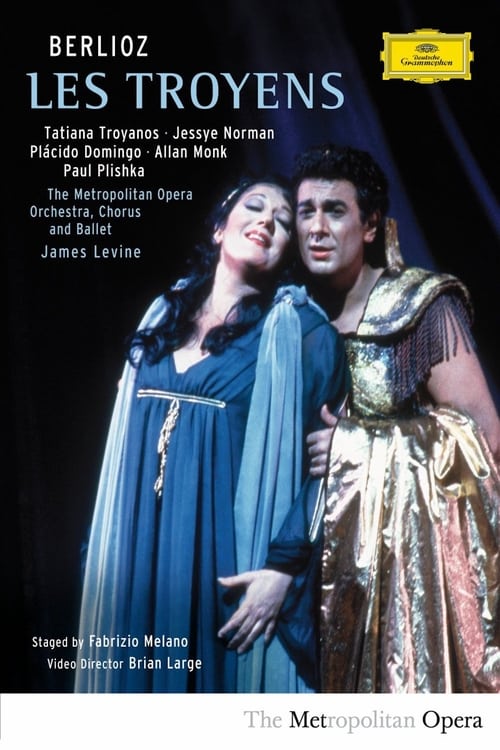
Berlioz’s colossal masterpiece requires stupendous forces—dozens of soloists, enormous chorus, orchestra and ballet, a superb conductor who understands the uniqueness of the score—plus a production that does visual justice to the work. “A stupendous achievement” was one critic’s assessment of Peter Wexler’s inventive production. And with James Levine’s wizardry galvanizing the marvelous all-star cast, this is truly a gem. Plácido Domingo is the legendary hero Aeneas, Jessye Norman the obsessed prophetess Cassandra, and Tatiana Troyanos is Queen Dido, who commits suicide when Aeneas leaves her.
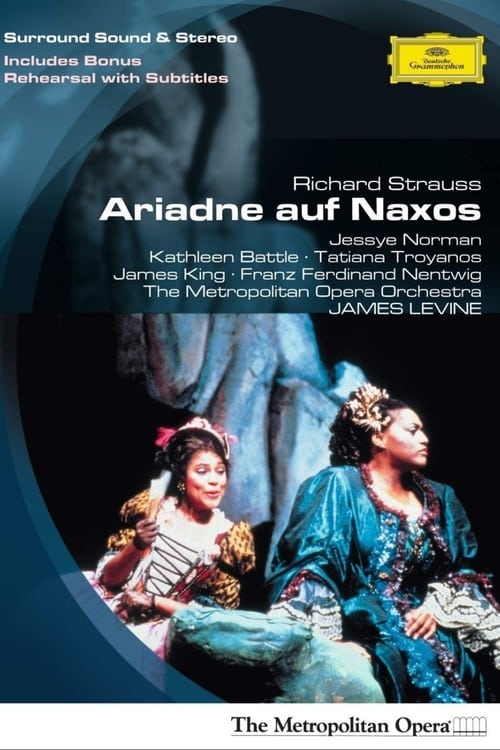
Jessye Norman is a regal Ariadne, the mythological Greek heroine in this opera-within-an-opera, opposite the passionate Bacchus of the great James King. Kathleen Battle delivers the coloratura fireworks of Zerbinetta, the leader of a commedia dell’arte troupe that finds itself stranded on Ariadne’s island. Tatiana Troyanos and Franz Ferdinand Nentwig star as the young Composer and the Music Master in the opera’s prologue. James Levine brings out all the color and charm of Strauss’s brilliant chamber-sized score with its equal amounts of pathos and humor. Bodo Igesz’s production features sets by esteemed designer Oliver Messel.
Live from the Metropolitan Opera 19 December 2009.
This was one of the most emotional evenings in Met history—the night Leontyne Price bid farewell to opera. Aida is the role that inspired audiences around the world to acclaim her as the greatest Verdi soprano of her time. And this telecast shows why: the famous soaring phrases that seemed to never end, the shimmering top to her lustrous voice, undimmed by the years. But most of all, there is the ennobling heart and soul Price lavished on every performance—captured here forever. With James Levine conducting the Met orchestra, chorus, and ballet.
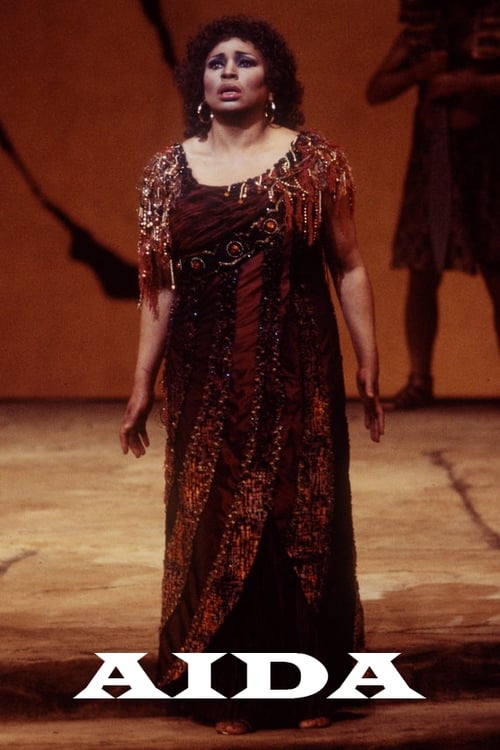
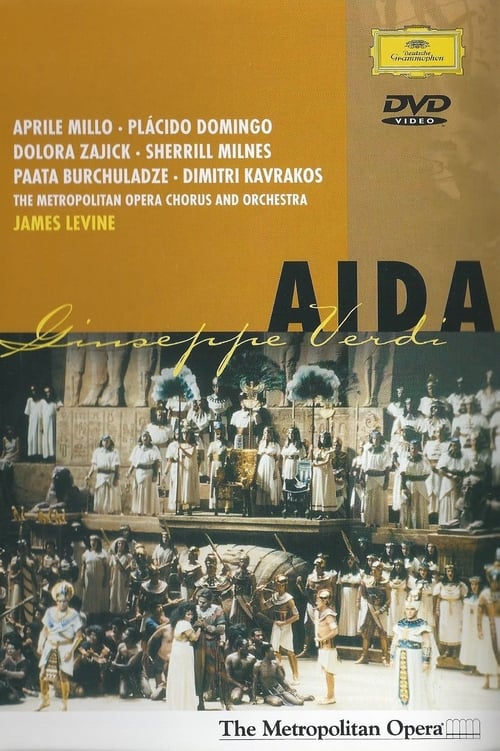
AIDA, an Ethiopian princess, is captured and brought into slavery in Egypt. A military commander, Radamès, struggles to choose between his love for her and his loyalty to the Pharaoh. To complicate the story further, Radamès is loved by the Pharaoh's daughter Amneris, although he does not return her feelings. Sonja Frisell’s production captures all the grandeur and excitement of Verdi’s monumental opera, particularly the great triumphal scene where the Egyptian army, led by Radamès (Plácido Domingo), returns victorious from war. Aprile Millo is Aida, the slave girl whose love for Radamès has her squaring off with Amneris (Dolora Zajick), the Egyptian princess who also loves him. Sherrill Milnes is Amonasro, and James Levine leads The Metropolitan Opera Orchestra, Chorus, and Ballet.
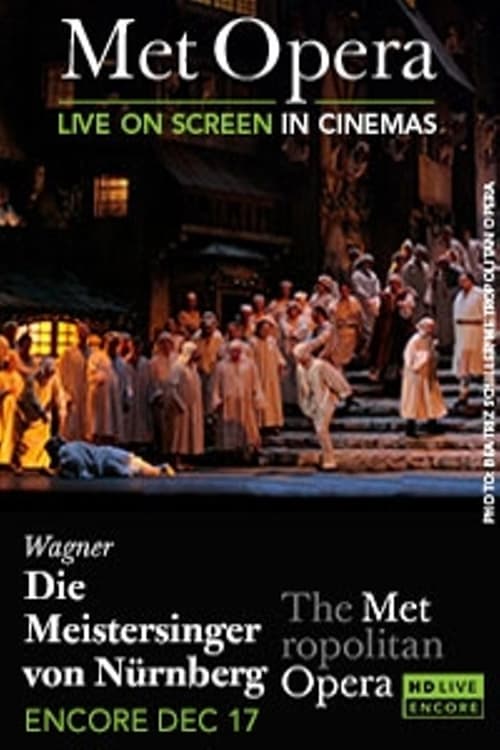
James Levine leads a stirring performance of Wagner’s epic comedy, seen in Otto Schenk’s classic production. Baritone Michael Volle stars as Hans Sachs, the cobbler-poet at the heart of this story of love, art, and youth vs. age. Leading Wagnerian tenor Johan Botha is Walther von Stolzing, the young knight whose new ideas upset the traditional ways of the mastersingers, and Annette Dasch sings Eva, the girl he loves, whose hand has been promised to the winner of a singing contest. Johannes Martin Kränzle as the pedantic town clerk Beckmesser, Hans-Peter König as Pogner, Eva’s father, and Paul Appleby as David, Sachs’s apprentice complete the stellar cast.
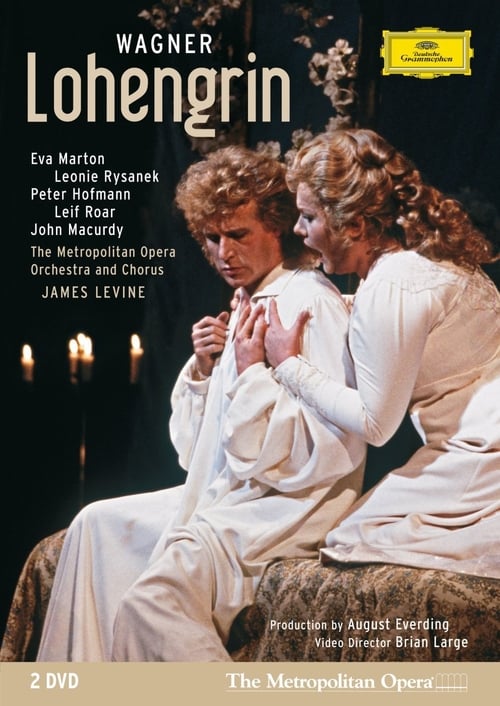
Wagner’s Romantic opera demands singing actors who can truly inhabit their parts, and that’s just what we have here. Is it possible for a Knight of the Holy Grail to look more enticing than Peter Hofmann? No wonder Elsa (Eva Marton) falls in love at first sight. Marton’s heroine is innocent, but she is also a passionate, real-life young woman—which is good, because Leonie Rysanek is positively demented as Ortrud, the sorceress who accuses Elsa and Lohengrin of using magic. With James Levine’s superb conducting, the orchestra and chorus are similarly magical.
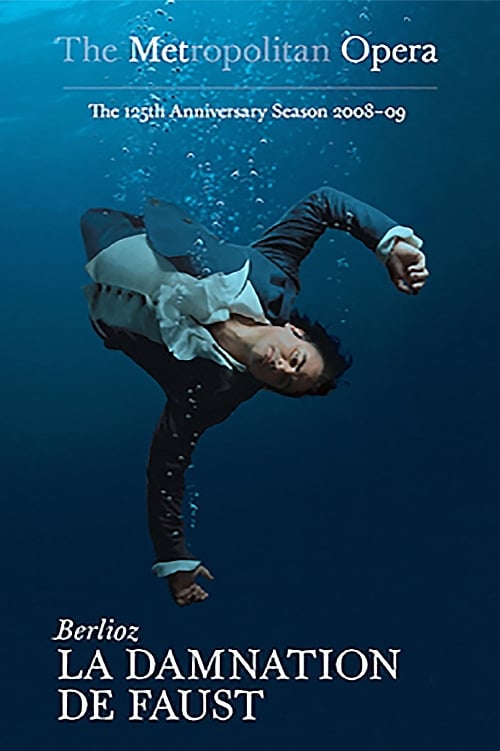
Radiant mezzo-soprano Susan Graham and dashing Italian tenor Marcello Giordani are unlucky lovers in La Damnation de Faust, Hector Berlioz’s classic take on dancing with the devil.
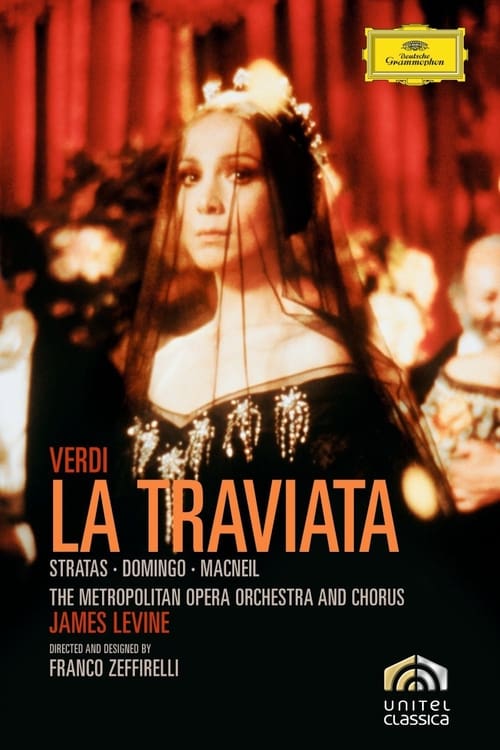
This “Traviata” became one of the most succesful of all opera films, especially in France, where 800,000 Parisian cinemagoers flocked to it in the first six week. It was nominated for two Oscars (for production and costume design) and won BAFTAs in those two categories, as well as receiving BAFTA and Golden Globe nominations as 1983’s Best Foreign-Language Film.
A storage facility employee discovers someone is living in one of the units.
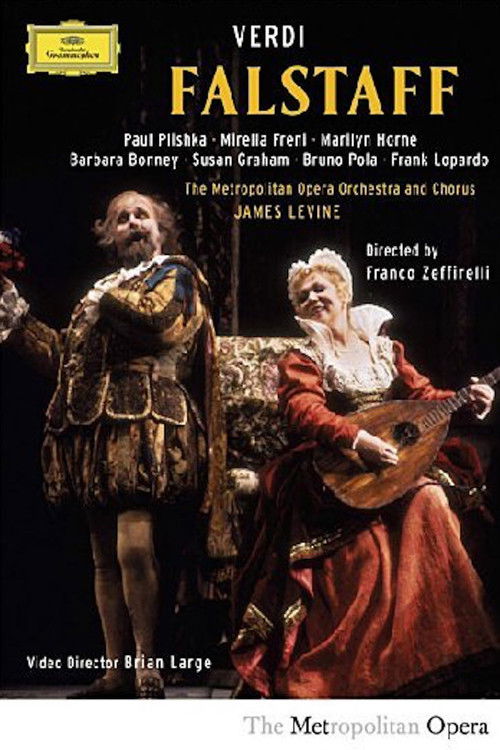
It is to composer and librettist Arrigo Boito and his constant pestering of the octogenarian Verdi that there remained within him one last great comedy fighting to get out that we owe this absolute miracle of an opera. Produced in 1893 as Verdi turned 80 there is much in this masterpiece that can be identified as a modernist neoclassical work. The use of short motifs instead of long arioso melodic lines, the spry and reduced orchestral textures and the lack of a single 'stand and deliver' dramatic declamatory aria all serve to make this more of a 20th century work than an example of 19th century late-Romanticism.