Acting
This VPRO's ‘summer classic’ is based on an equally simple and refreshing idea that originated in 1988: When during the summer most of the channels are showing reruns, ask interesting people people to curate their ‘favorite television evening’ and let them clarify the fragments in a long-form interview/conversation. The programme was first aired in 1988. Each episode takes up an entire Sunday evening, lasting typically three hours. It consists of an in-depth studio interview with a notable Dutch, Belgian or other Dutch-speaking foreigner, interspersed with cinema or television footage selected by the guest, which is subsequently discussed. Guests include writers, scientists, television personalities, politicians or business people.
No description available.
Lucia, Giacomo Casanova’s only great love, leaves Italy for Amsterdam after her face has been disfigured by smallpox. Sixteen years later, they meet again when she has reinvented herself as a veiled courtesan. Without revealing her true identity or showing her face, Lucia and Giacomo become lovers once again. Will Lucia dare to reveal herself and turn her weakness into her strength so that she can be truly free in the eyes of her great love?
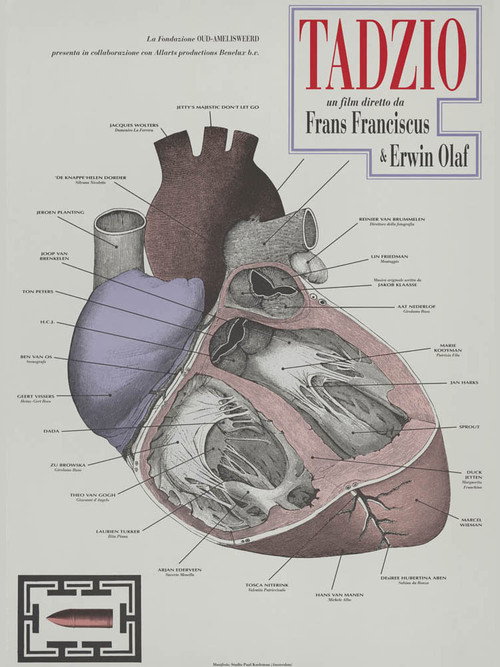
Overstimulated by flamboyant props and distracted by extravagant queens pacing up and down the rooms and corridors, one easily forgets the 18th-century country house serving as the backdrop in Tadzio. Yet this imposing bourgeois mansion was the starting point of it all, as well as the only constraint the directing duo of the short film had to consider. An eminent Dutch cultural critic, Els Hoek, challenged several artists to feature this particular place in an audiovisual artwork. She provided them with a generous budget and left them to do the rest. Three films emerged from her idea – Tadzio among them.
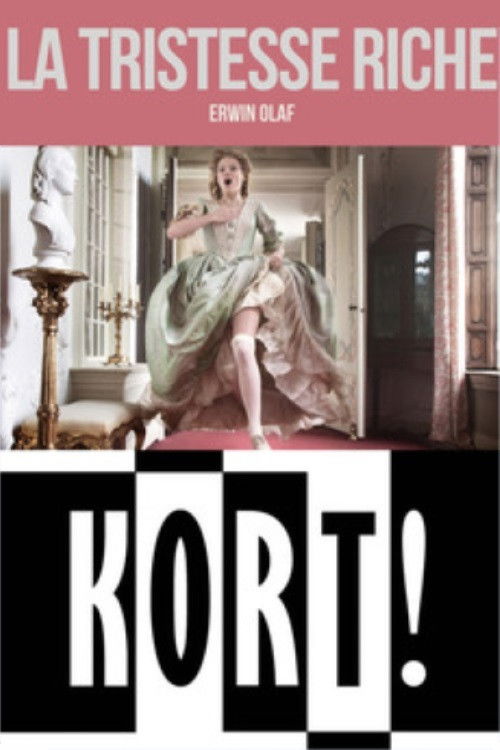
Stylised, largely French-spoken homage to Luchino Visconti about a 19th century young noblewoman who is surrounded by people from the moment she awakes. Resigned, she undergoes the morning ritual, in which three servants clothe her and do her hair. During the day, she grows increasingly paranoid. The people she sees remain unnoticed by the others. Or is she really watched?
In a large open and light shower room a boy is washing himself, posing like he is acting in a shower gel commercial. With exaggerated movements, his hands slide all over his skin with the foam pouring plentifully down his body, as if this scene sprang from someone else’s imagination.
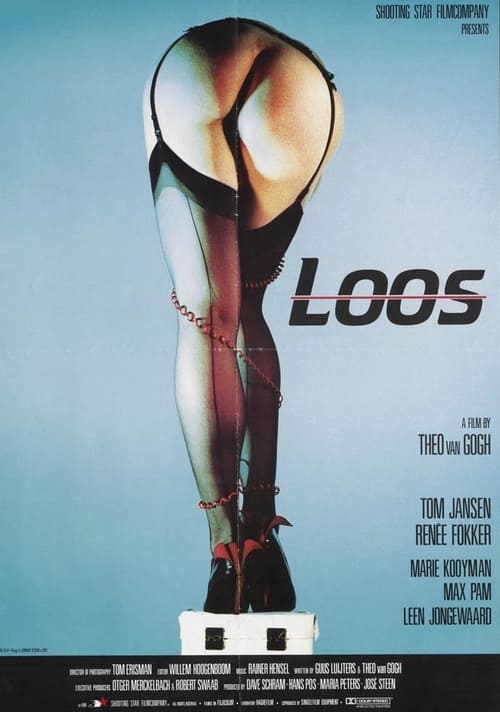
A lawyer must defend a nightclub owner accused of committing a crime-of-passion.
Dutch photographer Erwin Olaf (1959) is on the threshold of an important year: his most recent photographic series, Hope, Grief and Rain appear to have given him an international breakthrough. His work has been criticized since the 1980s as being produced merely for its shock value, thus eliminating it as art. But now that important art dealers and museums all over the world are showing his works, and huge crowds are visiting his expositions, it seems as if his years of hard work will finally lead to serious recognition. Yet this is occurring, of all times, in a period of his life in which Erwin Olaf is contending with emphysema, a debilitating disease that obliges him to deal cautiously with his energy reserves. Whether his body can keep up with his work pace is uncertain.