Acting
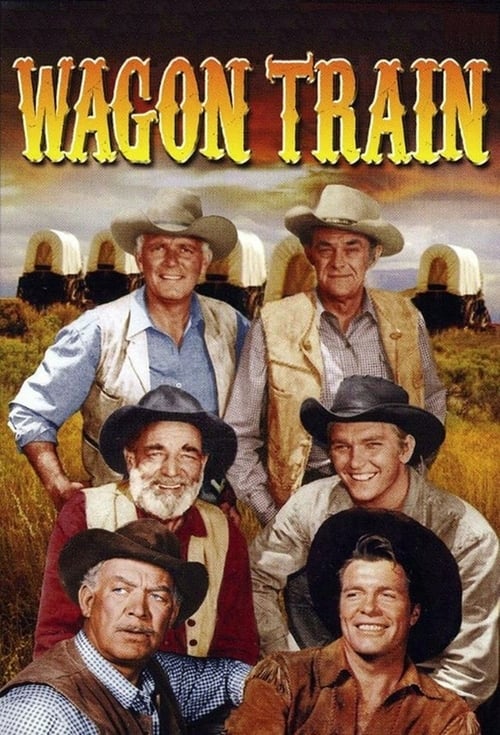
The series initially starred veteran movie supporting actor Ward Bond as the wagon master, later replaced upon his death by John McIntire, and Robert Horton as the scout, subsequently replaced by lookalike Robert Fuller a year after Horton had decided to leave the series. The series was inspired by the 1950 film Wagon Master directed by John Ford and starring Ben Johnson, Harry Carey Jr. and Ward Bond, and harkens back to the early widescreen wagon train epic The Big Trail starring John Wayne and featuring Bond in his first major screen appearance playing a supporting role. Horton's buckskin outfit as the scout in the first season of the television series resembles Wayne's, who also played the wagon train's scout in the earlier film.
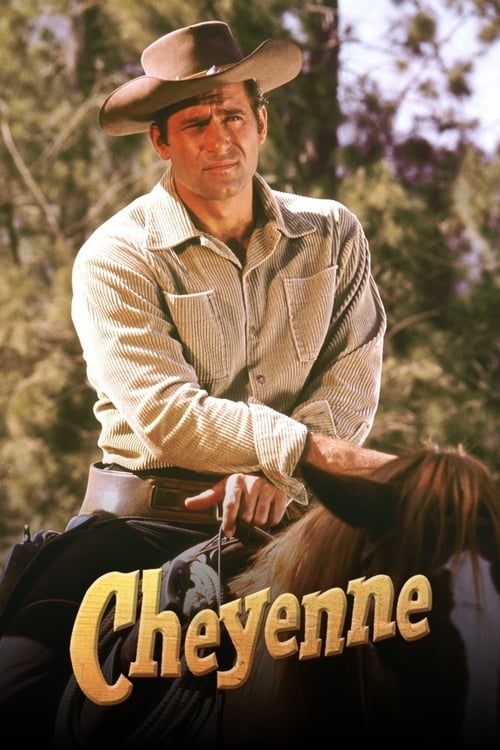
Cheyenne Bodie was a big man, a former army scout who went west after the American Civil War and drifted from job to job, here a cowboy, there a lawman, and always a larger-than-life hero. CHEYENNE is an American western television series of 108 black-and-white episodes broadcast on ABC from 1955 to 1963. The show was the first hour-long western, and in fact the first hour-long dramatic series of any kind, with continuing characters, to last more than one season. It was also the first series to be made by a major Hollywood film studio which did not derive from its established film properties, and the first of a long chain of Warner Brothers original series produced by William T. Orr.
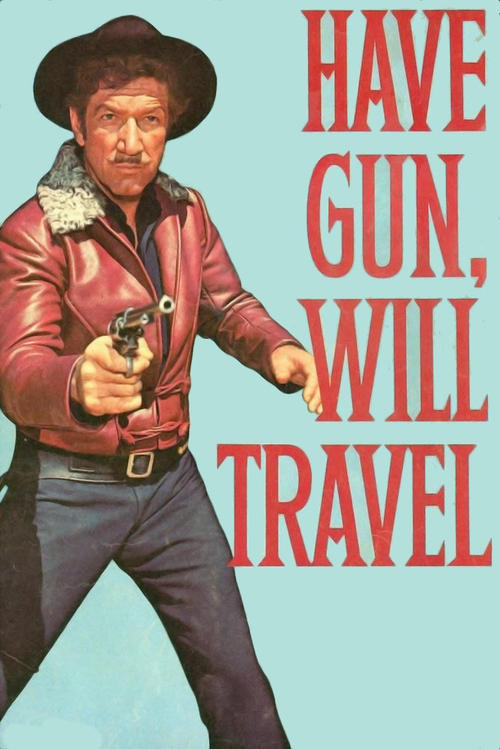
Have Gun – Will Travel is an American Western television series that aired on CBS from 1957 through 1963. It was rated number three or number four in the Nielsen ratings every year of its first four seasons. It was one of the few television shows to spawn a successful radio version. The radio series debuted November 23, 1958. The television show is presently shown on the Encore-Western channel. Have Gun – Will Travel was created by Sam Rolfe and Herb Meadow and produced by Frank Pierson, Don Ingalls, Robert Sparks, and Julian Claman. There were 225 episodes of the TV series, 24 written by Gene Roddenberry. Other contributors included Bruce Geller, Harry Julian Fink, Don Brinkley and Irving Wallace. Andrew McLaglen directed 101 episodes and 19 were directed by series star Richard Boone.
Diego de la Vega, the son of a wealthy landowner, returns from his studies in Spain and discovers that Los Angeles is under the command of Capitan Monastario, a cruel man who relishes in the misuse of his power for personal gain. Knowing that he cannot hope to single-handedly defeat Monastario and his troops, Diego resorts to subterfuge. He adopts the secret identity of Zorro, a sinister figure dressed in black, and rides to fight Monastario's injustice.
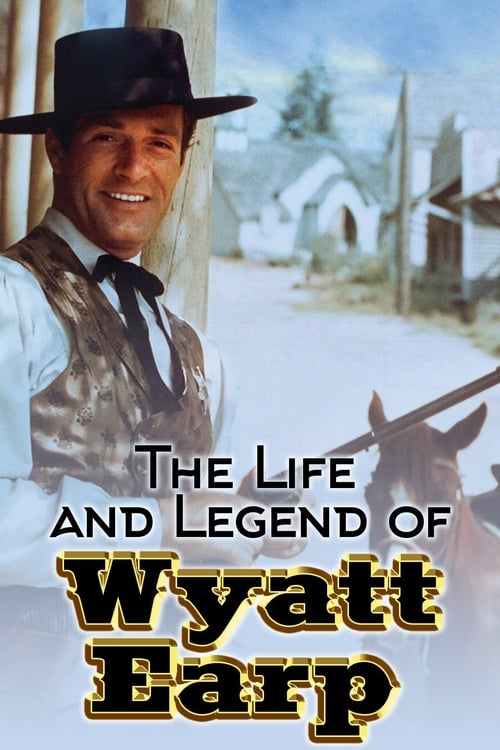
The Life and Legend of Wyatt Earp is a television western series loosely based on the life of frontier marshal Wyatt Earp. The half-hour black-and-white program aired for 229 episodes on ABC from 1955 to 1961 and featured Hugh O'Brian in the title role.
The Adventures of Jim Bowie is an American Western television series that aired on ABC from 1956 to 1958. Its setting was the 1830s-era Louisiana Territory. The series was an adaptation of the book Tempered Blade, by Monte Barrett. The series stars Scott Forbes as the real-life adventurer Jim Bowie. The series initially portrayed Jim Bowie as something of an outdoors-man, riding his horse through the wilderness near his home in Opelousas, where he would stumble across someone needing his assistance. He was aided by the Bowie Knife, his ever-present weapon. He designed it in the first episode, The Birth of the Blade.
The Painted Trail is a 1928 American silent Western film directed by J.P. McGowan and starring Buddy Roosevelt, Betty Baker and Leon De La Mothe.
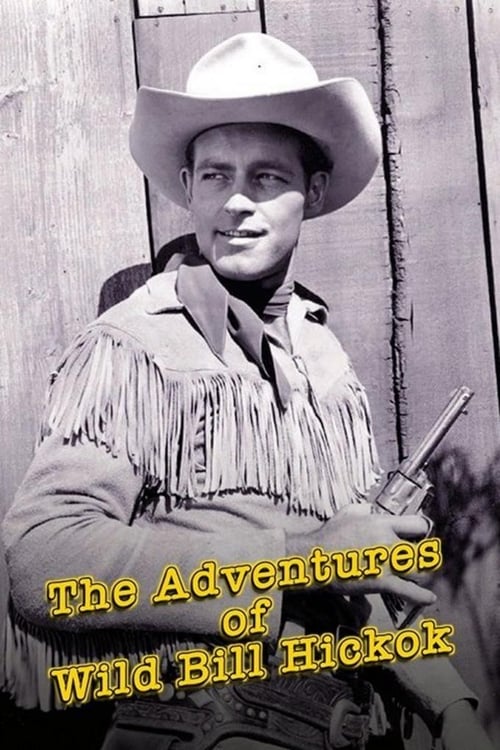
The Adventures of Wild Bill Hickok is an American Western television series which ran for eight seasons from 1951 through 1958. The Screen Gems series began in syndication, but ran on CBS from 1955 through 1958, and, at the same time, on ABC from 1957 through 1958.
Broken Arrow is a Western series which ran on ABC-TV in prime time from 1956 through 1958 on Tuesdays at 9 p.m. Eastern time. Repeat episodes were shown by ABC on Sunday afternoons during the 1959–60 season. Selected repeats were then shown once again in prime time during the summer of 1960.
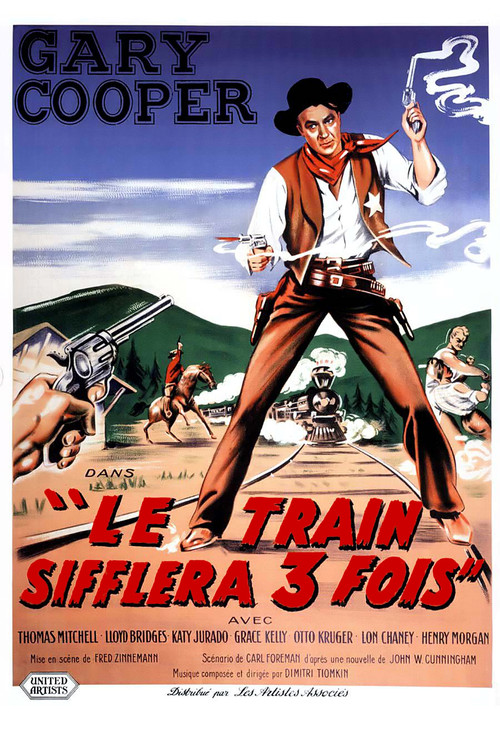
Will Kane, the sheriff of a small town in New Mexico, learns a notorious outlaw he put in jail has been freed, and will be arriving on the noon train. Knowing the outlaw and his gang are coming to kill him, Kane is determined to stand his ground, so he attempts to gather a posse from among the local townspeople.
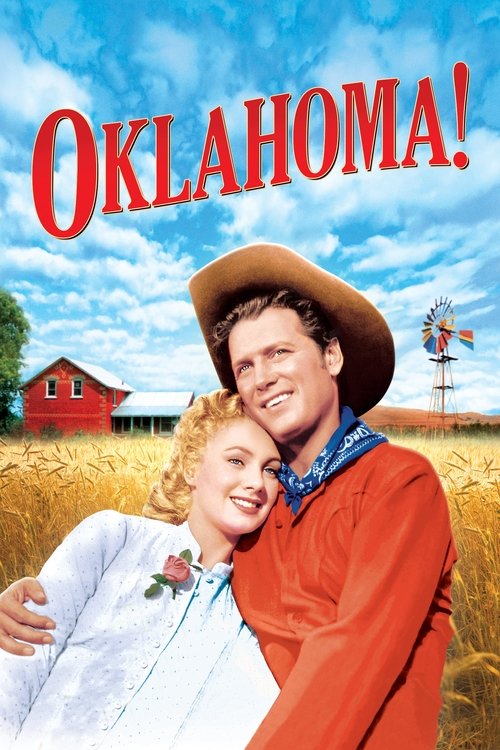
In the Oklahoma territory at the turn of the twentieth century, two young cowboys vie with a violent ranch hand and a traveling peddler for the hearts of the women they love.
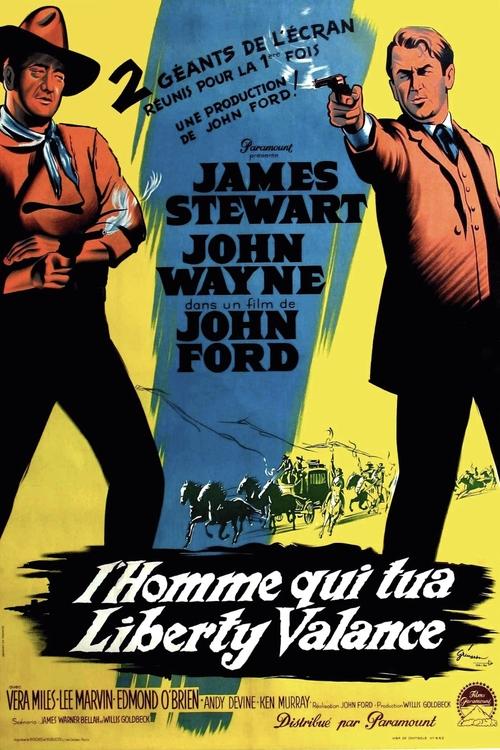
Questions arise when Senator Stoddard attends the funeral of a local man named Tom Doniphon in a small Western town. Flashing back, we learn Doniphon saved Stoddard, then a lawyer, when he was roughed up by a crew of outlaws terrorizing the town, led by Liberty Valance. As the territory's safety hung in the balance, Doniphon and Stoddard, two of the only people standing up to him, proved to be very important, but different, foes to Valance.
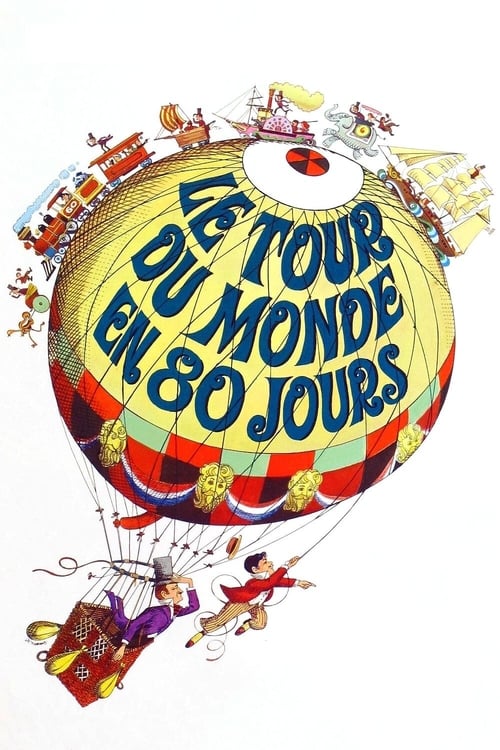
Based on the famous book by Jules Verne the movie follows Phileas Fogg on his journey around the world. Which has to be completed within 80 days, a very short period for those days.
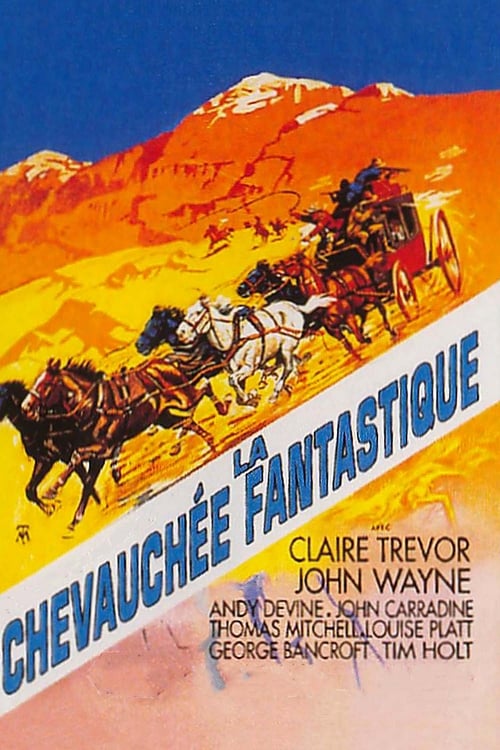
A group of people traveling on a stagecoach find their journey complicated by the threat of Geronimo, and learn something about each other in the process.
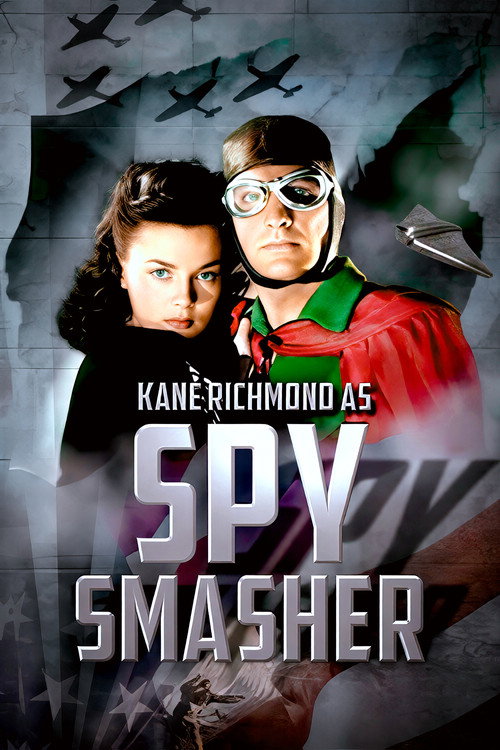
Prior to the United States' involvement in World War II, the masked vigilante Spy Smasher fights Nazi agents operating within the US, led by the treacherous sabotage leader codenamed The Mask.
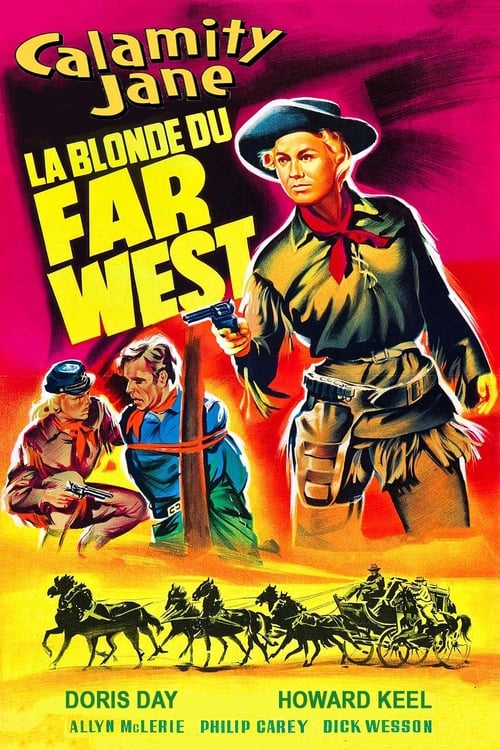
Sharpshooter Calamity Jane takes it upon herself to recruit a famous actress and bring her back to the local saloon, but jealousy soon gets in the way.
Death Valley Days is an American radio and television anthology series featuring true stories of the old American West, particularly the Death Valley area. Created in 1930 by Ruth Woodman, the program was broadcast on radio until 1945 and continued from 1952 to 1970 as a syndicated television series, with reruns continuing through August 1, 1975. The series was sponsored by the Pacific Coast Borax Company and hosted by Stanley Andrews, Ronald Reagan, Robert Taylor, and Dale Robertson. With the passing of Dale Robertson in 2013, all the former Death Valley Days hosts are now deceased.
An undercover marshal battles a power-mad cattle baron.
The territorial governor asks the Lone Ranger to investigate mysterious raids on settlers by Indians who ride with saddles. Wealthy rancher Reese Kilgore wants to mine silver on Spirit Mountain which is sacred to the Indians.
Whenever it becomes known how good he is with guns, ex-gunman George and his wife Dora have to flee the town, in fear of all the gunmen who might want to challenge him. Unfortunately he again spills his secret when he's drunk. All citizens swear to keep his secret and support him to give up his guns forever -- but a boy tells the story to a gang of wanted criminals. Their leader threatens to burn down the whole town, if he doesn't duel him.