FEEL IT.STREAM
Yehudi Menuhin

Yehudi Menuhin

Acting

Biography

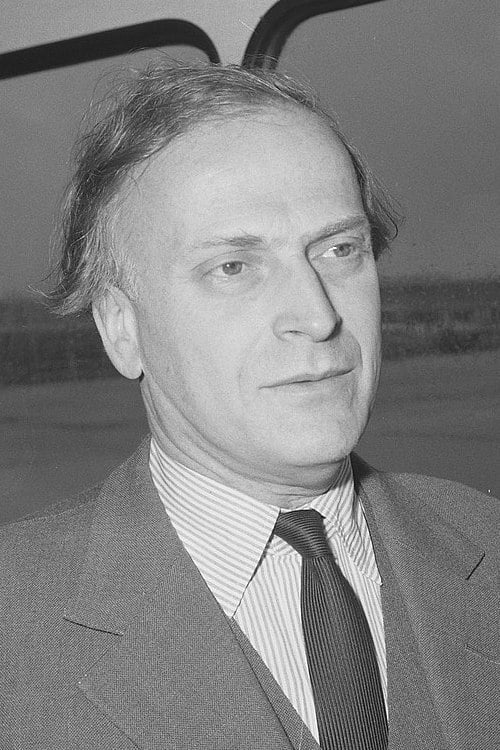
Yehudi Menuhin, Baron Menuhin, (22 April 1916 – 12 March 1999) was an American-born violinist and conductor who spent most of his performing career in Britain. He is widely considered one of the great violinists of the 20th century. He played the Soil Stradivarius, considered one of the finest violins made by Italian luthier Antonio Stradivari. Yehudi Menuhin was born in New York City to a family of Lithuanian Jews. Through his father Moshe, he was descended from a rabbinical dynasty. In late 1919, Moshe and his wife Marutha (née Sher) became American citizens, and changed the family name from Mnuchin to Menuhin. Menuhin's sisters were concert pianist and human rights activist Hephzibah, and pianist, painter and poet Yaltah. Menuhin's first violin instruction was at age four by Sigmund Anker (1891–1958); his parents had wanted Louis Persinger to teach him, but Persinger refused. Menuhin displayed exceptional musical talent at an early age. His first public appearance took place as an accompanist to another child prodigy, pianist Viola Walters, at the Imperial Theater’s Golden Hour Saturday matinee on January 21, 1921. Menuhin was five years old at the time. Two years later, when he was seven years old, Menuhin appeared as solo violinist with the San Francisco Symphony Orchestra in 1923. Persinger then agreed to teach him and accompanied him on the piano for his first few solo recordings in 1928–29. Julia Boyd records: " On 12 April 1929 it [the Semperoper] cancelled its advertised programme to make way for a performance by the twelve-year-old Yehudi Menuhin. That night he played the Bach, Beethoven and Brahms violin concertos to an ecstatic audience ... The week before, Yehudi had played in Berlin with the Philharmonic under Bruno Walter to an equally rapturous response." A newspaper critic said of his Berlin performance: "There steps a fat little blond boy on the podium, and wins at once all hearts as in an irresistibly ludicrous way, like a penguin, he alternately places one foot down, then the other. But wait: you will stop laughing when he puts his bow to the violin to play Bach's violin concerto in E major no.2." When the Menuhins moved to Paris, Persinger suggested Menuhin go to Persinger's old teacher, Belgian virtuoso and pedagogue Eugène Ysaÿe. Menuhin did have one lesson with Ysaÿe, but he disliked Ysaÿe's teaching method and his advanced age. Instead, he went to Romanian composer and violinist George Enescu, under whose tutelage he made recordings with several piano accompanists, including his sister Hephzibah. He was also a student of Adolf Busch in Basel. He stayed in the Swiss city for a bit more than a year, where he started to take lessons in German and Italian as well. According to Henry A. Murray, Menuhin wrote: "Actually, I was gazing in my usual state of being half absent in my own world and half in the present. I have usually been able to "retire" in this way. I was also thinking that my life was tied up with the instrument and would I do it justice?" — Yehudi Menuhin, personal communication, 31 October 1993. ... Source: Article "Yehudi Menuhin" from Wikipedia in English, licensed under CC-BY-SA 3.0.
Known For

The Mike Douglas Show
5.8

The Mike Douglas Show is an American daytime television talk show hosted by Mike Douglas that originally aired only in the Cleveland area during much of its first two years on the air. It then went into syndication in 1963 and remained on television until 1982. It was distributed by Westinghouse Broadcasting and for much of its run, originated from studios of two of the company's TV stations in Cleveland and Philadelphia.

The Mike Douglas Show

1961
Great Performances
6.1

The best in the performing arts from across America and around the world including a diverse programming portfolio of classical music, opera, popular song, musical theater, dance, drama, and performance documentaries.

Great Performances

1971
NDR Talk Show
6.6

No description available.

NDR Talk Show

1979
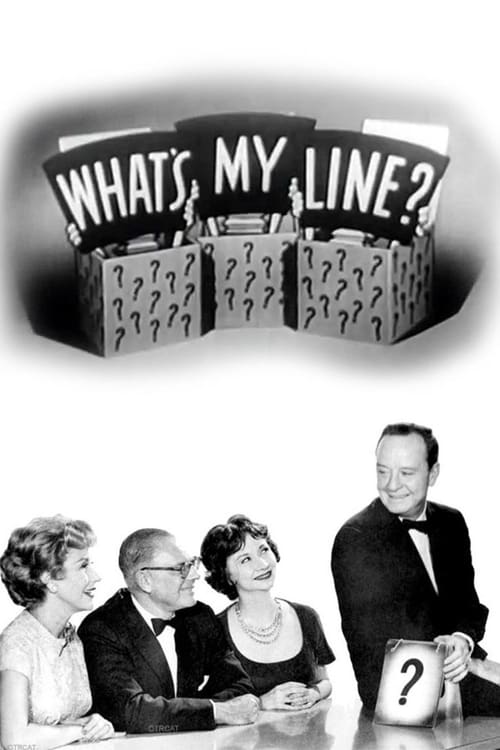
What's My Line?
7.0

Four panelists must determine guests' occupations - and, in the case of famous guests, while blindfolded, their identity - by asking only "yes" or "no" questions.

What's My Line?

1950
Eurovision Song Contest
7.2

The Eurovision Song Contest is an international song competition, organised annually by the European Broadcasting Union (EBU) and featuring participants representing primarily European countries. Each participating country submits an original song to be performed on live television and radio, transmitted to national broadcasters via the EBU's Eurovision and Euroradio networks, with competing countries then casting votes for the other countries' songs to determine the winner.

Eurovision Song Contest

1956
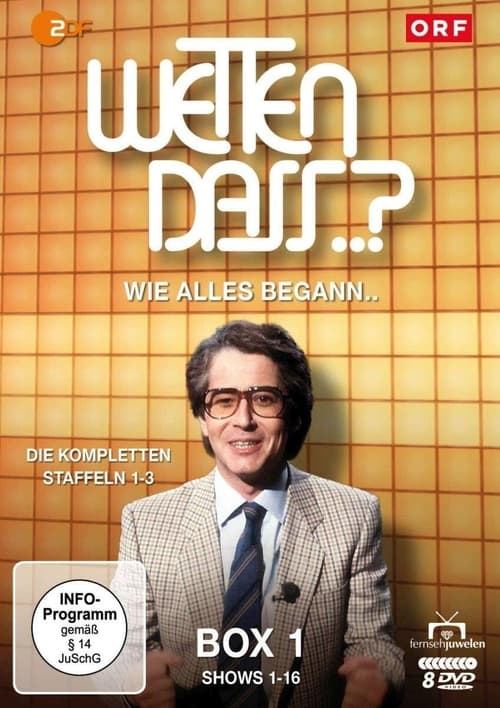
Wetten, dass..?
5.4

A long-running German-language entertainment television show based on the format of the British show You Bet! and the American show Wanna Bet?.

Wetten, dass..?

1981
The Ed Sullivan Show
6.8

The Ed Sullivan Show is an American TV variety show that originally ran on CBS from Sunday June 20, 1948 to Sunday June 6, 1971, and was hosted by New York entertainment columnist Ed Sullivan. It was replaced in September 1971 by the CBS Sunday Night Movie, which ran only one season and was eventually replaced by other shows. In 2002, The Ed Sullivan Show was ranked #15 on TV Guide's 50 Greatest TV Shows of All Time.

The Ed Sullivan Show

1948
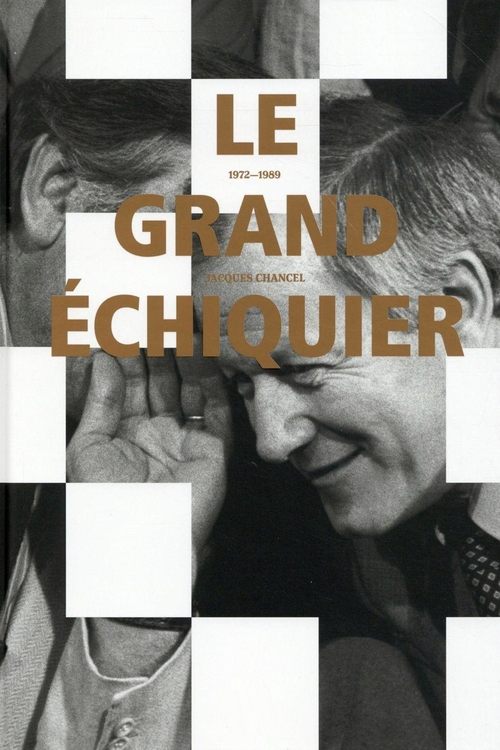
Le Grand Échiquier
8.0

Le Grand Échiquier is a French variety television program created and presented by Jacques Chancel. It aired at 8:30 pm on the first channel of the ORTF from January 12, 1972 to July 12, 1972, then on the second color channel of the ORTF from September 1972 to December 1974, and finally on Antenne 2 from January 1975 to December 21, 1989. The program returned to France 2 on December 20, 2018 and is hosted by Anne-Sophie Lapix.

Le Grand Échiquier

1972
The Steve Allen Show
6.2

No description available.

The Steve Allen Show

1956
An Audience with...
5.3

An Audience with... is a British entertainment television show produced by London Weekend Television, in which a host, usually a singer or comedian, performs for an invited audience of celebrity guests, interspersed with questions from the audience, in a light hearted revue/tribute style.

An Audience with...

1978
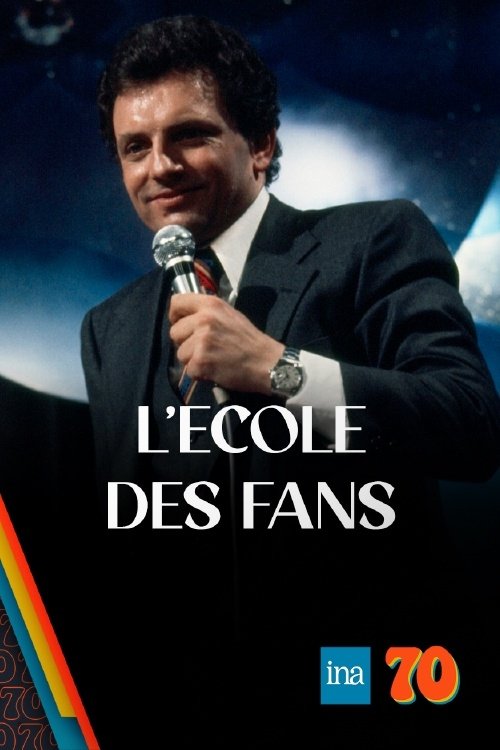
Fan School
7.2

Host Jacques Martin invites different talented children from various backgrounds to showcase their beautiful voices. The participants entertain and wow the audience with their lovely performances.

Fan School

1977
Boulevard Bio
7.0

No description available.

Boulevard Bio

1991
The Kennedy Center Honors
7.4

The Kennedy Center Honors is an annual honor given to those in the performing arts for their lifetime of contributions to American culture.

The Kennedy Center Honors

1978
Zeugen des Jahrhunderts
N/A

No description available.

Zeugen des Jahrhunderts

1979
HARDtalk
8.7

In-depth interviews with hard-hitting questions and sensitive topics being covered as famous personalities from all walks of life talk about the highs and lows in their lives.

HARDtalk

1997
No image
8.0

No description available.

Leute

1983
BBC Young Musician
10.0

BBC Young Musician (Young Musician of the Year) first appeared on our TV screens in 1978. The brainchild of BBC producers Humphrey Burton, Walter Todds and Roy Tipping, the biennial competition has developed an enviable reputation for finding superstar musicians including Nicola Benedetti, Mark Simpson and Sheku Kanneh-Mason.

BBC Young Musician

1978
Previn and the Pittsburgh
8.0

Renowned composer, conductor, and pianist Andre Previn welcomes one or more musical guests for conversation and performance, either accompanied by Mr. Previn on piano or in concert with the Pittsburgh Symphony Orchestra. Produced by WQED and syndicated nationally on PBS, the series was notable among musical performance programs for its deft camera work and editing. The episode The Music That Made the Movies was nominated for an Emmy for Outstanding Music Direction.

Previn and the Pittsburgh

1977
Stage Door Canteen
6.3

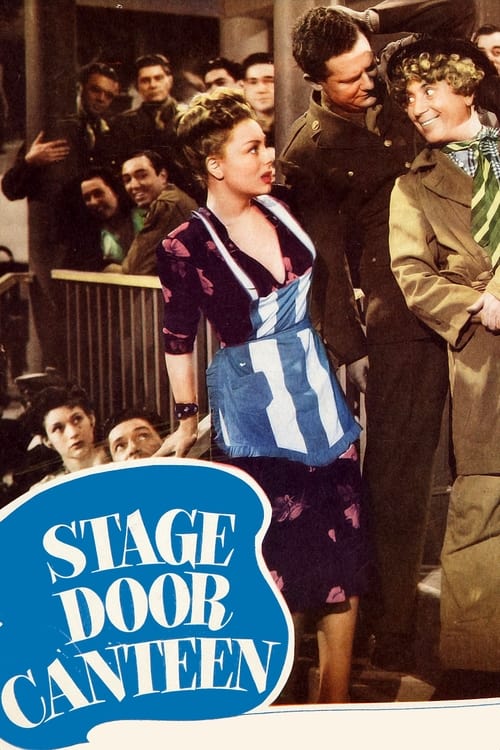
A young soldier on a pass in New York City visits the famed Stage Door Canteen, where famous stars of theatre and film appear and host a recreational center for servicemen during the war. The soldier meets a pretty young hostess and they enjoy the many entertainers and a growing romance.

Stage Door Canteen

1943
The French as Seen by…
6.9

In 1988, Figaro magazine asked a few famous directors to direct a series of short movies to celebrate the 10 years of the revue. The movies have been released for the French revolution bicentenary. Includes: Werner Herzog's Les Gaulois, David Lynch's The Cowboy and the Frenchman, Andrzej Wajda's Proust contre la déchéance, Luigi Comencini's Pèlerinage à Agen, Jean-Luc Godard's Le dernier mot.

The French as Seen by…

1988