Victor Willis
Acting
Biography
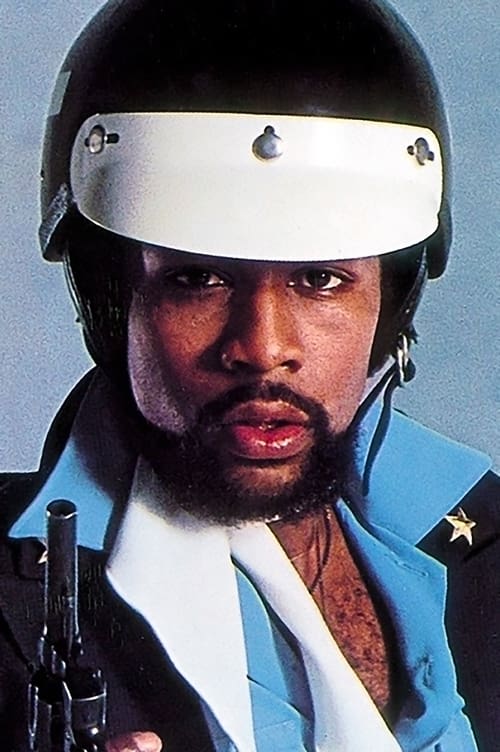
Victor Edward Willis (born July 1, 1951) is an American singer, songwriter, and actor. He is the founding member of the disco group Village People. He performed as their lead singer and was co-songwriter for all of their most successful singles. In the group, he performed costumed as a policeman or a naval officer. The son of a Baptist preacher, Willis developed his singing skills in his father's church. With training in acting and dance, he went to New York and joined the prestigious Negro Ensemble Company. He appeared in many musicals and plays, including the original Broadway production of The Wiz in 1976 and subsequently, the Australian production. Willis also had written and recorded several albums in the mid-1970s for independent labels and was eventually introduced to French disco producer Jacques Morali. Morali, who dubbed him the "young man with the big voice", approached Willis and said, "I had a dream that you sang lead vocals on my album and it went very, very big". Willis agreed to sing lead and background vocals under the guise of Village People, an at-that-point non-existent concept group. The album Village People was released in July 1977, including the hits "San Francisco (You've Got Me)" and "In Hollywood (Everybody is a Star)", and became a huge hit in the burgeoning disco market. After an offer from Dick Clark for the group to perform on American Bandstand, Morali and Willis were pressed to develop a "real" group around Willis to perform live. They did so by placing an ad in music trade papers for "macho" singers who "could also dance" and "must have a mustache". Willis was soon writing songs produced by and co-written with Morali for the group and other artists, which met with success. The Village People quickly rose to the top of the charts with Willis at the helm, scoring numerous major hits such as "Macho Man", "Y.M.C.A.", "In the Navy", and "Go West". In 1980, as preparations for a Village People feature film Can't Stop the Music were under way, Willis left the group. Although he does not appear in the movie, he wrote the lyrics for two of the film's songs, "Magic Night" and "Milkshake". Can't Stop the Music is listed among Hollywood's bigger movie flops. After Willis departed, Village People never had another hit. In an attempt to "recapture the magic", Morali convinced him to return to the group in 1982 for the album Fox on the Box. The album was released a year later in the United States as In the Street. In 1983, Willis left the group again. In 2013, Willis appeared on the TV One series Unsung in their two-hour special retrospective on the disco era. On June 28, 2016, Willis appeared as a contestant on the show To Tell the Truth, and sang "Y.M.C.A." as the credits rolled. After leaving Village People, Willis declined offers to record and consistently refused to perform any of his Village People hits. In 2010, he appeared at several Major League Baseball stadiums, performing The Star-Spangled Banner and leading the crowd for the traditional Y.M.C.A. 7th-inning stretch break. In 1979, Willis recorded a solo album which remained unreleased for over 35 years. The album, Solo Man, was finally released in August 2015. ... Source: Article "Victor Willis" from Wikipedia in English, licensed under CC-BY-SA 3.0.
Known For

A talk show presented by Michel Drucker
Les Rendez-vous du dimanche

No description available.
Le monde est à vous

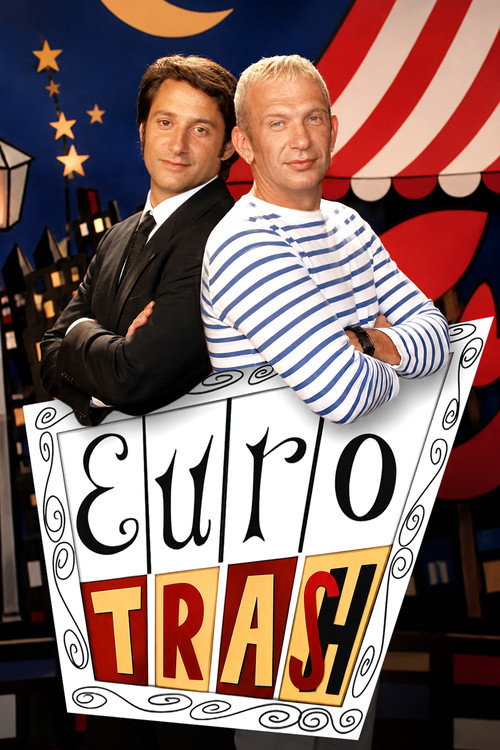
The likes of Antoine de Caunes, Jean Paul Gaultier, Davina McCall, and Lolo Ferrari are your guides to the weird and wonderful in Europe and beyond. How else would you learn about pubic hairdressers, the Penis Olympics, or the latest Japanese sex toys?
Eurotrash

E! True Hollywood Story is an American documentary series on E! that deals with famous Hollywood celebrities, movies, TV shows and also well-known public figures. Among the topics covered on the program include salacious re-tellings of Hollywood secrets, show-biz scandals, celebrity murders and mysteries, porn-star biographies, and "where-are-they-now?" investigations of former child stars. It frequently features in-depth interviews, actual courtroom footage, and dramatic reenactments. When aired on the E! network, episodes will be updated to reflect the current life or status of the subject.
E! True Hollywood Story

From the sweaty basement bars of 70s New York to the glittering peak of the global charts, how disco conquered the world - its origins, its triumphs, its fall and its legacy.
Disco: Soundtrack of a Revolution

The portrait of a woman who remembers. Sheila tells the story of Sheila, without concessions or evasions. Her childhood, her parents, her beginnings, the rumors, her love affairs, her marriage, her son, her successes, her farewells, her return, her mourning. The journey of an extraordinary popular icon who never stopped fighting. The courage of an artist who never gives up. "Sheila, toutes ces vies-là" is also a journey through time. 60 years of pop music, punctuated by numerous archives, personal films, timeless hits and illustrations by Marc-Antoine Coulon. But also 60 years of fashion, through a legendary wardrobe (her TV show outfits) that Sheila invites us to rediscover.
Sheila, toutes ces vies-là

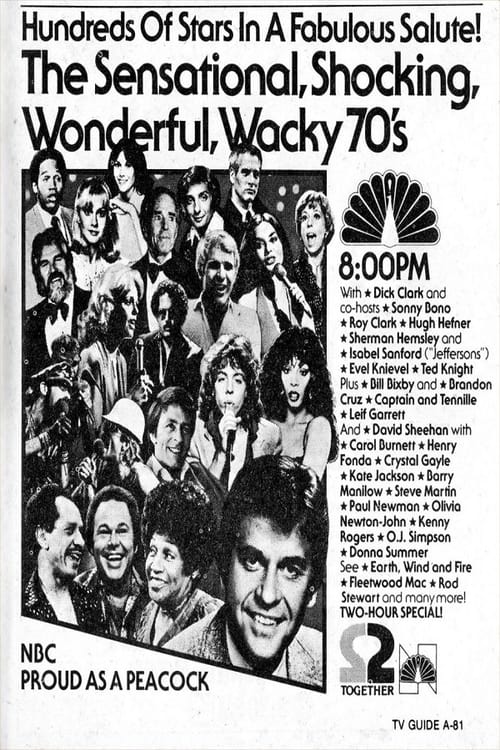
A look back at the people, events, music, and trends of the 1970s.
The Sensational Shocking Wonderful Wacky 70's

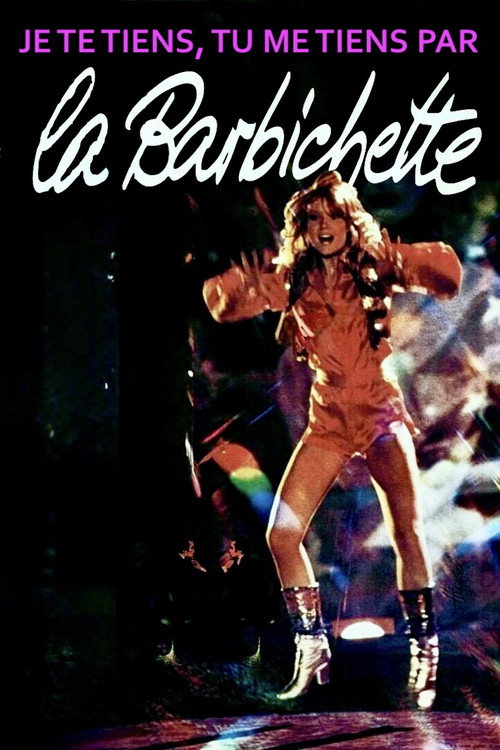
In this satire, a police detectiveis investigating the disappearance and kidnapping of the host of a television dance show. However, instead of finding his man, he is trapped into becoming a contestant on a children's quiz show. What's worse is that he becomes a very successful contestant.
I've Got You, You've Got Me by the Chin Hairs

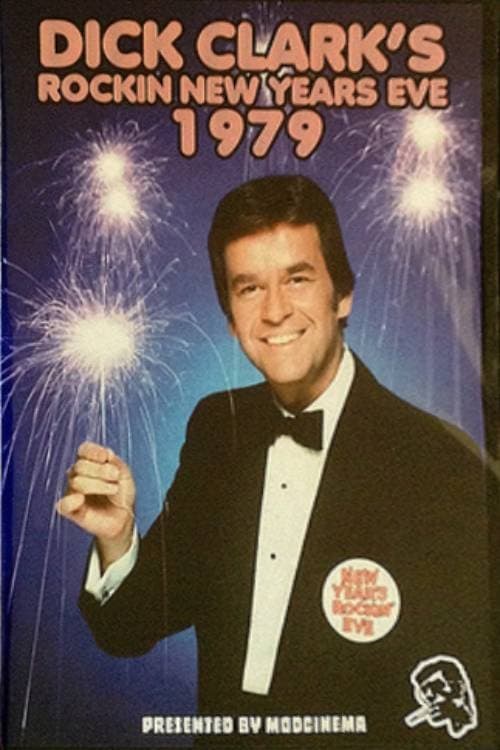
This special broadcast from New York City's Times Square features coverage of its annual ball drop event, along with live and pre-recorded musical performances by popular acts from Times Square and Hollywood, respectively.
Dick Clark's New Year's Rockin' Eve 1979

A film about how a much-derided music actually changed the world. Between 1969 and 1979 disco was born through gay liberation, female desire in the age of feminism and led to the birth of modern club culture before taking the world by storm. This in turn led to the 'Disco Sucks' movement and the inevitable backlash. With contributions from Nile Rodgers, Robin Gibb, Kathy Sledge and Ian Schrager.