David Fisher
Writing
Biography
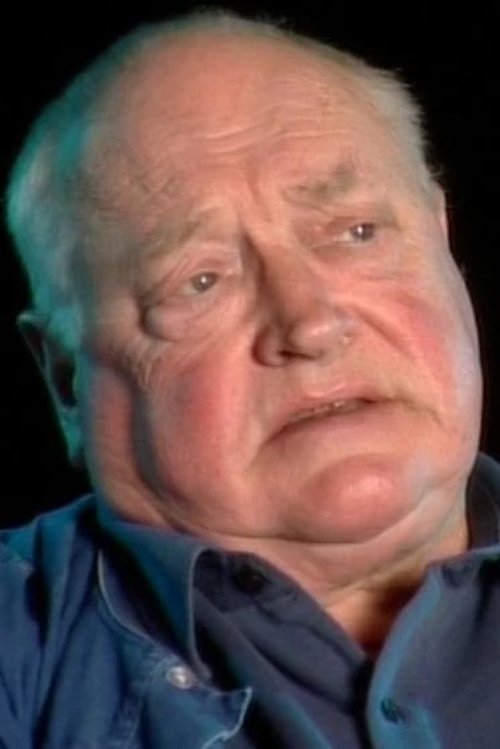
David Fisher (13 April 1929 – 10 January 2018) was a British television screenwriter. Doctor Who script editor Anthony Read commissioned Fisher to write The Stones of Blood (1978) and The Androids of Tara (1978) for The Key to Time storyline of season 16, and he was subsequently commissioned to write The Creature from the Pit (1979) for the seventeenth season during the tenure of Douglas Adams as script editor. He worked on a story called "A Gamble with Time", also for the seventeenth season, but owing to the divorce proceedings ending his first marriage, he was unable to finish the scripts. That story was reworked and completed by Douglas Adams and then-producer Graham Williams and was recorded and broadcast as City of Death (1979) under the pseudonym of David Agnew. His final Doctor Who story was season eighteen's The Leisure Hive (1980). Fisher novelised both The Leisure Hive and Creature from the Pit for the Target book range of Doctor Who novelisations, and appeared extensively on the interview features accompanying the DVD release of the former story. Fisher also wrote novelisations of The Stones of Blood and The Androids of Tara for audiobook releases in 2011 and 2012, which received print editions in 2022. He was also interviewed for a documentary accompanying the DVD release of City of Death. Fisher's other work included writing for the television series Dixon of Dock Green, Crown Court, and Hammer House of Horror.
Known For

The adventures of The Doctor, a time-traveling humanoid alien known as a Time Lord. He explores the universe in his TARDIS, a sentient time-traveling spaceship. Its exterior appears as a blue British police box, which was a common sight in Britain in 1963 when the series first aired. Along with a succession of companions, The Doctor faces a variety of foes while working to save civilizations, help ordinary people, and right many wrongs.
Doctor Who

Crown Court is an afternoon television courtroom drama produced by Granada Television for the ITV network that ran from 1972, when the Crown Court system replaced Assize courts and Quarter sessions in the legal system of England and Wales, to 1984.
Crown Court

Jake takes out an ad in the newspaper after the suicide of his unfaithful fiancée, in an effort to understand the reasons for the betrayal. By soliciting the secret diaries of other women, he hopes to find some reconciliation with the truth.
Red Shoe Diaries
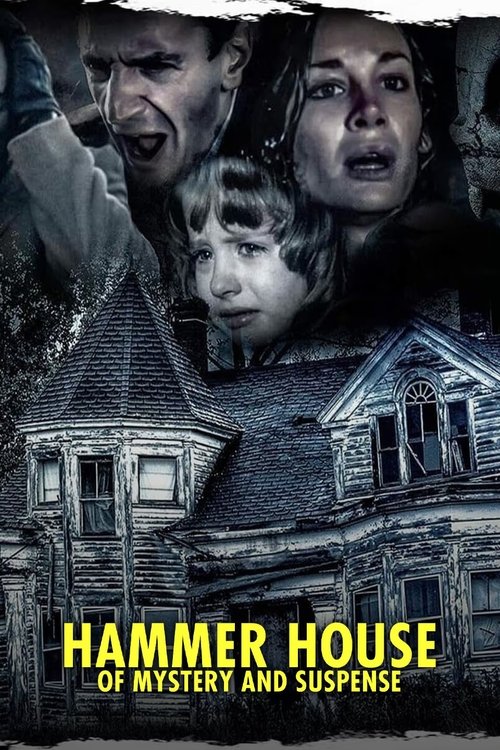
A short-lived anthology television series from Hammer Studios. Though similar in format to the 1980 series Hammer House of Horror, the Mystery and Suspense series had feature-length episodes, usually running around 70 minutes without commercials. Co-produced by Hammer Studios with 20th Century Fox Television, it is known in the United States as Fox Mystery Theater. Unlike 1980's Hammer House of Horror, all episodes feature American actors as either the leads or in key roles. It first broadcast in the UK on ITV in 1984, though was not simulcast and was shown in different timeslots throughout the various regions.
Hammer House of Mystery and Suspense
Sutherland's Law is a British television series created by Lindsay Galloway and produced by BBC Scotland for BBC One, aired from 6 June 1973 to 31 August 1976. The drama deals with the duties of the Procurator Fiscal in a small Scottish town. The series had originated as a standalone edition of the portmanteau programme Drama Playhouse in 1972 in which Derek Francis played Sutherland and was then commissioned as an ongoing series with Iain Cuthbertson as Sutherland.
Sutherland's Law

Follows the lives of British expatriates living on the island of Crete, where their secrets will soon rise to the surface.
The Lotus Eaters
The Mackinnons was a BBC Scotland drama series, which started in 1977. It starred Bill Simpson as the head of the Mackinnon family, a vet in the fictional Argyll town of Inverglen. It was seen as inhabiting similar terrain to Dr. Finlay's Casebook and Sutherland's Law, but was less successful.
The Mackinnons

Romana fancies a proper holiday and convinces the Doctor to visit the leisure planet Argolis, where a takeover by the Argolins' historic enemy is underway.
Doctor Who: The Leisure Hive
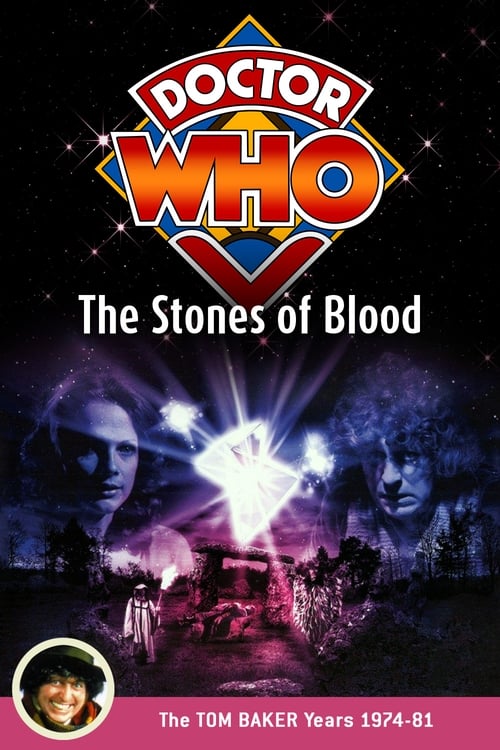
Searching for the third segment to the Key to Time brings the Doctor and Romana to present-day Earth, where the travellers have to contend with stone circles, Druidic rituals and a not-so-mythical goddess known as the Cailleach.
Doctor Who: The Stones of Blood
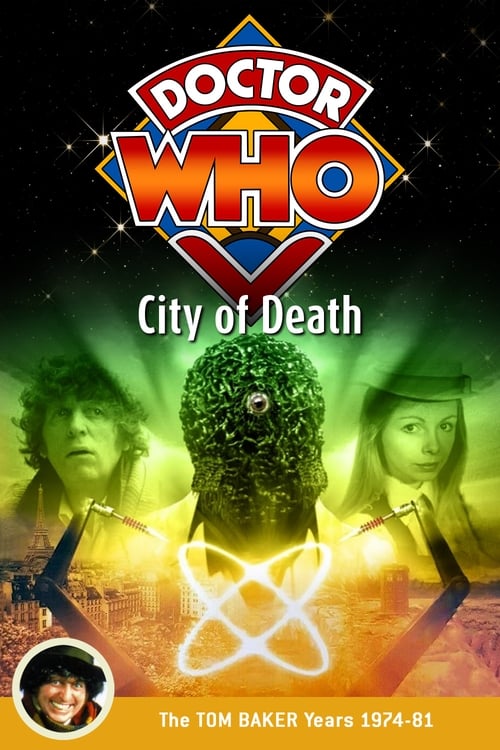
While taking in the sights of Paris in 1979, the Doctor and Romana sense that someone is tampering with time. Who is the mysterious Count Scarlioni? Why does he seem to have counterparts scattered through time? And just how many copies of the Mona Lisa did Leonardo da Vinci paint?
Doctor Who: City of Death

The Doctor and Romana follow a distress signal which leads to the jungle planet Chloris, whose ruthless ruler Lady Adrasta harbors a deadly creature in a pit.
Doctor Who: The Creature from the Pit

Unstable security chief of an auction house becomes increasingly obsessed with his female neighbor, who's being stalked, and a supposedly cursed jewel that's being auctioned. Is he losing his mind or is the curse real?
The Corvini Inheritance

Finding the fourth segment of the Key to Time was simple enough, but holding onto it may be another matter. The Doctor and Romana find themselves embroiled in the political games of the planet Tara, where doubles, android or otherwise, complicate the coronation of Prince Reynart.
Doctor Who: The Androids of Tara
A retrospective documentary looking at Graham Williams' three-year tenure as Doctor Who producer.
A Matter of Time
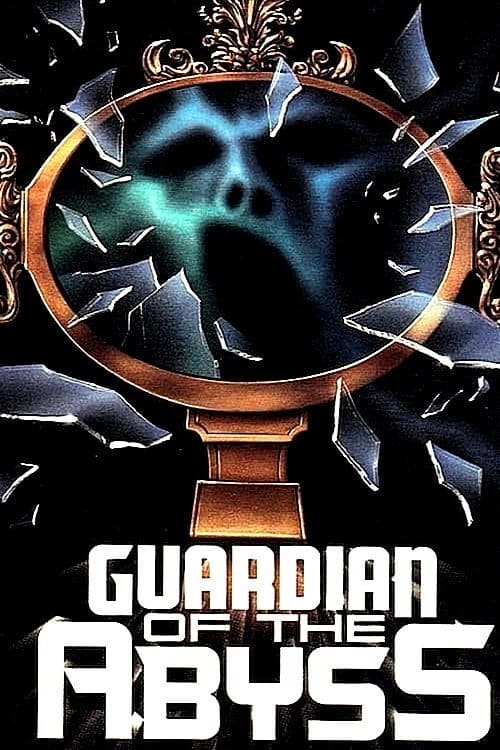
A scrying glass puts an antiques exporter in the path of a woman fleeing from devil worshipers and the evil hypnotist who leads them. Originally an episode of British horror anthology TV series, Hammer House of Horror, that later received a feature release in the United States.
Guardian of the Abyss
A 45-minute look at the making of City of Death, and in particular, the contribution of writer and script editor Douglas Adams.
Paris in the Springtime
Cast and crew look back at the making of The Stones of Blood.
Getting Blood from the Stones
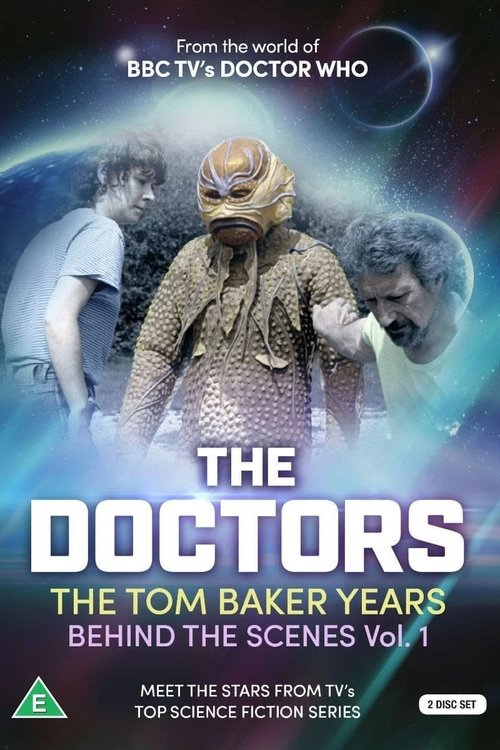
Presented by “voice of the Daleks” Nicholas Briggs, these six documentaries are the best in-depth interviews with Graham Williams (Producer), David Fisher (Writer), Andrew Smith (Writer) and June Hudson (Costume Designer) ever undertaken! Plus special productions featuring Genesis of the Daleks team Michael Wisher (Davros), Peter Miles (Nyder), Roy Skelton (Dalek Voices) and also actors Arthur Cox, Terence Denville, David Garfield and David Weston!
The Doctors: The Tom Baker Years Behind the Scenes Vol 1
Writer David Fisher and script editor Christopher H Bidmead examine the making of The Leisure Hive from the screenwriter's point of view.
From Avalon to Argolis
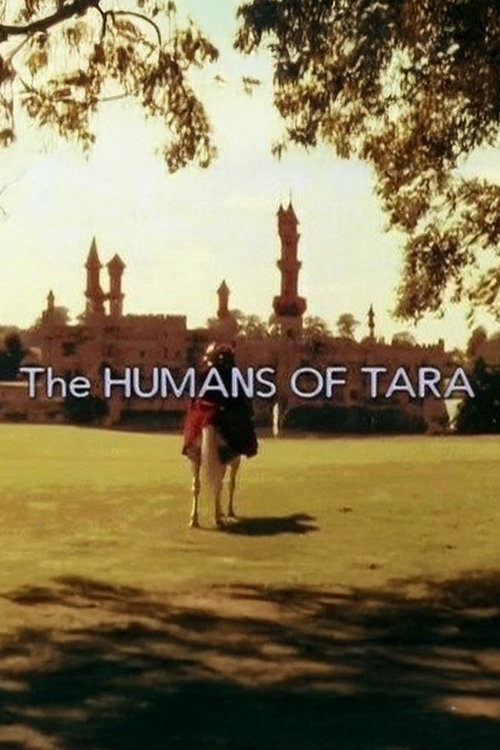
The cast and crew look back at the making of The Androids of Tara.