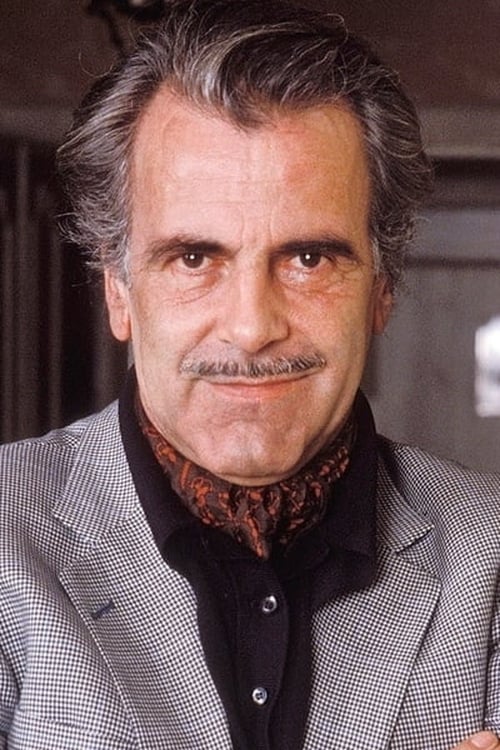
Maximilian Schell
Acting
Biography
Maximilian Schell (8 December 1930 – 1 February 2014) was a Swiss actor. Born in Austria, his parents were involved in the arts and he grew up surrounded by performance and literature. While he was still a child, his family fled to Switzerland in 1938 when Austria was annexed by Nazi Germany, and they settled in Zürich. After World War II ended, Schell took up acting and directing full-time. Schell won the Academy Award for Best Actor for playing a lawyer in the legal drama Judgment at Nuremberg (1961). He was Oscar-nominated for playing a character with multiple identities in The Man in the Glass Booth (1975) and for playing a man resisting Nazism in Julia (1977). Fluent in both English and German, Schell earned top billing in a number of Nazi-era themed films. He acted in films such as Topkapi (1964), The Deadly Affair (1967), Counterpoint (1968), Simón Bolívar (1969), The Odessa File (1974), A Bridge Too Far (1977), and Deep Impact (1998). On television, he received two Primetime Emmy Award nominations for the NBC film Miss Rose White and the HBO television film Stalin (1992), the later of which earned him the Golden Globe Award for Best Supporting Actor – Series, Miniseries or Television Film. He also portrayed Otto Frank in the TV film The Diary of Anne Frank (1980), the Russian emperor Peter the Great in the NBC series Peter the Great (1986), Frederick the Great in the British series Young Catherine (1991), and Brother Jean le Maistre in the miniseries Joan of Arc (1999). Schell also performed in a number of stage plays, including a celebrated performance as Prince Hamlet. Schell was an accomplished pianist and conductor, performing with Claudio Abbado and Leonard Bernstein, and with orchestras in Berlin and Vienna. His elder sister was the internationally noted actress Maria Schell; he produced the documentary tribute My Sister Maria in 2002. Description above from the Wikipedia article Maximilian Schell, licensed under CC-BY-SA, full list of contributors on Wikipedia.
Known For

TV presenter Markus Lanz invites prominent guests and experts from all areas of public life to his colourful talk show. As a rule, there are four guests, introduced individually to contribute their personal experiences to the topics.
Markus Lanz
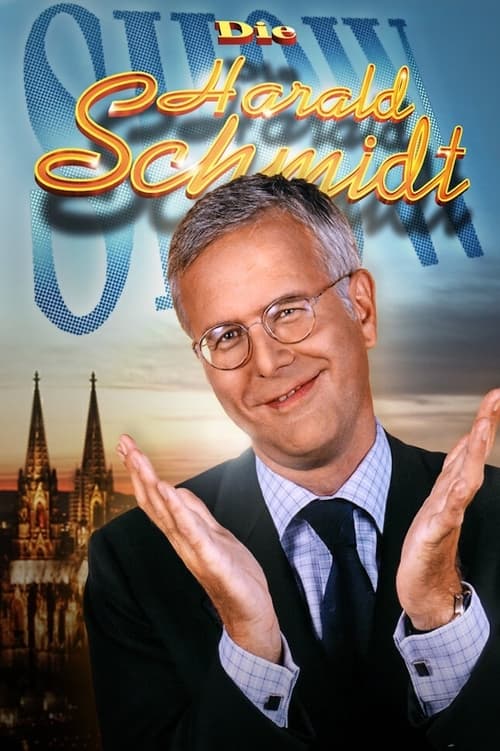
The Harald Schmidt Show is a German late night talk show hosted on Sky Deutschland by comedian Harald Schmidt. The show first aired from 5 December 1995 to 23 December 2003 on Sat.1. Schmidt then moved his show to Das Erste as Harald Schmidt and Schmidt & Pocher, but he returned to Sat.1 on 13 September 2011. After cancellation on Sat.1, the show continued on Sky Deutschland in September 2012.
Die Harald Schmidt Show

No description available.
NDR Talk Show
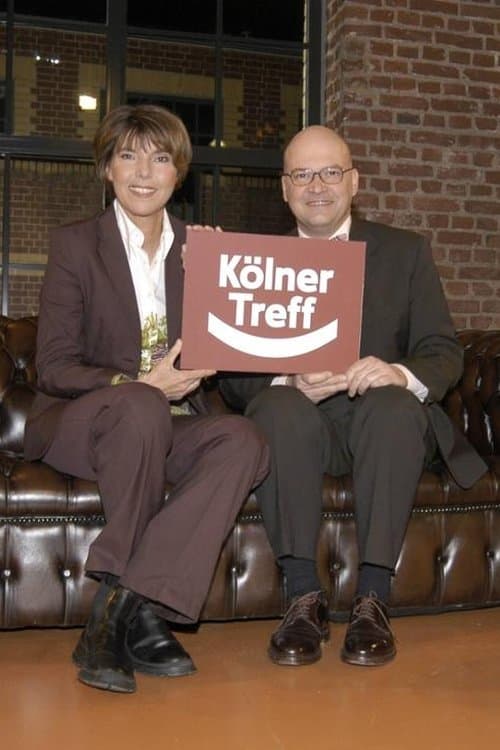
No description available.
Kölner Treff
No description available.
Bob Hope Presents the Chrysler Theatre
No description available.
The Johannes B. Kerner Show
The Dick Cavett Show has been the title of several talk shows hosted by Dick Cavett on various television networks.
The Dick Cavett Show

No description available.
Riverboat

The Bambi, often called the Bambi Award and stylised as BAMBI, is a German award presented annually by Hubert Burda Media to recognize excellence in international media and television to personalities in the media, arts, culture, sports, and other fields "with vision and creativity who affected and inspired the German public that year", both domestic and foreign. First held in 1948, it is the oldest media award in Germany. The trophy is named after Felix Salten's book Bambi, A Life in the Woods and its statuettes are in the shape of the novel's titular fawn character. They were originally made of porcelain until 1958, when the organizers switched to using gold, with the casting done by the art casting workshop of Ernst Strassacker in Süßen.
Bambi

Reinhold Beckmann hosts a weekly talk show.
Beckmann
No description available.
Nachtcafé

An annual American awards ceremony honoring cinematic achievements in the film industry. The various category winners are awarded a copy of a statuette, officially the Academy Award of Merit, that is better known by its nickname Oscar.
The Oscars

Vinnie Terranova does time in a New Jersey penitentiary to set up his undercover role as an agent for the OCB (Organized Crime Bureau) of the United States. His roots in a traditional Italian city neighborhood form the underlying dramatic base throughout the series, bringing him into conflict with his conservative mother and other family members while acting undercover as syndicate enforcer.
Wiseguy
No description available.
Menschen bei Maischberger

An American awards show recognizing people in entertainment, voted online by the general public and fans.
People's Choice Awards
No description available.
Goldene Kamera

No description available.
alfredissimo! Kochen mit Bio
No description available.
German Film Award
No description available.
Kulturzeit
Playhouse 90 is an American television anthology series that was telecast on CBS from 1956 to 1960 for a total of 133 episodes. It originated from CBS Television City in Los Angeles, California. Since live anthology drama series of the mid-1950s were usually hour-long shows, the title highlighted the network's intention to present something unusual, a weekly series of hour-and-a-half dramas rather than 60-minute plays. Playhouse 90 began as a pitch by Frank Stanton—the formidable, forward-thinking right-hand man to CBS chairman William S. Paley—during a brainstorming session for program ideas. The project was ultimately developed by Hubbell Robinson, a CBS vice president who received no screen credit on Playhouse 90 but is often described as its creator.