Paul Franklin
Writing
Known For
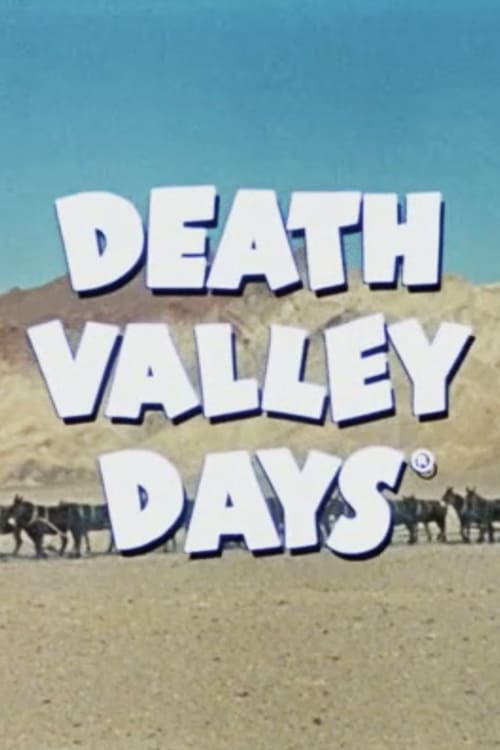
Death Valley Days is an American radio and television anthology series featuring true stories of the old American West, particularly the Death Valley area. Created in 1930 by Ruth Woodman, the program was broadcast on radio until 1945 and continued from 1952 to 1970 as a syndicated television series, with reruns continuing through August 1, 1975. The series was sponsored by the Pacific Coast Borax Company and hosted by Stanley Andrews, Ronald Reagan, Robert Taylor, and Dale Robertson. With the passing of Dale Robertson in 2013, all the former Death Valley Days hosts are now deceased.
Death Valley Days

High-school principal Dr. Alfred Carroll relates to an audience of parents that marijuana can have devastating effects on teens: a drug supplier entices several restless teens, Mary and Jimmy Lane, sister and brother, and Bill, Mary's boyfriend, into frequenting a reefer house. Gradually, Bill and Jimmy are drawn into smoking dope, which affects their family lives.
Tell Your Children
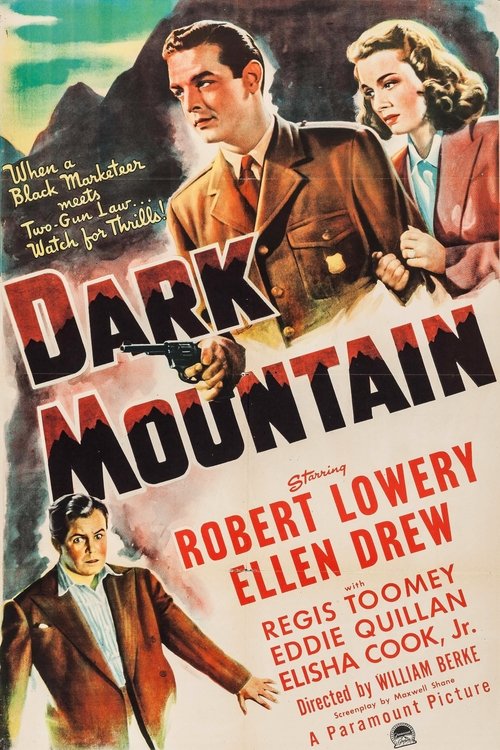
A woman doesn't realize that the man she has just married is a gangster. When she is implicated in a murder he committed, she turns to an ex-boyfriend, who is now a park ranger, for help. He hides her out in a cabin up in the mountains, and her husband goes on the hunt for both of them.
Dark Mountain
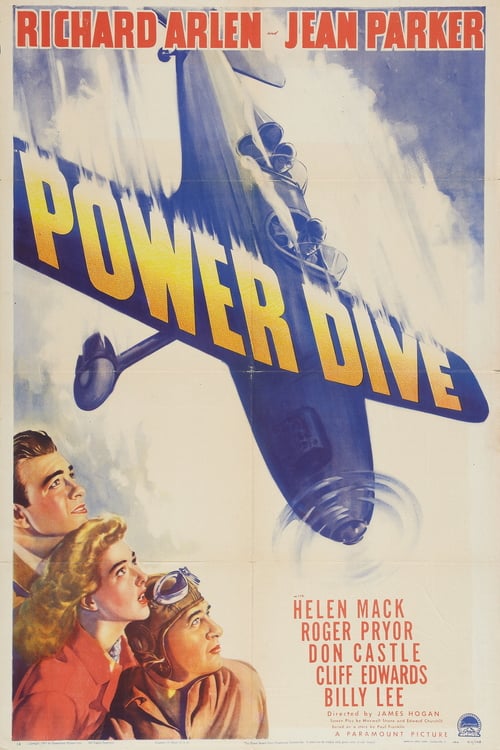
The story concentrated on a group of test pilots, busily experimenting with a revolutionary all-plastic airplane. Ace flyboy Brad Farrell (Richard Arlen) is determined to prove the practicality of the new aircraft, designed by Professor Blake (Thomas Ross), father of Brad's sweetheart Carol (Jean Parker). Back on solid ground, Brad must vie for Carol's attentions with his own brother, engineer Doug Farrell (Don Castle).
Power Dive
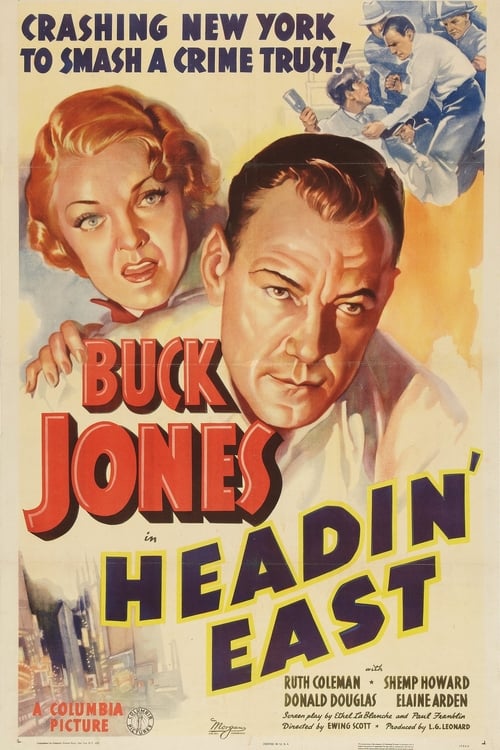
A cattle rancher comes to the aid of farmers by heading to NYC to stop the racketeers hijacking their produce shipments.
Headin' East
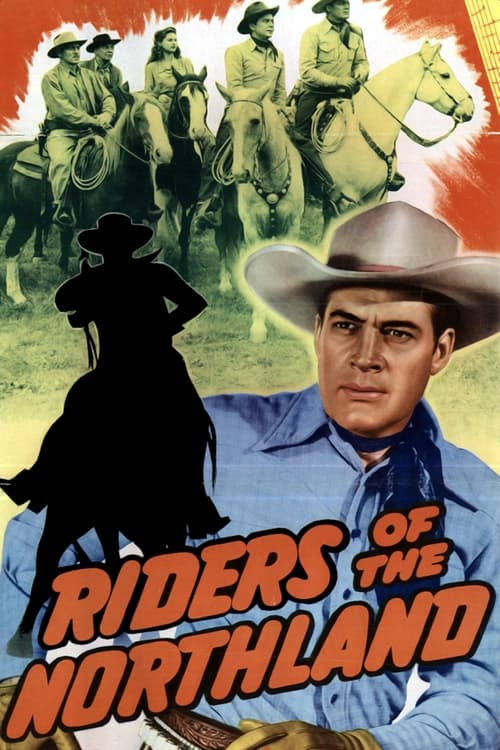
In this western, three Texas Rangers decide to do their part to save the world and join the Army, but before they can, they are sent to Alaska to destroy a secret Nazi operation involving a submarine refueling station. The outpost is located behind an impenetrable tangle of barbed wire. The rangers get a little help, and discover a traitor. Then to get through the wire, they start a cattle stampede and save the day.
Riders of the Northland
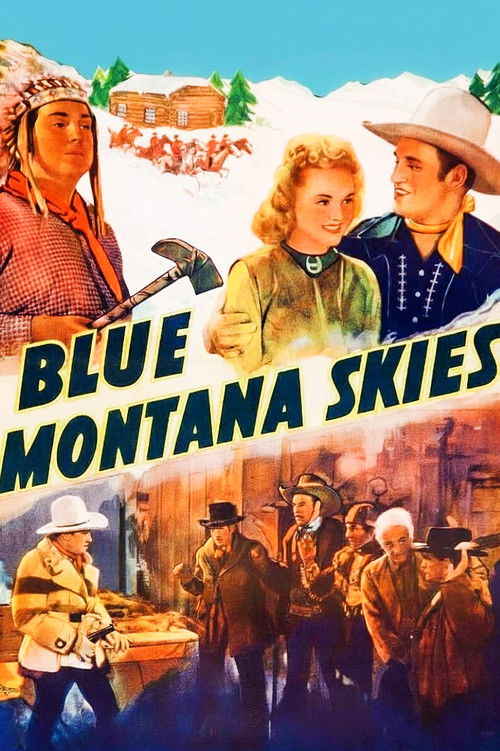
Gene Autry follows a clue written on a rock by his murdered partner and discovers a fur smuggling operation near the Canadian border.
Blue Montana Skies
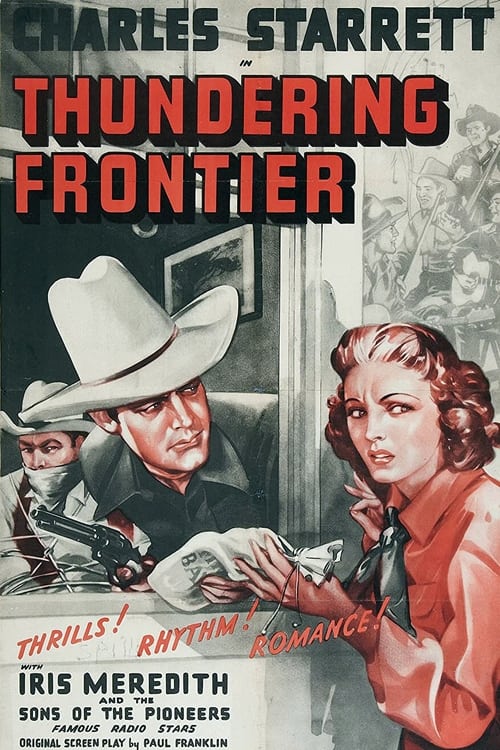
After a handful of non-formula westerns, Charles Starrett returned to the mixture as before in Thundering Frontier. Starrett plays Jim Fillmore, kind to old ladies, small animals and heroine Norma Belknap (Iris Meredith). In contrast, the villains are kind to no one, least of all struggling building contractor Square Deal Scottie (Alex Callam), whose projects are continually targeted for demolition and his payroll is forever being stolen at gunpoint. A good 25 percent of the film's running time is given over to Bob Nolan and the Sons of the Pioneers, whose C&W croonings are pleasant but a bit much. One of the film's few surprises is that Starrett's perennial screen sparring partner Dick Curtis isn't one of the bad guys.
Thundering Frontier
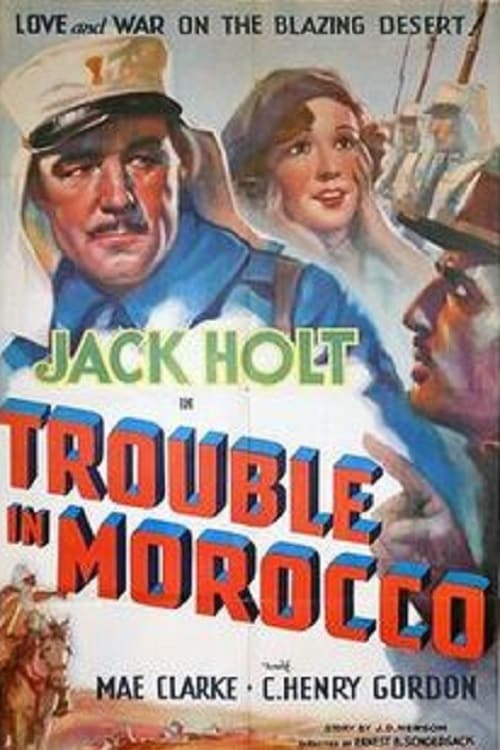
A newspaperman Paul Cluett (Jack Holt) gets rival reporter Linda Lawrence (Mae Clark) to admit that she is investigating a story in Morocco that guns are being smuggled illegally.
Trouble in Morocco
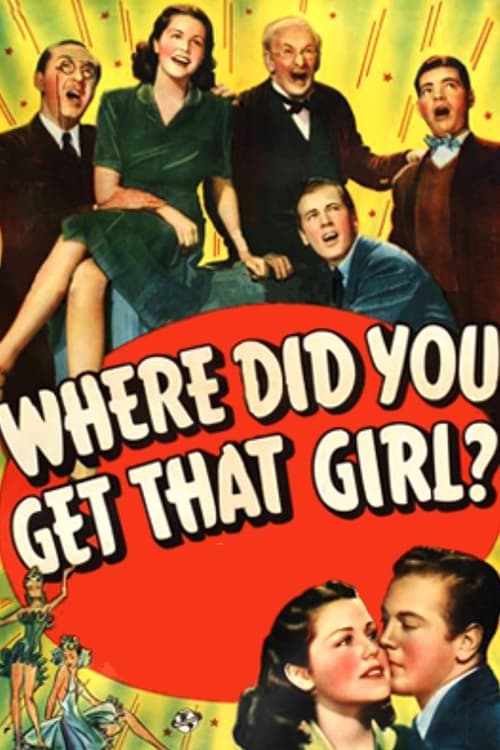
In this musical comedy, a motley band of musicians have only their extreme poverty in common. They end up writing a hit and getting a recording contract. The trouble is, the composer's works are never played without another band member doctoring them up to make them swingier. Fortunately, the composer isn't too averse to the changes as he has just won the heart of the beauty who sings his revamped songs.
Where Did You Get That Girl?
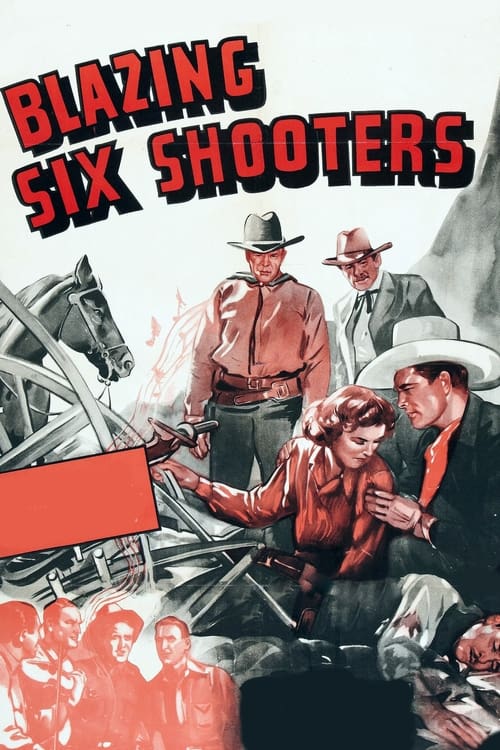
The story revolves around a valuable silver deposit, located between two ranches. Villain Lash Bender cooks up a scheme to gain control of both ranches so that he may have a clear field to the silver lode.
Blazing Six Shooters
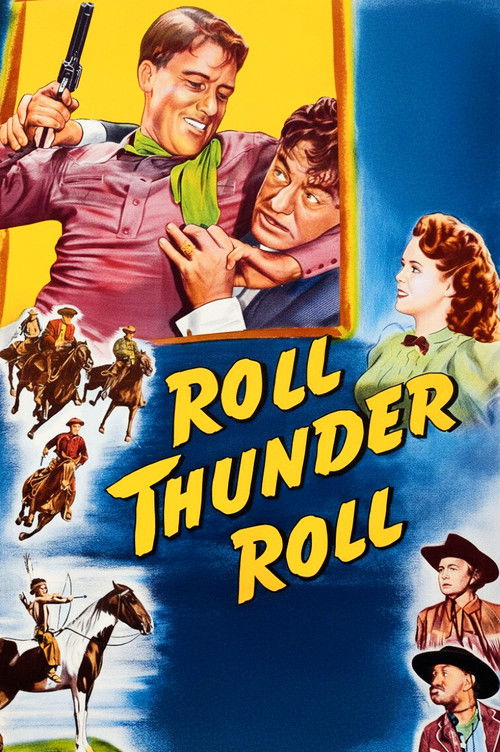
Jim Bannon is back as enduring cowboy hero Red Ryder in Eagle-Lion's Roll, Thunder, Roll. As ever, Ryder's cohorts are Little Beaver and the Duchess, here played by "Little Brown Jug" and Marin Sais. This time, Ryder tries to prove that a series of cattle raids and ranch fires were not the handiwork of masked Mexican do-gooder El Conejo.
Roll, Thunder, Roll!
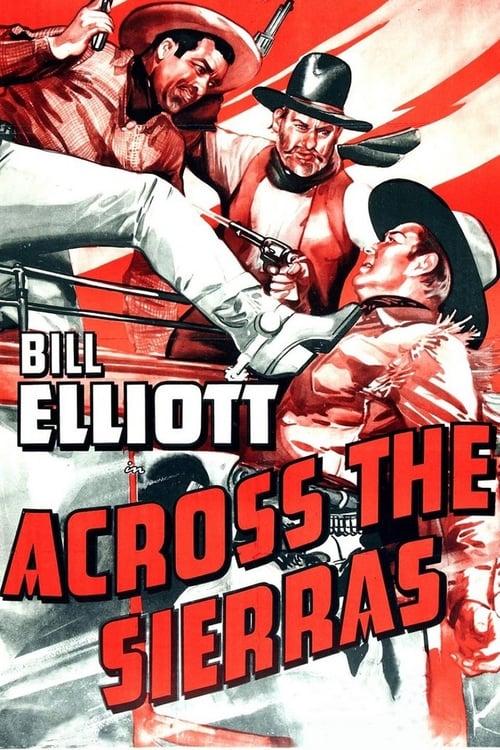
Elliott is hunted by Curtis who has spent six years behind bars because of his testimony. After knocking out several baddies and putting up with the zany antics of his sidekick Taylor, Elliott guns down his antagonist, but Luana Walters, the girl he almost marries, will not abide a gunslinger so Elliott is compelled to ride off alone into the sunset once more.
Across the Sierras
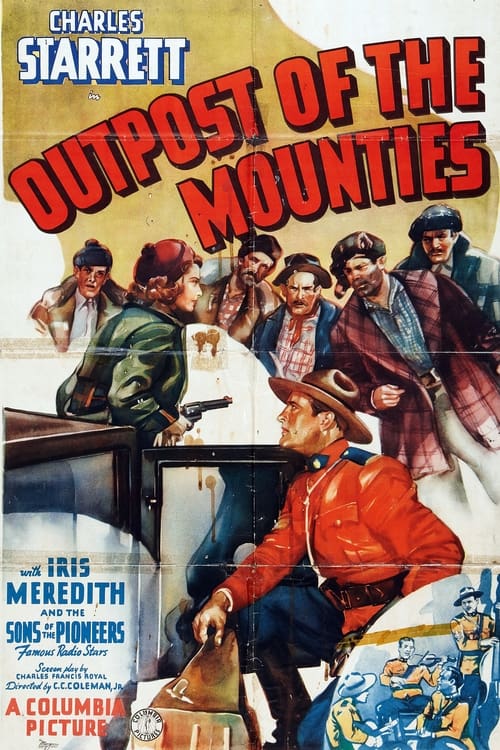
In this adventure, a courageous Canadian Mountie must bring peace an embattled miner and an unscrupulous trader whose price mark-ups are beginning to hurt the community. They fight so frequently that when the avaricious proprietor is killed, the young man becomes the prime suspect.
Outpost of the Mounties
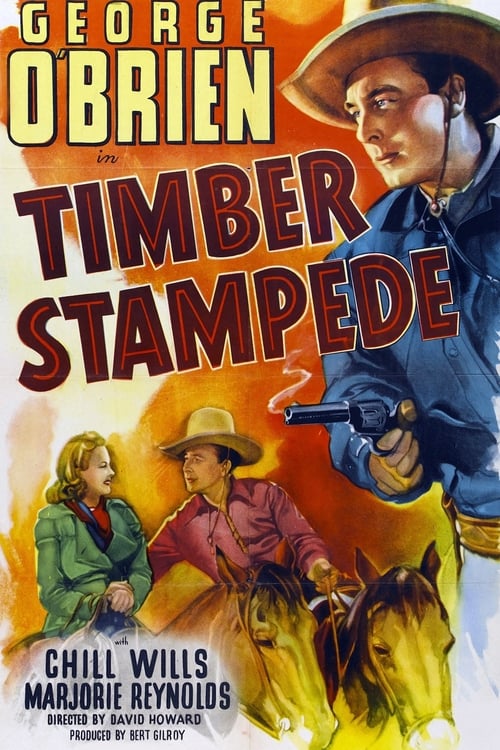
Cattlemen fight corrupt railroad men out to destroy the forest.
Timber Stampede
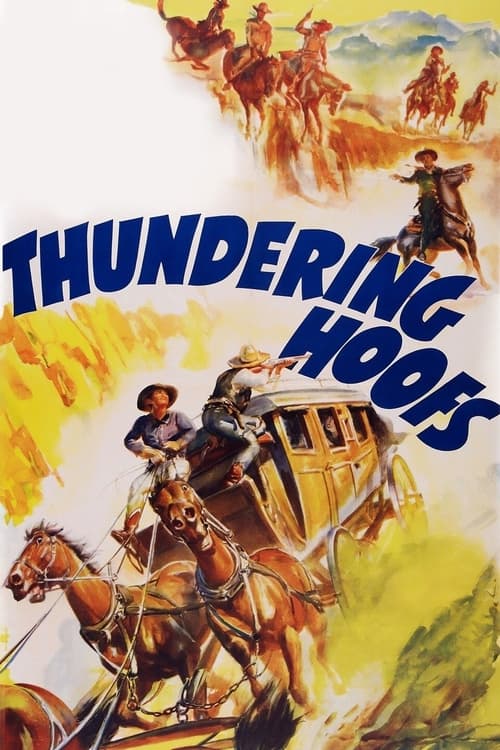
Bill Underwood falls out with his father and chooses the life of a cowhand rather than take charge of his father's stage line.
Thundering Hoofs
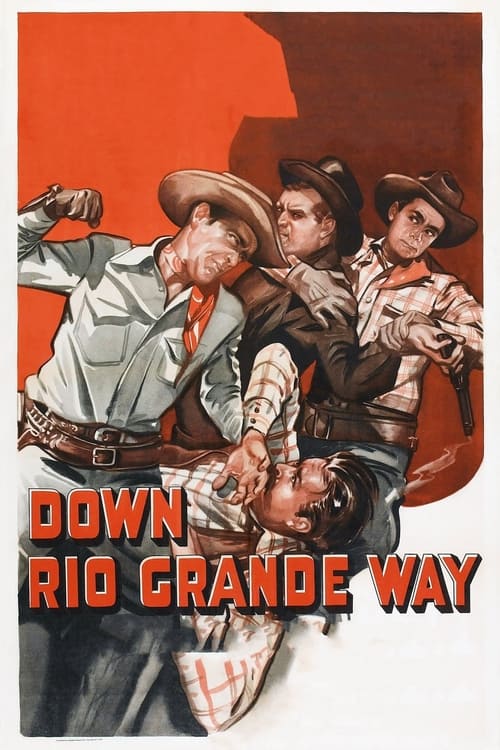
Slightly more elaborate than most Charles Starrett westerns, Down Rio Grande Way is set in the mid-19th century, when the Republic of Texas was poised to join the Union. Starrett plays Texas Ranger Steve Martin, who is dispatched to a "renegade" Texas country that refuses to become part of the good old USA. He discovers that the crux of the problem is a local tax collector who, with the help of a crooked newspaper editor, is systematically robbing the citizens of their hard-earned cash, all the while fomenting anti-American sentiments.
Down Rio Grande Way
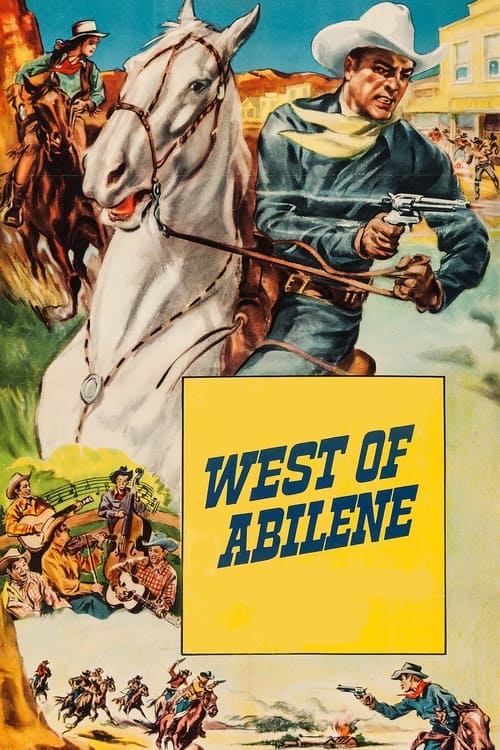
Frontiersman Tom Garfield and his pals endeavor to save their land from the clutches of slimy easterner Forsyth. The villain hires a bit of local muscle in the form of brutish Chris Matson, but he's no match for our hero.
West of Abilene
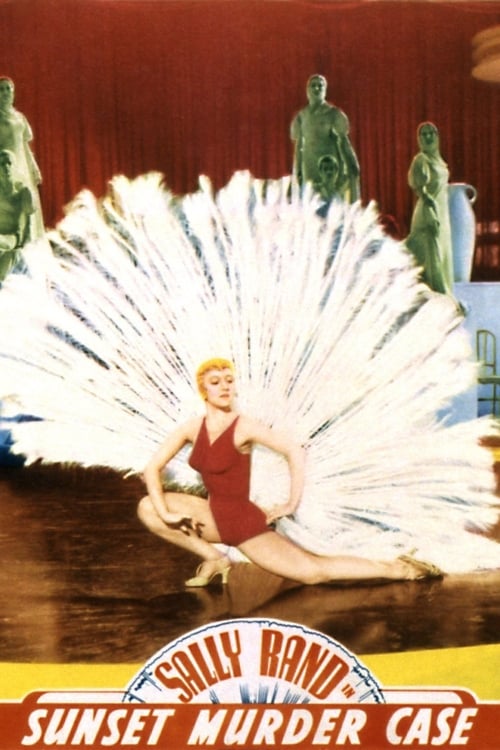
Small-time showgirl poses as a stripper to infiltrate a nightclub whose owner is believed responsible for her father's murder.
Sunset Murder Case
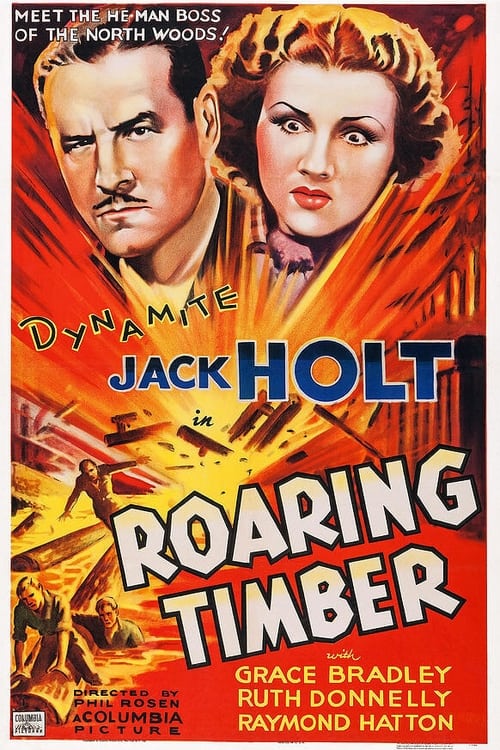
Jim Sherwood , toughest logging boss in the timber country, takes on his toughest assignment when he agrees to cut an enormous volume of timber for Andrew MacKinley, who has to deliver the timber within sixty days.