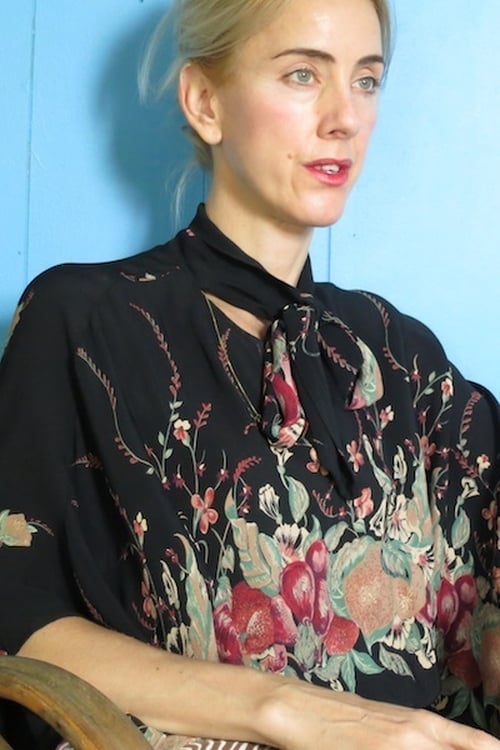
Stephanie Barber
Directing
Biography
Stephanie Barber is a writer and artist who has created a poetic, conceptual and philosophical body of work in a variety of media, often literary/visual hybrids that dissolve boundaries between narrative, essay and dialectic works. Her work considers the basic philosophical questions of human existence (its morbidity, profundity and banality) with play and humor. Barber’s films and videos have screened nationally and internationally in solo and group shows at MOMA, NY; The Tate Modern, London; The Whitney Museum of American Art, NY; The Paris Cinematheque; The Walker Art Center, MN; MOCA Los Angeles, The Wexner Center for Art, OH, among other galleries, museums and festivals.
Known For
Small biographies and musing generalizations--men’s relations to each other and their lives. There is hope and loneliness, companionship and isolation and the simplest of filmic elements to contrast the complexity of human emotions. The delicacy of the formalist writing moves the listener from intimacy to universalism and back again, swaying gently to and fro like the rocking of a ship. The minimalism of the photographic presentation allows the viewer to recognize the humanity in each individual document of a body.
dwarfs the sea
In The Jungle, playfully and sorrowfully tells the tale of an unreliable narrator in a self imposed exile. Given a grant to study the equivalent of animal cries and whines in jungle flora our heroine has lived for 1, 612 days deep in an unnamed jungle. This jungle serves as an extended metaphor for excessive and continual growth and death and fear and sustenance; a metaphorical space of chaos in which the scientist finds solace and which stands in contrast to the human jungle of 'civilization'.
In The Jungle
Stephanie Barber 2008 | 00:13:21 | United States | English | Color | Stereo | 4:3 "how looking at what has become the skeletons of photographs is a visual lecture on aesthetic pleasure or emotion. and how being, almost entirely denied of this pleasure, or having the pleasure merely suggested induces a viewer to ruminate on the act of viewing and that of wanting to view. and maybe it is evolution which causes this anxiety and art form." A series of collages recreating the photographs of well known artists (Uta Barth, Kohei Yoshiyuki, Candida Hofer, Deborah Willis) and a very slight suggestion of the actual photographs. The soundtrack is composed of approximately 25 statements on photography. -- Stephanie Barber
the inversion, transcription, evening track and attractor
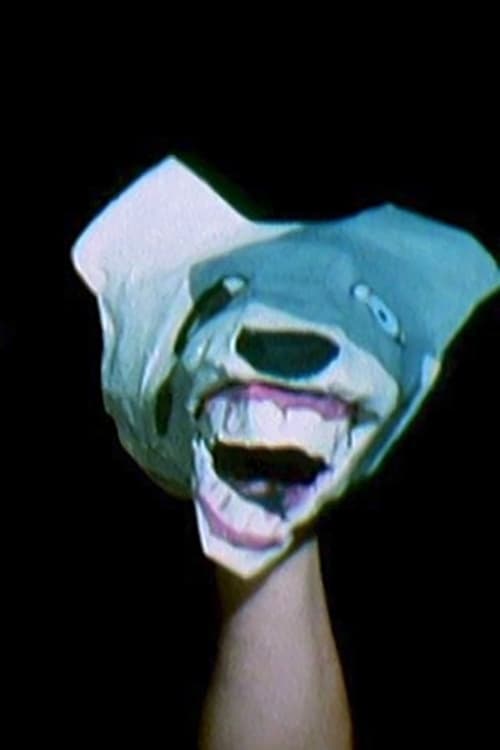
A mini-revolution. Wrong choices. The divorce of ethereal beauty and mystery so common in experimental films. In Stephanie Barber's films. What begins as devastatingly awkward or "tender" unfolds itself to show a deceptive, strangely rigid literary formalism commented upon by the content. The two (form and content) dance around, moving towards and away from each other in the tricky, clear dialogue. Hyper-reflexivity, art and love (and the role faith plays in each of these). The filmmaker writes, "I, myself, feel safest around purposefulness, can read more clearly an artist's work when I trust that choices have been weighed, bear meaning. This film requires a great deal of faith because it is strange and labile. Its device-ness is so apparent as to have left it naked. And then so naked as to be, perhaps, closed again."
Dogs
METRONOME is both the most straightforward (as well as the most difficult) of Stephanie Barber's films. It is very dear to the filmmaker's heart. The soundtrack of a radio play is off-set by the intractable images of "spaces." The former seems to balance precariously between kitsch and true heart-rending emotion and the latter references the asceticism of seventies minimalism (in experimental film) with the impenetrable intellectualism becoming increasingly moving as the film progresses. The marriage of these two elements is an odd tension: the tale of the play, the threat of limb extraction, asks the necessity of "whole and what the elements are which compose complete."
Metronome
“All day this strange pilot had flown his antique aeroplane over the abandoned space center, a frantic machine lost in the silence...” – JG Ballard
Memories of the Space Age II
A film poem thinking about the physics of sound, the need sound has to vibrate and bounce off a molecule or atom to return to our ears; thinking about this physical property as a metaphor for spirituality or love.
The Forest Is Offended
Conceptually, Stephanie Barber's short film LETTERS, NOTES is simplicity itself: found photographs hold the screen as animated texts transcribe brief notes and letters unmoored from context. And yet the elusive poignancy that emerges of this exquisite corpse structure is richly suggestive of the roots of narrative. If a code is a "reduced version of lang." (as one of the more enigmatic notes reads) then Barber’s film might be said to explore the possibilities of decoding: specifically, how cinema makes it possible to rewrite sounds and images as emotions. LETTERS, NOTES is another remarkable selection from the Cinemad Almanac.
Letters, Notes

The horizon, where the sky and the earth meet, is always elsewhere, a promised place where these two elements come together. a metaphor, an orienting, a promise of transition, change, transcendence. a place where the corporeal and spiritual meet, or are cleaved apart. Also, here, the space between narrative and documentary, fact and fiction, is scratched between two voices. Jayne love reads a text i wrote for her, short sentences on the concept of the horizon and the briefest suggestion of narrative collide with pieces of Richard (Oswan) Williams' beautiful, rum-fueled living room sermons to me.
Another Horizon

One friend tells another friend what she remembers from reading the Somerset Maugham novel "The Razor's Edge" ten or fifteen years ago. It is a sketchy and slanted remembering. They decide to shoot a film of this memory, a foggy tale with scant connection to the original but feeling the patronage of that text. Being artists and tricksters, they do it as a game, all in one week, with donated short-ends and gestural implications to narrative. What they really do is visit after years of not visiting. Endless talks about the state of the planet and our access to knowledge or the ineptitude of art. All this talking and the film turns out with almost no dialogue but sweeps through the city of Baltimore (which is often destitute, tropical and friendly).
Razor's Edge
Stephanie Barber's moving reflection on movie theaters and Anthology Film Archives.
what is a theater?
THEY INVENTED MACHINES is about colonialism, entertainment and love. The images are taken mostly on Disney World rides where one is shown facsimiles of people from far away lands. The soundtrack, a little more than half-way through, ceases its cricketing and, against impressionistic waterfalls, mentions love ("they have love here") which must then be thought of in the context of this same wonder, possession and amusement. The film ends with a series of flights.
They Invented Machines
A playful and dark conversational study—wrapping prose poetry into the recognizable conversational form and allowing both connections and missed meanings. First the ladies visit, the image—a roving camera lovingly viewing a still image—calls up both the progress and stagnancy of their talk, then they go to watch a play—on a television, in a snow garden. In many ways the play references the cadence of the ladies' conversation—the tedious animosity and lack of attentive or appropriate response. I am thinking about the art of conversation, the various directions this art takes and the ways one's receptivity to dialog changes when the subjects creating this dialog are taken out of the equation, or suggested scantily.
the visit and the play
While referencing the explorer Christopher Columbus, the film is actually a gift for filmmaker Stephanie Barber's friend, the performance artist Theresa Columbus. The short imagistic film is suggesting (or questioning) ever so gently the effects (both positive and negative) that exploring has on that which is being explored. Our most well known Columbus, now so often vilified, here stands in for a more psychological and artistic exploration and the fall out that can occur from that sort of expansionism as well. Like many of Barber's films, the piece itself works almost separately from the implications and sidelong glances of the title and the way it interacts with the (almost passive) images and (often quite dominant) soundtrack.
A Little Present (For My Friend Columbus the Explorer)
According to filmmaker Stephanie Barber, "This is probably the most heartbreaking film I have made." The pacing is romantic and simple, haiku-esque pauses and inclusions, with the words contrasting this poetry with their factual, disinterested narration. And that narration is a simple statement of failure; one which lies not in any action but in the pre-thought to that action, the hope or faith one holds in oneself, one's knowledge or abilities.
shipfilm
A hand-painted, heavily collaged bit of juvenilia thinking about our possessions and what can be lost. What can be retained. Whether our bodies, our self expression and our memories are intractable elements of our 'selves'. Or just what our 'selves' are when/if these things go.
Salamander O'Dictus
The video hovers tentatively between therapy, documentary, poetics and mystic traipsery and ends, like all good things, in surrender to song. There is a challenge presented (the challenge to engage earnestly with the piece as it requests) to fall into the breathing and pacing presented, and the challenge to view the video as a discrete piece of art at the same time. The piece relies heavily on the text, the disembodied Virgil through which the words become musical, instructive and (due to the absence of image) visual.
Healing
A portrait of risk and language, the experimental narrative Daredevils, presents a writer as she interviews a well-known artist and feels the reverberations of their discussion throughout her day. Visually spare, still and verbose the video constructs a metaphor of an artist’s life and work as daredevilry. –S.B.
Daredevils

A micro-fiction. "Story" is stripped to the tiniest suggestion as the image is reduced to cartoon with only the merest hint of 'reality' suggesting possible riches.—Stephanie Barber
At The Shore
WOMAN STABBED TO DEATH is a short film concerned with both the apathy of human receptivity and the perverse nature of free floating paranoia so artfully ingrained in women. it is a tiny horror film, with the soundtrack skipping blithely over the literal graves of millions and the metaphorical grave of one's feelings of safety.