Harry Martinson
Writing
Biography
Harry Martinson (6 May 1904 – 11 February 1978) was a Swedish writer, poet and former sailor. In 1949 he was elected into the Swedish Academy. He was awarded a joint Nobel Prize in Literature in 1974 together with fellow Swede Eyvind Johnson "for writings that catch the dewdrop and reflect the cosmos". The choice was controversial, as both Martinson and Johnson were members of the academy. He has been called "the great reformer of 20th-century Swedish poetry, the most original of the writers called 'proletarian'." One of his most noted works is the poetic cycle Aniara, which is a story of the spacecraft Aniara that during a journey through space loses its course and subsequently floats on without destination. The book was published in 1956 and became an opera in 1959 composed by Karl-Birger Blomdahl. The cycle has been described as "an epic story of man's fragility and folly".
Known For

A ship carrying settlers to a new home on Mars after Earth is rendered uninhabitable is knocked off-course, causing the passengers to consider their place in the universe.
Aniara

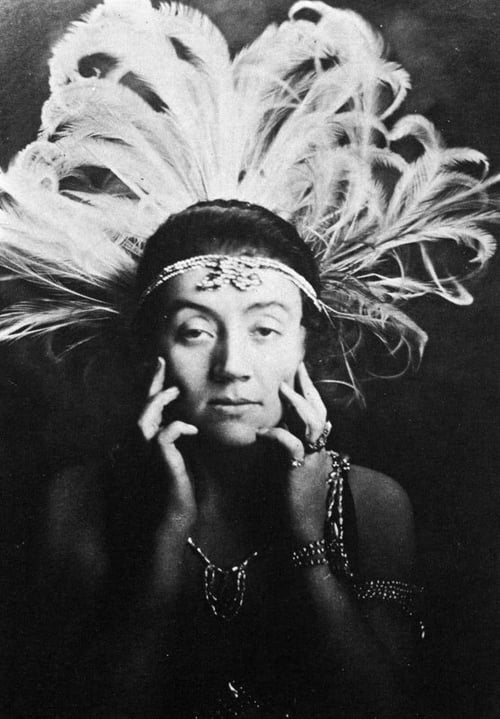
Naima Wifstrand, leading old lady, dressed as a Primadonna presents the variety revue "The Old, Happy 40's", a dark time of angst, depression and derailed, wild happiness. Those were the days. Music, dance, songs and hillarious sketches follow.
Södrans Revy

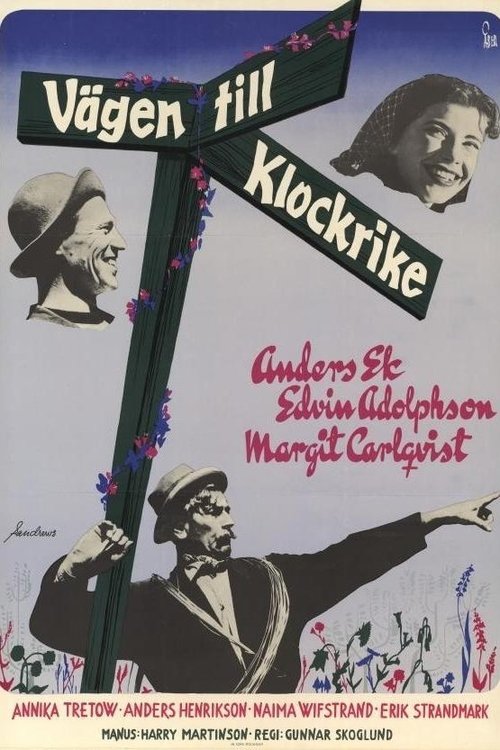
Bolle gets tired of working at the cigar factory and because of his desire for freedom he takes to the road. He and the other hobos have only one problem and that is the mounted policemen chasing vagrants.
The Road to Klockrike

Nobel Laureate Harry Martinson's famous poem consists of 103 cantos and relates the tragedy of a space ship which, originally bound for Mars with a cargo of colonists from the ravaged Earth, is ejected from the solar system after an accident and into an existential struggle.
Aniara
A Swedish short film directed by Johan Falck with cinematography by Arne Sucksdorff and poetic narration written by Nobel laureate Harry Martinson. Accompanied by a score from Erik Baumann, Erland von Koch, and Albert Löfgren, the film blends lyrical text, music, and images of Swedish nature into what Sucksdorff himself described—along with An August Rhapsody—as a “hymn to the Swedish summer.”
This Land is Full of Life

Musical production of the space epic Aniara.