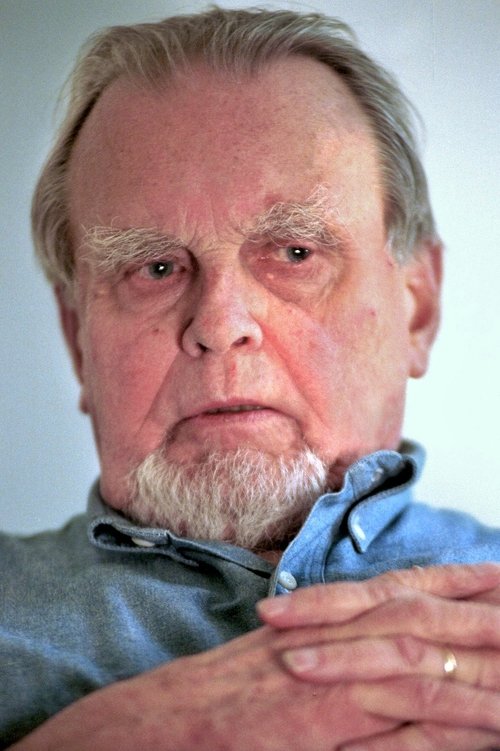
Czesław Miłosz
Writing
Biography
Czesław Miłosz (30 June 1911 – 14 August 2004) was a Polish-American poet, prose writer, translator, and diplomat. He primarily wrote his poetry in Polish. Regarded as one of the great poets of the 20th century, he won the 1980 Nobel Prize in Literature. In its citation, the Swedish Academy called Miłosz a writer who "voices man's exposed condition in a world of severe conflicts". Miłosz survived the German occupation of Warsaw during World War II and became a cultural attaché for the Polish government during the postwar period. When communist authorities threatened his safety, he defected to France and ultimately chose exile in the United States, where he became a professor at the University of California, Berkeley. His poetry—particularly about his wartime experience—and his appraisal of Stalinism in a prose book, The Captive Mind, brought him renown as a leading émigré artist and intellectual. Throughout his life and work, Miłosz tackled questions of morality, politics, history, and faith. As a translator, he introduced Western works to a Polish audience, and as a scholar and editor, he championed a greater awareness of Slavic literature in the West. Faith played a role in his work as he explored his Catholicism and personal experience. He wrote in Polish and English. Miłosz died in Kraków, Poland, in 2004. He is interred in Skałka, a church known in Poland as a place of honor for distinguished Poles. Czesław Miłosz was born on 30 June 1911, in the village of Šeteniai (Polish: Szetejnie), Kovno Governorate, Russian Empire (now Kėdainiai district, Kaunas County, Lithuania). He was the son of Aleksander Miłosz (1883–1959), a Polish civil engineer, and his wife, Weronika (née Kunat; 1887–1945). Miłosz was born into a prominent family. On his mother's side, his grandfather was Zygmunt Kunat, a descendant of a Polish family that traced its lineage to the 13th century and owned an estate in Krasnogruda (in present-day Poland). Having studied agriculture in Warsaw, Zygmunt settled in Šeteniai after marrying Miłosz's grandmother, Jozefa, a descendant of the noble Syruć family, which was of Lithuanian origin. One of her ancestors, Szymon Syruć, had been personal secretary to Stanisław I, King of Poland and Grand Duke of Lithuania. Miłosz's paternal grandfather, Artur Miłosz, was also from a noble family and fought in the 1863 January Uprising for Polish independence. Miłosz's grandmother, Stanisława, was a doctor's daughter from Riga, Latvia, and a member of the German-Polish von Mohl family. The Miłosz estate was in Serbiny, a name that Miłosz's biographer Andrzej Franaszek has suggested could indicate Serbian origin; it is possible the Miłosz family originated in Serbia and settled in present-day Lithuania after being expelled from Germany centuries earlier. Miłosz's father was born and educated in Riga. Miłosz's mother was born in Šeteniai and educated in Kraków. ... Source: Article "Czesław Miłosz" from Wikipedia in English, licensed under CC-BY-SA 3.0.