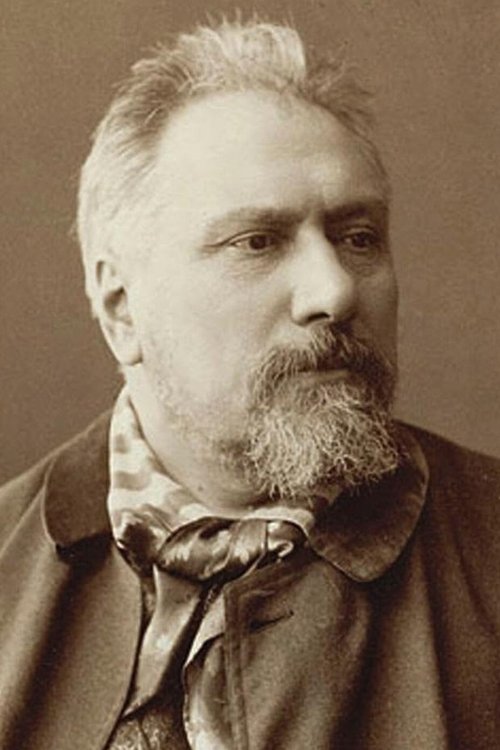
Nikolai Leskov
Writing
Biography
Nikolai Semyonovich Leskov (1831–1895) was a Russian novelist, short-story writer, playwright, and journalist, who also wrote under the pseudonym M. Stebnitsky. Praised for his unique writing style and innovative experiments in form, and held in high esteem by Leo Tolstoy, Anton Chekhov and Maxim Gorky among others, Leskov is credited with creating a comprehensive picture of contemporary Russian society using mostly short literary forms. His major works include Lady Macbeth of Mtsensk (1865) (which was later made into an opera by Shostakovich), The Cathedral Clergy (1872), The Enchanted Wanderer (1873), and "The Tale of Cross-eyed Lefty from Tula and the Steel Flea" (1881).
Known For
An anthology series of television plays which aired on BBC1 from October 1964 to May 1970. The plays were usually written for television, although adaptations from other sources also featured.
The Wednesday Play

Rural England, 1865. Katherine, suffocated by her loveless marriage to a bitter man and restrained by his father's tyranny, unleashes an irresistible force within her, so powerful that she will stop at nothing to get what she wants.
Lady Macbeth
The quiet life of the county town ended with the arrival of two young people from the capital, and what followed will remain in the memory of local residents for a long time. Intrigues and passions, meanness and nobility, love and death are closely intertwined in the life of an outwardly decent society.The outstanding Russian writer brought to the pages of his novel a number of famous and vivid characters who prepared the tragic events that happened in Russia in the 20th century through their activities.
On Knives
A ruthless woman's adulterous affair with a drifter sets in motion a chain-reaction of murder and deception in a remote village in 19th Century Mtsensk.
Siberian Lady Macbeth
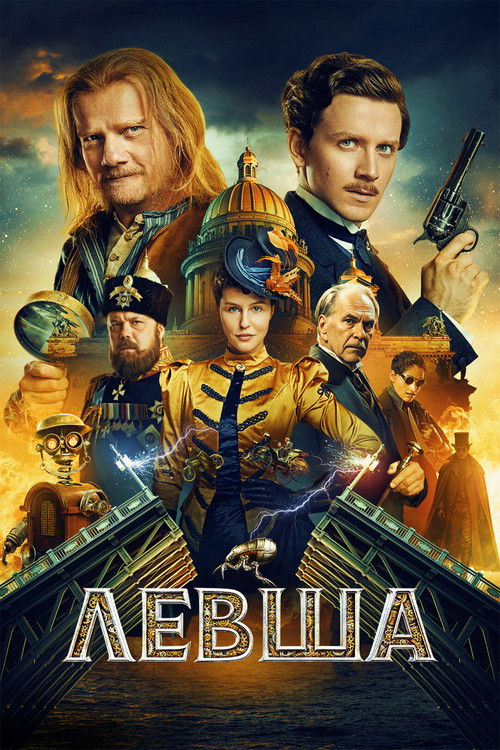
Russia, the late 19th century. As the threat of war with Great Britain looms, a mysterious device—a mechanical flea—is discovered within the Imperial Palace. Tasked with investigating the incident is a young officer, Pyotr Ogaryov, who dreams of earning the trust of Tsar Alexander III. In his quest for the truth, he joins forces with Lefty, a brilliant but forgotten master craftsman from Tula. Together, they plunge into a world of intrigue and danger. To uncover a conspiracy, the two heroes must challenge the established order, unravel family secrets, and make a difficult choice between duty and passion. The security of the nation—and their own destinies—hang in the balance.
Lefty
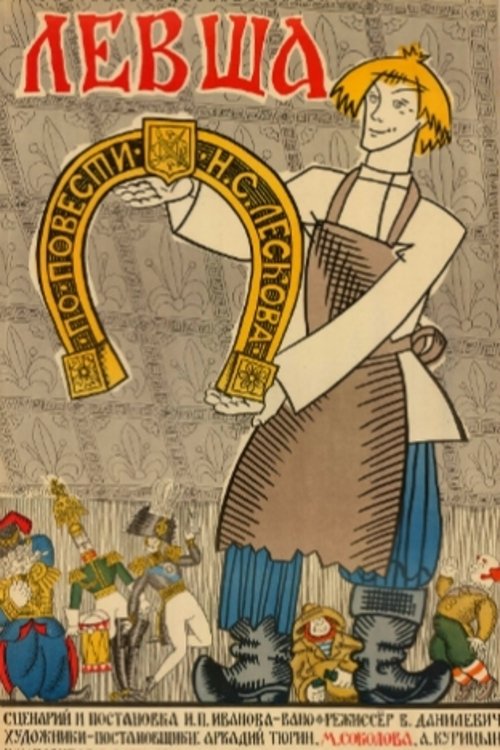
Surprising master Lefty, who grounded a steel flea. This feature-length cutout-animated film from the Soviet Union is based on the story of the same name by the 19th century Russian novelist Nikolai Leskov. It was directed by the "Patriarch of Soviet animation", Ivan Ivanov-Vano, at the Soyuzmult film studio.
Left-Hander
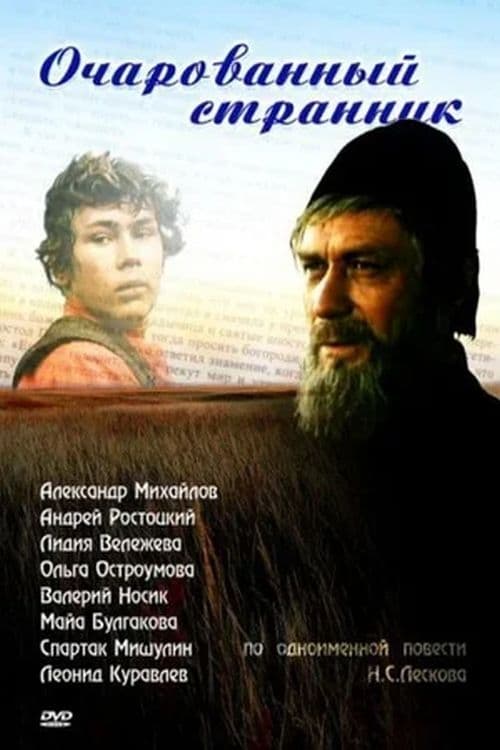
Aboard a steamship, a priest tells his fellow passengers his life story, which he admits is the story of a great sinner.
The Enchanted Wanderer
A love story between a barber and a serf actress who find themselves in an environment that combines savagery with a veneer of enlightenment. Based on Nikolai Leskov's short story "The Toupee Artist".
Drama from the Old Life
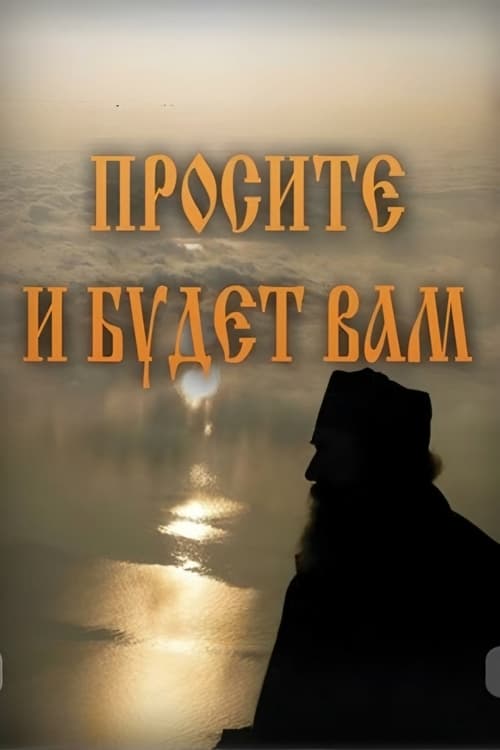
Several days from the life of a landowner's estate on the eve of Christmas are shown through the perception of a boy. The action takes place in Russia in the second half of the 19th century.
Ask and It Will Be Yours
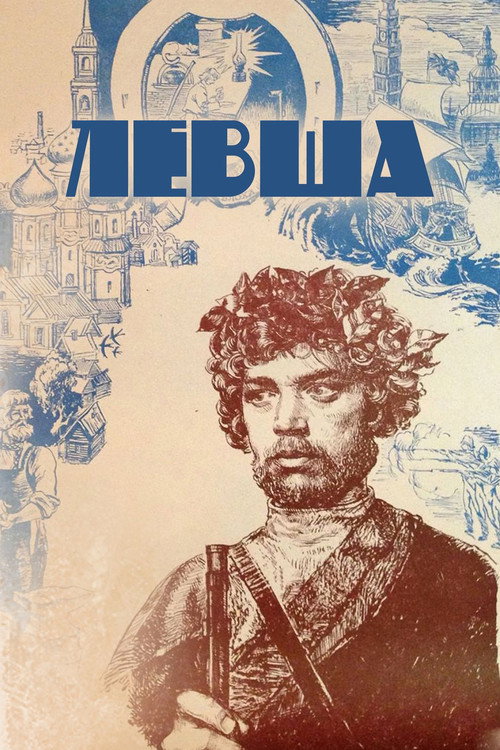
When the British, wanting to surprise the Emperor Alexander Pavlovich, presented a clockwork miracle flea, they did not know into the hands of which craftsman it would fall on Russian soil.
The Left-Hander

Katerina Izmailova is a filmization of Dmitry Shostakovich's long-suppressed 1936 opera. Galina Vishnevskaya stars as Katerina, a bored 19th century farm wife. At the behest of her grungy lover, Katerina murders her husband and her father-in-law. She and her new beau are both sent to Siberia, where the lover almost immediately takes up with a younger woman. Banned by Stalin for its bleak portrait of Soviet life, Katerina Izmailova was not given a Russian staging for over 40 years; its Metropolitan Opera debut did not occur until 1994.
Katerina Izmailova
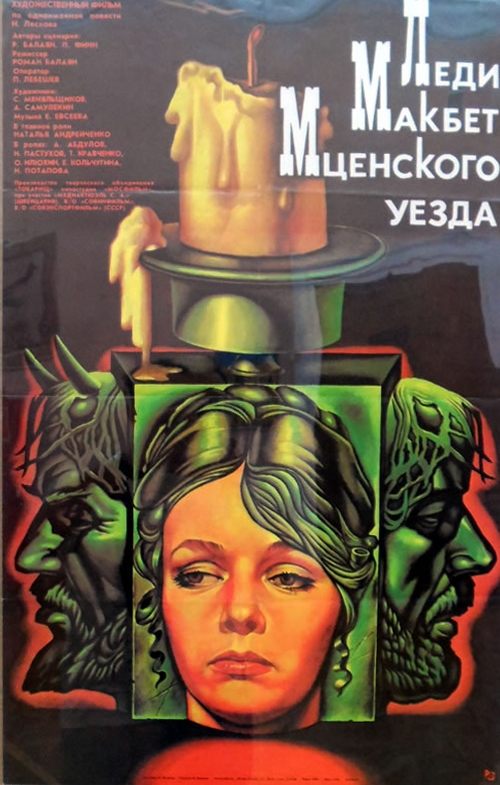
Katerina Izmailova, a beautiful and uneducated merchant's wife, feels lonely and bored somewhere in the Russian provinces while her older husband is often away. Years go by in her childless marriage, without an outlet for her youthful energy, resulting in constant idleness and frustration. Along comes Sergei, an unscrupulous young worker who is happy to improve his lot by seducing Katerina as he has done with others before. Katerina falls for Sergei, and this love quickly becomes her only reason for living, turning to destructive passion and ultimately to tragedy for many.
Lady Macbeth of the Mtsensk District
Partially lost.
The Comediant Girl

A young woman, married to a wealthy man, but miserably lonely; trapped within a world ruled with an iron fist. Katerina is driven by a lust for life and for love. Her husband, though, is impotent; her father-in-law a tyrant. No wonder, then, that she longs to free herself from this yoke. When Sergei starts work on the family estate, she sees in him a chance for salvation. However, their subsequent affair marks the beginning of a descent into crime.
Lady Macbeth of Mtsensk
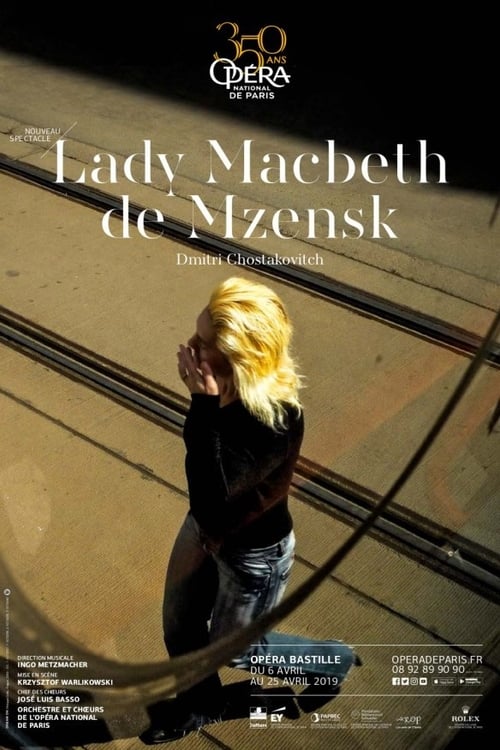
Of Shostakovich’s initial undertaking – a trilogy on the tragic destinies of Russian women through the ages – only one opera was ever written: the hard-hitting Lady Macbeth of Mtsensk. Although one of the mainsprings of the work, the Shakespearean parallel is here bitterly ironic: unlike Lady Macbeth, Katerina Ismaïlova who, in the remote reaches of rural 19th century Russia, falls in love with one of her husband’s employees and is finally forced to commit suicide, is less a manipulator than a victim of a violent and patriarchal society. Krzysztof Warlikowski liberates all the subversive power of this scorching and scandalous work, which marked the early years of the Opéra Bastille.
Shostakovich: Lady Macbeth of Mtsensk
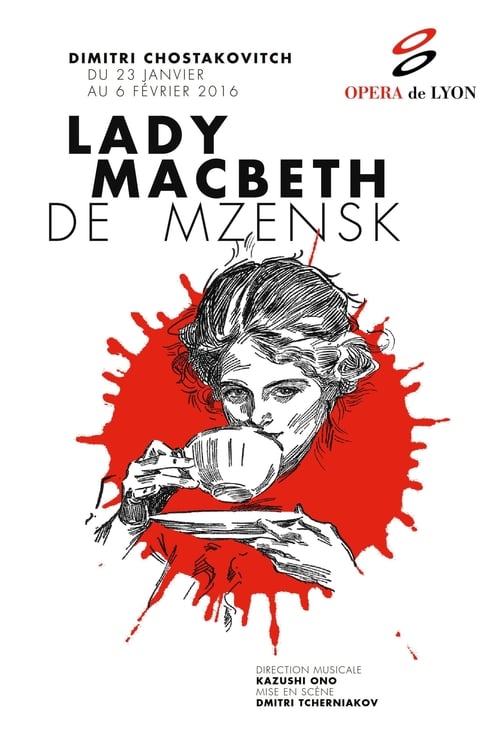
Lady Macbeth of Mtsensk is a powerful work of raw emotional intensity. With themes of adultery and murder, the story follows the downfall of a bored provincial merchant’s wife who seeks solace and excitement in an extra-marital affair. With a bold and contemporary setting, the staging provides the perfect backdrop to this 20th-century opera’s unflinching approach to sex and violence.
Chostakovitch: Lady Macbeth de Mzensk
When she was a little girl, Liuba came to town with her widowed mother to live in the block of flats owned by her aunt Anna Iwanowna. The wealthy and cold-hearted Anna Iwanowna barely accepted them as tenants. And no sooner did Liuba's mother die than she wanted to send her niece to the orphanage. Fortunately, Pawlin, Anna Iwanowna's janitor, decided to adopt her and he brought her up with affection. When she grew up, the beautiful Liuba fell in love with her aunt's son, Dodja, a good-looking but profligate army officer. Wishing nothing more than an affair with Liuba, Dodja did not hesitate to play the comedy of love to her. When she realized what Dodja was really after, Liuba was devastated and in desperation accepted to marry Pawlin, her benefactor, who had been infatuated with her for years. Alas, in the middle of the wedding party Dodja danced with Liuba and eloped with her
Tragödie einer Leidenschaft
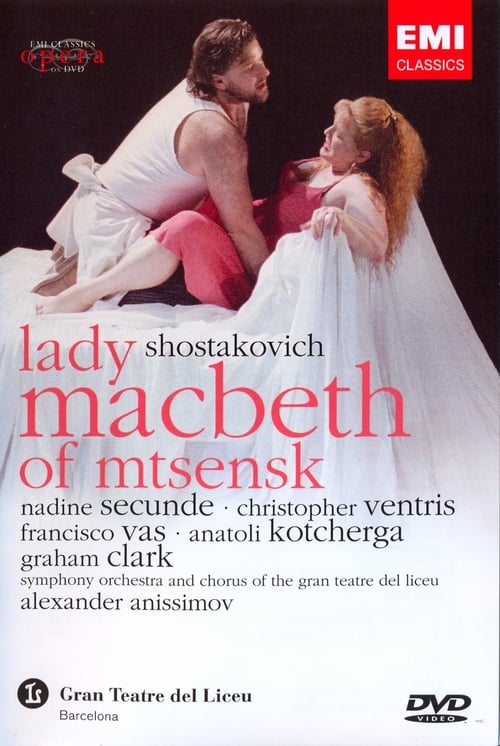
A stage performance of the Shostakovich opera, filmed at the Gran Teatre del Liceu in Barcelona.
Lady Macbeth of Mtsensk
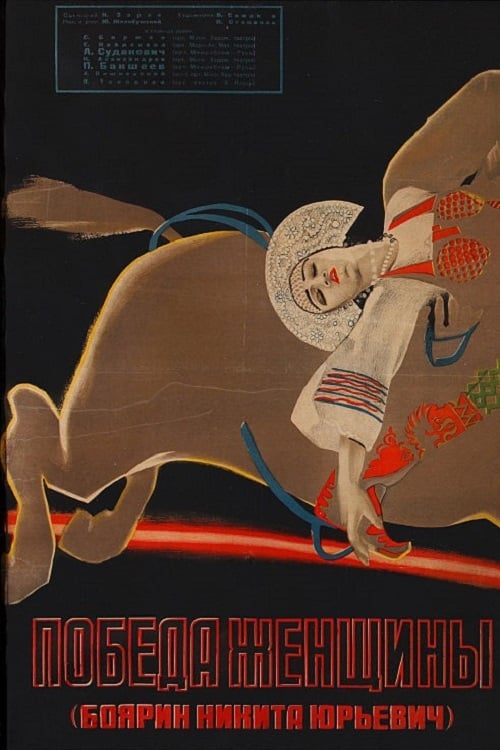
About life and customs in the boyar environment during the reign of Peter I.
Victory of Women
The city philistine Domna Platonovna-a merchant of lace, and sometimes... and "live goods" - is engaged in pimping. Fate confronts her with a young intelligent woman-a noblewoman, a colonel, Lekanida Petrovna, whose difficult life trials led to a moral decline. Domna Platonovna tells her tragic story with imperturbable calmness, presenting her own unseemly actions that push the unfortunate woman as the greatest benefits rendered to her.