Jorge Silva Melo
Directing
Biography
Jorge Silva Melo is a Portuguese actor, theatre director, writer, playwright and translator. In 1973 Melo founded the Teatro da Cornucópia with Luís Miguel Cintra. He received critical acclaim for his work as a playwright. From Wikipedia, the free encyclopedia

Known For

In Brazzaville, in 1944, Alex Emmerich was sentenced to wander the seas by Hélène Latray, the wife of Félix Beauvois, the man Alex loved. In 1962, exiled on Hatray cruises and feeling the coming death, Alex decides to compose for his love a testament: the photographic report of his agony.
Swing troubadour

A father and a son. The father will be seventy years old, the son is in his twenties. The son drives the father to the hospital. Classical music in the radio. The father did not know that the son liked classical music, and the son did not know that that would be the last time he would speak to his father. But Mozart asks that souls rejoice, that men rejoice.
A Felicidade

It is the end of summer and Isabel is a relationship with Diogo. She don't quite know what she wants from her life going forward as her father gets sick.
A Girl in Summer
In a specialized, hermetic drama about love won and lost, not necessarily by the same individuals, novice director Christine Laurent has focused on the backstage melodramas of an opera company. The conductor for an upcoming performance of the Marriage of Figaro has his mind and heart on other matters -- an entrancing diva who keeps him enraptured with her presence and voice. In the meantime, he finds fault with his cast members who cannot, of course, measure up to the woman of his dreams. As singers encounter one problem or another, it is clear that something has to be done about the conductor. Director Laurent designed costumes for both theater and opera, giving her some insight into the venue.
Vertiges

A bewitching combinatory adaptation of the Bluebeard tale and a 15th century Portuguese fable of a damsel who disguises herself as a knight errant.
Silvestre

Xavier returns to Lisbon after a military stint, determined to lead a meaningful life, only to find his world closing in on him.
Xavier

This visually striking drama is taken from the classic Japanese novel Tales Of Genji by Marasaki Shikibu. Set in modern Portugal, Joao (Luis Miguel Cintra) is a left-wing political leader and ladies man with a bright future. His ex-wife Isabel (Manuela de Freitas) both loves and hates him as Joao plays on her wavering emotional state. He is sent to Italy to retrieve wayward family member Antonia (Caroline Chaniolleau), the beautiful young woman with a terrorist boyfriend. Joao is forced to recognize his feelings as the political and amorous climate changes around him.
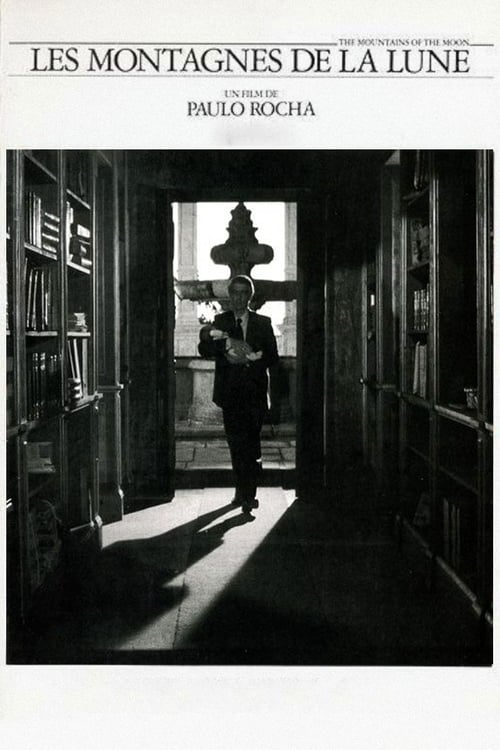
The Mountains of the Moon

Set four years after the Portuguese revolution and the simultaneous loss of the Portuguese empire in Africa, the story concerns a director who sells guns to finance his play.
The Jester

The city during the beginning of cinema. The typical city at the time of the dictatorship. The New Lisbon of the New Cinema. Lisbon after the Revolution. The white city of foreigners. A geographical and moviegoer screenplay of Lisbon through the images of films and testimonies of several filmmakers who filmed in Lisbon.
Lisboa no Cinema, Um Ponto de Vista

During the century of the Spanish Gold, Doña Prouhèze, wife of a nobleman, deeply loves Don Rodrigo, who is forced to leave Spain and go to America. Meanwhile Prouhèze is sent to Africa to rule the city of Mogador. Ten years later Rodrigo leaves America and travels to Africa in search of Prouhèze to find out that she died and eventually meeting her daughter.
The Satin Slipper

Director Jorge Silva Melo has developed a viable, though highly intellectual mystery story about the world of art and culture and murder in this somewhat theatrical presentation. When German artist Bernd Hoffmann (Michael König) arrives in Lisbon to oversee the installation of his paintings in a joint exhibition with another Berlin artist, Hanna Brauer (Charlotte Schwab), Hanna never shows up. Hoffmann is puzzled because he is certain he saw a video sequence with Hanna at the exhibition, and he begins to look for her. Another Lisbon cultural center, a theater, is also having problems that may or may not be related -- and the mystery deepens when Hanna is found dead, either by her own hand, or murdered.
No one Twice

One night, a group of workers realises that the administration is stealing machines and raw materials from their own factory. As they organize to survey the equipment and block the relocation of production, they are forced to stand at their posts with no work to do, as a form of retaliation, while negotiations over general lay-offs take place. The pressure leads to a breakdown of the workers along with the world around them.
The Nothing Factory

Summer of 1964. The professor Carlos and the couple Dário and Alda spend time together in the beach during vacations. Away from the colonial war, everything seems lost in time.
Agosto

The film of a performance of a selection of cabaret comedy sketches by Karl Valentin, with Jorge Silva Melo as stage director. The show was a complete success and has become almost legendary. Solveig Nordlund shot it, adding some more sketches that weren’t included on the show.
E Não se Pode Exterminá-lo?

“I think my film represents above all the proof to those who want to understand and accept it, that poetry can’t be filmed, that it is useless to try” - João César Monteiro
Sophia de Mello Breyner Andresen

The film was to be a documentary, but evolved during production to a fictional film. It nevertheless adheres strictly to the poems and letters exchanged by two of the most outstanding names of the Modernist Movement, Fernando Pessoa (in Lisbon) and Mário de Sá-Carneiro (in Paris). Their endless conversation was dramatically and suddenly terminated.
The Conversation Is Over

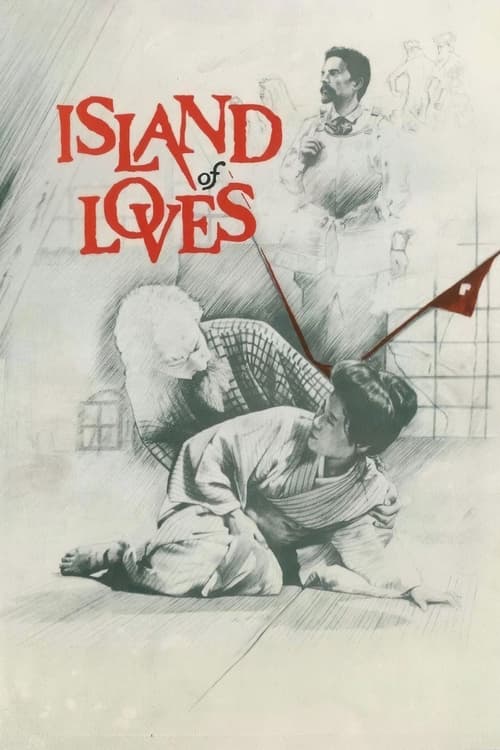
This film depicts the life of the 19th-century Portuguese writer Wenceslau De Moraes by means of nine ancient ballads from China. The writer married a Chinese woman after he left his wife and family to go live in Macao. Later, he moved to Japan where he fell in love with a Japanese woman, staying in Japan for the rest of his life. Mixed in with the career and loves of Moraes is the history of Portugal at home and in its colonies.
Island of Loves

Nogueira, a man in his fifties, is a relic of times long past. While the youngsters at the school where he works as a caretaker still think the world is their oyster, Nogueira knows that, for him, most doors have long closed.
Step by Step

O Outro Teatro proposes a look at the independent theater manifestations that came in the wake of the pioneering gestures of Teatro Experimental do Porto.
O Outro Teatro ou As Coisas Pertencem a Quem as Torna Melhores

A boy in Lisbon, in this Lisbon in permanent renovation.