FEEL IT.STREAM
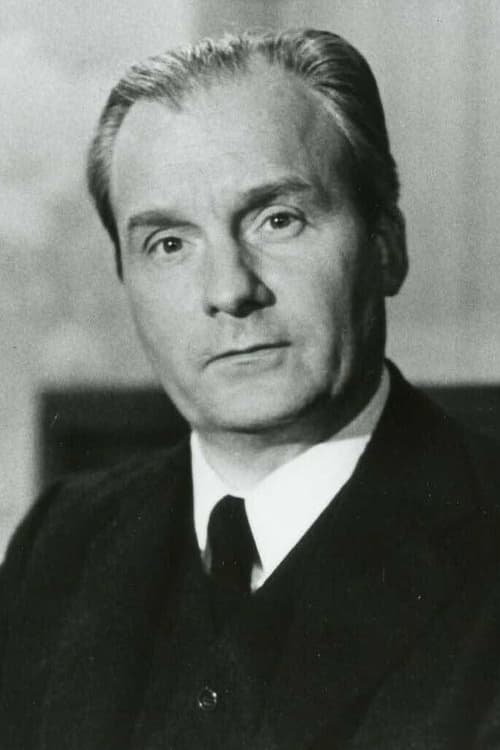
Michel Bouquet

Michel Bouquet

Acting

Biography

Michel Bouquet (6 November 1925 – 13 April 2022) was a French stage and film actor. He appeared in more than 100 films from 1947 to 2020. He won the Best Actor European Film Award for Toto the Hero in 1991 and two Best Actor Césars for How I Killed My Father (2001) and The Last Mitterrand (2005). He also received the Molière Award for Best Actor for Les côtelettes in 1998, then again for Exit the King in 2005. In 2014, he was awarded the Honorary Molière for the sum of his career. He received the Grand Cross of the Legion of Honor in 2018. Michel François Pierre Bouquet was born on 6 November 1925 in Paris. When he was seven years old, he was sent to a boarding school where he stayed until the age of 14. He aspired to become a doctor but had to quit school at the age of 15 after his father had been taken prisoner during World War II. Bouquet worked as a baker's apprentice, then a bank clerk, to provide for the family. After a short stay in Lyon, he returned with his mother to Paris. Marie Bouquet was passionate about theater, and that helped the young Bouquet to find his vocation. He took acting classes under the tutelage of Maurice Escande, a member of the Comédie Française, and made his stage debut in the play La première étape in 1944. Then he studied at the Conservatory of Dramatic Arts in Paris where he met Gérard Philippe. In the mid-1940s Michel Bouquet began working with the playwright Jean Anouilh and director André Barsacq, who staged plays at the Théâtre de l'Atelier in Montmartre. In 1946, Anouilh gave Bouquet a part in Roméo and Jeannette, followed by The Rendez-vous of Senlis and The Invitation to the Castle in 1947. In the 1950s, the actor met another stage director, Jean Vilar, with whom he would frequently collaborate. Bouquet played many roles from the classical repertoire at the Festival d'Avignon, created by Vilar in 1947 (Henry IV in 1950, The Tragedy of King Richard II in 1953, and The Miser in 1962). Bouquet regularly worked with Anouilh until the early 1970s, then helped popularize in France the works of the British author Harold Pinter: The Collection in 1965, The Birthday Party in 1967 and No Man's Land in 1979. At the same time, at the end of the 1970s, Michel Bouquet was appointed professor at the National Conservatory of Dramatic Arts and taught there until 1990. In the 1980s-1990s, he returned to the Théâtre de l'Atelier where he once began his career. In 1994, he played in Exit the King by Eugène Ionesco, the role he would perform many times until 2014. In 1998 he received the Molière Award for Best Actor for Bertrand Blier's Les côtelettes, then again for Exit the King in 2005. In 2014, he was awarded the Honorary Molière for the sum of his career. A year later, the actor received accolades for his performance in Taking Sides by the British playwright Ronald Harwood. Bouquet announced his retirement from stage in 2019. ... Source: Article "Michel Bouquet" from Wikipedia in English, licensed under CC-BY-SA.

Known For

Champs-Elysées
6.8

No description available.

Champs-Elysées

1982
Vivement dimanche
3.6

No description available.

Vivement dimanche

1998
Spécial cinéma
9.5

Marcello Mastroianni, Isabelle Adjani, Alain Delon, Martin Scorsese, Woody Allen... the biggest stars in cinema were welcomed by Christian Defaye on his show Spécial cinéma. Between intimate confessions from actors and immersion in the world of the greatest filmmakers, Christian Defaye took viewers on a journey into the fascinating world of cinema for nearly thirty years.

Spécial cinéma

1974
Discorama
8.0

No description available.

Discorama

1959
28 minutes
2.5

No description available.

28 minutes

2012
No image
6.0

No description available.

Samedi soir

1971
Maigret
7.8

The pragmatic, reserved and refined Maigret investigates murders in his singular unhurried manner and inevitably discovers the truth.

Maigret

1991
Night and Fog
8.3

Filmmaker Alain Resnais documents the atrocities behind the walls of Hitler's concentration camps.

Night and Fog

1956
La Case du siècle
7.3

A French current affairs show.

La Case du siècle

2010
The Unfaithful Wife
6.8

A man begins to believe his wife is cheating on him.

The Unfaithful Wife

1969
This Special Friendship
7.8

A tale of the tender relationship between a twelve-year-old boy and the fourteen-year-old upperclassman who is the object of his desire, all set within the rigid atmosphere of a Jesuit-run school.

This Special Friendship

1964
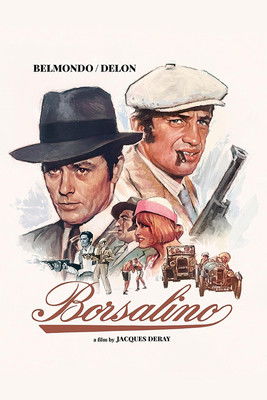
Borsalino
6.9

In 1930s Marseilles two small-time crooks decide to join forces when they meet while brawling over a woman. Starting with fixed horse races and boxing matches, they soon find themselves doing jobs for the local gangster bosses. When they decide to go into the business for themselves, their easy-going approach to crime starts to change.

Borsalino

1970
Toto the Hero
7.1

80-year-old Thomas recounts his childhood and middle age through a series of flashbacks and dream sequences. Thomas believes he’s been taken away from a better life at birth; following a hospital fire, he vividly recalls being swapped with another new-born, and subsequently grows up in a poorer neighbouring household.

Toto the Hero

1991
Two Men in Town
7.1

A former bank robber is released after 10 years in prison. He gets help from a social-worker, but gets harassed by an old cop from his past.

Two Men in Town

1973
The Conspiracy
5.7

Paris 1960. DeGaulle determines to end a bitter war in Algeria by granting its independence. Millions oppose him, including a group of DeGaulle's disenchanted Arm Officers. In a desperate attempt to save the colony for France, they plan a daring jailbreak of their imprisoned leader. A network of snitches inform a tenacious detective leading to an explosive three-way cat-and-mouse game among the rebels, the Gaullist politicos and the police.

The Conspiracy

1973
The Bride Wore Black
7.1

Julie Kohler is prevented from suicide by her mother. She leaves home, with the intent track down, charm and kill five men who do not know her. What is her goal? What is her purpose?

The Bride Wore Black

1968
Lamiel
5.2

Lamiel is a poor orphan girl who climbs to the social elite in this 19th-century costume drama. Sansfin, provincial doctor, lives vicariously through her, as he oversees the progress of his female protégé. Defiant and rebellious, Lamiel goes to Paris to escape boredom and to know love.

Lamiel

1967
Katia
6.5

Tsar Alexandre II meets a young student, Katia. He understands that he loves her and try to send her away but they end up seeing each other again and becomes his mistress. With the help of Katia, Alexandre prepares a liberal constitution, but these reforms make him hostile to the more privileged subjects without satirising the revolutionaries against the regime.

Katia

1959
The Serpent
6.1

Vlassov is a Soviet spy who defects in France. He is whisked to the U.S, where Allan Davies takes over the case. After polygraph tests and cross-examinations, Vlassov names several Western European agents who are also spying for the Soviets. Davies wants to take the listed agents into custody; meanwhile, those on the list start dying under mysterious circumstances.

The Serpent

1973
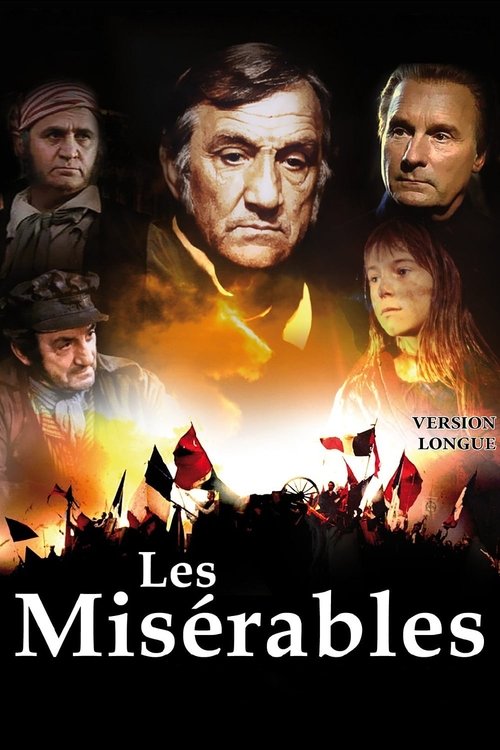
Les Misérables
7.0

In 19th century France, Jean Valjean, a man imprisoned for stealing bread, must flee a relentless policeman named Javert. The pursuit consumes both men's lives, and soon Valjean finds himself in the midst of the student revolutions in France.

Les Misérables

1982