Dāvis Sīmanis Jr.
Directing
Biography
Dāvis Sīmanis, son of the cinematographer of the same name, is a Latvian film director and university professor.
Known For

A story about Emīlija Benjamiņa, the “queen of the press” in interwar Latvia, whose wealth and tragic fate have since become folklore. The film’s narrative covers the period from the beginnings of Emīlija’s magazine Atpūta (Recreation), to her arrest and slow demise in a train en route to Siberia. The most prominent clairvoyant of the time - Eugene Fink’s prophecy that Emīlija would die from starvation in a foreign land (which served to be true) weaves through the narrative as a red thread. With this strong woman at the centre of the story, the film shows Latvian society in all its richness and gives the audience the opportunity to meet many well-known historical figures.
Emily. Queen of the Press

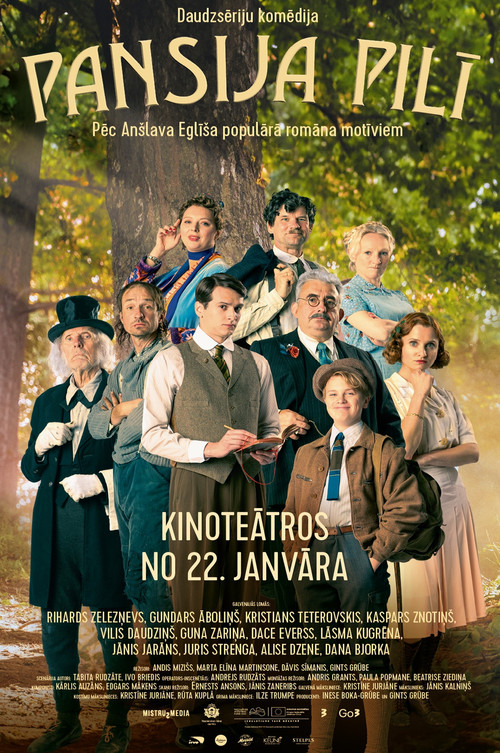
A miniseries about the events during one summer in a family of a writer who are unexpectedly granted a remote estate with all its unusual inhabitants, and who has to decide what to do with the dilapidated estate. Exciting and comic events in eight episodes in which the future writer Anšlavs Eglītis together with his brother Vidvuds, father Viktors and his wife Hilda Vīka, begin the restoration of the estate, at the same time opening a boarding house, which becomes the intersection and summer stage of the neighbourhood, ghosts of the past, visitors from the city and Latvian intellectuals in Latvia in the 1920s.
Pansion in the Mansion

With the eyes of ordinary people, Adreses explore successful and less successful or even scandalous examples of architecture and environment building. Martins Kibilds goes to two places or addresses, every time taking a different person with him – without professional experience in architecture, but with a keen desire to explore, think and share impressions with the audience.
Adreses

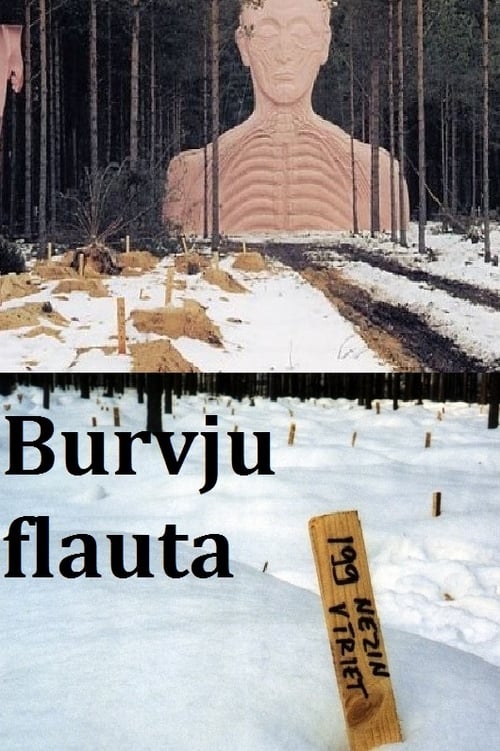
“As death, when we come to consider it closely, is the true goal of our existence, I have formed during the last few years such close relationships with this best and truest friend of mankind that death's image is not only no longer terrifying to me, but is indeed very soothing and consoling” - thus said Mozart about death. Mozart died in 1791 and was buried in a mass grave, as standard at the time in Vienna for a person of his social and financial situation. In 2000, 452 of Riga’s deceased — people without relatives, the homeless and the unidentified — were buried at the Jaunciems cemetery. But this film is not about death: it's about Mozart, The Magic Flute, Riga, and love. A short commissioned for the Latvian exhibition at Venice Biennale.
Magic Flute

A laid-back journey in search of one of the world’s most fascinating families, observed and examined from within its most intimate relationships, where the truth and depth of a memoir meet the ironic tone of an indie comedy.
The Rossellinis

After the lives of several people are tied into a intriguing knot upon meeting police officer Krasts one hot summer day, they’re all brought together again on a full moon winter night. Intrigue develops among a couple of lovers, Gints and Elga, three adventure-race participants with one woman, Renate, on their team, three generations of a family whose father, Karlis, died in a tragic hunting accident, Karlis’s daughter Aija, his former lover Livija, and a young girl hardened by life, who lives at a Christian home for expectant mothers. A detective twist is added by a bit of poison, which one of them will get.
The Hunt

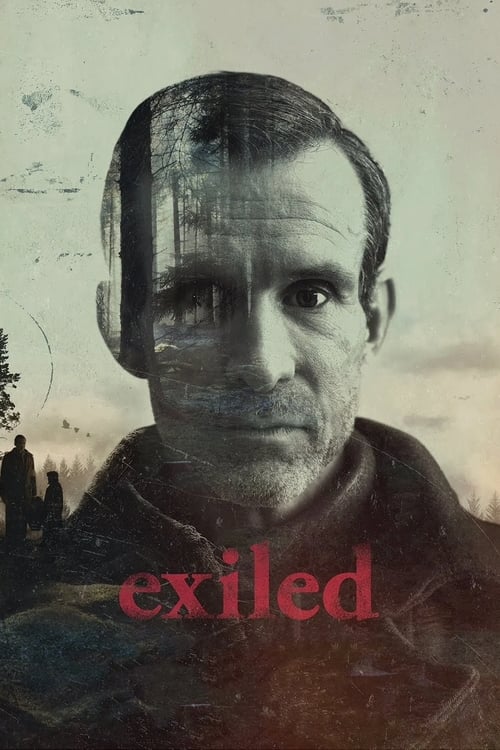
In the final years of World War I a retired German field medic is sent to a remote sanatorium for soldiers suffering from post-traumatic mental disorders. There he encounters a strange, dreamlike state of existence that challenges his own war-torn mind.
Exiled

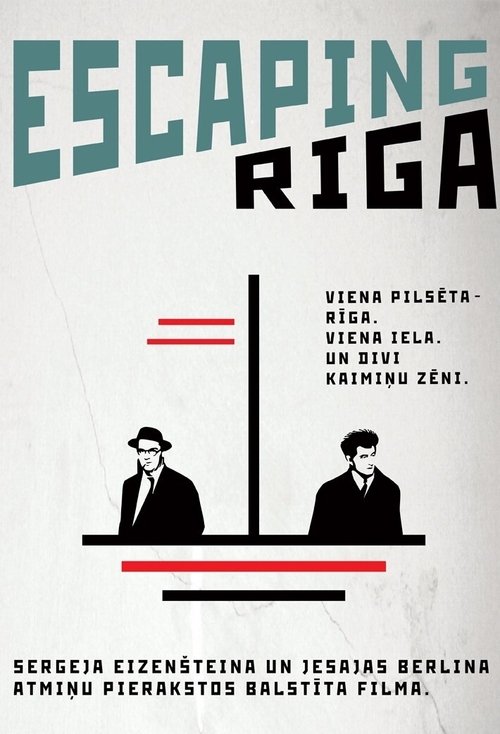
The film is based on true events, it tells the stories of two outstanding personalities of the 20th century – Sergei Eisenstein and Isaiah Berlin, who were both born and spent their childhood in Riga but soon had to leave the city. The film follows the lives of the two characters during the turbulent first half of the 20th century, telling how one of them becomes “the greatest film director of his generation” in the totalitarian Soviet Union, and the other “the greatest thinker of his generation” in liberal Great Britain.
Escaping Riga

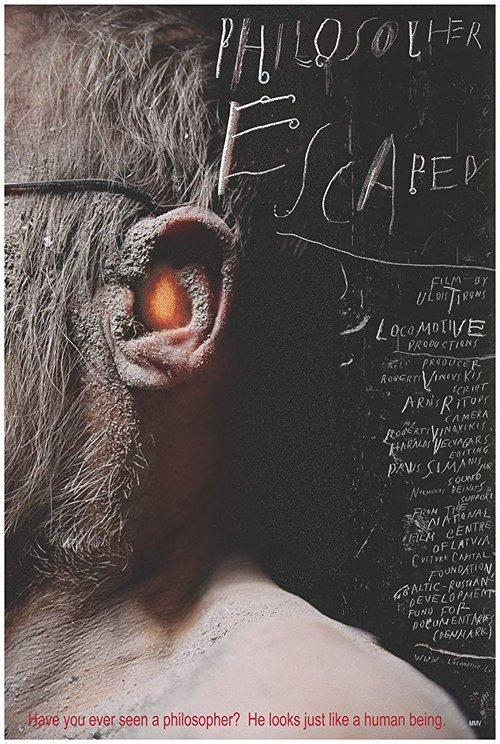
A film about the eccentric and paradoxical Russian philosopher Alexander Piatigorsky - a specialist on Buddhism and ancient Indian philosophy, a legendary character in Russian intellectual circles since the 60s, and a well-known writer who, "collects interesting people" and "doesn't wish to prepare for death".
Philosopher Escaped

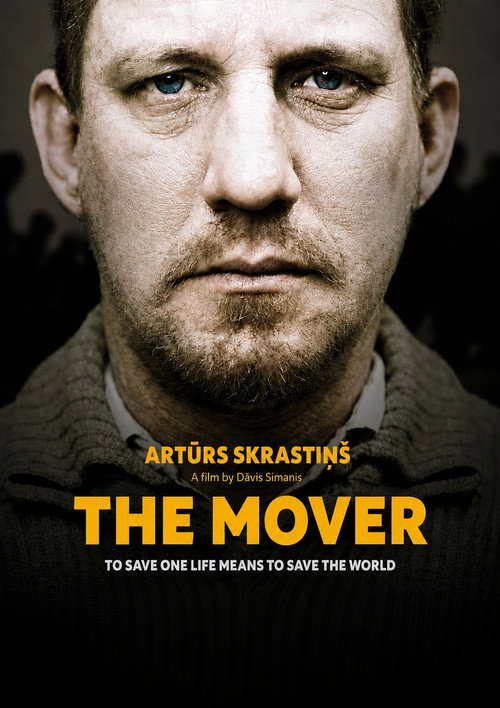
Žanis Lipke, an ordinary blue-collar worker in Latvia, embarks on a covert operation. Despite his family’s hardship under successive Soviet and German occupations, Lipke tries to save local Jews from Nazi persecution and certain death, moving them from the Riga ghetto to an underground bunker hidden on his property.
The Mover

17-year-old Ria is a sensitive and mysterious young woman. Ria's mother has suffered in a car accident and has stopped speaking since her daughter's birth. The family grows deer for sale, yet, the business is not successful. To earn some money, her father decides to organize a hunt.
The Dark Deer

In 1937, silent film star Maria Leiko travels to USSR upon learning of the birth of her granddaughter. But when she discovers the tragic circumstances of that event, KGB agents persuade her to remain in the country. Leiko abandons her cinema career to instead join Skatuve, the Latvian State Theatre in Moscow. Soon she discovers that she is being manipulated by the government amid its purges of political enemies. As a network of traitors, informers, and NKVD agents surround her, she must choose between family and career, and between her ideals and the lies of Stalin’s totalitarian regime.
Maria's Silence

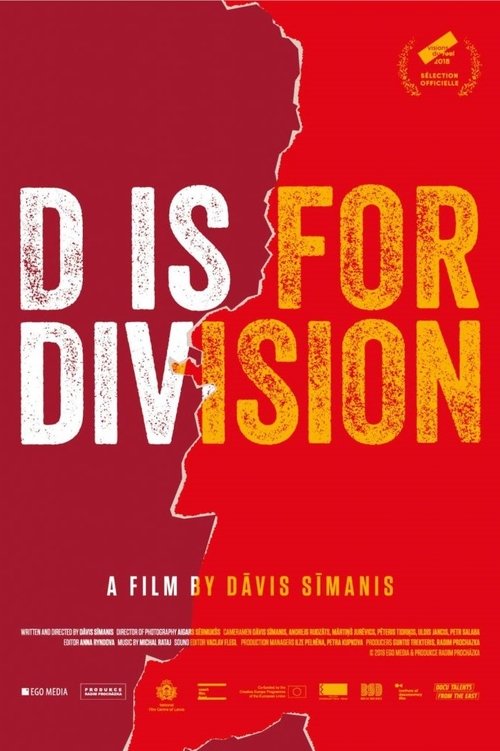
1940. On the border between Latvia and the USSR, a woman is killed in front of her house as she tried to protect her son from the liberating attack of the Soviets. Almost 80 years later, the archive photo bearing witness to this news item and representing a collateral victim of the European Union’s founding conflict forms the starting point for a journey undertaken by Davis Sīmanis. He navigates from one side to the other of this border, which today represents another separation, one that is geographical but also cultural: between Europe and Russia.
D is for Division

Death as non-existence, non-being, or the absence of life has been a subject of human interest for millennia. Poets, philosophers, prophets, and hermits have now been replaced by filmmakers, influencers, cryonicists, and evolutionary biologists in the search for the quintessence of life and death. Zoltan Istvan runs a cryonics laboratory and is running for president of the United States with the demand that immortality be included among fundamental human rights. In Russia, a mass festival dedicated to the cult of death is traditionally held. Dāvis Sīmanis' film essay reveals the twists and turns of man's age-old desire for eternal life. It uncovers the metaphorical and fetishistic representations of death and the mechanisms by which we come to terms with our own mortality.
Death of Death

Composers are regular people – they drive public transport, do sports, pay their bills. And still – they are very different as they are able to comprehend sound. The documentary film Sounds Under the Sun is an inspiring cinematic journey all over the world to meet some of the world-famous contemporary classical music composers. Visiting Alaskan forests, skyscrapers in Tokyo, and war zone in Georgia, the film gives a glimpse of how the composers share their struggle to create music from the moment of sonic creation till the moment when their music is interpreted for public (the film features composers Sir John Tavener from the UK, Leonid Desyatnikov from Russia, Giya Kancheli from Georgia, Dobrinka Tabakova from Bulgaria, John Luther Adams from the USA, and Ko Matsushita from Japan, and one of the world’s best youth choirs, Kamēr..., from Latvia).
Sounds Under the Sun

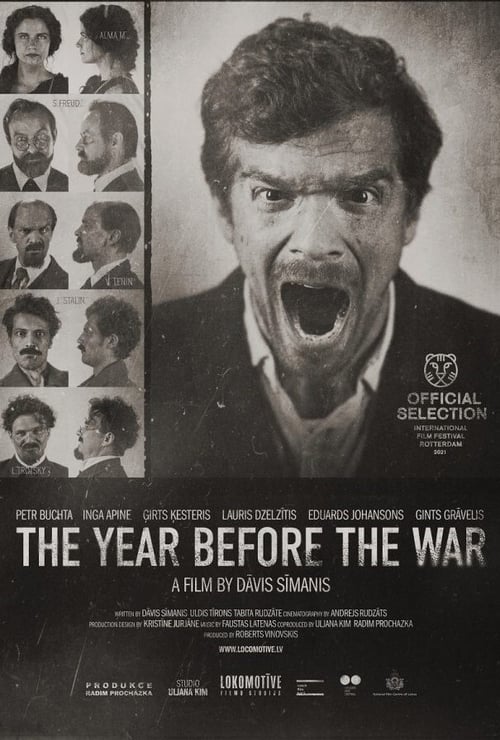
Stylized as silent cinema, the film connects political and philosophical extremes of 1913 in a story of a young man participating at the creation of a new world. This mysterious adventurer, who was known as Peter the Lett, gets involved in a tragicomic and surreal race from a routine clerk job and a romantic passion in Riga to preparation of the world revolution in Vienna, psychoanalysis at Freud’s salon and seduction of Mata Hari in Paris.
The Year Before the War

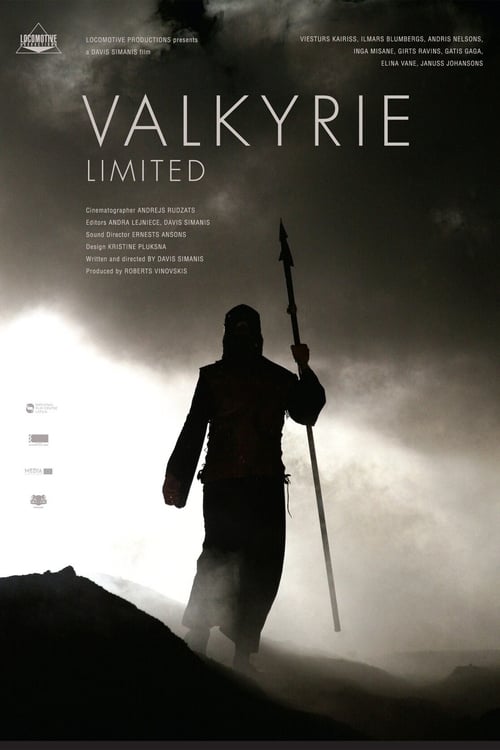
The documentary draws a portrait of an opera director who is staging Richard Wagner’s Die Walküre. He is torn between the tragicomic routine of an opera house and his own perception of Wagner and the Ring cycle. The film witnesses the director’s drama in maintaining the fragile link between a well-constructed performance and his own vision that lies within the music and the narrative, and is seen as German expressionism-like nightmares.
Valkyrie Limited

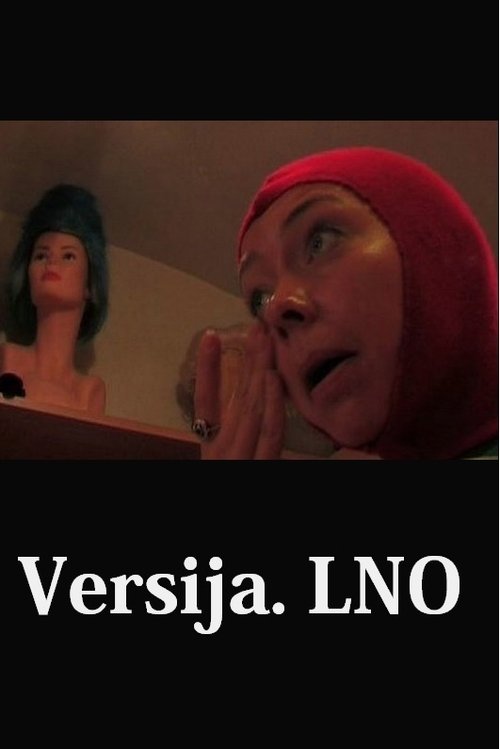
Ten years ago the Latvian National Opera was reopened after an immense reconstruction. Now this is the place where artists and the stage come together in an unusual atmosphere to create “the miracle” of music, action, text – elements of the opera phenomenon.
Version. LNO

The characters of the movie are closely twisted. Each of the heroes is a slave to their own passions. Only through strong will and some happy event they will be able to free themselves from their addictions.
You're Sexy When You're Sad

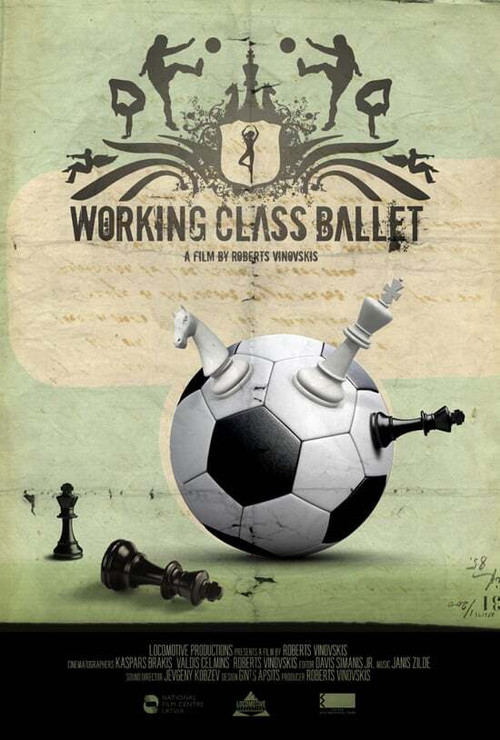
The European championship football madness, drunken "experts" at the provincial stadium, the backstage of National team, raving fans at the streets of Paris and Lisbon. Football is a sport and entertainment through possibly there is more to the game. In the film "Working Class Ballet" philosophers, linguists, neuropsychologist and football coach are contemplating on the parallels between football and drama of life, forming an unusual tale on what football is or could be.