Bahar Noorizadeh
Writing
Known For
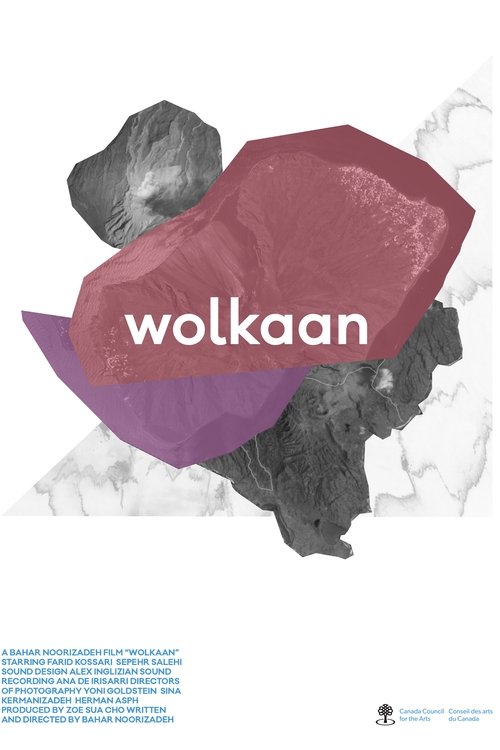
A volcano spews lava that slowly crawls through the streets of Tehran. Thousands of miles away, an Iranian boy and his dad take a road trip through the American Midwest. Two seemingly unrelated journeys are juxtaposed in this rich meditation on diaspora, memory, and loss.
Wolkaan
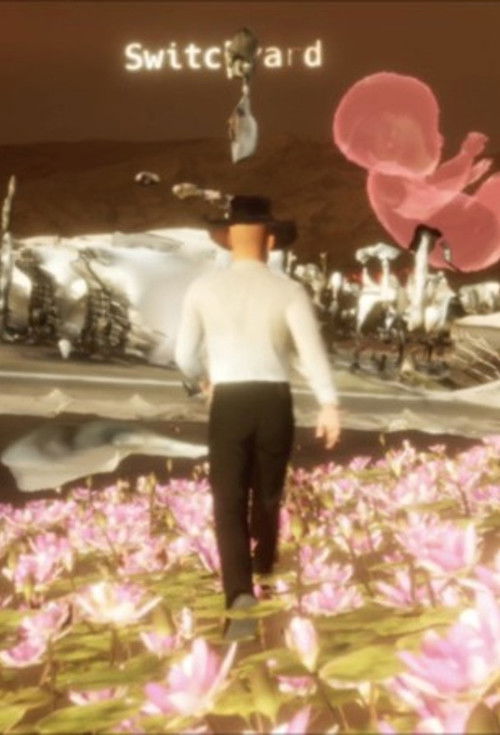
Teslaism is a 3rd person-racing musical game featuring Elon Musk and his self-driving car/lover and life coach, as they drive towards a shareholder meeting in a post-gamified Berlin landscape. The film takes the newly built Gigafactory in Berlin as a prism to describe the emergence of Teslaism (succeeding Post-Fordism) as an upgrade to the system of production and consumption predicated on advanced storytelling, financial worldbuilding, and imagineering »the look of the future«.
Teslaism: Economics After the End of the End of the Future
Cinema devolved into the slow-motion industry: spectacles repeat. Ultima Ratio speeds up by slowing down the image-fix. Traversing the crime-enriched Bekaa valley, the camera uncovers the age-old industries of hashish, models for altering what we see. So too, the camera follows futures, a flash-forwarded optic that seeks to perceive what can be seen anew, cut, particled into vivid fields of matter. “In hashish there is no likeness,” only zero-sites for vision-production then, now as visual senses submitted to the rule of reason. The new reason, as this cinematic skin sees it, is not dead old technology, power and blood, not accelerated nothingness, hype and retro-fascism, but technology, each and every instance, as a talking with the dead – emotions, optics, hashish, radio transmitters, melodramas, fiber optic telecommunications, ideologies – and now, hashish as primitive technology, the Now as a science-fiction beyond the double binds, the bad infinities of u-/dys-topia.
Ultima Ratio Δ Mountain of the Sun
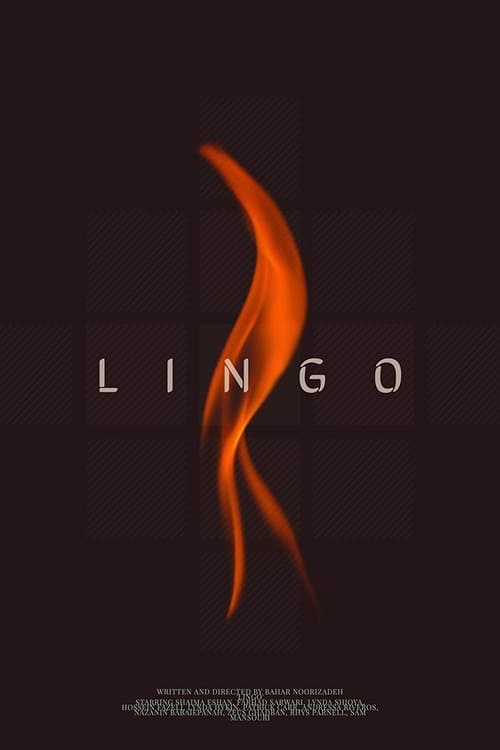
Maryam is an Afghan immigrant, living with her young son in Canada. After a fire breaks out in their neighborhood they both become entangled in the consequences.
Lingo
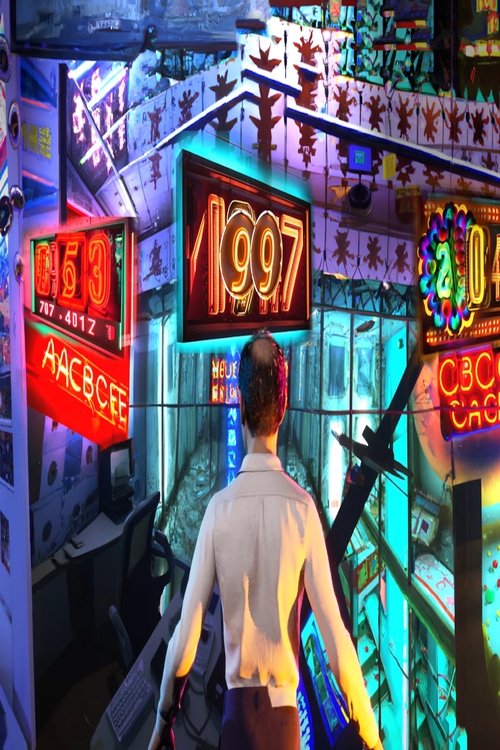
An operatic financial sci-fi, Free to Choose is narrated by Milton Friedman, an American economist who was the real-life evangelist of Hong Kong’s free market policies. The work reframes financial instruments as a time-travelling machine that allows the wealthy to borrow money from their future selves. It follows Philip Tose—an ex-race car driver and CEO of an insolvent company— from 1997 to 2047 as he attempts to escape the impact of the economic crash to seek a bailout from his older self. Hong Kong in 2047 is ridden with the aftereffects of Friedman’s advocacy, where economic freedom has not produced the unparalleled human freedom that he predicted but new forms of corruption. In this dystopia, preferential treatment for time-travel is given to the rich and powerful, while young “credit rating” activists demand universal access to the future.
Free to Choose
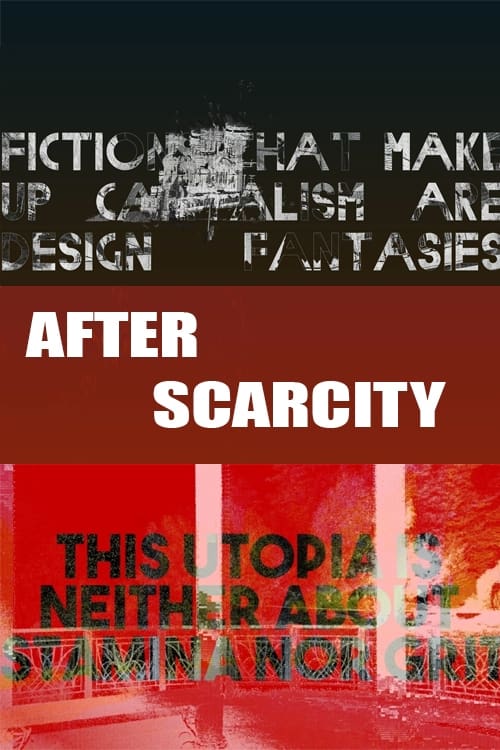
After Scarcity is a sci-fi-essay film that tracks Soviet cyberneticians (1950s-1980s) in their attempt to build a fully-automated planned economy, an attempt that finds traction today as a way of defying financialization. If the problem of socialism was time loss—too much bureaucracy, too much conversation, too many meetings—a socialism-on-speed, counting electricity plus statistics, could move past this limit. The film recounts the history of a moment in time when, against all odds, it seemed feasible to plan for the whole system at once—collective ownership of global resources with the programmed and networked efficiency of Wal-Mart.