Camera
Tatort is a long-running German/Austrian/Swiss crime television series set in various parts of these countries. The show is broadcast on the channels of ARD in Germany, ORF in Austria and SF1 in Switzerland.
Polizeiruf 110 is a long-running German language detective television series. The first episode was broadcast 27 June 1971 in the German Democratic Republic, and after the dissolution of Fernsehen der DDR the series was picked up by ARD. It was originally created as a counterpart to the West German series Tatort, and quickly became a public favorite.
Annual awarding of the Grimme Awards.
This film examines two parallel German lives: that of a Nazi general who continued in his job during the democratic era and a communist bricklayer who could hardly make ends meet after the war. Both had fought in the Spanish Civil War, but their stories can’t be merged; the audience gazes into a wound that will not heal.
No description available.
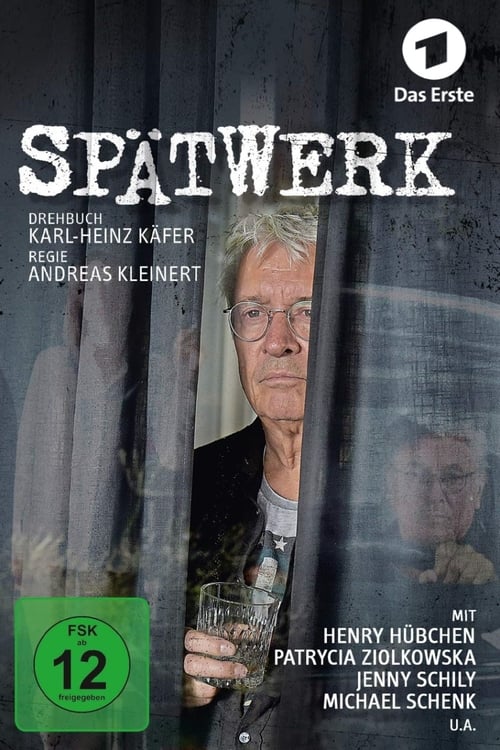
Paul Bacher is in crisis. If he could feel in the past as one of the most influential writers of his generation, he has long lacked ideas and impetus for a new great work. His reading tours are becoming more and more a sad affair with too much alcohol and too little public. Then Paul overflows in a drunken hitchhiker, flees first scared and later removes the body, without talking to anyone about the experience. But something is flowing in its interior. Paul starts to write again. The criticism is done, but the story about the death of a hitchhiker also arouses suspicion.
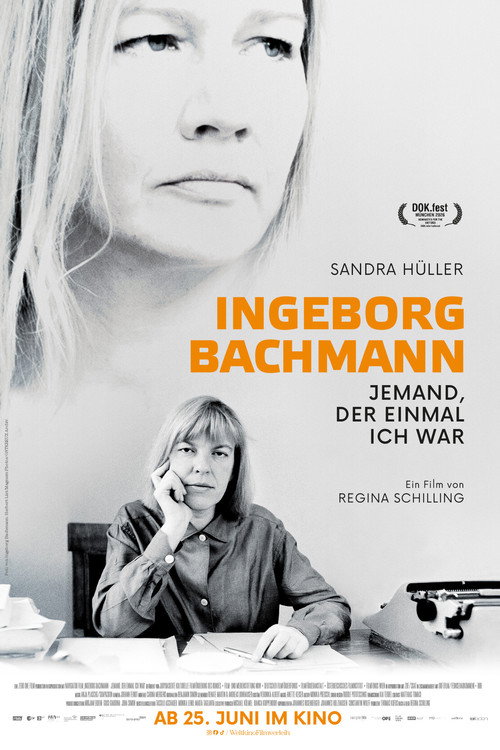
Sandra Hüller portrays Ingeborg Bachmann on an imaginary day in Rome. Regina Schilling’s hybrid film weaves together reenactments, archival footage, and Bachmann’s own writings into a portrait that offers a refreshing new perspective on the author and positions her writings as a reference point in current debates on gender relations and power.
Seldom does a documentary film accomplish so much as Beruf Neonazi. Aside from the rather frightening look into the current world of holocaust denial and pro Hitler ideology, the contents of the film were used as evidence to secure a court conviction.
"A Woman" is a cinematic essay about identity. A search into the wounds of exile and a reflection on the function of memory. A haunting and intimate portrait of the director’s own mother. It is the story of an imitation artist, trying to adapt to the challenges of real life … as a woman.
In September 1948, 83 German children arrive in Cape Town. Orphaned by war and handpicked to strengthen the Afrikaner bloodline with "Aryan blood", they are forced to start a new life in the early days of Apartheid. This film follows two of those orphans, Werner and Peter, as they attempt to reconcile past and present in post-Apartheid South Africa.
A documentary-style essay of the state of the nation in the late 1990s in Berlin.
Late in the 1980s, two documentary film makers found six German men, all in their 60s and 70s, who had been soldiers in the German invasion of the USSR in 1942. Each carried an 8mm camera into battle and they still had their film. "Mein Kreig" alternates between interviews with these older men, now apologetic, philosophical, or defiant about their participation, and the footage they shot. It's chronological: basic training, the train trip East, roof-top vistas of war-torn Warsaw, peasants in Belarus, the downing with carbine volleys of a Russian plane, winter, a holiday at the Black Sea, mud, impassable roads, death, destruction and retreat. "Home, that was the front," one says.
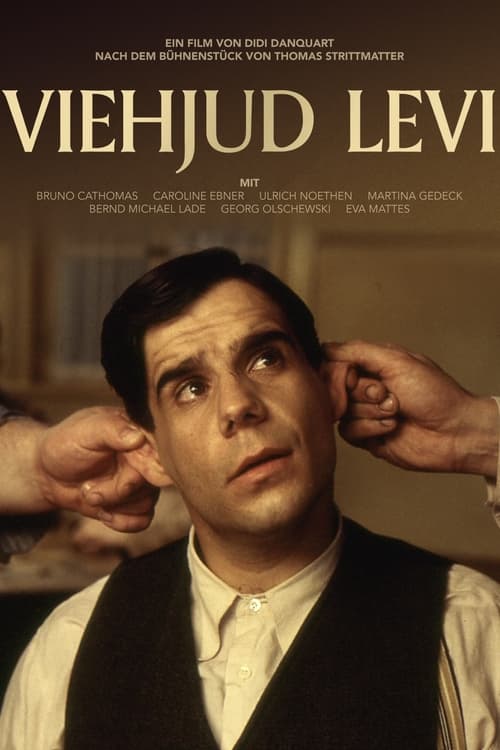
Benjamin Levi (Bruno Cathomas) is a Bavarian cattle dealer traveling to pre-World War II Germany on his annual trip to a remote farming village. Levi hopes to do some business and, more importantly, win the hand of the lovely Lisbeth (Caroline Ebner). But Nazi propaganda has gripped the small community and poisoned it forever. Now, Levi and Lisbeth are targets of hate in this provocative and shocking drama.
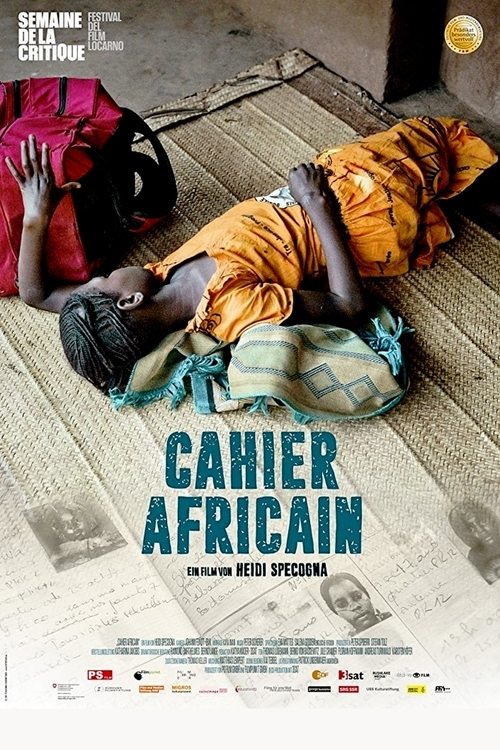
It all started with a small exercise book. Its page were checkered with the courageous testimonies of 300 Central African women, girls and men. They reveal what Congolese mercenaries did to them. On their own initiative, they gathered together their testimonies in this book.
Sven Marquardt might be the most famous bouncer worldwide. But beside standing in front of the legendary techno club Berghain in Berlin, he is also a well-known and skilled photographer. Long before the Berlin Wall came down, Marquardt portrayed the subcultural East-Berlin scene. His black and white photography illustrates it as voluptuous, laid-back, dirty and existential. Even if shot by daylight, his work is permeated by darkness, ecstasy and night.
An inspiring and provoking road trip through Germany between 2006 and 2009.
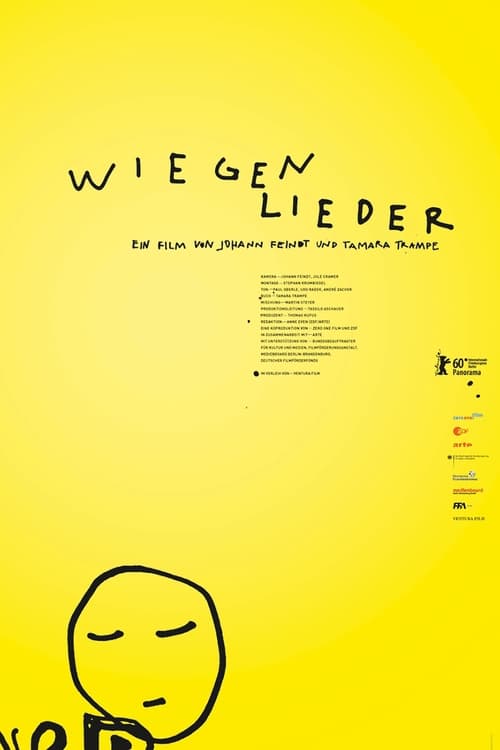
Lullabies are our first connection to the world – a universal experience we all share, yet it remains deeply personal. "Can you recall a song that your mother would sing for you to fall asleep?" is the question Tamara Trampe and Johann Feindt ask people they meet in the streets of Berlin.
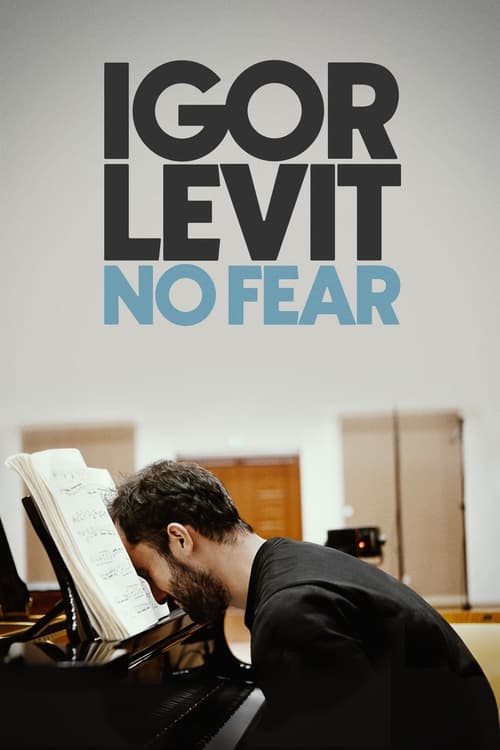
Follows the artist over two years as he explores his „life after Beethoven“, as he searches for his next challenge, his identity as an artist.
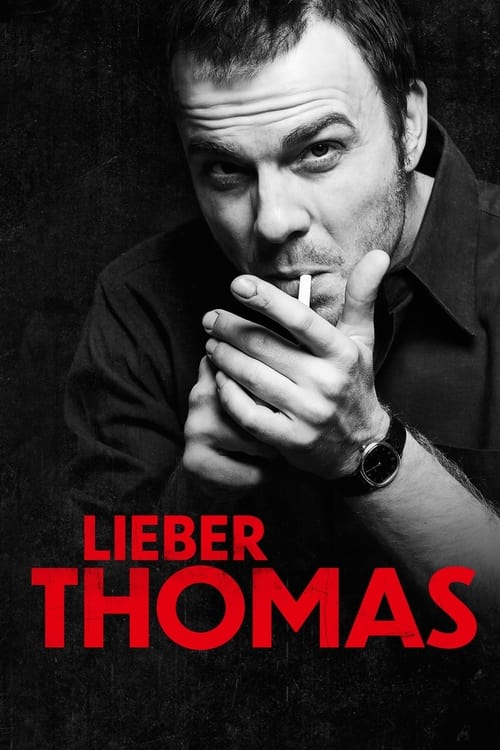
Thomas Brasch was born as a German-Jewish emigrant in England in order to move to the young GDR with his family at the beginning of the 1950s. His father Horst is primarily interested in helping to build the new German state. But Thomas prefers to realize himself as a writer and in doing so discovers his potential as a poetic rebel. His very first play was banned and soon afterwards he lost his place at the film school. When the tanks of the Soviet Union roll through the Czech capital Prague in 1968, Brasch and his girlfriend Sanda and other students try to call for protest in the streets of Berlin - and fail. His own father betrays him to the Stasi and allows Thomas to go to prison. After being paroled, he continues to try his hand at poet writing about love, revolt and death. In the GDR, however, you don't want to have anything to do with someone like him.
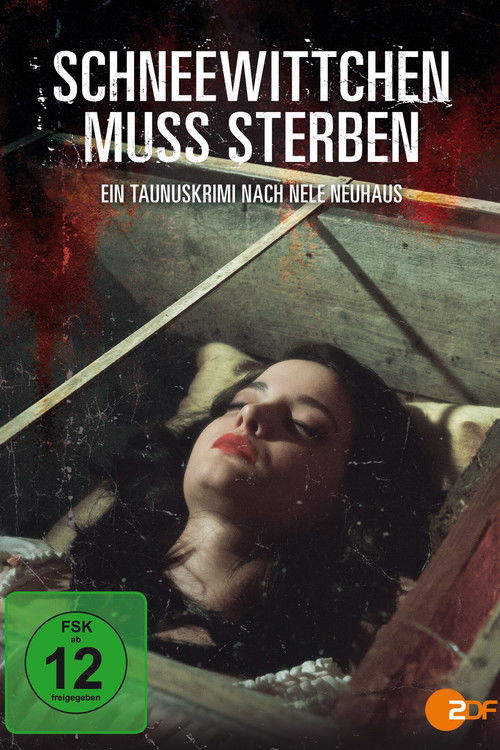
"Snow White Must Die". Part 1 of 4 Nele Nauhaus Mysteries. A young man returns to his village after serving time for a murder he may or may not have committed. Will old truths be dangerous even now? Pia and Oliver investigate.