Mark Lewis
Directing
Known For
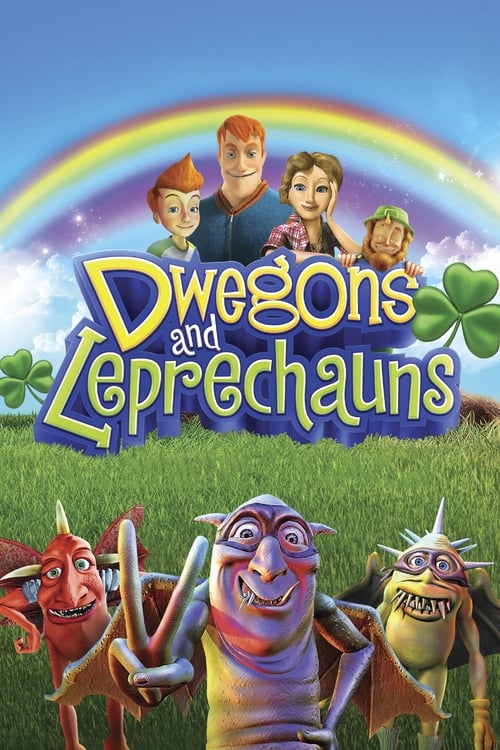
Family inherits an old house and to their surprise, finds the home filled with wonderful colorful creatures that brings the family together.
Dwegons and Leprechauns
2006 experimental short by Mark Lewis
Rear Projection: Molly Parker
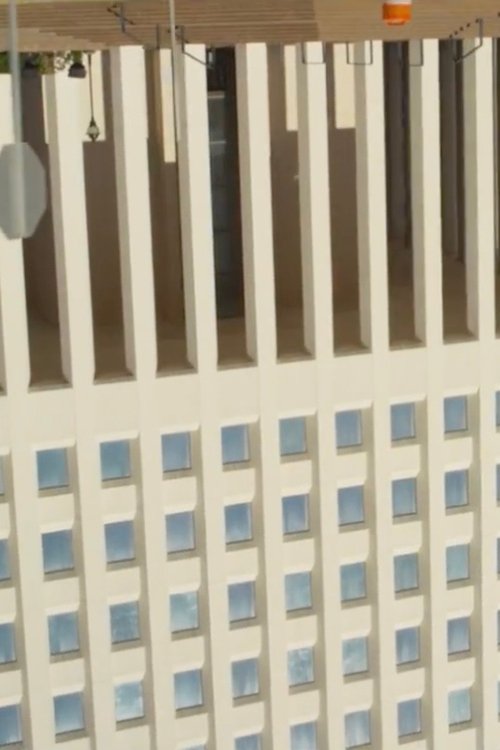
Lewis’s latest film, Galveston, 2017, newly commissioned by The Contemporary Austin and on view at the Jones Center, takes the city of Galveston, Texas, as both its setting and title. This island off the Gulf Coast has had many lives—as historic immigration port, center for shipping and the petrochemical industry, site of natural disasters, and tourist destination—and this complex, layered history becomes the backdrop and undercurrent for the film. In Galveston, Lewis’s ever-present subject is the iconic white skyscraper of One Moody Tower, visible throughout the southeast Texas city since it was completed in 1972.
Galveston
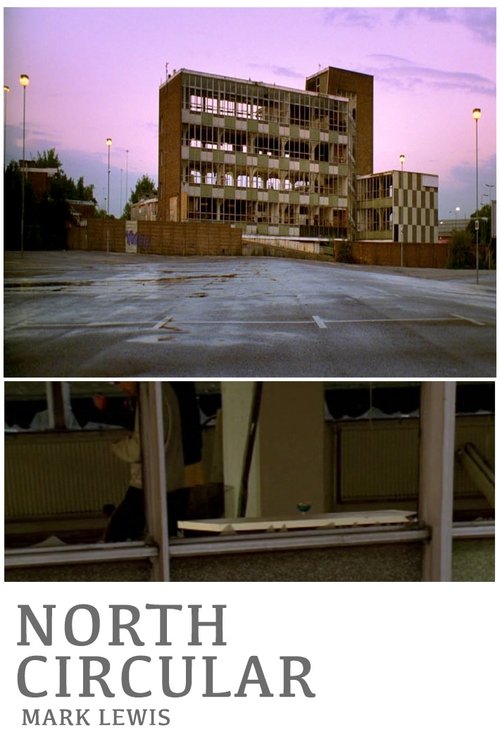
NORTH CIRCULAR employs a single 4-minute shot. It opens with a distant shot of an abandoned, partially ruined modernist office block backlit against a violet-tinged sky and the camera glides slowly towards the building.
North Circular
Mark Lewis, Cold Morning (2009) Single screen projection, 7 minutes 35 seconds, HD video.
Cold Morning
In this work Mark Lewis highlights the gap between utopian visions and everyday realities. The camera glides around a complex network of empty walkways in South London’s soon-to-be-demolished Heygate Estate, with the seamless movement of a computer game. Every detail is precisely planned and produced, from the perfect spring weather to the child actors playing in communal spaces. We are forcefully drawn into the image as the camera glides through the estate’s narrow paths, creating a metaphor for the linear nature of film itself, always moving on. Through this travelling motion, the architecture of the Heygate Estate is animated as a constant stream of images and information, highlighting how we, as viewers, understand the world around us, and what impact it can have on us.
Children’s Games, Heygate Estate
Short video art work by Canadian artist Mark Lewis, featuring figure skaters in a park at night.
Nathan Phillips Square, A Winter's Night, Skating
'Backstory' investigates the highly skilled art of 'Rear Projection', a widely used tool in film making in the mid 20th century employed in films such as Alfred Hitchcock's Vertigo or Marnie. In 'Backstory' Lewis invites the Hansard family, which has been instrumental in the provision and development of Rear Projection for hundreds of Hollywood productions over several decades, to tell their own story of the heyday of the techniques and their decline and disappearance as the they are replaced by new technologies and new tastes in visibility.
Backstory
Smithfield (2000), the camera peers in through the windows as though spying on the woman who is cleaning the floor inside.
Smithfield
Jay's Garden, Malibu follows the constant meandering of a camera through a lush, tropical garden. On closer inspection, a number of porn stars can be seen wandering around and Lewis' gaze drifts from the sexual metaphors hidden in the rich foliage to the suggestively dressed actors, and back again.
Jay's Garden, Malibu
2005 short video work from Canadian artist Mark Lewis
Downtown Tilt, Zoom and Pan
In A Sense of the End he films six alternative endings in long shot - the man rushing to catch up with the train that bears the woman away; the gunshot victim faltering and finally collapsing in an urban wasteland. Each conclusion functions as a kind of film-without-a-film: pure climax that requires no build-up. Lewis makes a similar feature of opening titles.
A Sense of the End
Lewis’ Northumberland (2005) is focused on a drystone wall in the English countryside. The frame is split almost equally between the wall and the landscape behind it.
Northumberland
Single screen projection, 5 minutes 27 seconds, HD video.
The Fight
23 August 2008 consists of two shots. A brief opening shot, intercut with inter-titles, of the famous Al-Mutanabbi Street book market in Baghdad is followed by an unbroken eighteen-minute monologue, shot from a single, still camera position and simply recording the speaker’s words without interruption. In it, Faysal Abudullah gradually builds a portrait of his relationship with his younger brother, Kamel, and in the process evokes the lives of Iraqi intellectuals of the left, driven into exile in the early 1980s by Saddam Hussein’s regime. Faysal describes Kamel’s decision to return to Iraq in 2003, his work for the new Ministry of Culture and his tragic death at the hands of unknown assassins on 23 August 2008. While the film throws light on little known aspects of Iraq’s political history, primarily it is the story of the two brothers, of Faysal’s devotion to Kamel and their contrasting attitudes to exile and to life itself.
23rd August 2008
2010 short video work by Canadian artist Mark Lewis
Willesden Laundrette; Reverse Dolly, Pan Right, Friday Prayers
2005 short video work by Canadian artist Mark Lewis
Rush Hour, Morning and Evening, Cheapside
In Spadina: Reverse Dolly, Zoom, Nude, Lewis establishes cinematic continuity between three separate scenes. The title indicates the place and progress of the film: it is a three-minute single shot, filmed in Spadina Road in the north of Toronto. We follow the transition from a close-up to a wide shot, all with the fluidity of a long dolly shot that is carefully developed. The movement begins with a reverse dolly shot, going from details of leaves on a tree to a wide shot of an urban landscape, then zooms towards a building and ends on an image of a woman taking some fresh air on her balcony.
Spadina: Reverse Dolly, Zoom, Nude
2006 experimental short work by Mark Lewis
Golden Rod
A virtual stroll inside the cultural center Casa do Povo (São Paulo, Brazil), ending at the basement floor of the building, where an imaginarily restored version of the Teatro de Arte Israelita Brasileiro (TAIB) is located.