Frank Rose-Růžička
Acting
Known For
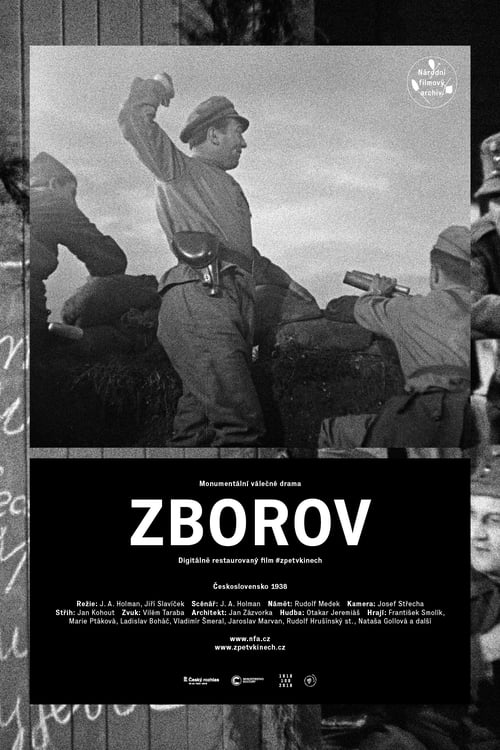
In the Škoda factory, where they are feverishly rearming in 1914, works the foreman Kalina, the father of the young men Pavel and Jan. Pavel is a supporter of the monarchy, while Jan, on the contrary, defends the idea of our national independence. Just before mobilization, Jan escapes to Russia, where he joins a group of volunteer legionnaires called the "Czech Company", fighting against the Austro-Hungarian monarchy. Pavel enlists in the Austrian army. The brothers do not meet again until July 1917 in the battle of Zborov in Ukraine, which marked a successful breakthrough of the Austro-Hungarian front.
Zborov
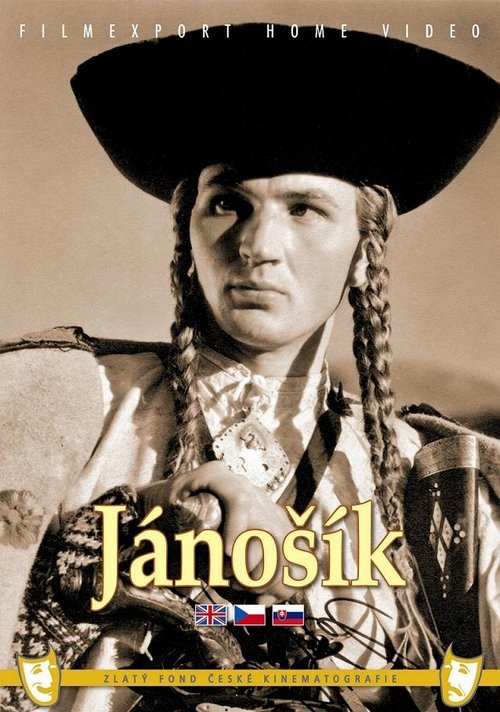
Jánošík has been topic of many Slovak and Polish legends, books and films. According to the legend, he robbed nobles and gave the loot to the poor. The legend were also known in neighboring Silesia, the Margraviate of Moravia and later spread to the Kingdom of Bohemia. The actual robber had little to do with the modern legend, whose content partly reflects the ubiquitous folk myths of a hero taking from the rich and giving to the poor. However, the legend was also shaped in important ways by the activists and writers in the 19th century when Jánošík became the key highwayman character in stories that spread in the north counties of the Kingdom of Hungary (present Slovakia) and among the local Gorals and Polish tourists in the Podhale region north of the Tatras.
Jánošík

Věra accepts the offer of her friend Kajetán, who arranges a position for her in Dominik's puppet factory. The spirited girl impresses her employer, Antonín Dominik, so much that he falls in love with her. Dominik's mother notices her son's interest in Věra and immediately fires her. Kajetán, who works in the studio of sculptor Výr, who is engaged in the production of mechanical puppets that can be used to advertise goods, asks Věra for help...
Panenka

The owner of a fashion factory, Rafael Klučina, is desperately looking for an imaginative advertising campaign that would attract the public and raise the profile of his business. However, the head of his advertising department, Filip Muška, seems unable to come up with one. In the end, they are helped by the model Boženka Smolíková and her talent for perfect disguises and masks. The unusual advertising campaign involves Boženka traveling around the country for fourteen days in model clothes, and whoever recognizes her will win a prize of fifty thousand crowns...
Slečna matinka
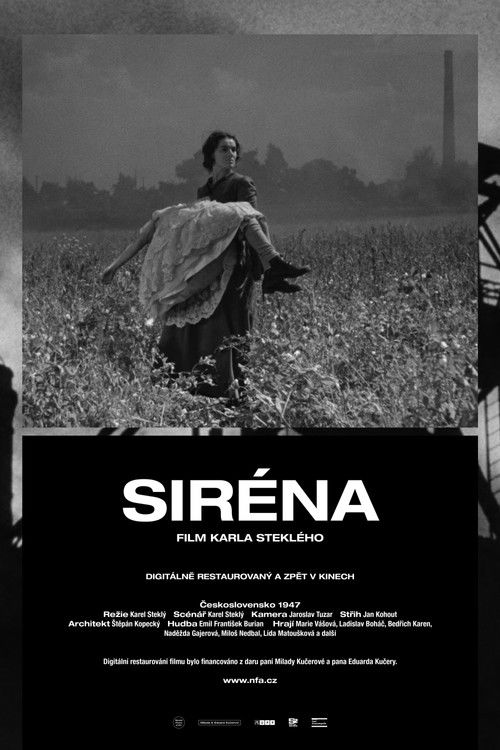
In late 19th century Czech-speaking Bohemia, oppressed workers at German-owned mines and foundries revolt against their harsh working conditions. Made shortly after World War II as Czechoslovakia was falling to communism, the film resonates in Czech resentment of the German occupation.
The Strike
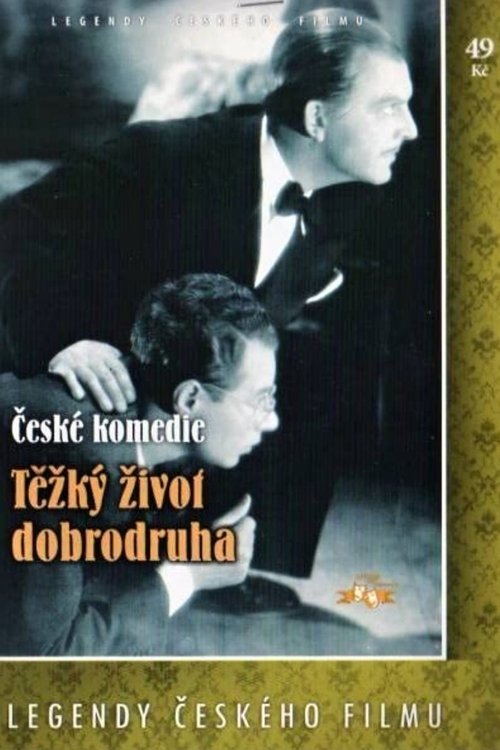
A writer of pulp crime novels is drawn into a series of real crimes. This film was one of the first Czech attempts on a genre parody.
The Hard Life of an Adventurer
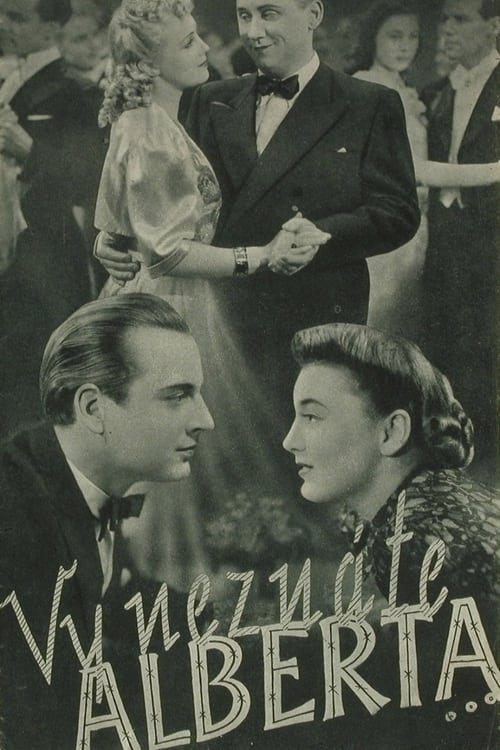
No description available.
Vy neznáte Alberta
No description available.
Žena pod křížem
No description available.
Srdce na kolejích

A small Czech town in the 1860s. The townspeople once made a fortune from the proceeds of gold mines that are now flooded. However, they do not want to invest in draining them, as they are convinced that it is not worth it. However, the cessation of mining has plunged the miners' family into poverty. After vain requests for help in the town and the governor's office, the miners decide to take action themselves...
Průlom
Věra Donátová has graduated from law school and wants to open a law firm. However, she is financially dependent on her parents. Her emancipated mother supports her efforts, but her father gives Věra money on the condition that if her practice is not successful within a year, she will marry the son of Consul Raboch. Věra has no clients. The first case is assigned to her ex officio. Věra visits her client Petr Kučera, known as Tygr, in a prison cell and achieves his release against his will. In an attempt to reform him, she offers him a position as a butler in his office. Tygr invites her to a pub to get acquainted with the mentality of the underworld. Věra likes his sovereign behavior. The one-year deadline has passed and Father Donát is throwing a feast. He wants Věra to choose from several invited suitors. Věra ridicules all the suitors, including Consul Raboch's son...
Advokátka Věra
No description available.
Jan Výrava
Oldřich Nový was and will forever remain the embodiment of charm, elegance and personal charm for Czech cinema, to which all women, regardless of age, were subject. In his unforgettable lover roles, he was not only a romantic who was able to fall in love with a girl from an ancient painting, succumb to the chocolate-brown eyes of the minister's girlfriend, but also a seducer for whom infidelity was a regularly practiced sport, or, conversely, a newlywed obsessed with jealousy. This was exactly Viktorin, the main character of a crazy Art Nouveau comedy, where everything revolves around a massive deer antler. Its involuntary owner becomes the jealous Viktorin, and it is certainly not difficult to guess what such a "right" gift can cause.
Parohy

In a country whose people have just been successfully persuaded of their superiority and the justification for military expansion by the fiery speeches of a dictator, the bacillus of a highly destructive form of leprosy has spread. It is called morbus Tshengi, or popularly „white disease“. The only one who has developed an effective cure for it is a physician of the poor named Galén. But he refuses to reveal the secret of his cure as long as the powerful destroy human lives through wars.
The White Disease
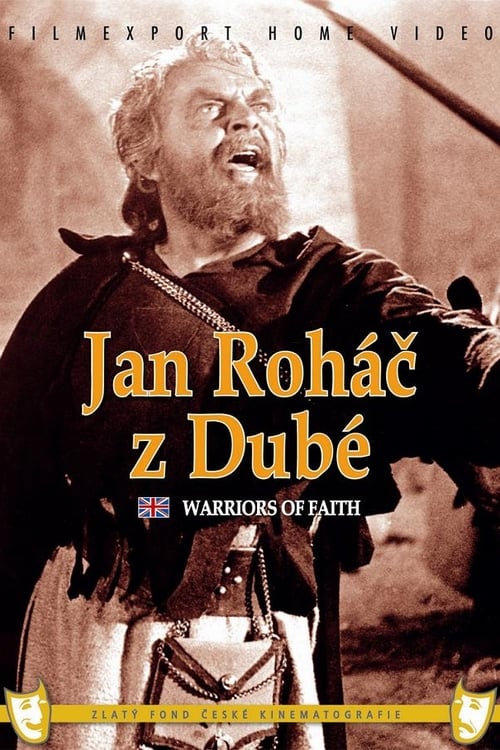
After the Battle of Lipany, the remnants of the Hussite troops concentrated under the leadership of Jan Roháč of Dubé at Sion Castle. However, he had no prospects of victory against the soldiers of the Lordship. Sion was conquered, Roháč of Dubé was captured and executed as a pest in Prague on September 9, 1437.
Warriors of Faith
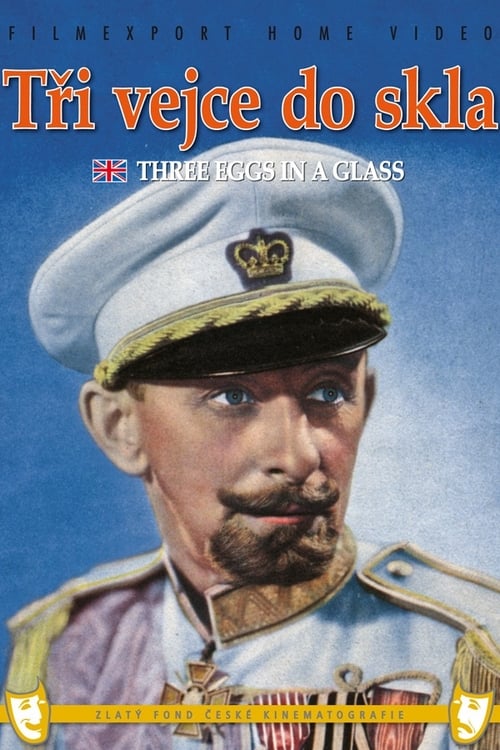
Vincenc Babočka, an insignificant employee of the police station, plays detective in private, convinced of his exceptional abilities. However, a vacation in Karlovy Vary unexpectedly gives him the opportunity to prove what he is really capable of. He is mistakenly considered to be the international adventurer Leon Weber, who is being pursued by the police. He decides to take advantage of the confusion and expose Weber's accomplices, who are planning to steal diamonds belonging to the Maharaja of Yohir. According to Weber's plan, he meets the Maharaja disguised as General Naryshkin, but everything only works out until the real Weber appears in town...
Three Eggs in a Glass
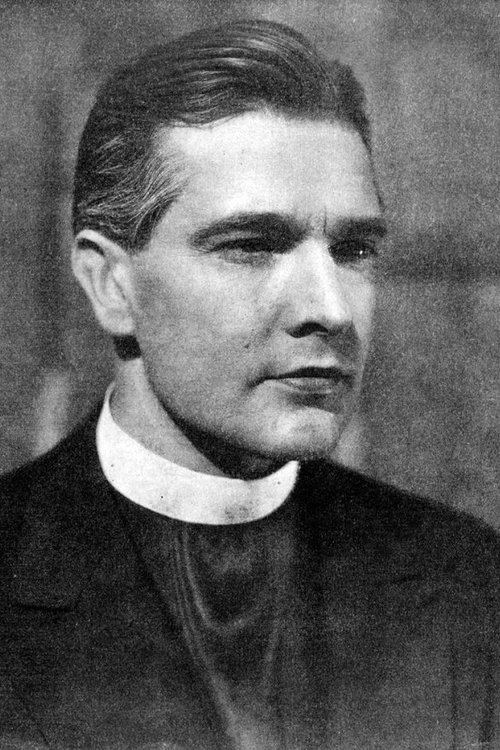
Vojtěch's beloved Frantina is leaving for Prague to work. Vojtěch promises his dying mother that he will become a priest. His brother Karel is to inherit the mill. However, during the feast, he attacks the weak Josífek and then flees the village. He hides in a quarry with an unknown vagrant. While blasting a stone in the quarry, the vagrant dies, and Karel exchanges his documents for his own. Vojtěch is still thinking about Frantina in the seminary.
Father Vojtech
No description available.
Portáši
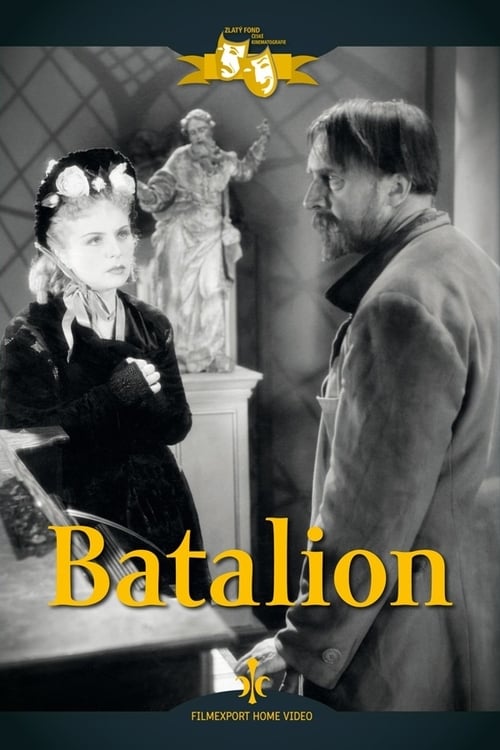
Attorney František Uher is known for his patriotic mindset and active assistance in disputes between the Czechs and the Austrian justice system. One of his clients is the poet Šulc, who, while staying with Uhry, discovers that the lawyer's wife Anna is flirting with Uhry's cousin Hojer. When Anna does not respond to Šulc's warning, the poet draws attention to Anna's relationship with Uhra. Uher wants to know the truth, so he returns early from a business trip and actually catches Anna cheating. Disappointment brings him to the "Batalion" pub in Old Prague, where Šulc also used to go some time ago. Here, Uher becomes a mentor to the poorest, but gradually falls into alcoholism. He once again finds strength and stands on the side of justice when he accuses the police in court of murdering poor Lojzík, who wanted to marry the unfortunate waitress from "Battalion" Mimi. After appearing in court, Uher is arrested and "Battalion" is closed. After his release, Uher becomes an organist...
Battalion

Antique dealer Samek lives a bachelor life. He financially helps his housekeeper raise her daughter Mána, who is learning to be a hairdresser in the countryside. On the recommendation of matchmaker Mudra, Samek decides to get married. Mána returns to Prague and Samek, who has not seen her for a long time, is enchanted by her charm. Mána has the opportunity to get a nice job, but she lacks knowledge of German. Samek offers to teach her while they go for walks together. During a German conversation on Petřín Hill, Mána catches the eye of electrician Vašek, who falls in love with her. He thinks that Mána does not know Czech, so he buys a German textbook so that he can speak to her. Soon the opportunity arises and the two young people confess their love. Samek is about to propose marriage to Mána. But Mána prevents him. She confides in him about her love and asks him to give Vašek a job...