
Guy Khalifa
Sound
Biography
Guy Khalifa is a French pianist and conductor, born in 1953 in Algeria. He has composed under the pseudonyms Guy Zu Khalifa, Gary Jenkins, and Gary Picketson. He began playing the piano at the age of 5 and continued his musical studies at the École Normale de Musique in Paris. He has distinguished himself in the musical field, developing a career in France after his debut in Algeria. From 1976 to 1980, he composed and performed several film scores (for television) as well as incidental music for the "Café de la Gare." He also participated in the band Odeurs. From 1980 to 1990, he joined the band Magma, recording and touring, while accompanying various French singers, such as Renaud, Bernard Lavilliers, Guyon, Michel Jonasz, Francis Lalanne, and others. In 1985, he won a prize for Polish music interpretation in Paris. Since 1988, he has taught piano and singing at several conservatories (in the 12th and 19th arrondissements of Paris) as well as at various music schools in Aquitaine (C.I.A.M. in Bordeaux, Atelier 104, École de Musique de Lège-Cap-Ferret, etc.). Highly regarded as a soloist and accompanist, he regularly performs on stage with various choirs and dance classes, as well as with his wife, classical singer Marie-Louise Khalifa. In 2012, he formed a duo with classical guitarist and singer Arnaud Chevalier, featuring the repertoire of Léo Ferré. Guy Khalifa composed for fiction and documentary films such as "Tant Pis Si Je Meurs" (1987), "Mémoire Commune" (1978) and "Les Matous Sont Romantiques" (1981)...
Known For

In 1984, climbing virtuoso Patrick Berhault gave a night climbing demonstration with Nico Ivaldo in Finale Ligure, Italy. This close and spontaneous connection with the audience, the silence followed by the cheers of the crowd with each move, amplified the climbers' sensations, creating a powerful feeling that gave them a state of flow. This idea of climbing dance took root and culminated in the film "Star Climber," composed of parodic vignettes retracing the history of climbing through the ages. Berhault, by turns a Cro-Magnon man, a Zulu in a trance, a troubadour climber accompanied on the flute by Catherine Destivelle, a Buster Keaton trying to climb his beautiful woman's wall, as Blues Brothers, Berhault and Robert Cortijo push the dial on rock 'n' roll 10 meters above the ground solo on the facade of a building at the crossroads of West Side Story and a Terry Gilliam film.
Grimpeur Étoile
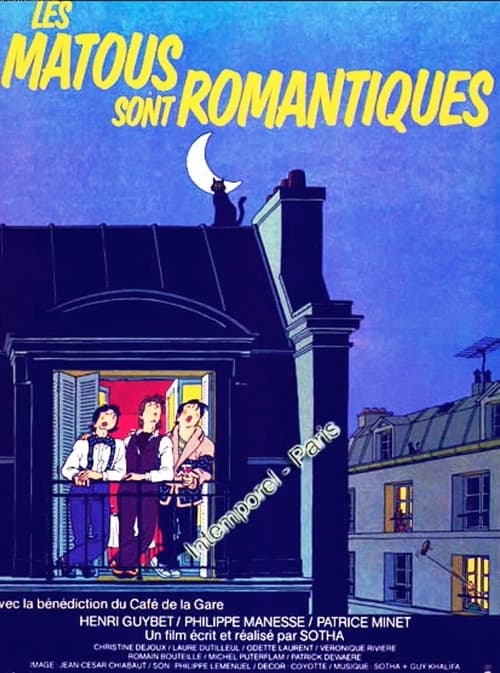
Three couples—each made up of a man named Roger and a woman named Jeanne—are close friends who plan a convivial dinner gathering. In a humorous twist, the wives unexpectedly fail to appear, leaving the three Rogers to navigate the evening on their own. As they share a meal, the absence of their partners sparks a series of reflective and witty conversations where memories, philosophies on love, life, and death, and existential musings take center stage, transforming an ordinary night into an intimate exploration of friendship and the human condition.
Les matous sont romantiques
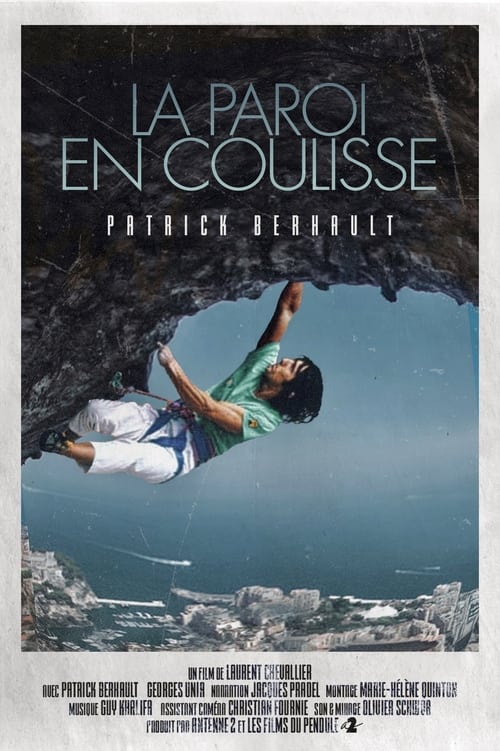
Behind the scenes of the filming of a film on climbing a cliff by Patrick Berhault and Georges Unia on the parishes of the route "La Tête de Chien" in Monaco. Director Laurent Chevallier explains the difficulties of filming at height, the kind of shots that are suitable and the specifications of equipment suitable for filming on a cliff.
The Backstage Wall

A character, directly addressing the viewer, attempts, through his or her knowledge, a historical reflection on the Paris Commune of 1871. A series of five tableaux retraces the major phases of the events. First comes the analysis of the Second Empire. Then comes the fall of the Empire and the proclamation of the Republic on September 4, 1870. Based on texts by Jules Vallès, several actors evoke the event in the contemporary setting of the large housing estates of Bobigny. The third part deals with the period October-March 1871, during which the people of Paris felt, little by little, betrayed by the government. Finally, March 18 is the revolutionary day. Inspired by Bertold Brecht's "Days of the Commune," actors perform the episode "Madame Cabet's Canon." The fifth part, entitled "Two or Three Things I Know About Her," directly evokes the work of the Commune, building and imagining a better world...
Mémoire Commune

A team of 12 men, 5 sailors, a doctor, a writer, a film crew, and 3 mountaineers, Jean-Marc Boivin, Thierry Leroy, and Dominique Marchal, set off by sailboat from Mar del Plata in Argentina to reach Riso Patron in Chile, via the Strait of Magellan, the Patagonian Channels, and Falcon Fjord. Their goal is to climb Riso Patron and then make the first crossing of the Campo de Hielo Sur glacier, or Hielo Continental Patagónico, to meet up with the sailors in Puerto Williams on Navarino Island in Chile, a village at the end of the world. After three attempts and an accident for Leroy, who was repatriated, they gave up, crossed the glacier and rejoined the boat, to set off for Cape Horn to climb the South face, knowing that the weather was good one day a month... On January 20, 1983, Jean-Marc Boivin and Dominique Marchal succeeded in making the first ascent of the South face of Cape Horn.