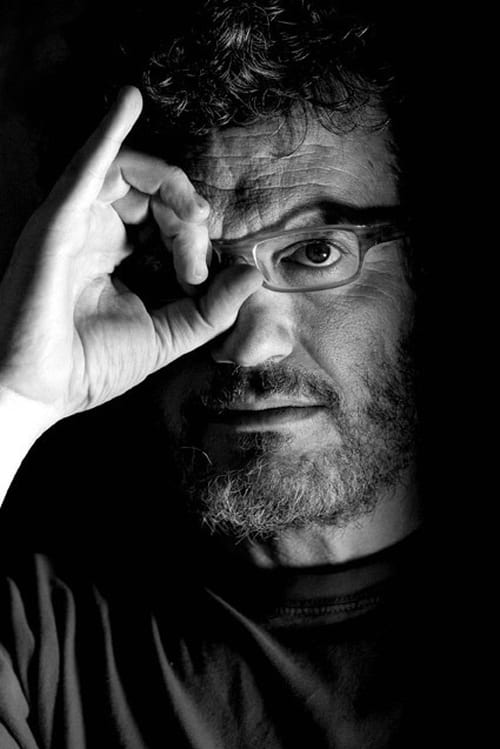
Chus Domínguez
Directing
Biography
Chus Domínguez works in the orbit of documentary and experimental film-video, from where he has expanded his work to the territories of the archive, the living arts and the processes of collective creation. He teaches documentary film at ECAM (Madrid Film School) and Audiovisual Arts at the Degree in Fine Arts at Salamanca University.
Known For
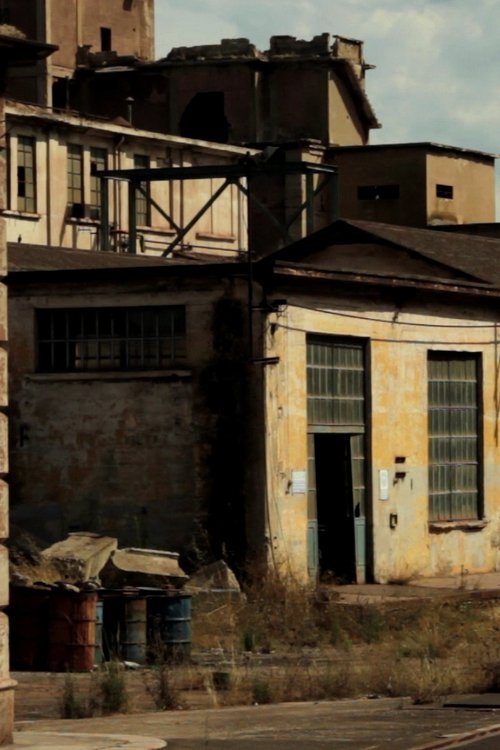
Following the trip Pasolini made in 1959 along the entire coast of Italy as a reporter for the magazine Sucesso, they where located different places as possible scenarios for his death. Understanding cataloging as a tool that allows us to organize knowledge for recovery, this catalog offers the viewer the possibility of redemption of the rebellious individual or the questioning of our acceptance of the critical difference.
Catálogo de escenarios para la muerte de Pier Paolo Pasolini
An audiovisual excavation in the mining area of Gordón (León), in the village of Ciñera, affected by the dismantling of the mining industry and the ways of life associated with it. The project has been conceived as a collective work through local groups, in which the last images of the mine are intermingled with the conversations held between women miners throughout the period 2016-2017. The resulting film adds layers of complexity to an epic reading of the class struggle, while highlighting aspects such as care work or affective components, usually relegated in the conventional narrative about the mine.
Fucking Mine
No description available.
bodega 96
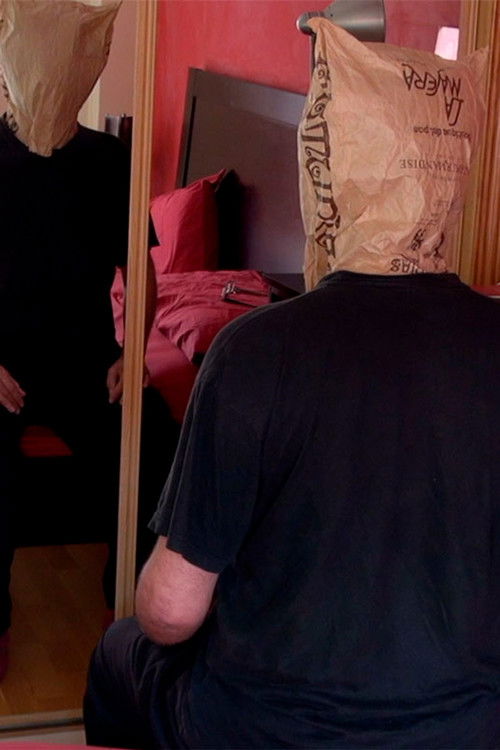
In a peculiar universe that looks much like our own present, the desires, fears and hopes of a group of people fighting to survive a world that appears to be heading towards fascism unfurl. "Ya habremos olvidado" asks La Rara Troupe in this ensemble tale that questions the audience by means of the experiences of our bodies as they pass through distance and solitude.
We'll Have Already Forgotten
The autumn weather in a remote village of Caurel, in the mountains of Lugo, the slow time of the rain, the time to look for the fire...
O tempo dos bullós
Improvisations, performances, experimentations around percussion and sound.
Cepilllo de dientes, esquina de gong
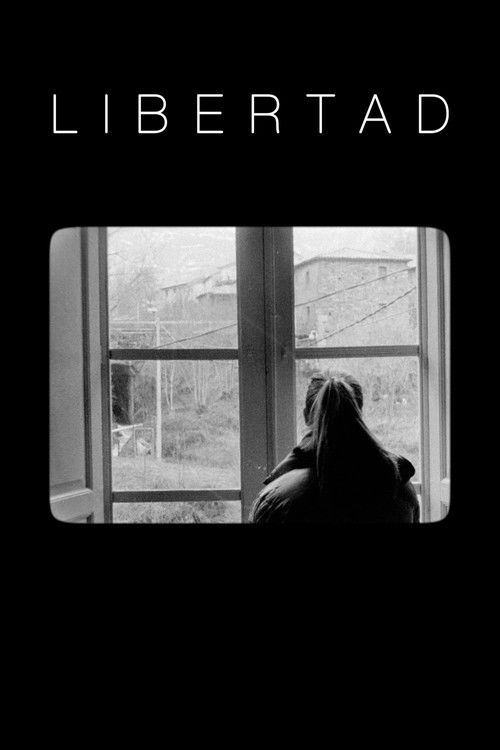
The film is based on the oral testimony of Josefa Castro García, recorded in 2013 when she was 90 years old, in which she recounts her life marked by the Civil War and post-war repression. Through her narration, the students with the same age as Josefa Castro was during the Civil War, 16-18 years, have developed a cinematographic proposal in parallel to their process of shared discovery of audiovisual language.
Libertad
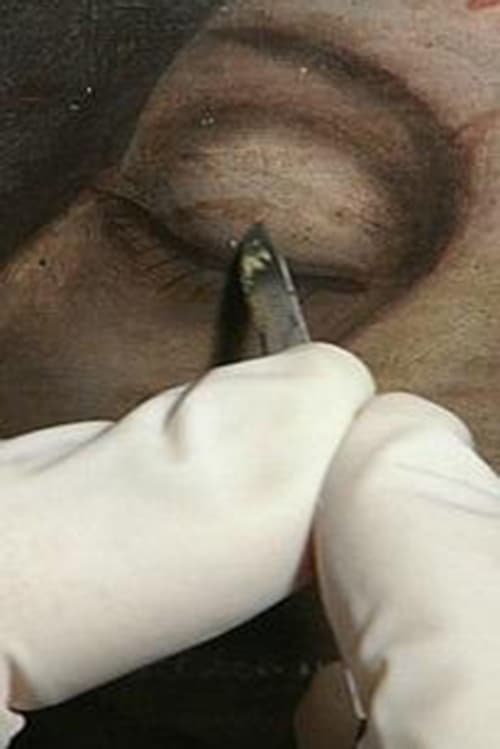
‘In the realm of the visible, all epochs coexist fraternally, even if they are separated by centuries or millennia’. John Berger. ‘The third eye turns on a recognition: the Other perceives the veil, the process of being visualized as an object, but returns the glance [...] the third eyes winks at us [...], but notice how ridiculous my cage and my image are’. Tobing Rony.
Museo
Villa 31. Buenos Aires is about life in its most physical sense, the life that, despite everything, beats unstoppably in every corner of the planet. It speaks of happiness, suffering, and the learning of both, and takes place, perhaps by chance, in one of the various shantytowns of Buenos Aires: Villa 31. The recording was made as part of Rodrigo García's stage project ‘Cruda, vuelta y vuelta, al punto, chamuscada’.
Villa 31. Buenos Aires.
Patricia Lamas, with her generosity and energy, invited us to improvise-play-share at the recently opened creation centre L'animal a la esquena (Celrá, Girona). From that meeting resulted, among others, these improvisations.
Improvisaciones Celrá

Refilmed scene by scene of the short film "The Perfect Human" (1967), by Jorgen Leth, to resignify from the recognition of diversity and the multiple intertwinings with the body, affective-sexuality and mental health.
The Perfect Human

Architecture is a hunt for harmony in the chaos, a way of putting order in the universe through the creation of regular angles. The severity of the forms of a Francoist building – the Universidad Laboral in Gijón, Spain – is distilled and decomposed into its patterns, in this piece made with a mobile phone device for filMO (a project commissioned by Laboral Centro de Arte y Creación Industrial, Gijón).
Pixelación Laboral
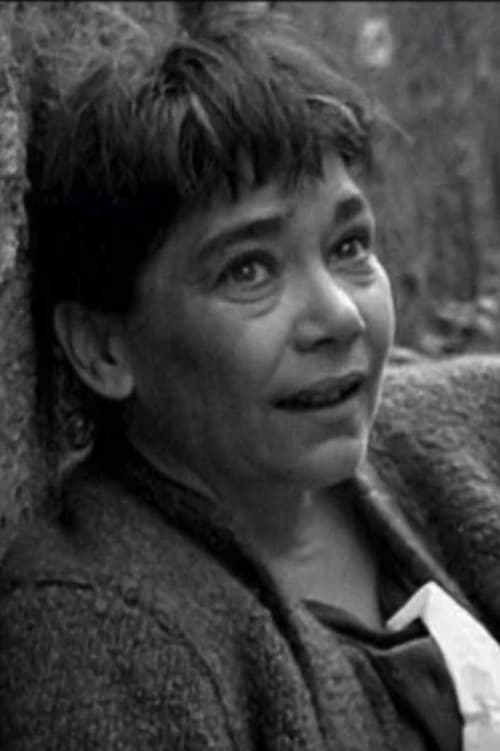
A character adrift, half real, half created, and a look/listen that searches for reality in these two halves. An encounter between two forms of creation, which may have in common the visual, the sonorous, perhaps the scenic, and certainly the poetic.
Impregnaciones en la señorita nieve y guitarra
On his return to his Galician homeland, the poet and storyteller Antón Avilés de Taramancos (1935-1992) sees the parallel stories of his life in Colombia and the history of the American continent intermingled. The uneasiness of a new world and the terror of colonisation and subsequent slavery give way to peace in the city where all the ingredients blend together (European, African, Amerindian) and, finally, integration in the ecstasy of dance. After his death, around a sidereal oak tree, the sounds of the two continents come together.
No ámbito do Cauca
In Jean Luc Godard's film ‘Vivre sa vie’, Elena Córdoba, choreographer and dancer, heard a short dialogue that spoke of the nature of chickens and their soul. This text gave rise to the idea of animating the body of a quail ready to be cooked and, following Godard, to search for the soul of this posthumous dancer.
La danza de la codorniz. Primer movimiento

Action/performance: Nilo Gallego Rodríguez and Felipe Quintana Pastrana, with a flock of 200 yearling sheep (6 zumbos (buzzers), 36 long bells, 36 short bells, 48 picks, 48 shears).
Felipe vuelve a casa con las ovejas sonando
If any cinematographic experience belongs from beginning to end to spectrality (Derrida), in “Kubrick” the relationship between cinema and ghostliness is explicitly evident. Through a performative spell, the projected light frees the images from the proper territory of the specter (neither alive nor dead), giving them life, or, which is the same thing, giving them death.
Kubrick
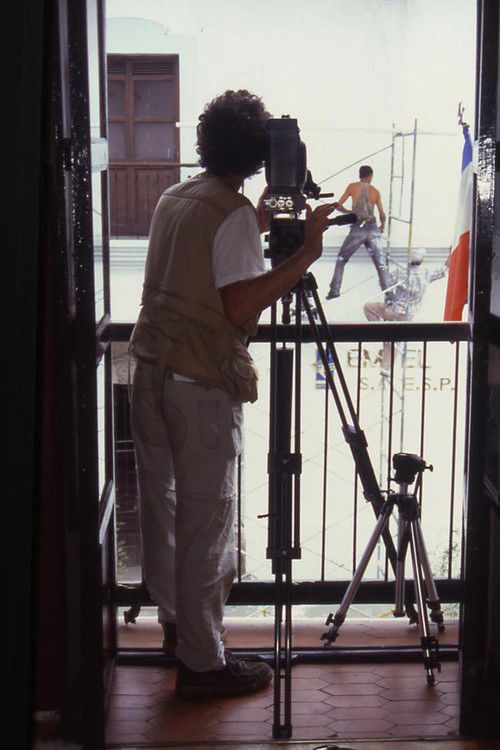
Like a notebook on the filmmaker's stay at the Eslava guesthouse in the old quarter of Pamplona, these notes of the ephemeral are filmed as one lives: without turning back, assuming mistakes, looking at fleeting lives that come and go, like notes on the inexorable passage of time.
Notas de lo efímero
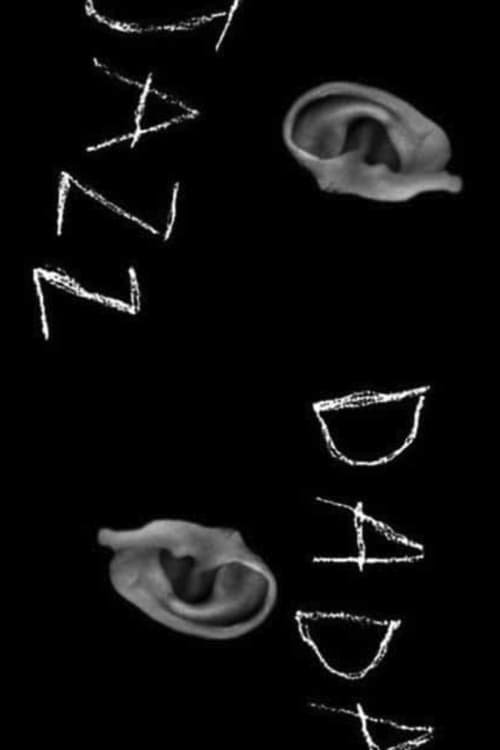
No description available.
Dada Jazz. Piensan las manos piensan los pies

Between 1947 and 1949 the photographer based in the Canary Islands Bonifacio Hernández Gil made numerous photographs for the army and the colonial administration of the so-called Spanish West Africa. In his images appear new cities as scenes of science fiction movies, surrounded by the desert and half-empty, prepared to welcome the new man that the regime designed. Impossible cities that the film says from the present in the only possible way, as Calvino wrote: from the relations between the measurements of its space and the events of its past.