Owen Land
Directing
Biography
George Landow (1944 – June 8, 2011), also known as Owen Land, was a painter, writer, playwright, photographer, and experimental filmmaker. Shortly after the release of his film On the Marriage Broker Joke... (1977), Landow rearranged his name to Owen Land, an anagram of "Landow N.E." He has also worked under pen names Orphan Morphan and Apollo Jize. According to film historian Mark Webber, Land made early films as a teenager, and his later films, made mostly during the 1960s and 1970s, are some of the first examples of the "structural film" movement. Land's films usually involve wordplay, and have been described by Webber as having a humor & wit that separates his films from the "boring" world of avant-garde cinema. Webber also said that he was inspired by Joyce, Beckett, and Ionesco. While the humorous aspects of his films makes them appealing to audiences who are not familiar with the perceived hermetic and insular world of avant-garde film, many of his works function as sharp parody of the experimental & "structural film" movement. The book Two Films By Owen Land (Lux, London) features the complete scripts of Landow/Land's films Wide Angle Saxon and On the Marriage Broker Joke as Cited by Sigmund Freud in Wit and its Relation to the Unconscious or Can the Avant-Garde Artist Be Wholed?, as well as footnotes written by Land interpreting the many references and elements of these two films and a filmography by Mark Webber. Released in May 2011, the book "Dialogues - a film by Owen Land" (Paraguay Press, Paris) features the complete script of his last film, as well as two interviews with the artist.
Known For

A reworking of an earlier film, Institutional Quality, in which the same test was given. In the earlier film, the person taking the test was not seen, and the film viewer in effect became the test taker. The newer version concerns itself with the effects of the test on the test taker. An attempt is made to escape from the oppressive environment of the test — a test containing meaningless, contradictory, and impossible-to-follow directions by entering into the imagination. —Canyon Cinema
New Improved Institutional Quality: In the Environment of Liquids and Nasals a Parasitic Vowel Sometimes Develops

Dialogues is Land's last film: A chaotic, self-reflexive experimental narrative about many, many things-- namely Land himself. A caustic, anything-goes attitude permeates the late work.
Dialogues, or A Waist Is a Terrible Thing to Mind

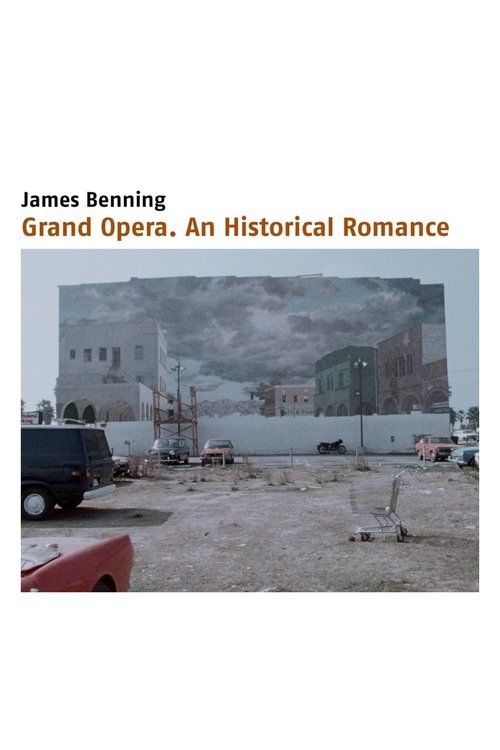
Grand Opera marks a stock-taking of Benning's work and his life, presenting a personal and artistic autobiography woven together with a series of events dealing with the historical development of the number pi, Benning's travels, and homages to Michael Snow, Hollis Frampton, George Landow (Owen Land), and Yvonne Rainer.
Grand Opera: An Historical Romance
In his first 16mm film, Landow proposes that if we accept the reality offered to us by the illusion of depth on the flat plane of the screen, we can then assign reality to anything at will. A cinematic equivalent of the illusionistic portraiture of the Flemish painters. - Harvard Film Archive
Fleming Faloon

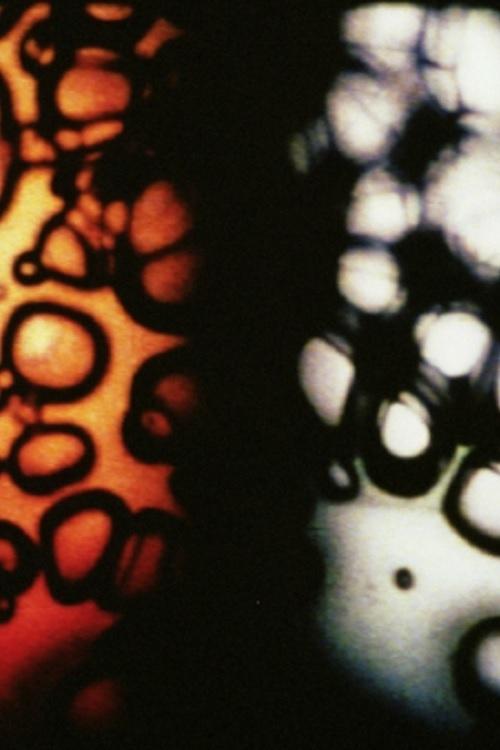
A shot of a Southern Belle waving to a group of tourists on a pleasure boat ride is looped, multiplied and then melted, creating psychedelic abstract images. “A paraphrasing of certain sections of the Tibetan Book of the Dead in motion picture terms.” - Harvard Film Archive. Originally ran 45 minutes, then was edited down to 30, then 20 minutes. Final version was simply entitled "Diploteratology" and runs 7 minutes, and is the most commonly shown version.
Bardo Follies

Two artists create grotesque characters; Two-dimensional drawings which somehow have a life of their own, that exist in the same space as real objects. The film seems to ask, "Isn't every filmmaking venture a series of repeated, once-negative images displayed alongside the real world?"
The Film That Rises to the Surface of Clarified Butter

The Land Camera Collective presents a (nearly) shot-by-shot remake of the Owen Land 1977 classic experimental film 'On The Marriage Broker Joke as Cited by Sigmund Freud in Wit and Its Relation to the Unconscious, or Can the Avant-Garde Artist be Wholed?'
On the Marriage Broker Joke as Cited by Owen Land...in the Film 'On the Marriage Broker Joke as Cited by Sigmund Freud in Wit and Its Relation to the Unconscious, or Can the Avant-Garde Artist Be Wholed?'

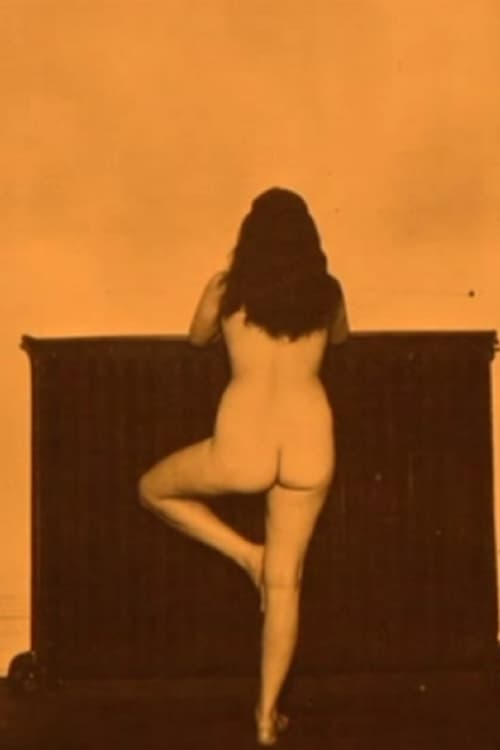
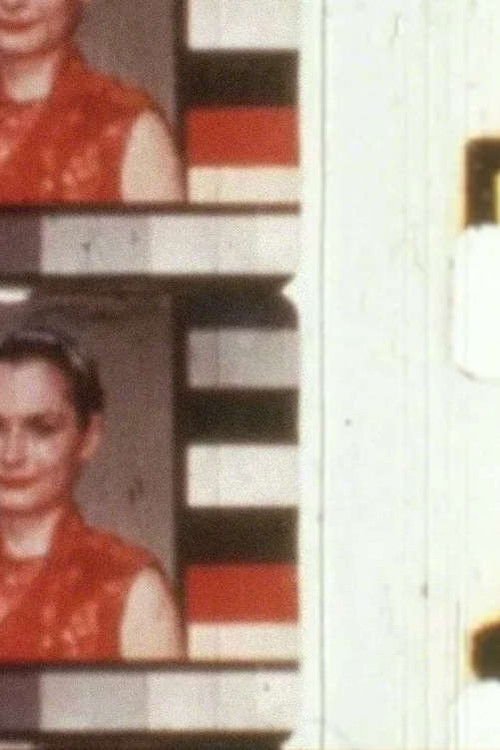
Film in Which There Appear... is a six-minute loop of the double-printed image of a "China girl" or "Shirley card", her image off-center, making visible the sprocket holes and edge lettering on the film. According to Land, within the loop, "no development in the dramatic or musical sense" occurs. Fred Camper described Film in Which There Appear... as "a kind of Duchampian found object, a [...] film that focuses attention on the medium and the viewer." There also exists a 20-minute "widescreen version" involving two prints of the film projected side-by-side, with the left print flipped horizontally so that the "China girl" forms an almost complete face in the center.
Film in Which There Appear Edge Lettering, Sprocket Holes, Dirt Particles, Etc.
“There is a TV screen superimposed over his face, his face being the screen and the screen being the image.The image of a TV screen can be an image in a movie. On television, the movie is the television image.This seems logical.” (George Landow, letter to Sheldon Renan, 1967) “A study for Fleming Faloon. Kraft is the actor in Fleming.” (Owen Land, letter to Mark Webber, 2004)
Richard Kraft at the Playboy Club

A found, utilitarian object, the overtly moralizing educational film “How to be a Good Citizen,” is elevated to the status of ‘art’. First presented unaltered and then in Landow’s color facsimile, the film is further modified by applying an opaque matte that creates a spatial paradox. - Harvard Film Archive
What's Wrong with This Picture? 1

Landow rejects the dream imagery of the historical trance film for the self-referential present, using macrobiotics, the language of advertising, and a speed-reading test on the definition of hokum. The alienated filmmaker appears, running uphill to distance himself from the lyrical cinema, but remember, "This is a film about you, not about its maker."
Remedial Reading Comprehension
Constructed around a found soundtrack in which a strict female voice delivers a test of perception and comprehension, Institutional Quality’s sound and image relationship become detached as the filmmakerloses interest in his subject.
Institutional Quality

Following a series of title cards, a man in sunglasses briefly flutters his hands like fairy. Owen Land states that this film was not made by George Landow, and believes it should be credited to John Cavanaugh. "George Maciunas had a number of films which didn’t have titles on them. Then he put them together into his Fluxus reel and tried to remember who made them. It was an intentional Fluxus joke." (Owen Land, interview with Mark Webber, 2004)
The Evil Faerie
“Fleming Faloon Screening does not document filming of Fleming Faloon. It is only a screening, contrasting the movie images with the interior of the room.The people in the room are ‘once removed’ from us.The person in the movie is two (and three) times removed.” (George Landow, letter to Sheldon Renan, 1967) “There was a screening of Fleming Faloon, the 16mm version, in the FilmMakers’ Cooperative office, and I filmed, on 8mm, the screening on the screen in the office. It shows the whole room and the people in the room watching it.” (Owen Land, interviewed by Mark Webber, 2004)
Fleming Faloon Screening
“The sore – which is not static, but a series of exposures of a healing infection – is called Not a Case of Lateral Displacement. It is not a ‘medical illustration’ but an actual infection.” (George Landow, letter to Sheldon Renan, 1967)
Not a Case of Lateral Displacement

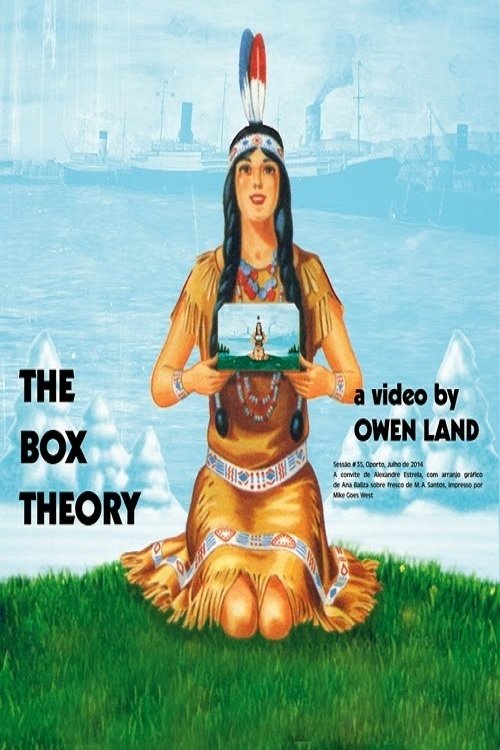
In The Box Theory, Owen Land, the uncanny American structuralist, king of the absurd and a religious addict, recreates the image of the Indian girl, holding the butter box with the image of herself, to produce an ad-eternal video zoom. This operation generates a vertiginous and hypnotic mise-en-abyme centered on the female body. This moving mantra raises the figure of the girl to the status of medieval icon – Our Lady of the O – a fertility goddess from the prodigious and polysemic land Of Land.
The Box Theory (Ireko Riron)

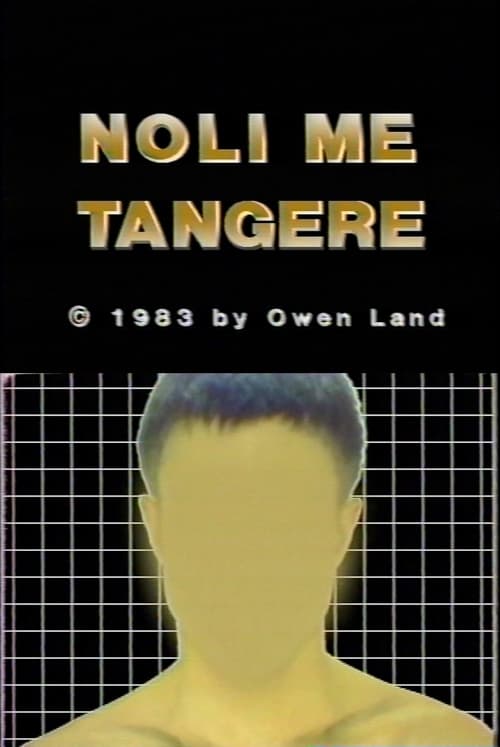
“The idea behind it is: Feminists claim that men objectify women’s bodies. So this was a revenge or a punishment for men who did that during their lifetimes, by being subjected to objectification by women in the after death state"
Noli me tangere

A revision of Bardo Follies, Diploteratology suggests that “death (destruction of the original image) is not an end but merely the next stage.” Preceded by longer versions entitled "Bardo Follies."
Diploteratology

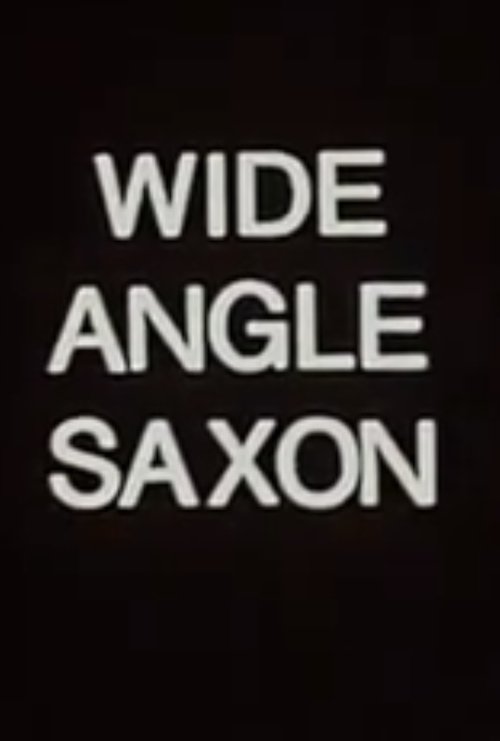
An interpretation of The Confessions of Saint Augustine featuring an ordinary middle-aged man who undergoes a conversion experience whilst watching an experimental film. - Harvard Film Archive
Wide Angle Saxon
“Both sides are the same time (well,almost). It’s really simultaneous – practically. Except at the end a car burns and that is the same car we have been looking at on the other track,already a burnt out wreck around which kids dance.All this was taking place in and outside of my window when I lived uptown.” (George Landow, letter to Sheldon Renan, 1967) “Two random street events in New York City … in one of them a car was on fire.They’re shown in split screen, created by matte-ing.” (Owen Land, interviewed by Mark Webber, 2004)