Lawrence Weiner
Directing
Biography
A key figure in Conceptual Art, Lawrence Weiner has long pursued inquiries into language and the art-making process. From his pioneering installation works of the 1960s and '70s through his new digital projects, Weiner posits a radical redefinition of the artist/viewer relationship and the very nature of the artwork. Translating his investigations into linguistic structures and visual systems across varied formats and manifestations, Weiner has also produced books, films, videos, performances and audio works.
Known For
"The mise-en-scene, the whole story, takes place in one location, the artist's studio. A delicate psychological allegory on 'a day in the life of' anchors the displacement of (filmic) reality and the alienation of the (players) self. Devices such as incongruity between the image and the soundtrack, odd camera angles, and plays on objective focus are integral and explicit components of the narrative. Altered to Suit diverges from preceding films in that the dialogue is not solely related to the work; rather the work serves as a central frame of reference from which the story unfolds. This is also the first time that narrative dominates the structure of the film. It is shot in black and white with very sensual, very seductive photography." — Alice Weiner
Altered to Suit
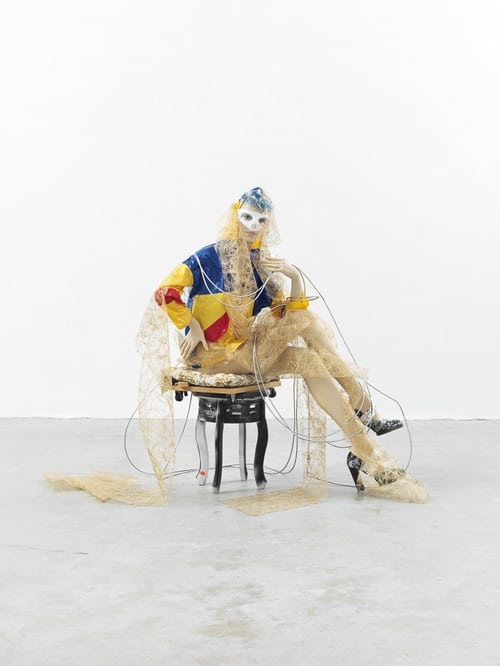
MoMA documentary on sculptor Isa Genzken.
This Is Isa Genzken
A table is set with two red books placed at diagonal corners and a stack of three poker chips placed in the center. Two women enter, sit, and begin to play with the books and poker chips. Different soundtracks converge; the dialogue begins to sound like an interrogation as one character asks, “What is the structural definition of logical positivism? Lawrence Weiner, what is the structural form as in the manner and use of your language? Does it not have a direct relation to logical positivism?”
Green As Well As Blue As Well As Red
"Done To" (sometimes called "It Is, Done To") consists of simple camera frames which are silent and/or unconnected to a complex soundtrack running parellel to the images. There are brief instances where image and sound meet; however, the majority of the images are overtaken by at times symphonic, at times cacophonous soundtracks which displace the normal filmic viewing experience.
Done To
The male/female, subject/object investigation in A Bit of Matter and a Little Bit More has no titillating introduction; the appetite is not whetted beforehand. Hardcore, the opening shot, shows the crotch areas of a male and female body engaged in coitus. At the end of the tape a male voice says, "Some questions and five answers relative to moved pictures, five questions and some answers relative to moved pictures—" a reference to the artists' book, 100 Rocks on a Wall.
A Bit of Matter and A Little Bit More
16mm short film from 1981.
Passage to the North
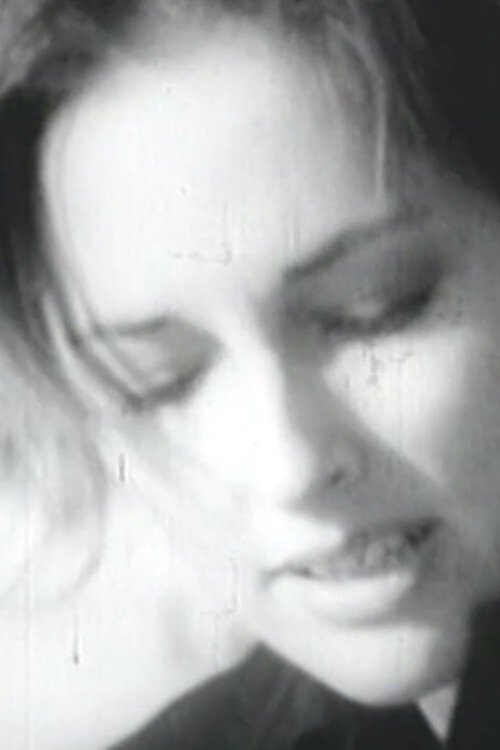
Using the structure of a feature film as its basic format, A First Quarter adopts the principles of nouvelle vague cinema. Simultaneous realities, altered flashbacks, and plays on time and space, are all components of the form and content of this film. Because it was originally shot on video, then kinescoped to 16mm film, A First Quarter has acquired a softened, poetic look. The dialogue derives entirely from the creation of the work as it is spoken and read, built, enacted, written, and painted by the players. As scenarios build, they appear as tropes, one after another.
A First Quarter
Shifted From the Side is conceptually identical to To And Fro... and was probably made the same afternoon. The object used to demonstrate five possibilities of what could—but not necessarily should—be the artwork is a pack of Lucky Strike cigarettes. As in To And Fro..., the camera is static. The pack is on the right side of the screen; as the text is read, the pack is shifted back and forth. The hand retreats from the object each time an act is completed before sliding it from side to side across the table.
Shifted From the Side
In a nearly bare loft space, Weiner's performers cluster around an octagonal pink table, enacting a series of what seem to be choreographed exercises or processes: playing patty-cake, grappling for possession of rectangular blocks, kissing and embracing, engaging in bizarrely coded conversations.
Do You Believe In Water?
Short documentary on the conceptual artist, Lawrence Weiner, produced for Belgian television.
Ziggurat: Lawrence Weiner
Reportedly shot in the back office at Leo Castelli’s New York gallery, an ashtray is used to demonstrate five different actions related to artistic work. With the camera static, the video opens with the ashtray in the center of the screen. A hand approaches from above and slides the object up and down, then back up and back down. Each time an act is completed, the hand retreats from the object, marking a separation from the next “possibility.” The actions (or movements) mimic language (e.g. “to and fro”) as it is spoken.
To and Fro. Fro and To. And To and Fro. And Fro and To.
The soundtrack begins with the artist stating the conditions: “An artist may construct a work and/or a work may be fabricated and/or a work need not be built. I elected five possibilities for videotape.” These possibilities are the actions executed in Beached. They are shot in five sequences and consist of throwing, pulling, lifting, dragging, and using leverage.
Beached
Lawrence Weiner film from 1999
Hearts and Helicopters - A Trilogy
Turning Some Pages was produced in conjunction with the printing of a limited edition journal of the same name by the Howard Smith Paper Group, a British paper merchant. The action of reading a book informs the structure of this motion drawing. Abstract arrangements of shapes and images of dice are interspersed with cryptic aphorisms ("With the addition of explicit meaning, the implicit sense of the throw of the dice becomes clear"); arrows suggest the turning of a page. Weiner adds another layer of complexity and enigma by repurposing his droll 1981 audio work Where It Came From as a soundtrack. Accompanied by Roma Baran on the piano, Weiner matter-of-factly explains: "Art is not a metaphor upon the relationship of human beings to objects and objects to objects in relation to human beings, but a representation of an empirical existing fact."
Turning Some Pages
Wild Blue Yonder fuses animated drawings and text with video footage of Weiner's friends, colleagues, and family. Weiner recontextualizes the everyday, leveling gestures, conversations, actions and interactions into a system of codes that blur the boundaries between what is choreographed and what is improvised. Weiner's visual grammar (arrows, horizons, frames) suggests motion and borders; the relationships of the animations, aphoristic text, and conversations activate questions of intimacy within the conventions of physical and personal space.
Wild Blue Yonder
Writes Weiner: COLLAGED COMPONENTS COLLIDE IN THIS CARTOON - SINK OR SWIM LOOKS AS IF BUILT AS AN HOMAGE TO THE 'LOONEY TUNES' PREMISE THAT WHAT DOESN'T MAKE SENSE MAKES PERFECT SENSE: AS LONG AS YOU EITHER BELIEVE - OR KNOW. A SIMPLE PRESENTATION OF A SLICE OF LIFE (EMPIRICAL REALITY) DOES NOT APPEAR TO BE THE OBJECTIVE OF SINK OR SWIM.
Sink or Swim

"In this video the artist states that it is a public freehold work which demonstrates what could be art within his responsibility. Like Beached it was also shot in a marshy area near the sea and in sequences that are separated by dissolves. One sees five different actions that are related to BROKEN OFF. The artist breaks a tree branch, scrapes and kicks the ground with his foot, snaps a stick in two off a fence, scrapes a stone with his fingernail. At the end he pulls the line plug from the video." — Alice Weiner.
Broken Off
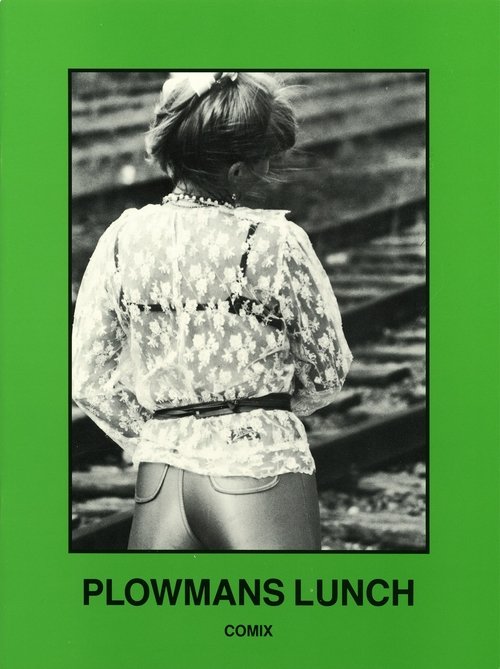
16mm film from 1982.
Plowman's Lunch
There But For resembles a soap opera; its characters—a couple whose relationship has seen better days, a ball-and-jack playing adult/child, and a couple that comes to visit the family—are in the midst of their day-to-day lives (an imitation of life). The music was composed and performed live on the set as the play unfolded. There But For is a free-form chance operation within the defined boundaries of place (an apartment) and the assigned roles of the players: the mother (bitch), the father (jerk), their kid (retard), and their visitors. The players continually argue as they feel their way through this structure, where ambiguity is the form. The kid asks, “Is mediocrity its own reward?” Perhaps the clue for the viewer is in the tape’s title: There But For (the grace of God go I)."
There But For
The title refers to his statement made in 1968 for the magazine Art News in an attempt to define his work. 1/ the artist may construct the work; 2/ the work may be fabricated; 3/ the work need not be built.