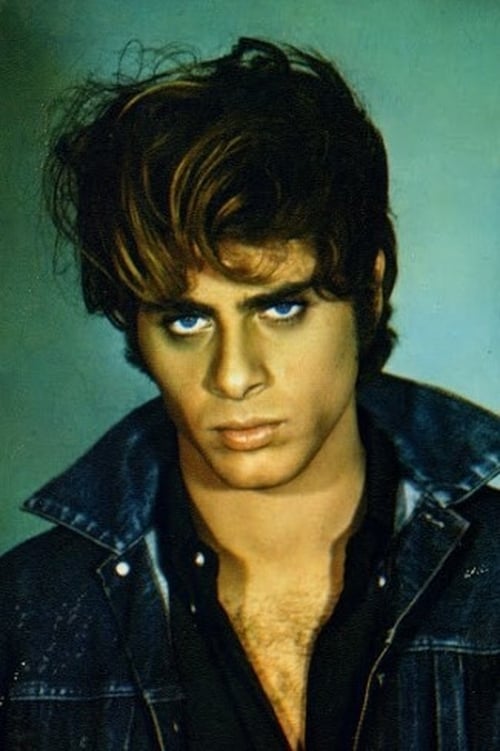
Ricky Shayne
Acting
Biography
Ricky Shayne (born 4 June 1944) is a pop singer and an actor of French and Lebanese descent who was popular in Europe in the 1960s, especially in Germanophone countries. Shayne was born George Albert Tabett on 4 June 1944 in Cairo, Egypt, to a Lebanese father and a French mother. Young Tabett moved to Paris when he was 15 years old, with his mother, and took music lessons for two years. He then moved to Italy where, in 1965, under the stage name "Ricky Shayne," he had his first hit with the single "Uno dei Mods" ("One of the Mods"), written by Gianni Meccia and Franco Migliacci. It was featured in the Italian-German 1966 musical film La battaglia dei Mods (The battle of the Mods) in which Shayne played the role of a "disaffected young man" and sang. The film also featured Udo Jürgens, Joachim Fuchsberger, Elga Andersen, and others, and Shayne moved to (Germany) for the duration of the production. While in Germany, Shayne recorded the single "Ich sprenge alle Ketten" ("I bust all the chains"), composed by then-unknowns Giorgio Moroder and Michael Holm, which became a national hit and made Shayne an idol among young German fans of pop music. Shayne followed this success with the 1967 singles "Das hat die Welt noch nicht gesehn" ("The world has not yet seen that"), "Es wird ein Bettler zum König" ("Beggar becomes king"), and "Ich mache keine Komplimente" ("I make no compliments"). In 1971, Shayne released his German version of the international hit song "Mamy Blue" that was originally composed in French by Hubert Giraud, which became his greatest success, peaking at No. 7 in the country's national chart. His english version of "Mamy blue" was a No. 8 hit in france, top ten hits in french Belgium and Japan and No. 1 in Argentina and Brazil. The same year, he starred in the German comedy Hurra, wir sind mal wieder Junggesellen! (Hurray We Are Bachelors Again). He moved to the United States in 1975, occasionally returning to Germany for business ventures and nostalgia concerts. Source: Article "Ricky Shayne" from Wikipedia in English, licensed under CC-BY-SA 3.0.
Known For

Derrick was a German TV series produced by Telenova Film und Fernsehproduktion in association with ZDF, ORF and SRG between 1974 and 1998 about Detective Chief Inspector Stephan Derrick and his loyal assistant Inspector Harry Klein, who solve murder cases in Munich and surroundings.
Derrick

No description available.
NDR Talk Show
No description available.
Die Drehscheibe

No description available.
ZDF-Fernsehgarten
No description available.
Hier und heute
The ZDF-Hitparade, or Hitparade for short was one of the most popular and most well-known music television series presenting mostly German Schlager.
Die ZDF-Hitparade

Disco was a pop music program that aired in Germany on the ZDF network from 1971 to 1982. It generally aired on the first Saturday of each month at 7:30PM, each show running 45 minutes. 133 shows were produced. The show was hosted by German actor and comedian Ilja Richter. Its lesser known predecessor on ZDF, 4-3-2-1 Hot & Sweet was aired between 1966 and 1970, presenters included Ilja Richter and Suzanne Doucet. Disco generally served a younger pop-oriented audience compared to ZDF's Hitparade, and until 1972, its main competitor was Beat-Club, followed by Musikladen, both on ARD. Repeats of Disco have been aired since 1984 on ZDF Musikkanal, after its closedown in 1989 on 3sat. Since 2004, the digital ZDF Theaterkanal aired repeats of the entire series. In 2007, ZDF Dokukanal began to air reruns, starting with episodes from 1975 and also multiple repeats of the series have been shown on hit24 in 2008. The show focussed on chart hits current at the time of airing, giving about equal airtime to international pop music and German Schlager. Despite its name, it did not particularly focus on disco music although it featured many disco hits as long as they were chart relevant..
Disco
No description available.
Système 2
The show was meant to compete with those on West German television. To this end it was fairly successful even attracting a following in parts of West Germany which could receive Eastern TV. Its production values were high. Apart from song and dance numbers and appearances from East German celebrities, almost every broadcast featured well-known stars from the west, often after their popularity had peaked in their home countries.
Ein Kessel Buntes
No description available.
Versteckte Kamera
No description available.
Musik aus Studio B

No description available.
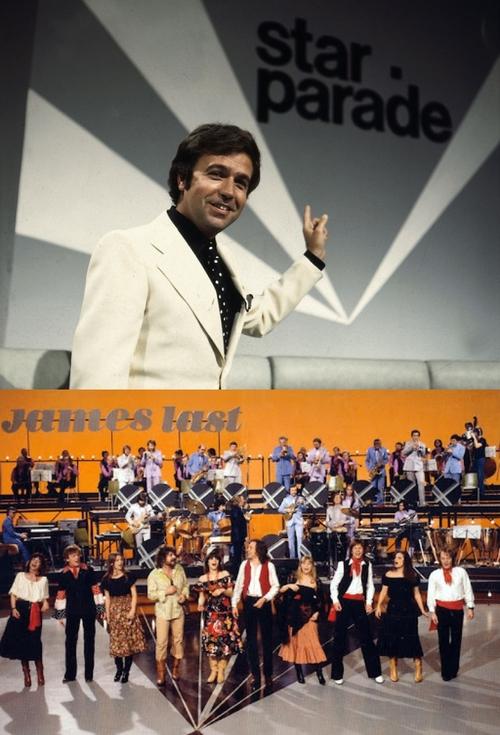
Starparade
No description available.
Musik liegt in der Luft
No description available.
Unsere kleine Show - Musik zur blauen Stunde
No description available.
Na siehste!
No description available.
Meine Melodie
No description available.
Hör hin, schau zu!
No description available.
Show & Co. mit Carlo

No description available.
Bananas

Whilst being transferred to a psychiatric hospital, a ruthless serial killer Gassot makes a break and goes on the run. He arrives in Marseilles, intending to escape abroad. Here, he falls for a young prostitute, Gerda.