Acting
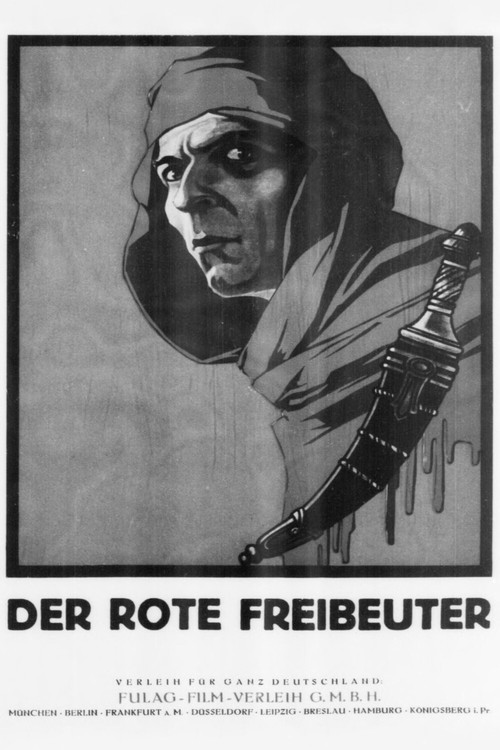
Early Italian pirate adventure.
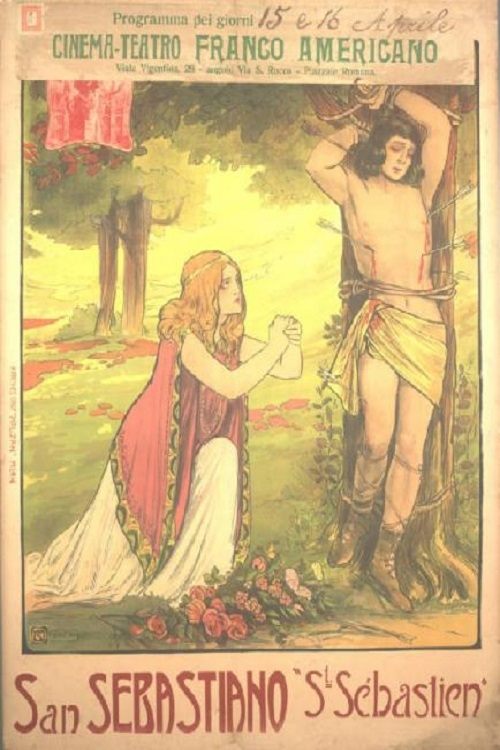
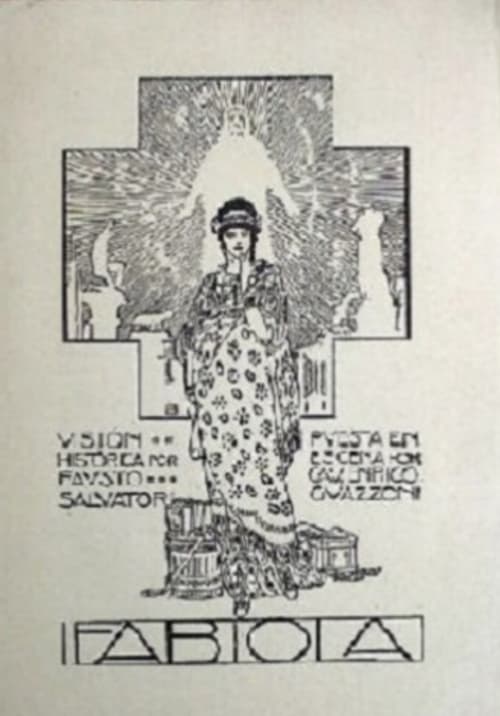
From a window in Fabiola's house, Sebastian watches the Christians being taken to their cells, and as he listens to the shrieks and curses of the multitude his heart is stirred with pity. Later Sebastian is denounced to the Emperor as a Christian, and he is condemned to die by the swords of the Numidian guards. The news is brought to Fabiola, who sends one of her slaves to the chief of the Numidians. Heis brought to her house, and rich bribes are offered to him not to fulfil the Emperor's command. Sebastian is taken to the place of execution, and the chief commands his followers to shoot with their arrows, but not to kill. Dangerously wounded, Sebastian is carried to Fabiola's house, where she tenderly nurses him back to health. But Sebastian, partially recovered, sets out to meet the Emperor, and reproaches him for his cruelty towards the Christians.
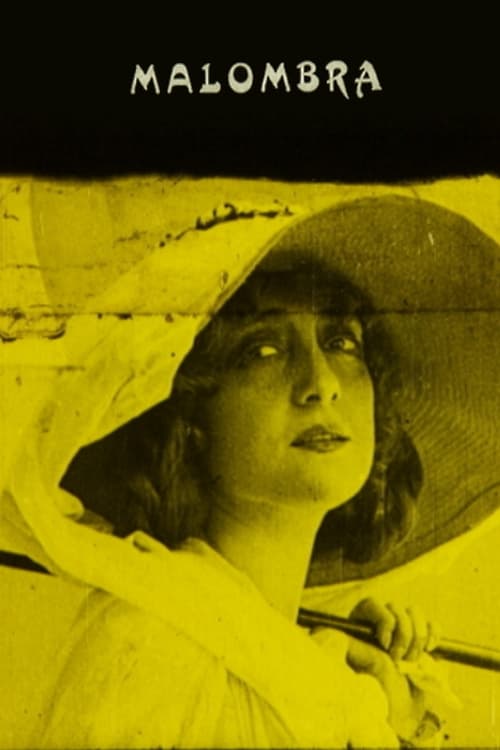
Marina di Malombra (Borelli) lives in a castle prior to her wedding. She begins to read letters written by an ancestor called Cecilia. She finds out that Cecilia was driven to her death by her uncle. Marina identifies with Cecilia and take revenge on her behalf by murdering her uncle.
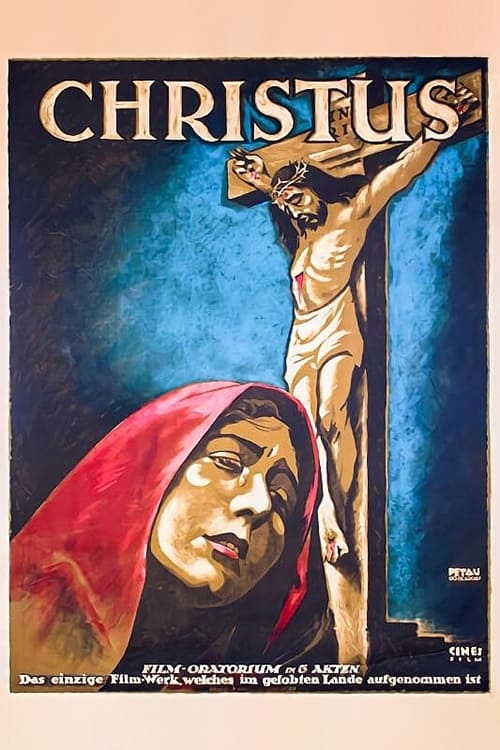
Antamoro's CHRISTUS, epic in scale and ambition, and featuring decidedly otherworldly special effects, was released in 1916. Telling the story of the Life of Christ, the film is divided into three segments-- three Mysteries. The first of these includes the Birth of Jesus, the arrival of the Magi, Herod and the slaughter of the innocents, the flight into Egypt. The second Mystery features the expulsion of the merchants from the Temple, Mary Magdalene's conversion and Christ's entry into Jerusalem. The third Mystery is itself divided into three separate parts, which are The Passion, The Death and The Resurrection.
An unknown Menichelli, a young and lively beauty, is desired by two stars of the Italian scene: Ruggero Ruggeri and Amleto Novelli. This breezy story based on an comedy unreleased in Italy at that time is built around Ruggeri, who plays the role of a playboy father who wants to turn into the family delights rejoining his son until then neglected. Novelli, a little uncomfortable in a role that would have required ten years less, is the good-hearted rustic son. Pina Menichelli, adorned with flowers, wanders about on her bicycle, between not only two men, but also two lifestyles. In this role, she shows off a naturalness that will surprise people who know her only for her decadent performances. Sometimes, though, a dark glimpse reveals the character of the actress, that will stand out in the imagination of the public.
In "Agrippina" (1910), Guazzoni recreates the particular and troublesome relationship between Agrippina, the second wife of the Emperor Claudius, and her son Nero.
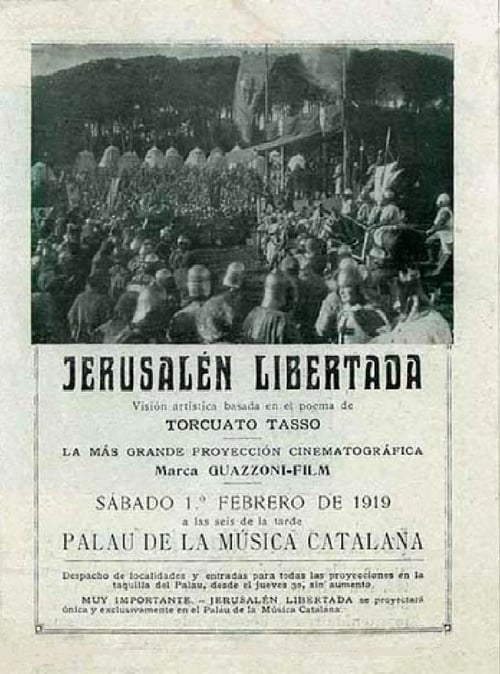
The film is set during the Crusades and describes Godfrey of Bouillon's conquest of Jerusalem in 1099.
Directed by Enrico Guazzoni.
The relationship between Herman, a lion tamer and star of a circus show, and his assistant Cleo, develops around themes of love and jealousy.
In "Fabiola" (1918) Herr Guarzzoni moved from the earliest days of Christianity when the new faith was struggling to just survive to a later period in the Roman Empire when the religion was a major force and attempting to win over Rome.
Two siblings lose their parents amidst turmoil in revolutionary France and are adopted by a peasant family. Once grown up, the older brother enlists in the Napoleonic Wars.
Based on Théophile Gautier's novel of the same name, the film tells of the tragic love affair of Ottavio de Saville. He falls madly in love with Madame Prascovie Labinska, a woman very faithful to her husband, the Polish count Olaf Labinski. Alarmed by the growing physical and mental weariness of the desperate young man, his relatives and friends decide to turn to Doctor Balthazar, who has just returned from a trip to the Indies where he was initiated into the secrets of Brahman.
Believing that Caesar is becoming too powerful in the state, Brutus and others conspire to take his life. The next day, when all are assembled in the senate chamber, the conspirators accomplish their fatal purpose
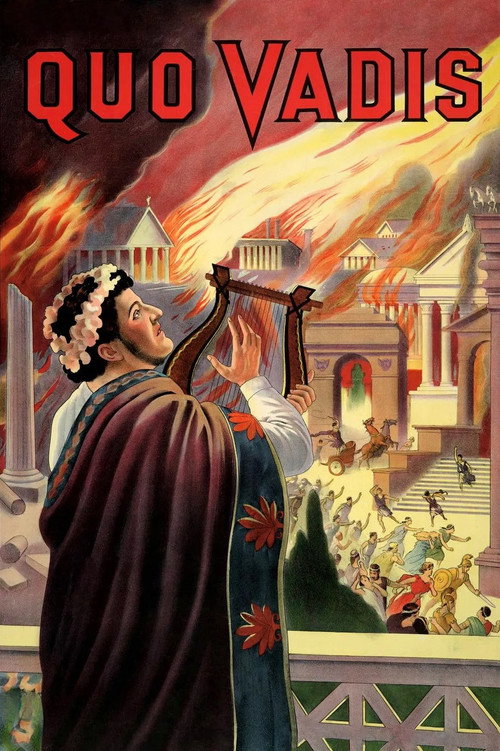
During the latter years of the reign of the tyrannical Roman emperor Nero, Marcus Vinicius, one of Nero's officers, falls in love with a young Christian named Lygia, attempting to enslave her. Lygia's protector, the noble and burly Ursus, works to save her from Vinicius' clutches. Pursuing Lygia, Vinicius finds himself at a catacomb prayer meeting led by the apostle Peter and finds his conscience stirring-- just as Nero orders Rome burned. A landmark in epic film, Enrico Guazzoni’s grand-scale masterpiece laid the foundations for what colossal Italian spectacles would become. The film had tremendous influence on Giovanni Pastrone’s Cabiria (1914) and D.W. Griffith’s Intolerance (1916).
19th century Sardou period melodrama turned into a vehicle for diva star Lyda Borelli: an aristocratic French lady leaves her unfaithful husband and becomes involved with a member of Robespierre's revolutionary regime.
A troubled detective investigates the disappearance of junk TV celebrities who hosted the same controversial talk show.
Grazia de Plessans abandons her studies in a convent following a mystical crisis. In her paternal house, she studies music together with maestro Claudio Morillot with whom she ends up falling in love.
A silent adaptation of the later parts of Sir Walter Scott's novel "The Talisman": During King Richard’s illness, his sworn enemy the Duke of Monserrat steals the English flag from the crusader camp. To avenge the insult, Richard decrees that Monserrat must engage in mortal combat with Sir Kenneth, the king’s favorite knight.
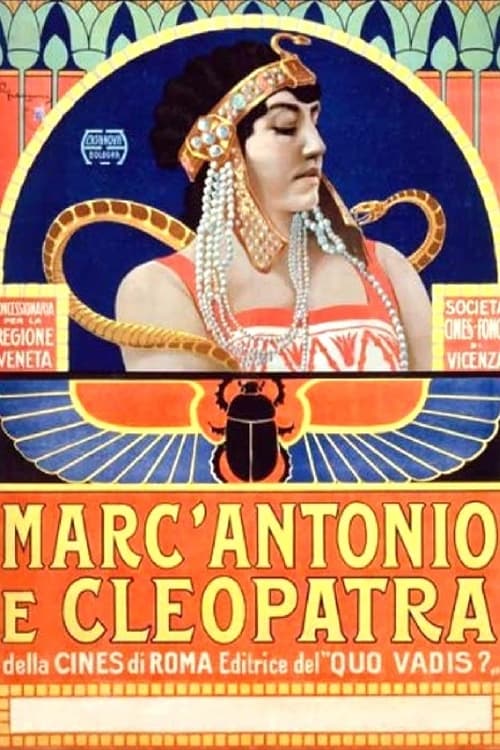
Based loosely on Shakespeare's play, Plutarch's "Life of Antony", and Pietro Cossa's dramatic poem, "Cleopatra", this movie was spectacular for its time. It offers location shots made in Italy and Egypt, large crowd scenes (e.g., the Roman army embarking in Alexandria), lots of emotional drama (Marc Antony & Cleopatra, his wife Octavia, sister of Antony's rival Octavian, unhistorically coming to Alexandria to beg him to return to her, and some mean, mean looks exchanged between Octavia and Cleopatra.
Filippo Derblay, a young man of humble birth, became, thanks to his job, the owner of the ironworks. He is secretly in love with Clara, the daughter of the Marquis of Beaulieu, who lost all his fortune. Clara is engaged to the Duke of Bligny, a vain cousin of her. After learning of Clara’s financial disgrace, the Duke prefers to engage to Atenaide Moulinet, a social climber and daughter of the industrialist Moulinet, the “King of Cacao”. To get revenge, Clara agrees to marry Filippo Derblay, despite she considers him an upstart and she despises him. But Filippo, who loves her deeply, can’t tolerate to be humiliated, will prove how much her prejudice was wrong and, at the end, he will win her love. Among the most captivating aspects of the film, the intense performance of the great diva Pina Menichelli and the high level of the photography, that captures spaces from life as the remarkable images of the factory and the workers at the machinery.