Kinya Kitaoji
Acting
Biography
Early life: He was born in Kyoto, son of jidaigeki film star Ichikawa Utaemon, and graduated from Waseda University School of Letters, Arts and Sciences Ⅱ in Tokyo. Acting career: Kin'ya made his debut with his father in the 1956 Toei film Oyakodaka in the role of Katsu Kaishū. He is a contemporary of, and was taken to be a rival of, Hiroki Matsukata, who was also the son of a famous actor (Jūshirō Konoe). In 1964, Kin'ya made his first appearance on stage in Cyrano de Bergerac. The 1960s and 1970s saw him in many contemporary roles. He appeared in Battles Without Honor and Humanity: Deadly Fight in Hiroshima and Battles Without Honor and Humanity: Final Episode as well as Karei naru Ichizoku. The title role in the 1975 film Takehisa Yumeji was his. On television, Kitaōji portrayed Miyamoto Musashi in the Nippon Television show of the same name. A major historical role was Sakamoto Ryōma in the year-long prime-time NHK Taiga drama Ryōma ga Yuku (1968). He landed the title role in the long-running cop show Zenigata Heiji, set in the Edo period. In the 1985 twelve-hour New Year special Fūun Yagyū Bugeichō, he played Yagyū Jūbei, and in the following year's special, he portrayed both Tokugawa Yoshimune and Yagyū Shinrokurō. The role of another shogun fell to him in the following new year as TV Tokyo tapped him to play Tokugawa Iemitsu. Kin'ya returned to NHK for the 1987 Taiga drama Dokuganryū Masamune as Date Terumune, father of title character Date Masamune. Another role he took had been created by his father. Saotome Mondonosuke was the title character in the series Gozonji! Hatamoto Taikutsu Otoko. It ran from 1988 to 1994 on TV Asahi. His father, Ichikawa Utaemon, had appeared in numerous films as Mondonosuke. Kin'ya reprised the part of Miyamoto Musashi in the 1990 New Year's special. Toshirō Mifune had portrayed Musashi in the earlier film, also based on the Eiji Yoshikawa story, that had won an Academy Award. He returned to the New Year's special in 1996, again as the famous swordsman, in Tokugawa Kengōden Sore kara no Musashi. His first portrayal of Ōishi Kuranosuke was in the 1996 Chūshingura. He took up the role again in 2004 for the NHK Saigo no Chūshingura and in 2007, in the New Year special Chūshingura Yōzei-in no Inbō. Other historical roles from the Sengoku period include Azai Nagamasa, Saitō Dōsan, and Yamamoto Kansuke. In addition to historical parts, he appeared in fictional series. His portrayal of Ogami Ittō in the Lone Wolf and Cub ( Kozure 2) Which was a series for Asahi TV in Japan is representative of these appearances. In 2008, Kitaōji revisited the role of Katsu Kaishū in the Taiga drama Atsuhime. He had portrayed Katsu in his 1956 debut. He won the award for best actor at the 10th Hochi Film Award for Fire Festival and Haru no kane. Kitaōji played one of the lead roles in Hideo Nakata's psychological thriller film The Incite Mill. In recent times, Kitaōji voices the Hokkaido-inu character of "Father" in SoftBank Mobile's White Family advertising campaign.

Known For

Daimon Michiko is a 37-year-old freelance surgeon who is part of a questionable “doctor placement service” that has her wander from hospital to hospital. The harsh environment at the hospitals led many doctors to retire from their positions, forcing hospitals to make use of said program to fill the empty spots at least temporary. However, Michiko doesn’t look like a doctor at all with her flashy clothes and eccentric attitude. In the first episode she raises objections to a certain operation which is planned to be done by the head of a hospital who hasn’t performed an operation for a very long time. This causes Michiko to incur odium at the hospital, however, everyone becomes frozen when Michiko points out the outdated skills of the director. She also holds a scrupulous compliance when it comes to her working hours, never does any unnecessary chores that don’t require a medical license, and couldn’t care less about the power struggles within the hospitals. Nobody knows how she acquired such a top-level skill that allows her to claim exorbitant sums as reward, but her private life is an even greater mystery to everyone around her. Tanaka plays a rookie surgeon, Uchida an anesthetist, Kishibe the head of the placement service, and Ito the head of the surgical department of this institution.
Doctor-X: Surgeon Michiko Daimon

SMAP×SMAP was an ongoing weekly Japanese variety show on Kansai TV and Fuji TV starring the members of SMAP. The show began on April 15, 1996 and it aired from 22:00 to 22:54 every Monday. The show's usual ratings were higher than 20%, which is considered high since most variety shows range from 10-20%. Each episode begins a variety of skits, comedic performances, and/or games. These are followed by Bistro SMAP, in which the SMAP members compete against each other to impress celebrity judges with their gourmet cooking. Last is a musical performance by SMAP which may include celebrity guests, as well.
SMAP×SMAP

Izumi Sakuragi is a new police sergeant with the Special Investigations Office, which was set up within the Metropolitan Police in November last year. The new investigation team uses DNA analysis and the latest in forensics science to investigate cold cases as well as cases suspected to involve missing persons.
Absolute Zero

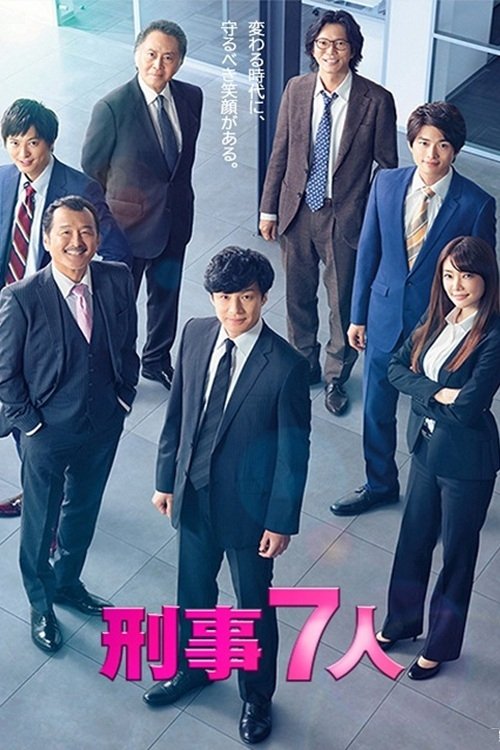
Yū Amagi is a slightly eccentric detective who has been assigned to the Twelfth Section of the Tokyo Metropolitan Police Department's First Investigative Division from the Lost and Found Centre. The Twelfth Section is called the "graveyard of detectives" and ridiculed as the "banishment room where hardened detectives who cannot be fired are sent." Its assembled detectives Kōsuke Samura, Takumi Yamashita, Keita Nagasawa, Tamaki Mizuta, and Masatoshi Katagiri are elite and yet oddballs. Amagi appears fixated with time which seems to have no relation with a case. Raising questions about the timelines of the perpetrator and victim derived from the estimated time of death, time of crime, time of alibi, and time limit, he searches for the meaning of "blank time" which arises from this. He obsesses over the weight of every minute and second of time because of some incident.
Seven Detectives

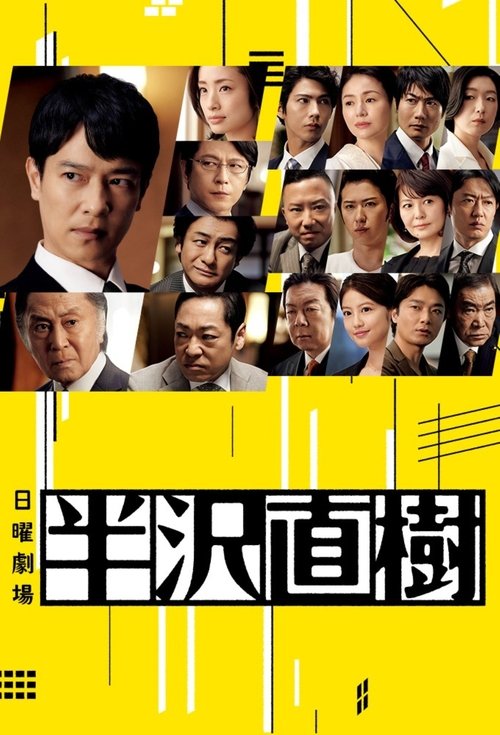
Hanzawa Naoki works as a loan manager at the Osaka Nishi branch of Tokyo Central Bank. One day, Hanzawa makes a loan contract for 500 million yen with Nishi Osaka Steel Company. Hanzawa didn't want to approve the loan, but he had to due to the branch manager's order. Nishi Osaka Steel Company seems financially stable, but the company actually hides massive amounts of debt through fraudulent accounts. The company is caught. Three months later, Nishi Osaka Steel Company goes bankrupt. The bank's branch manager is Asano. He is an ambitious man and tries to shift the blame to Hanzawa. Hanzawa then attends an inquiry about the loan failure at the bank's headquarters in Tokyo. Hanzawa denies fault and promises to retrieve the 500 million yen loan. He did this because it's the only way for Hanzawa to survive as a banker.
Hanzawa Naoki

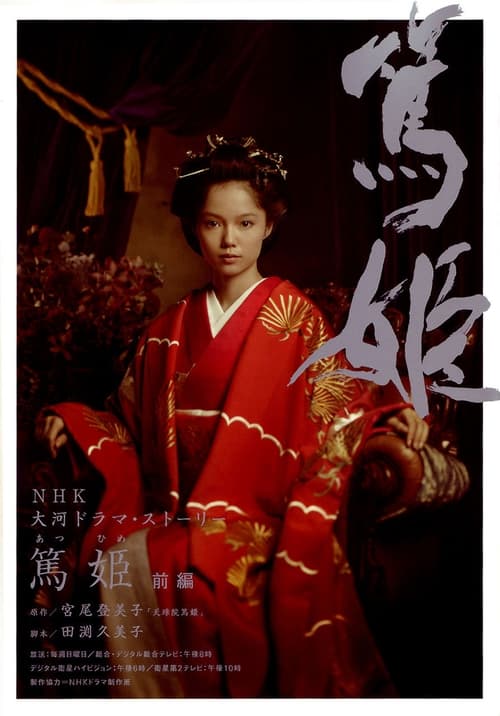
The 47th NHK Taiga Drama is a life story of Princess Atsu, who was born in Kagoshima Prefecture, then called Satsuma, and became the wife of Tokugawa Iesada, the 13th shogun of the Tokugawa shogunate. She accedes to the highest rank in Ooku, the inner palace of the Edo castle where women related to the reigning shogun resided. Iesada dies soon after their marriage and Atsuhime assumes the name Tenshoin at the age of 23. She exerts herself for the Tokugawa clan and for the nation during the upheaval in the Meiji Restoration, headed by those from Satsuma.
Atsuhime

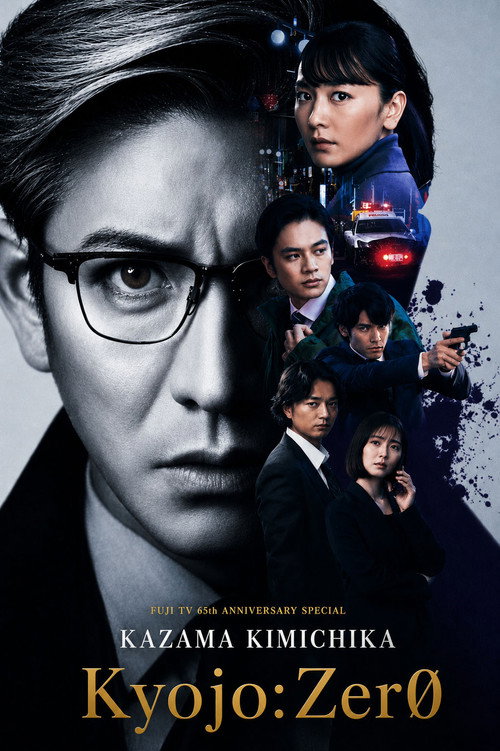
The mystery of how Kazama Kimichika became so ruthless and unmatched will be revealed. Kyojo Zero depicts the time before he was assigned to the police academy, when he was working as an instructor in charge of training new detectives...
Kazama Kimichika: Kyojo Zero

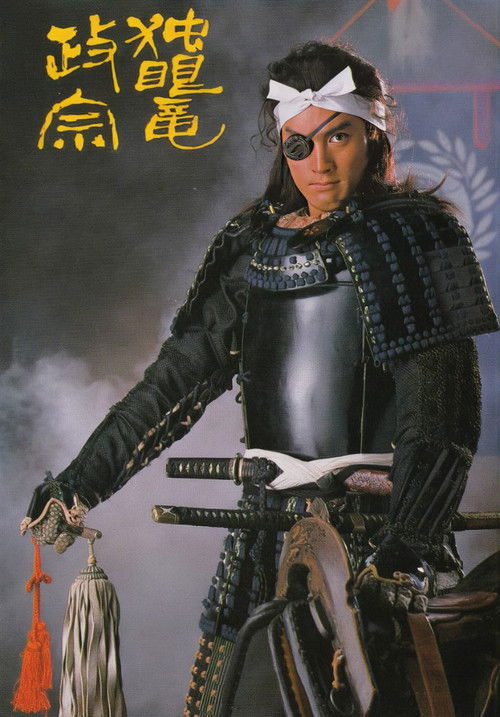
Broadcast TV drama NHK broadcast on January 4 to December 13, 1987 (Showa 62). In the questionnaire survey conducted by NHK, it is shining in the most favorite river drama. The original is Yamaka Sosaichi's novel "Date Masamune", the biggest drama on the theme of the Date house was the first time in 17 years since the "Shinnogi remained" (1970), which painted Datejo in the Edo period. It depicts the life of Matsudo Date of Sengoku warrior · Date Masamune who built the foundation of Sendai clan 620,000 stones in his generation as a result of my own wisdom and talent.
Masamune Shogun

Onda Kokoro is an oncologist called Dr Onkoro for short by the people around her and teased that she was born for this path. She got married to Takumi, whom she had known since she was a student, and they had a son. Life was going smoothly for her. But three months ago, her husband fell in an accident and remained unconsciousness even though he underwent emergency surgery. Although Kokoro puts on a brave face at work, she still has not been able to accept reality. One day, she meets Kajiyama Kaoru, a competent gastroenterologist who has transferred to work at the hospital. Kaoru understands the need for oncology as a surgeon and gives emotional support with her sunny personality as a colleague. She becomes a dear friend whom Kokoro feels is sudden a ray of light in her personal and professional life…
Alive: Dr. Kokoro, The Medical Oncologist

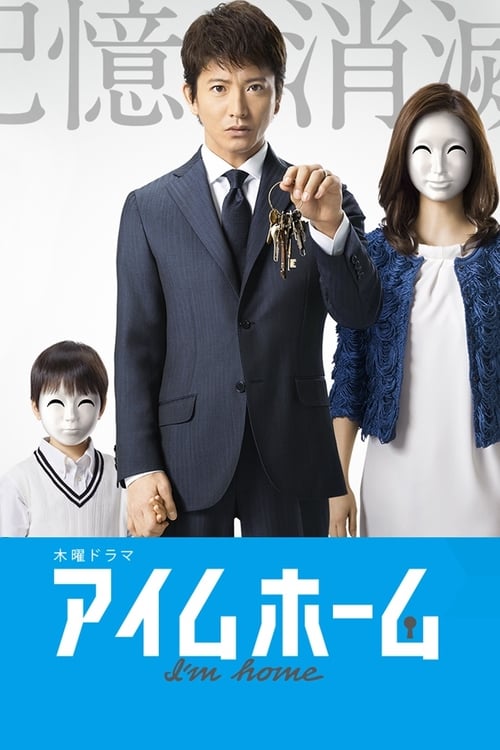
Ieji Hisashi, a salaryman who works for a securities company, has a fuzzy memory of the recent five years because of an accident at his job posting. His wife of five years, Megumi and their 4-year-old son seem to wear masks. He can neither tell their facial expressions nor their emotions. He also struggles about his love for them. On the other hand, Ieji feels an attachment to his ex-wife, whom he divorced five years ago, and their daughter. What sort of days did he have in those five years which are a blank to him? Ieji sets out on a journey to find his past self with a mysterious bunch of 10 keys that he has. He becomes aware that he was a cold, career-minded man before the accident, and the persona that is gradually revealed is beyond the imagination of his present kindhearted self.
I'm Home

The glittering Gran Tesoro, a city of entertainment beyond the laws of the government, is a sanctuary for the world’s most infamous pirates, Marines, and filthy rich millionaires. Drawn by dreams of hitting the jackpot, Captain Luffy and his crew sail straight for the gold. But behind the gilded curtains lies a powerful king whose deep pockets and deeper ambitions spell disaster for the Straw Hats and the New World alike.
One Piece Film: GOLD

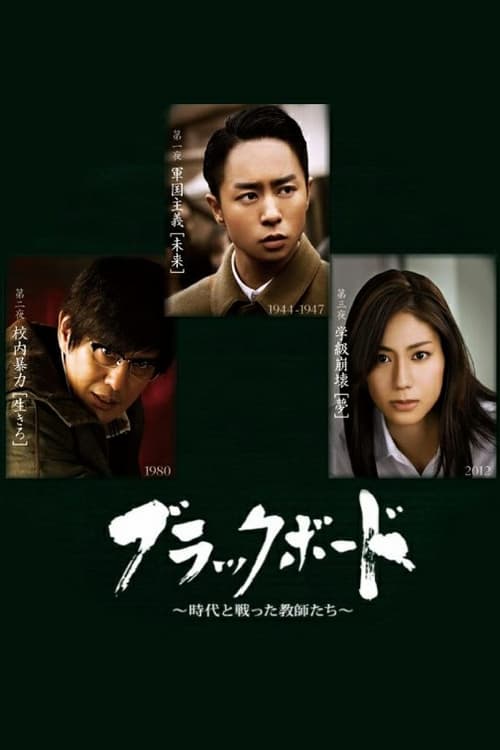
"Blackboard ~ Jidai to Tatakatta Kyoushitachi~," revolves around teachers in different time periods having to deal with the problems of that era. The first episode stars Sakurai as Shirahama, a junior high school teacher who taught his students about "dying for your country" during wartime. After later losing his right arm in the war, he returns to teaching but is burdened and conflicted by what he taught his students in the past. The second episode of "Blackboard ~Jidai to Tatakatta Kyoushitachi~" stars Sato Koichi as a teacher during the 1980s having to deal with school violence. Shida Mirai plays a delinquent student, and Kanjiya Shihori plays another teacher at the school. Set in modern-day Japan, tackles the story of forbidden teacher-student relationships. Matsushita Nao plays a devoted English teacher who's offering personal lessons for a pupil (played by Kamiki Ryunosuke), who barely can read or write.
Blackboard

The story of Kishi Keiichitaro, a dashingly handsome pathologist who is intensely eccentric and brutally honest, but also holds one of the most brilliant minds. A pathologist is a physician whose job is to determine a diagnosis of disease or cause of death based on an assortment of data, including a patient's tissue, bodily fluids, organ samples, blood, etc.
Fragile

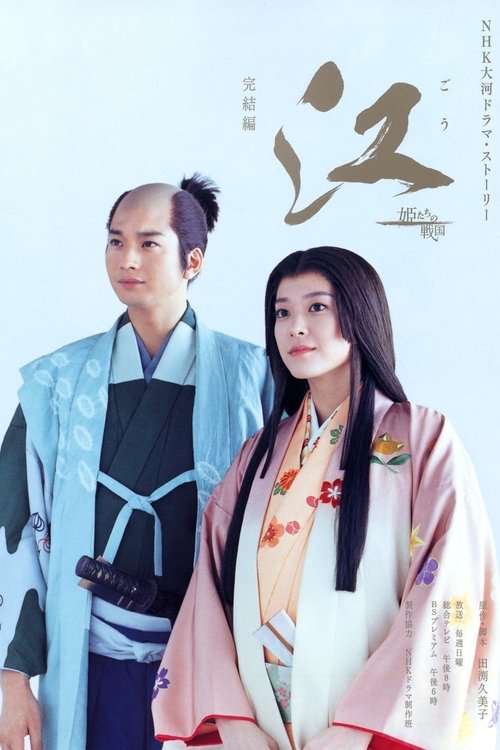
Princess Go was the youngest of the most famous three sisters in Japanese history, who each led a remarkable life in an age of turmoil and civil war. Go loses her parents in the war, marries three times, and feuds with her own sister in competing for power. Go's husband becomes the second Tokugawa Shogun and she ensures her prominence as she gives birth to a son who later becomes the third Shogun and a daughter, a wife of the Emperor. The drama describes the age of the civil war through the eyes of Princess Go, who plays a significant part in establishing the age of peace that lasts over 200 years in Japan.
Princess Go

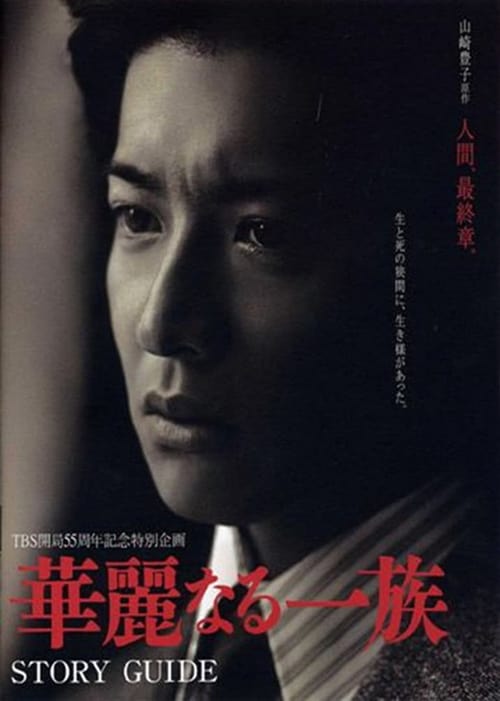
The Family, the program commemorating the 55th anniversary of the launch of the TBS TV station, is a social drama depicting the inside story between bureaucrats, politicians, and big businesses over a bank merger revolving around the family discord between Daisuke Manpyō, the owner and president of Hanshin Bank, and his eldest son, Teppei.
The Family

A 19-year-old girl burdened by a cruel destiny, a 41-year-old man living in atonement, and a forbidden love that cannot be accepted by the people around them. Breathless Summer is as much a social drama as it is a love story. Takei plays said girl who learns that her mother never recorded her birth in their family register. While falling into despair after finding out the secret about her birth yet wholeheartedly trying to live to regain "herself", she happens to run into a former journalist who is suffering from a deep scar in his heart himself. Although they could be father and daughter, they start to develop much stronger feelings for each other, a love forbidden by society.
Breathless Summer

Rokuheita Narumi is fascinated by oriental art and works as the director of the Saho Art Museum in Nara. His wife, Noriko, is unable to leave Tokyo, despite his wishes, and the two live separately. Feeling lonely and neglected by her husband, she immerses herself in the depraved life of the city and continues to have a loveless relationship with a doctor, Katsumori. One day, Narumi arrives in Tokyo and learns of Noriko's affair, but he cannot divorce her for the sake of their child, so he devotes himself to his work.
Spring Bell

This series, produced to commemorate the 65th anniversary of TV Asahi, tells the story of Riku Kariyama, an architectural designer passionate about bridge construction. He faces an unexpected difficulty of being imprisoned, but he never gives up, continuously searching for a path of hope and rebirth. The intricate suspense and heart-pounding, stirring human stories intertwine, weaving a grand drama.
Believe: A Bridge to You

The chronicles of Sakamoto Ryoma, a pre-revolutionary who helped shape the face of modern Japan. In order to study swordsmanship, Ryoma heads for Edo where he meets many people who influence his thinking. He becomes close friends with men like Katsu Kaishu and Saigo Takamori and later establishes a naval training school in Kobe. Ryoma's controversial political views make him a target for shogunate assassins but his fervent belief in a classless society helps forge the Choshu-Satsuma alliance which ultimately brings about the Meiji Restoration.
Ryoma ga Yuku

Higurashi Tabito has lost four out of his five senses--his sense of sound, smell, taste, and touch. The only sense he has is sight, which he relies on for his job as a detective who has to investigate and find various missing objects. He works at the detective agency with Yukiji, his buddy and manager, and Tei, his adopted daughter. No matter what it is, Tabito always finds the missing object. His investigative methods, however, are a little bizarre. His eyes seem to be able to see everything, including things that regular people can't see, like scents and emotions. Without a single blood relative left in the world, the lonely Tabito pours his heart out on his job. Each case he solves brings him closer to Yukiji, Tei, and her daycare teacher Yoko, who all treat him like family. Wrapped in their warmth, his heart begins to melt.