FEEL IT.STREAM
Nam June Paik

Nam June Paik

Directing

Biography

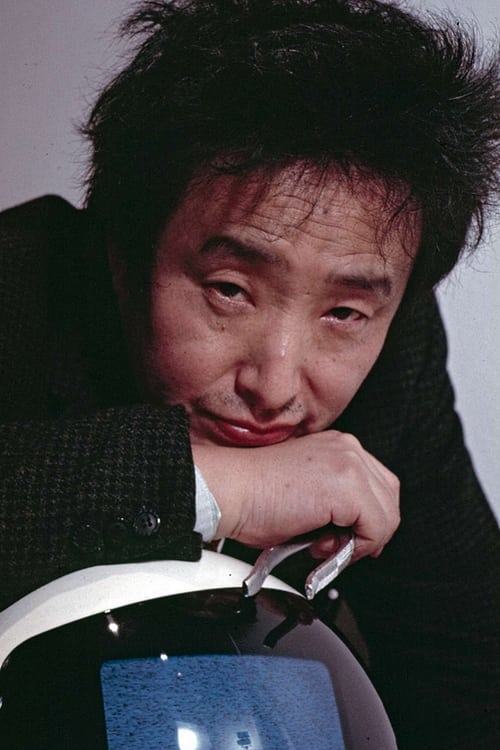
Nam June Paik was the first video artist who experimented with electronic media and made a profound impact on the art of video and television. He coined the phrase "Information Superhighway" in 1974, and has been called the "father of video art."
Known For

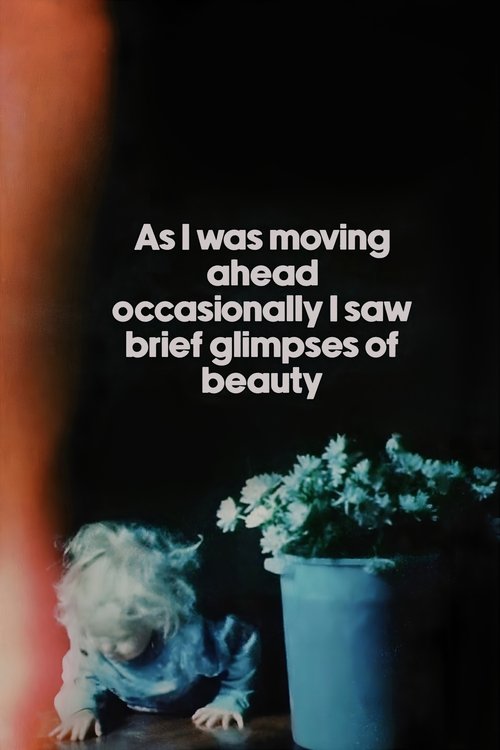
As I Was Moving Ahead, Occasionally I Saw Brief Glimpses of Beauty
7.7

A compilation of over 30 years of private home movie footage shot by Lithuanian-American avant-garde director Jonas Mekas, assembled by Mekas "purely by chance", without concern for chronological order.

As I Was Moving Ahead, Occasionally I Saw Brief Glimpses of Beauty

2000
Nam June Paik: Moon Is the Oldest TV
6.8

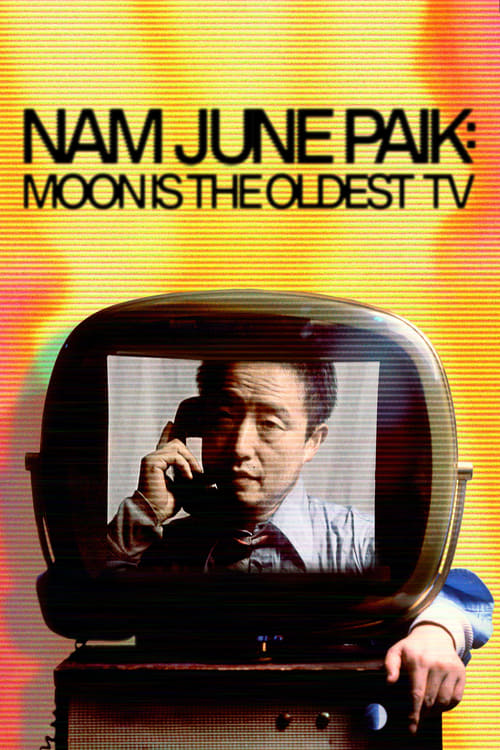
The quixotic journey of Nam June Paik, one of the most famous Asian artists of the 20th century, who revolutionized the use of technology as an artistic canvas and prophesied both the fascist tendencies and intercultural understanding that would arise from the interconnected metaverse of today's world.

Nam June Paik: Moon Is the Oldest TV

2023
365 Day Project
10.0

This exhibition focuses on Jonas Mekas’ 365 Day Project, a succession of films and videos in calendar form. Every day as of January 1st, 2007 and for an entire year, as indicated in the title, a large public (the artist's friends, as well as unknowns) were invited to view a diary of short films of various lengths (from one to twenty minutes) on the Internet. A movie was posted each day, adding to the previously posted pieces, resulting altogether in nearly thirty-eight hours of moving images.

365 Day Project

2007
Good Morning, Mr. Orwell
8.1

In his book "1984", George Orwell saw the television of the future as a control instrument in the hands of Big Brother. Right at the start of the much-anticipated Orwellian year, Paik and Co. were keen to demonstrate satellite TV's ability to serve positive ends-- Namely, the intercontinental exchange of culture, combining both highbrow and entertainment elements. A live broadcast shared between WNET TV in New York and the Centre Pompidou in Paris, linked up with broadcasters in Germany and South Korea, reached a worldwide audience of over 10 or even 25 million (including the later repeat transmissions).

Good Morning, Mr. Orwell

1984
He Stands in a Desert Counting the Seconds of His Life
8.4

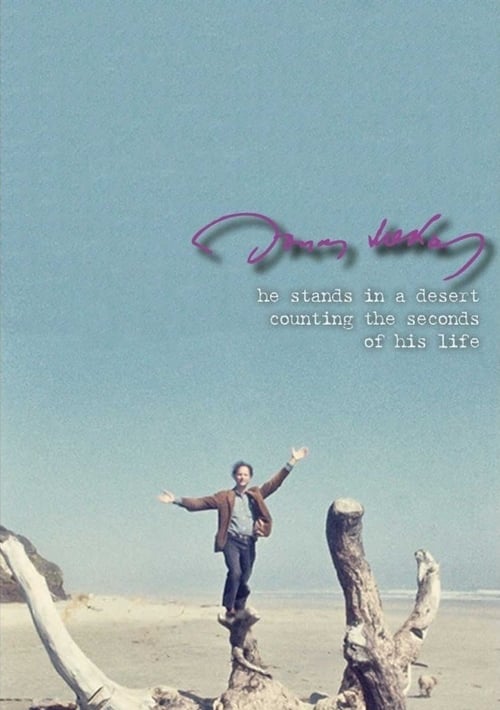
A film collage tracing the story of the lives, loves, and deaths within the artistic community surrounding Jonas Mekas.

He Stands in a Desert Counting the Seconds of His Life

1986
Global Groove
7.7

Global Groove was a collaborative piece by Nam June Paik and John Godfrey. Paik, amongst other artists who shared the same vision in the 1960s, saw the potential in the television beyond it being a one-sided medium to present programs and commercials. Instead, he saw it more as a place to facilitate a free flow of information exchange. He wanted to strip away the limitations from copyright system and network restrictions and bring in a new TV culture where information could be accessed inexpensively and conveniently. The full length of the piece ran 28 minutes and was first broadcasted in January 30, 1974 on WNET.

Global Groove

1973
Bye Bye Kipling
N/A

This ambitious live satellite link-up of Japan, Korea and the United States features interviews with Keith Haring and architect Arata Isozaki, and performances and works by Philip Glass and the Kodo Drummers, Charlotte Moorman, Nam June Paik, and Lou Reed. In an extraordinary section, a performance in Japan of classical Western music is accompanied by a group of Kabuki dancers.

Bye Bye Kipling

1986
All Star Video
6.5

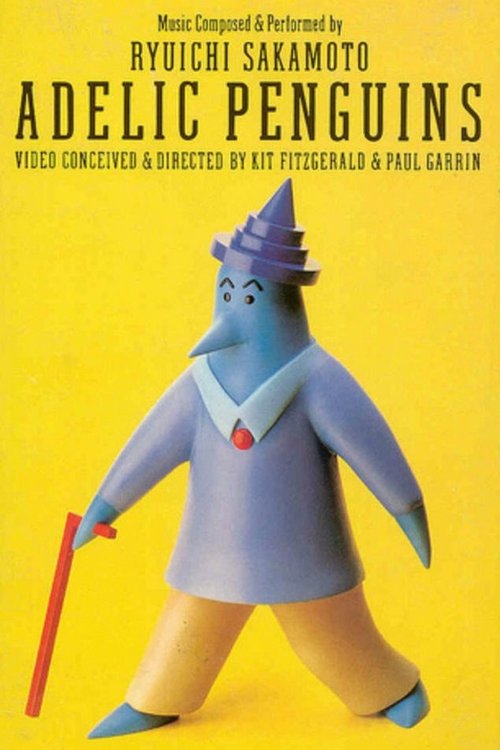
A compilation of avant-garde artwork and talent of the mid to late 20th century hosted by Ryuichi Sakamoto.

All Star Video

1985
Suite 212
N/A

Suite 212 is Paik's "personal New York sketchbook," an electronic collage that presents multiple perspectives of New York's media landscape as a fragmented tour of the city. Paik critiques the selling of New York by multinational corporations and the city's role as the master of the media and information industries; Collaborators Yalkut, Davis and Kubota contribute their own vibrant and punchy segments.

Suite 212

1974
Persistence of Vision
N/A

A short documentary profile of the Anthology Film Archives, shot on the eve of the move to the historic 2nd Avenue Courthouse. Staff and patrons are interviewed, and films preserved by Anthology are spotlighted.

Persistence of Vision

1984
Home Movies 1971-81
N/A

Home movies shot on Super 8mm by W+B Hein over 10 years.

Home Movies 1971-81

1985
Kill Your TV: Jim Moir’s Weird World of Video Art
N/A

Jim Moir (aka Vic Reeves) explores Video Art, revealing how different generations ‘hacked’ the tools of television to pioneer new ways of creating art that can be beautiful, bewildering and wildly experimental.

Kill Your TV: Jim Moir’s Weird World of Video Art

2019
No image
N/A

This fascinating film documents the U.S. premiere production of Originale, a Happening by German composer Karlheinz Stockhausen. Filmed at the "2nd Annual Avant Garde Festival of New York," which was produced by Norman Seaman and Charlotte Moorman, the stage production was directed by Allan Kaprow. Performers include Nam June Paik, Moorman, Jackson Mac Low and Allen Ginsberg, among many others.

Stockhausen's Originale: Doubletakes

1964
No image
N/A

An unreleased diary film shot during the Fairleigh-Dickinson Artist Seminar simultaneous to the production of Back and Forth by Michael Snow.

Seminar

1969
Allan ‘n Allen’s Complaint
N/A

The influence of Jewish fathers on their sons and the complexity of familial relationships are explored in a witty, poignant portrait of two artists. Beat poet Allen Ginsberg (whose father Louis was a poet in his own right) and performance artist/sculptor Allan Kaprow (whose father is a high-powered lawyer) are the sons who struggle with and against the influences of these patriarchal figures.

Allan ‘n Allen’s Complaint

1982
‘Rameau’s Nephew’ by Diderot (Thanx to Dennis Young) by Wilma Schoen
7.8

Various unrelated vignettes, often juxtaposing sound and image.

‘Rameau’s Nephew’ by Diderot (Thanx to Dennis Young) by Wilma Schoen

1974
Hi-Red Centre Shelter Plan
N/A

Hi-Red Centre were comprised of Genpei Akasegawa, Natsuyuki Nakanishi and Jiro Takamatsu, who enacted ‘happening’-style performance art in unusual spaces during the early 1960s in Japan. The film is an extremely rare document of one of their early events, where they hired out a room in the Imperial Hotel and invited many friends and professionals in the art scene to participate in the occasion. The performance parodies Cold War fears and the construction of private bomb-shelters, as they diligently measure each guest’s weight and proportions in pretence that they are to build human-size shelters for each individual. Key figures of the art scene make an appearance, including Yoko Ono, video-artist Nam June Paik, noise artist Yasunao Tone, filmmaker Masao Adachi and graphic designer Tadanori Yokoo. A rarely seen and exceptional insight into the Japanese art scene of the era, Jonouchi records the event in his characteristically erratic style.

Hi-Red Centre Shelter Plan

1964
Back to Fucking Cambridge
8.0

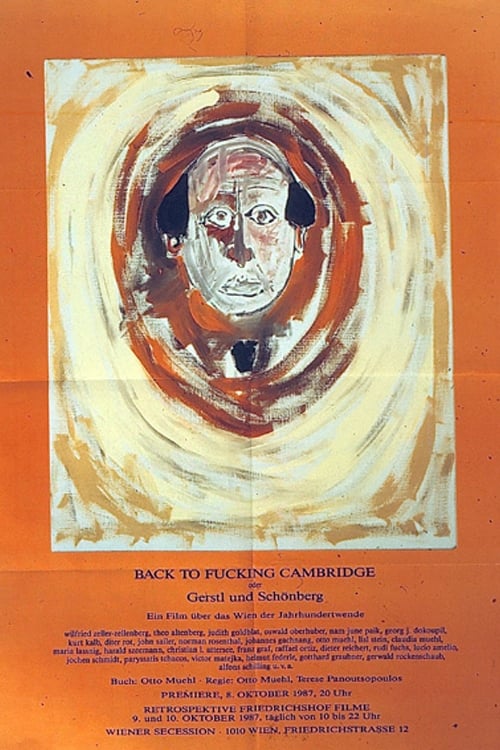
About a group of graduates from Cambridge University who go back to their college to visit a friend who has stayed on there. Otto Muehl founded a community of artists in Vienna in 1970 with the aim of exploring a completely free life practice. Since 1972, this society experiment at the Friedrichshof in Burgenland, 60 kilometers from Vienna, further developed. From the mid-1970s, other municipalities were founded in 30 European cities. At Friedrichshof itself lived at times up to 240 members and visitors.

Back to Fucking Cambridge

1987
Lake Placid '80
8.0

Paik produced this exuberant, high-speed collage as a commission for the National Fine Arts Committee of the 1980 Olympic Winter Games. In a fractured explosion of densely layered movement and action, images of Olympic sports events are mixed with Paik’s recurring visual and audio motifs.

Lake Placid '80

1980
Sistine Chapel
N/A

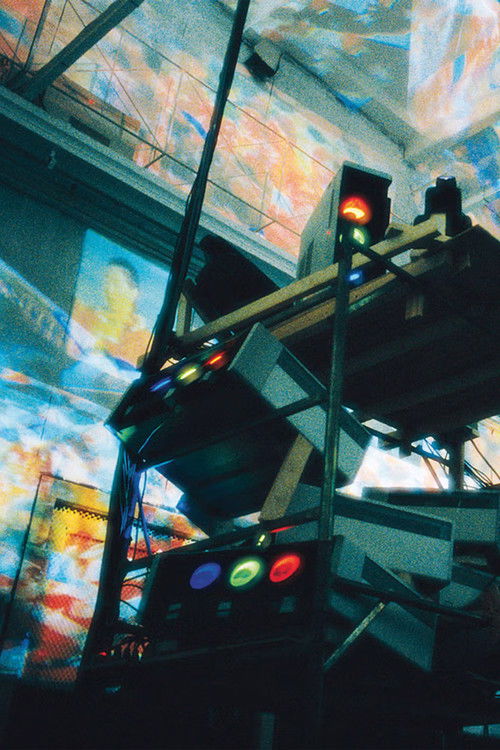
Sistine Chapel is an audio-visual collage of new footage and samples from Paik’s past videos, which featured many of his friends, collaborators, and public figures. It was Paik’s own way of summarizing his artistic career with video. The film installation consists of fast-paced and overlapping images that completely cover the gallery walls and ceiling—one of the most under-appreciated parts of architecture, according to Paik. With its electronic visuals and booming audio, interspersed with periods of silence, the immersive installation stands in stark contrast to the experience of its namesake.

Sistine Chapel

1993