Wolf Vostell
Directing
Biography
Wolf Vostell (14 October 1932 Leverkusen – 3 April 1998 Berlin) was a German painter and sculptor of the second half of the 20th century. Wolf Vostell is considered one of the early adopters of Video art, Environment, Installation, Happening and the Fluxus Movement. Techniques such as blurring and the Dé-collage are characteristic of his work, as is embedding objects in concrete.
Known For
An essayistic documentary about the action art movement that emerged in the 1960s: In interviews with various action artists, including Wolf Vostell, Joseph Beuys and Allan Kaprow, director Helmut Herbst illuminates the performative and participatory tendencies in art that began in the 1960s and outlines the diversity of motives and strategies.
Happening, Kunst, Protest 1968
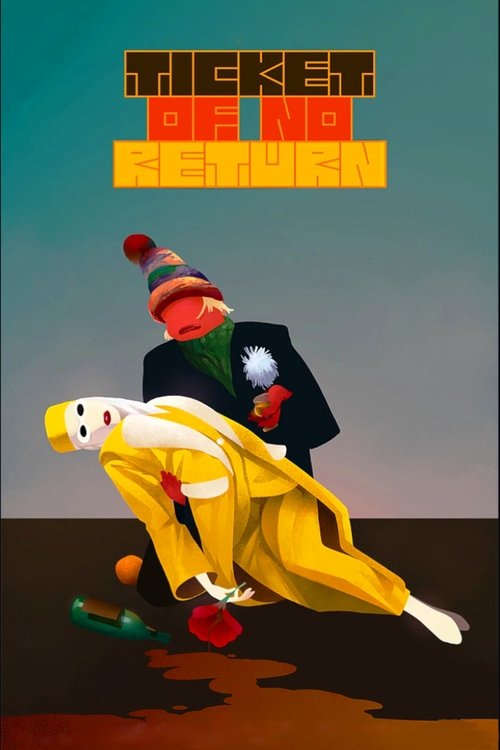
A sartorially resplendent woman of few words arrives in Berlin with plans to live out the rest of her days as a drunkard.
Ticket of No Return
A comprehensive documentation of new art movements from 1945 to the present day. Beginning with the "Internationale Situationniste," "Cobra," "Spur," and "Wiener Gruppe" groups in Europe, and moving on to the international Happening and Fluxus movements, including the Viennese Actionists, and from 1970 onward to international Body and Performance Art, which also encompassed media art—film and video—the documentary presents film and photographic material from these art movements.
Aktionskunst International. Dokumente zum Internationalen Aktionismus

Feature-length compilation program presenting 37 out of 41 original fluxfilms produced and directed in the 1960s by Fluxus artists, including George Maciunas, Nam June Paik, Yoko Ono, Robert Watts, Paul Sharits, et al.
Fluxfilm Anthology 1962-1970
Early documentary about the pop art scene and happenings in Germany.
Kunst und Ketchup
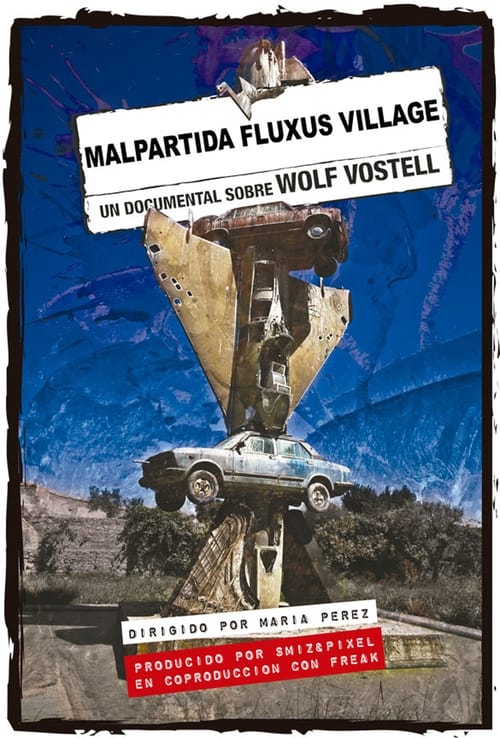
The German artist Wolf Vostell and his family moved to a little village in Cáceres (Extremadura/Spain) in the seventies. In the middle of this primitive environment, he founded a contemporary art museum in connection with the local inhabitants, thus turning Malpartida into the first Fluxus village.
Malpartida Fluxus Village
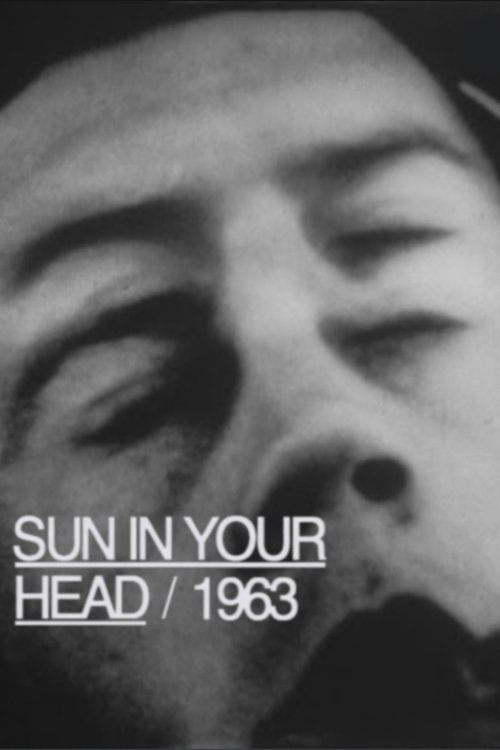
"Single Frame sequences of TV or film images, with periodic distortions of the image. The images are airplanes, women men interspersed with pictures of texts like: 'silence, genius at work' and 'ich liebe dich.' The end credit is 'Television décollage, Cologne, 1963."
Sun in Your Head
Vostell manipulated a television to distort news footage of the Vietnam War and recorded the intervention using Super 8 film. In this key example of his practice of “TV-dé-coll/age,” the artist addresses the hyper-saturated media landscape and our increasing desensitization to distant atrocities.
Vietnam
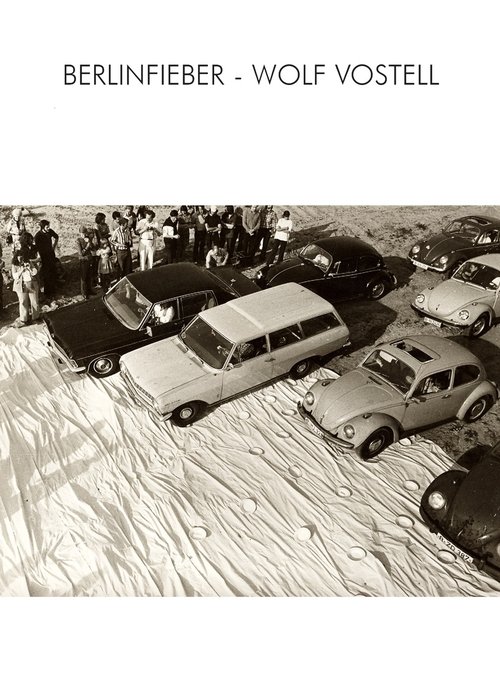
In 1973, Wolf Vostell, an artist associated with Fluxus, made a happening in which participants were required to perform a series of ritual, obsessive actions, such as “go to the trunk of your vehicle, there open and close the trunk 750 times and 375 times put a white plate in it and take it out 375 times.” Described by Ottinger as a documentation of what Vostell called “dé-coll/age-happening”, the film is an illustration of her creative method, a surrealist act, a separate work of art, and a strange object. She would later describe her method as “fragments of reality assembled in an unusual manner”.
Berlin Fever
Documentation by Vostell of the environment 'E.d.H.R. Electronic dé-collage Happening Room' from 1968, exhibited in 1982 at the Neue Nationalgalerie in Berlin in the exhibition "Art Becomes Material". The environment consisted of six televisions equipped with additional electric motors that move objects across the floor covered with broken glass. Slides of earlier happenings and works by Vostell were projected onto the walls. According to Vostell, the room contained "Multi-layered mixed layers, superimpositions and events, mobile collages and dé-collages".