Directing
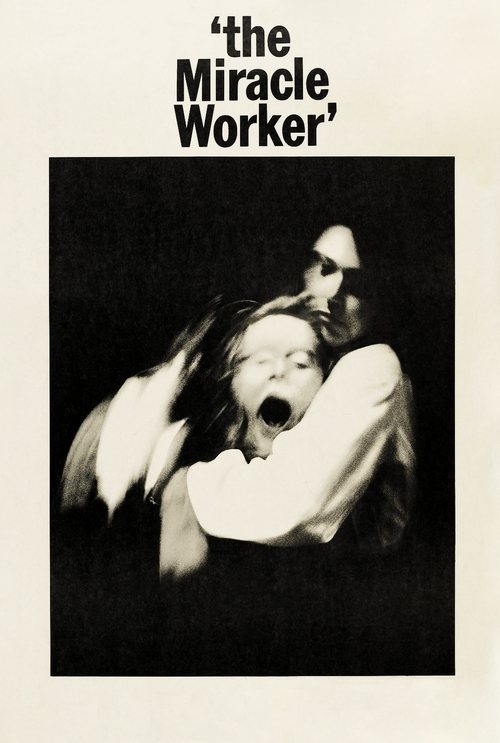
The true story of the frightening, lonely world of silence and darkness of 7-year-old Helen Keller who, since infancy, has never seen the sky, heard her mother's voice or expressed her innermost feelings. Then Annie Sullivan, a 20-year-old teacher from Boston, arrives. Having just recently regained her own sight, the no-nonsense Annie reaches out to Helen through the power of touch, the only tool they have in common, and leads her bold pupil on a miraculous journey from fear and isolation to happiness and light.
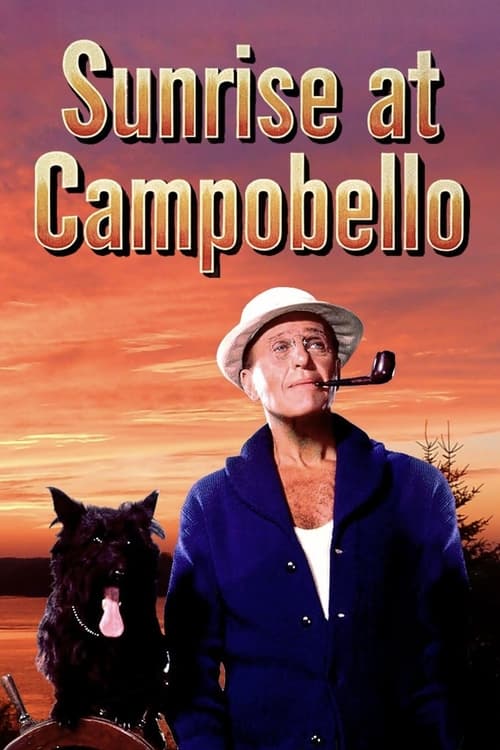
The story of Franklin Roosevelt's bout with polio at age 40 in 1921 and how his family (and especially his wife Eleanor) cope with his illness. From being stricken while vacationing at Campobello to his triumphant nominating speech for Al Smith's presidency in 1924, the story follows the various influences on his life and his determination to recover.
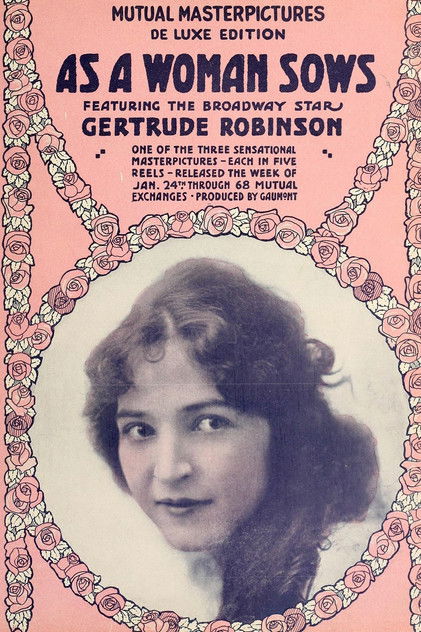
Mayor of Lynboro, Loren Hayward is so dedicated to his work, he soon neglects Milly his young wife. In order to rekindle his affections, she engages in a flirtation with ladies' man Robert Chapman, an all too willing suitor who forces her to kiss him.
Mary is from Boston, and she doesn't just take to the cow punchers as she would to the "rah-rah boys" of the Hub. Bill, who is a fellow of no small caliber, is looked upon by his companions as a sort of leader, feels a little miffed, but acknowledges she is the real goods and has some occasion to feel proud of herself; at the same time he won't stand for her snubs. The punchers await developments and make up their mind what can't be cured must be endured. The Captain, a classy chap, from a neighboring ranch, puts in his appearance, and asks Mary to go riding with him.
Nell, an independent and somewhat obstinate girl, receives an invitation to attend a dance. She asks her mother for money to buy a new dress. Her mother, a hard working woman, who has to toil from morn to night, feels that her request involves an unnecessary extravagance and she denies it. Nell answers her sharply and leaves in a sullen mood. While working in the hot, broiling sun, the mother is overcome with the heat.
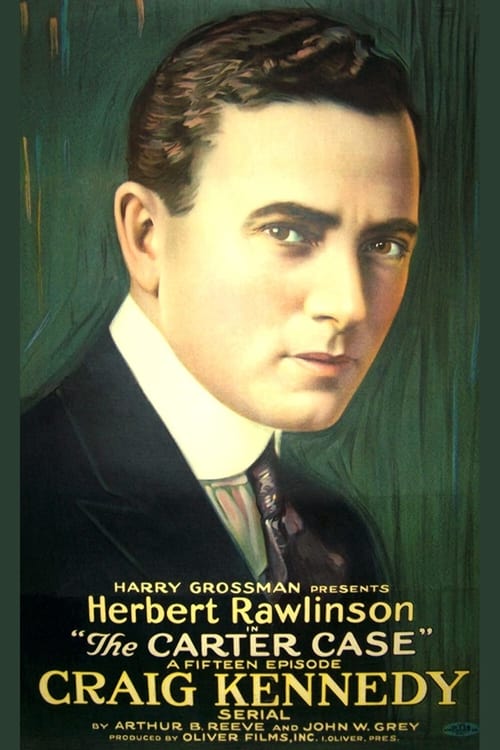
Science fiction serial.
Desdemona was not the only woman to have trouble over a handkerchief. It occurred to Mary also. Mary was in love with Bill, who worked on her father's ranch, and was greatly admired by all the boys. Shorty returned from town one day with a fine checkered handkerchief, which he proudly placed about his neck, strutting in front of Bill to attract his notice. The handkerchief was almost loud enough to speak for itself, so Bill noticed it all right. One of the boys sneaked it from about Shorty's neck and hung it on a nail, where Mary found it. Seeing that it was new, she placed it about her own comely neck, but alas, Othello Bill became jealous and accused her of accepting it from Shorty.
Nora, who is the president of the Bachelor's Club, receives a letter announcing the death of her uncle in the west and that he has made her heir to his immense fortune. Including a ranch at Grey Oaks. Nora decides to go west and take charge of the ranch and run it herself a la suffragette fashion. She invites all the girls to go with her and they start for their new home. Arriving at Grey Oaks they pay no attention to the cowboys who greet them at the station but go at once in the old stage-coach to the ranch. The cowboys follow, approach the ranch, offer their services and are rewarded by being driven from the premises. The boys make up their minds to "get next" to the girls and devise a scheme.
It was April weather on Lloyd's ranch, but all was not sunshine. The mortgage was due, and while there were enough cattle to sell to pay it, they were woefully short of men to handle them. Finally Lloyd decided to entrust the job to his son, Hal, and detailed El Paso Pete, one of his trusted men, to accompany the boy to Waco. The cattle were rounded up and shipped. Hal sold them to advantage and collected the money and was on his way to settle the mortgage, when he ran into an adventure. Jim Dempsey, a rough gambler, was having an altercation with his daughter, Rose. A Texan will ever respond to the call of beauty in distress and, regardless of the relationship, Hal interfered and followed them to see it safely through. He was led to a dance hall and was surprised and somewhat disappointed to see that Rose was a dancer there, but discovered that her father forced her to thus earn her living.
Adventerous engineer Robert Clay, goes to a South American country on an assignment by rich American Ted Langham to open an iron mine. While Robert is there, the unscrupulous General Mendoza tries to convince him to divide the mine's assets between them and President Alvarez. Mendoza starts a revolution against Alvarez when he and Clay will not go along with the plan, but he eventually is defeated after a long battle. Clay then is able to pursue his relationship with Hope, Langham's daughter, who has accompanied her father to South America.
If John was half the man that Molly is, she and her father would have been a great deal better off. Molly by her industry and ambition has saved up five hundred dollars to go to college and complete her education; she is very proud of her achievement. John is a young fellow with extravagant idle notions, who refuses to hold his jobs as a skilled mechanic and insist upon spending his time in rambling and dissipation. Molly loves her brother and tries to induce him to mend his ways and make a man of himself.
John Burton met Bessie Fields on her way home one day, and was for making love to her right then and there, but for the interruption of Crazy Joe, a half-witted boy, who always seemed to get in wrong. Burton was incensed, and, although Bessie protested, applied his whip to the demented boy, when Steve Ross, Bessie's sweetheart, happened along and rushed to the boy's rescue. Steve saw that Burton's attentions were not welcomed and ordered him off the scene. Next day, both went to Mr. Fields, and proposed for Bessie's hand. When Burton learned that Steve had been accepted, he rushed from the house, fired back upon it, and fled. Of two shots spent, one hit and killed Mr. Fields.
A lost silent film depicting the battle of the Alamo. Filmed in San Antonio.
A short silent western produced by Gaston Mèliès in San Antonio.
A Navajo Indian has crossed the great desert, and his water bottle has been emptied. He is in a frenzy from thirst and sees mirages of water everywhere. He comes upon Nat Perry, a young settler, who is conveying his household goods across the burning sands. Perry has just taken a drink from his precious canteen when the Indian falls at his feet and implores a little water. The young pioneer heartlessly turns him over with his foot and leaves him to die.
Braggs, the young western settler, comes into view leading his broncho while he leads his little child on the horse's back. Placing the child on the ground and watering the pony, he takes his knife from his pocket to make an extra hole in the saddle strap. The knife slips and penetrates his wrist, severing an artery. His wife comes to his assistance, makes a tourniquet with strips of her apron, jumps on the broncho's back, bids her husband to care for the child and keep up courage while she rides to town for the doctor.
In the Latin Quarter of Paris, Mimi earns the nickname "The Mad Dancer" and poses in the nude for a sculptor named Serge Verlaine. After her father commits suicide, Mimi travels to the United States to live with her American relatives. Her new family heavily disapproves of her past and insults her for having posed for Verlaine. Unwilling to tolerate the abuse, she walks out and moves to Washington, D.C. In D.C., Mimi secures a new life and becomes engaged to Keith Arundel, the son of a United States Senator. Her hard-earned respectability is jeopardized when her bohemian past threatens to catch up with her and expose the details of her life in Paris.
After graduating from an Indian school where he has acquired an education and schooling in the ways of the white man. Ta-wa-wa, a young Indian, returns to his native territory and far western home. On the way to the tribe's encampment he stops at Vail's ranch, meets Kawista, his boyhood sweetheart, who greets him cordially and with a frank admiration for his gentlemanly appearance. While they are exchanging greetings the postman enters and hands a letter to Mr. Vail from Col. Leigh, an Englishman, stating that he will visit the ranch with Lord Wyndham, an English lord who expresses a desire to see a real Indian powwow.
Nellie and her father are from Boston, but every winter they visit San Antonio for the old man's rheumatism. Nellie is very fond of ranch life and it is her custom to spend part of the time at the Bar X, which is close by, while her father is undergoing all the delights of being "Boiled out" in the sulfur baths. Nellie meets all "the boys" and is particularly impressed with Jim Edwards, who constitutes himself her guide at the ranch. One day a horse runs away with her, and Jim neatly ropes it and thereby saves her life and wins her love.
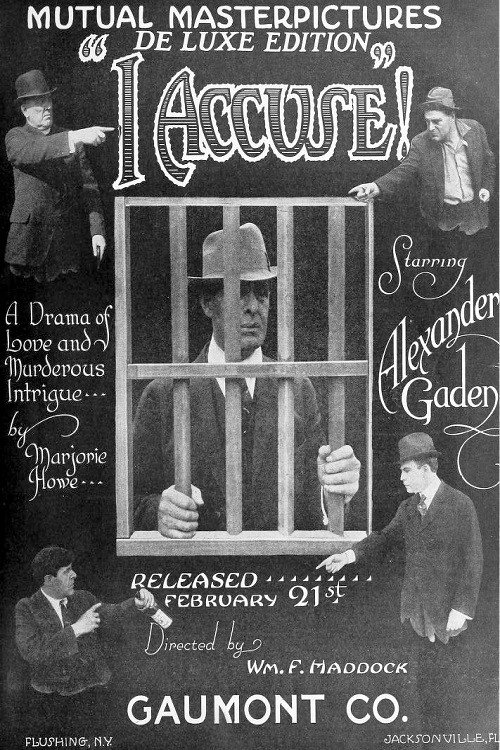
A story of malice, deception, blackmail and pride set in small town America.